 Haaland Has Seven Goals and Norway Runs Entirely Through Him
⚽️2026 FIFA WORLD CUP
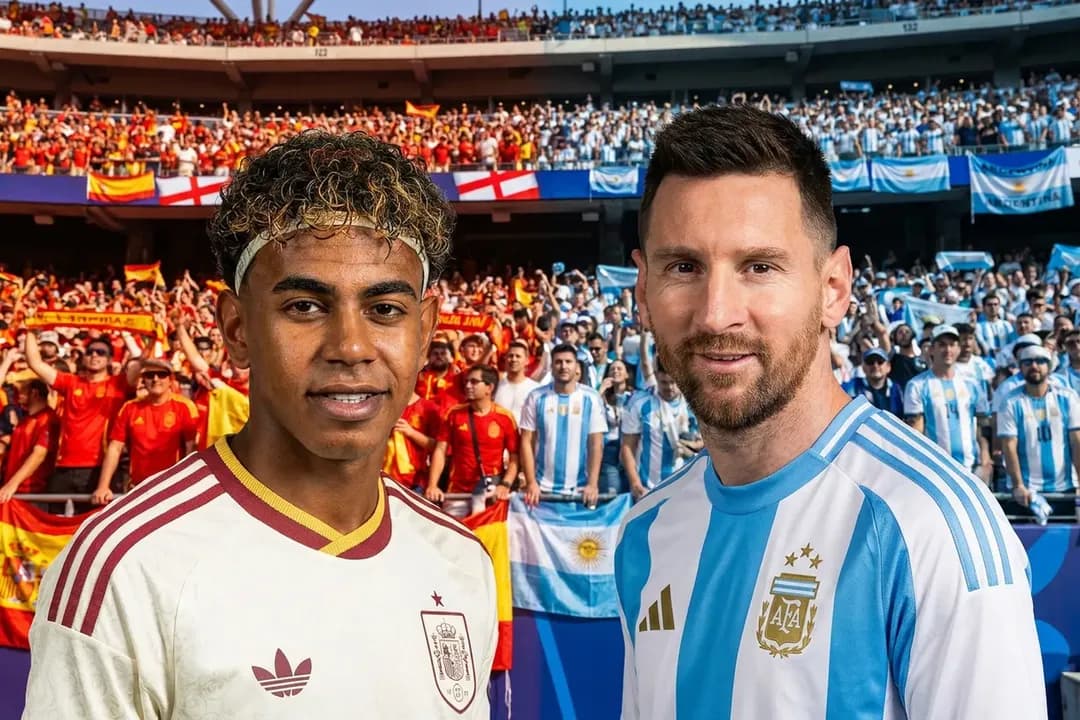
Lamine Yamal and Messi Defined the Final’s Generational Story
A 19-year-old Lamine Yamal and a 39-year-old Lionel Messi gave the final an unforgettable generational frame. Spain’s 1-0 extra-time win over Argentina turned that contrast into the story many fans will remember first.
East Rutherford, just across the Hudson from New York City, hosted a final that felt bigger than a single scoreline. Spain beat Argentina 1-0 after extra time, but the match also carried a striking generational image: 19-year-old Lamine Yamal representing Spain on one side and 39-year-old Lionel Messi representing Argentina on the other. That age contrast did not need invented statistics, dramatic claims, or private moments to matter. It was visible in the basic facts of the occasion, giving fans a clean, compelling way to understand why this final will be discussed long after the trophy ceremony.
Text Karpo now for a personalized final recap, a celebration plan, a food-and-drink route, or a New York-area city plan built around how you watched Spain’s extra-time win.
A Final Framed by Two Football Ages
The phrase lamine yamal messi surged because it captured a simple truth about the final’s emotional architecture. Yamal, at 19, stood for the next wave of elite football, a player whose career is still being formed in public view. Messi, at 39, carried the weight of an era already written into the sport’s modern memory. Their shared presence did not require a direct duel to define the occasion; the contrast itself gave the final a broad, human storyline.
That is why the final’s most durable narrative may sit alongside, rather than inside, the tactical account. Spain’s 1-0 win after extra time decided the trophy, but Yamal and Messi gave the night a generational shape. One represented possibility and acceleration, the other continuity and legacy. In a global final, those ideas travel easily across languages, clubs, and national loyalties, especially when fans are looking for meaning beyond the final score.
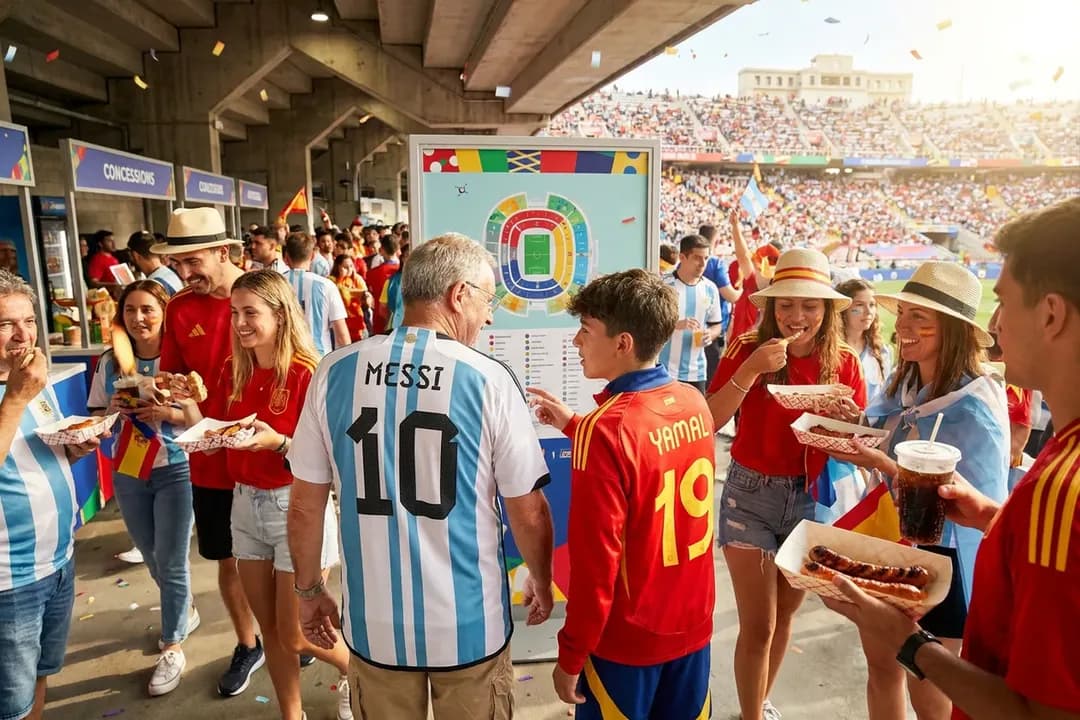
Spain’s Extra-Time Win Set the Stage
The confirmed result is clear: Spain defeated Argentina 1-0 after extra time. That outcome is the spine of the story and should not be overloaded with unverified detail. Without inventing goal timing, individual final statistics, or dressing-room scenes, the significance remains strong. A final that goes beyond regulation already asks supporters to live with tension for longer, and Spain’s eventual victory turned that extended pressure into a defining part of the match’s public memory.
For Spain, the win confirmed the night as a triumph on the biggest stage. For Argentina, the defeat arrived within a final that still carried enormous global attention because of Messi’s presence and the opponent across from him. The matchup’s interest was never limited to national colors. It also drew viewers into a broader question about where football has been and where it is going, with Yamal and Messi standing at opposite ends of a remarkable age spectrum.
Why the Age Gap Resonated Worldwide
A 20-year age difference between two headline names in a final is easy for casual fans to understand. Supporters do not need advanced metrics to feel the gap between 19 and 39. One age suggests emergence, freshness, and the long runway of a career still ahead. The other suggests endurance, adaptation, and the rare ability to remain central deep into a sporting life. That contrast made the final accessible even to people following the tournament through highlights and headlines.
The appeal also came from the lack of forced symbolism. There was no need to claim that Yamal replaced Messi, that Messi passed anything to Yamal, or that the match proved a definitive generational handover. Those phrases can flatten a complex sport into easy myth. The better reading is more precise: the final placed two very different career stages in the same global frame, and Spain’s victory ensured that frame became part of the tournament’s closing image.
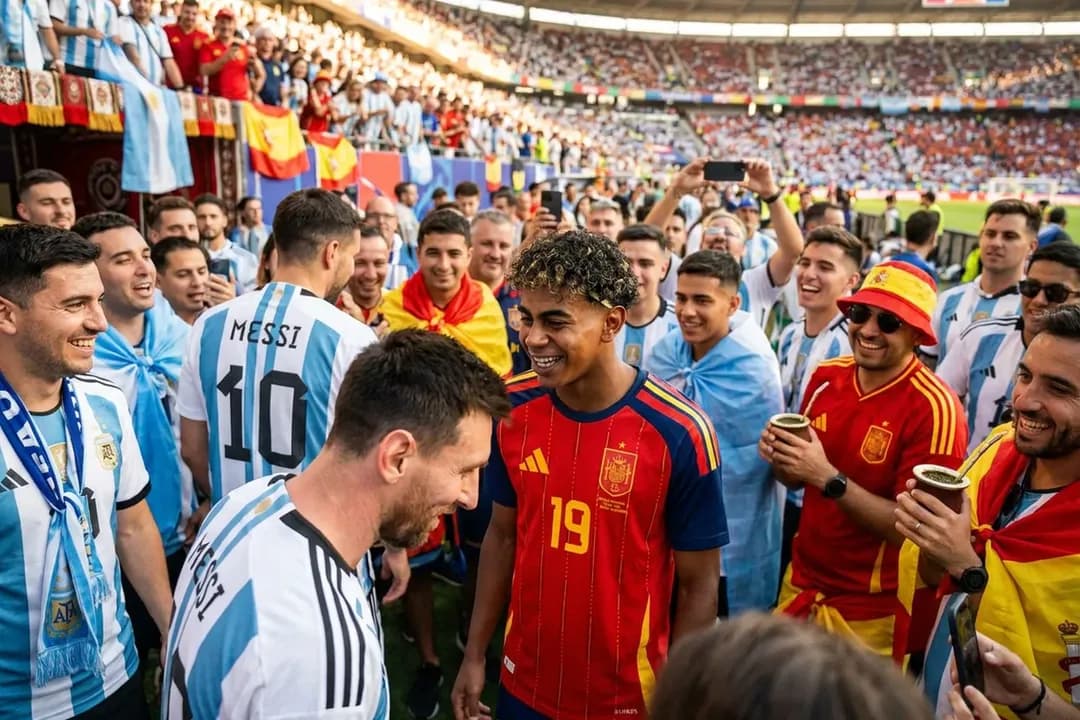
Messi’s Presence Still Changed the Conversation
Messi’s age mattered because very few players remain this visible at 39, especially in a final of this scale. His presence for Argentina added historical gravity, not because of any invented final statistic, but because of what his name already means to the sport’s public imagination. Fans understand that seeing Messi in a final carries context accumulated over years. That context followed him into East Rutherford and shaped the way neutral viewers processed the matchup.
At the same time, the most responsible way to write about Messi here is to stay with what is known. He featured for Argentina in a final Spain won 1-0 after extra time. Beyond that, the temptation to create private exchanges, symbolic gestures, or unconfirmed emotional scenes should be resisted. The public facts are strong enough. Messi’s role in the generational story comes from verified presence, age, and stature, not from embellishment.
Yamal’s Role Made the Future Feel Immediate
Yamal’s presence at 19 gave Spain’s win an additional layer because he belongs to the age group fans naturally associate with what comes next. In a final decided after extra time, his name became part of a victory that will be attached to this Spanish side’s identity. The story is not that one teenager carried an entire night by himself. The story is that a teenager appeared within a winning final and became a central point of global conversation.
That distinction matters because young players are often turned into shortcuts for sweeping predictions. It is enough to say that Yamal featured for Spain, Spain won, and his age made the final feel unusually forward-looking. Anything beyond that must be grounded in verified evidence, not excitement. The most compelling version of the narrative is also the cleanest: a 19-year-old stood on the winning side of a World Cup final against an Argentina side featuring 39-year-old Messi.
The Clean Story Fans Will Remember
The final’s high-interest contrast works because it connects outcome, place, and time. In East Rutherford, beside New York City, Spain’s 1-0 extra-time win became the result. Around that result, Yamal and Messi gave fans a shorthand for the night’s generational sweep. The story does not need head-to-head numbers, private conversations, or imagined scenes. It needs only the verified frame: two globally discussed players, 20 years apart, present in the same final.
That is the version most likely to last. Spain lifted the final through a 1-0 win after extra time, while Argentina’s night remained inseparable from Messi’s enduring presence. Yamal’s involvement gave the winning side a future-facing symbol, and Messi’s involvement gave the match a living link to a long football era. Together, without needing to be reduced to a direct comparison, they defined the final’s generational story in a way the score alone could not.
Tags: #WorldCup2026
Sources consulted: Associated Press final report · FIFA final hub
All trademarks are the property of their respective owners.
Ask Karpo First
Ask Karpo for your personalized final recap, a Spain celebration route, an Argentina reflection plan, or a New York-area food and city guide built around the match.
Ask Karpo for more information.
Keep reading
- Haaland Has Seven Goals and Norway Runs Entirely Through Him
 World Cup Trophy Ceremony Timing Medals and Postmatch Celebrations
 Olise and France's Attack: The Semifinal Tactical Question