 El Sereno Urban Staircase Walk Planner for a Study Break
Free Things to Do
Arts District Winter Sunrise Photo Route Planner: Viaduct
Shooting a winter sunrise in the LA Arts District is free: walk the Sixth Street Viaduct at dawn, then turn west as the downtown towers catch the first light.
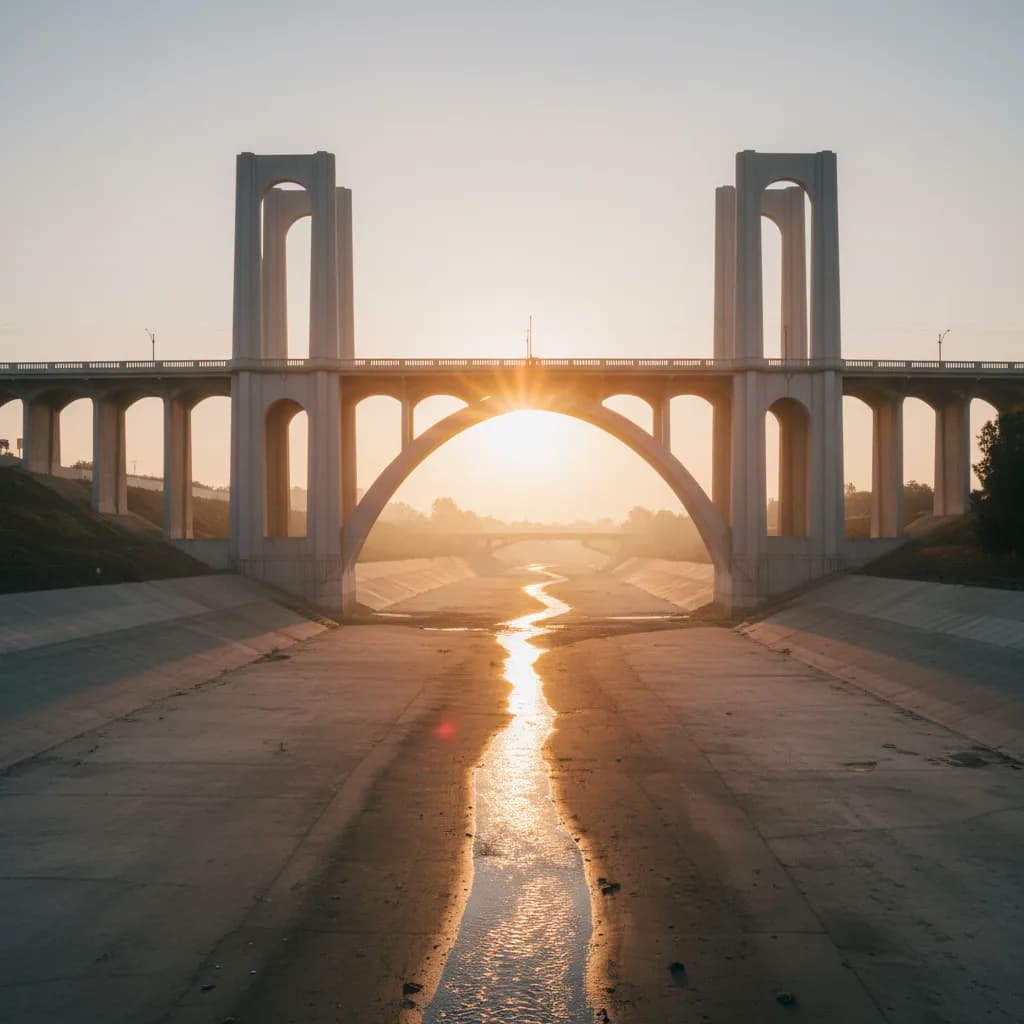
The Sixth Street Viaduct gives the Arts District a free front-row seat for winter sunrise, with a raised pedestrian walkway that faces straight across the Los Angeles River toward Boyle Heights. A winter sunrise photo route planner for this corner of downtown is simple: be on the bridge during blue hour, watch the sun come up behind the eastern hills, turn around to catch the skyline lighting up, then walk back down into the warehouse grid for murals in low side light. The whole loop takes about ninety minutes and needs nothing but comfortable shoes.
What Makes This Neighborhood a Sunrise Spot
Downtown Los Angeles is rarely thought of as a sunrise destination because tall buildings block the horizon from most streets. The Arts District sits on the eastern edge of downtown, right against the river, so the view east is open. In winter the sun rises in the southeast, low and slow, which means it skims across the river channel and lights up the bridge arches from the side instead of from above.
There is also the contrast that draws photographers here at every hour: raw concrete, brick warehouses, freight rail lines and enormous painted walls, all set against a skyline of glass towers. At dawn the towers turn copper while the streets below stay cool and blue. That split between warm and cool is the main subject of this route, and it lasts for less than an hour.
First Light on the Viaduct Walkway
Walk onto the viaduct from the Arts District side and head toward the middle of the span. The arches are the obvious frame. Stand where one arch lines up with the horizon to the east and wait for the sun to sit inside the curve. A wide lens shows the full arch and the river channel below, while a 50 mm lens isolates the sun in the opening with the concrete forming a clean border.
Stay on the pedestrian walkway at all times. The roadway carries real traffic, including early commuter buses and trucks, and standing on the barriers or the arches themselves is both dangerous and illegal. The river channel is also off-limits. You can get every shot on this route from public sidewalks, and the best angles are on the walkway anyway because it is raised above the traffic lanes.

Turn Around for the Skyline
About ten minutes after the sun clears the horizon, put it at your back. Looking west from the viaduct, the downtown towers catch the light floor by floor, starting at the top. This is the shot that surprises most people: the skyline goes gold while the warehouses in front of it are still in shade. A short telephoto lets you stack the towers behind the low brick roofs of the district and keeps the scene from looking flat.
On clear winter mornings you may also see the San Gabriel Mountains to the north, sometimes with snow on the peaks after a storm. That view does not happen every day, so if it is there, take it before anything else. Haze often builds as the city wakes up and the mountains fade within the first hour.
Down Into the Warehouse Streets
Leave the bridge and drop back into the grid around Mateo Street, Santa Fe Avenue, Industrial Street and Traction Avenue. This is where the low sun earns its keep. Utility poles, loading-dock awnings and fire escapes throw long diagonal shadows across the walls and the asphalt. Murals that look flat at noon suddenly have depth. Walk on the shaded side of each street and shoot across to the sunlit facades.
Pay attention to direction. Walls facing east are lit first, while those facing south only start glowing once the sun climbs a little higher. If one block looks dull, walk to the next cross street and check the opposite wall. Avoid photographing private loading areas or parked work vehicles up close, and never step into fenced lots. Plenty of the most interesting textures, like peeling paint and old rail spurs set into the pavement, are right on the public sidewalk.
An Honest Note on Timing
Skip this route on weekday mornings if you hate traffic noise. Trucks and delivery vans move through the district early, and the viaduct can be loud. Weekend mornings are calmer and better for clean street shots. Also, do not linger in the warehouse streets too long after the light softens. By mid-morning the sun is high enough that the shadows shorten and the murals lose their texture, so this is really a dawn-only walk.
Planning the Loop with Karpo
Tell the Karpo APP what you have in mind, such as a sunrise walk from the Sixth Street Viaduct through the Arts District with breakfast at the end. Karpo can line up the stops in a sensible order, give you rough walking times and point out spots nearby where you can sit down and warm up after the shoot. It does not watch the sky in real time or report haze or traffic, so look up the sunrise time and a basic forecast on your own the night before.
If the Sky Is Gray
A cloudy morning shifts the focus from the bridge to the walls. Even light flatters murals and brick, and the reflections in wet streets after rain add color to an otherwise neutral scene. In that case, start in the warehouse grid, walk slowly toward the river, and finish on the viaduct only if a break appears in the clouds. Thick fog on the river is rare but spectacular, so if the forecast hints at it, go straight to the bridge.
Who Will Enjoy It Most
Architecture and street photographers get the most out of this route, along with anyone who likes the industrial side of the city. It is fully flat, so it works for most walkers, though the viaduct can feel exposed on windy days. Families with young children may prefer to stick to the walkway section only, since the warehouse streets have narrow or missing sidewalks in places.
Practical Notes
Dress warmly, because the river corridor channels a cold breeze in winter. Street parking in the district is metered or restricted on many blocks, so read every sign before leaving the car, or arrive by transit and walk in. Carry water and a small bag rather than a heavy backpack, since you will be stopping and starting often. Keep a respectful distance from anyone sleeping in doorways, and avoid pointing cameras at people who have not agreed to be photographed.
Ask Karpo for more information.
Keep reading
- El Sereno Urban Staircase Walk Planner for a Study Break
 Santa Monica Urban Staircase Walk Planner Before Meetings
 Mount Washington Urban Staircase Walk Planner: Hike Prep