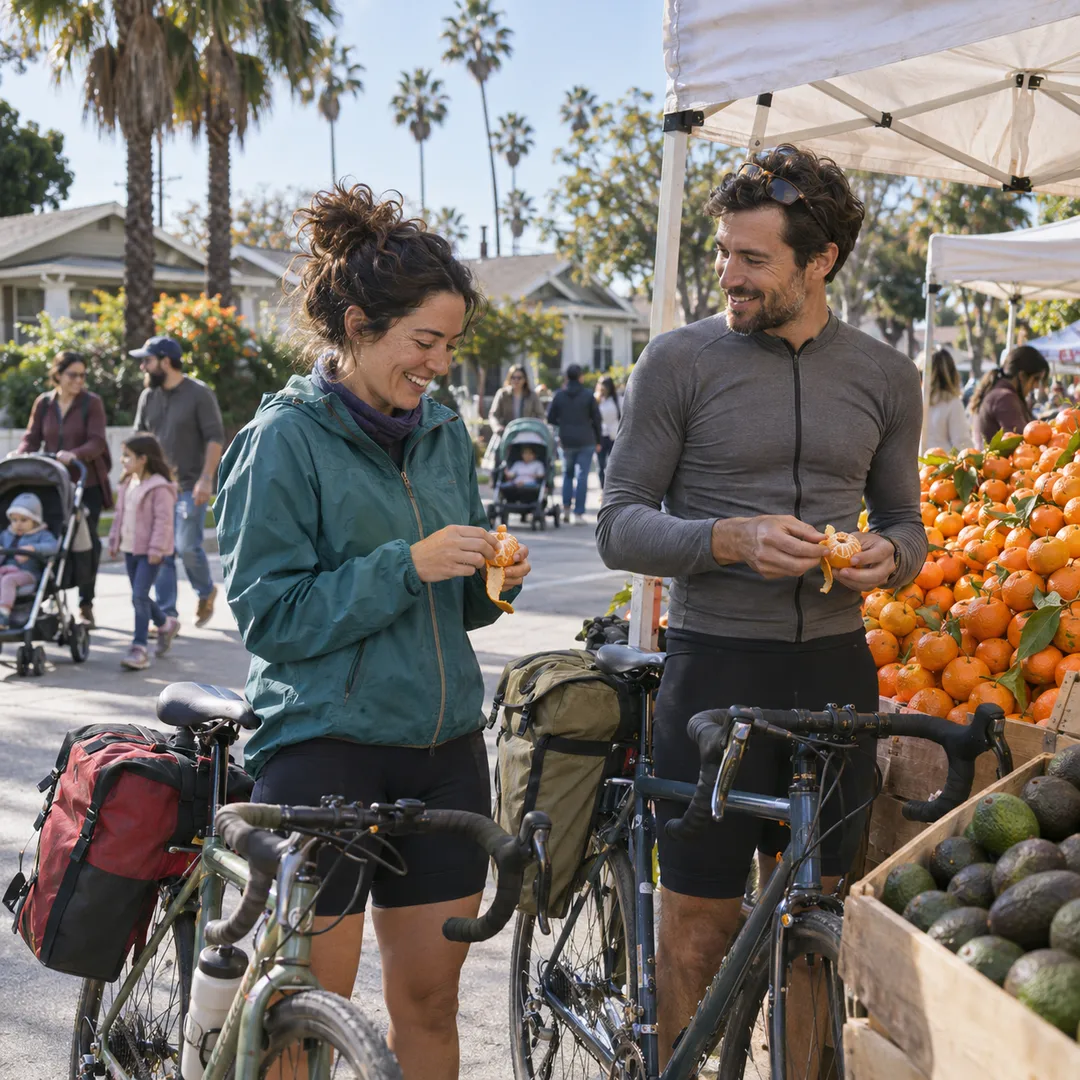
 Mar Vista Winter Farmers Market Picker for Weekend Cyclists
Weekend Plans
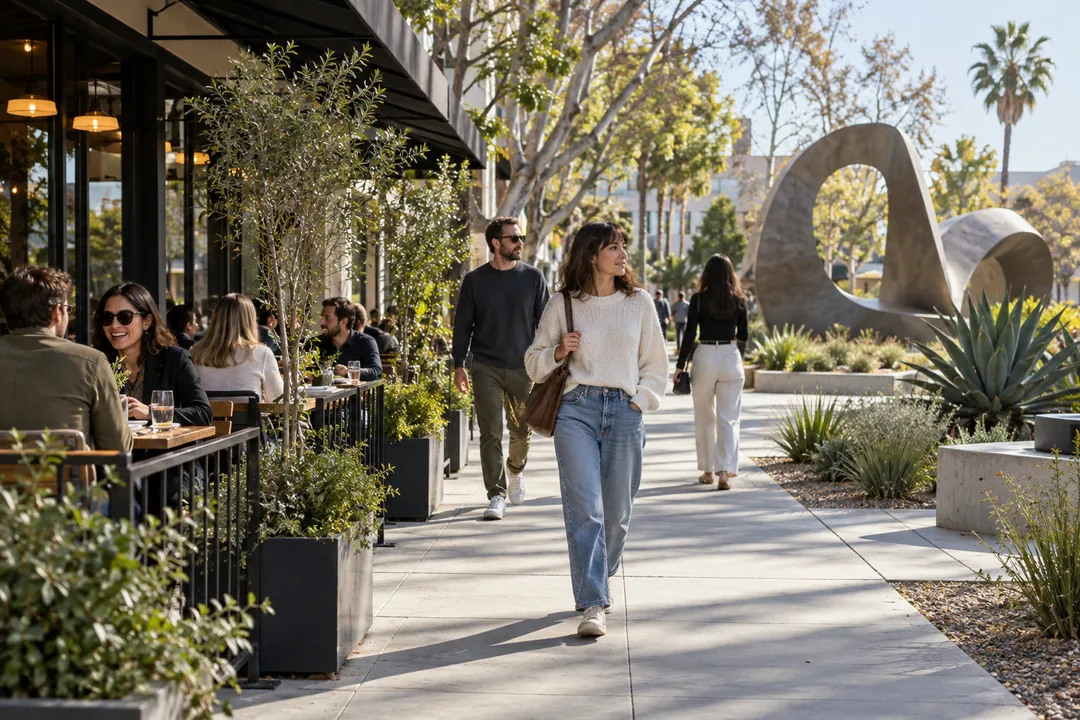
LA Weekend Plan Builder for Food and Culture on Foot
Pair food with a cultural stop in Los Angeles by looking at the walk between them, the order of the visit, and the point where adding more stops backfires.
A restaurant and a cultural stop can look close together on a map yet make an awkward Los Angeles afternoon. The meal runs long, the entrance sits on another side of the building, or the walk uses more energy than you wanted to spend. A weekend plan builder should help you examine the connection between the two experiences. Begin with one pair of stops and ask what makes them work together on foot. Adding destinations comes later, after the basic pairing earns its place.

Should the meal or the cultural stop come first?
Use the less flexible part of your afternoon to set the order. A ticketed event has a defined start, while a casual meal may offer more room in your own schedule. Alternatively, a particular dining booking may be the commitment around which everything else turns. Identify what you have actually arranged before comparing options. A suggested performance or restaurant remains a candidate until you have completed the relevant purchase or reservation yourself through its stated process.
Hunger and concentration matter as much as the order on paper. If you tend to rush through exhibitions when hungry, food first may produce a better cultural visit. If you like talking about what you have just seen, eating afterward gives the meal a purpose beyond fitting into the route. There is no universal sequence. Choose the one that supports your group, then allow a real transition rather than scheduling the second experience immediately after the first.
How much walking belongs in this outing?
Describe a walking preference in terms of comfort rather than a vague request for somewhere nearby. You might want only a brief transfer, or you might welcome a longer wander as part of the day. Mention whether you need seating, prefer level ground, or want to avoid crossing large roads. These are meaningful inputs. They help distinguish a pair of destinations that happen to be close from a connection you would personally enjoy traveling between.
Count all the walking, including the distance from your arrival point to the first entrance and from the final stop back to transport. An appealing middle segment can hide a demanding beginning or end. Think about the least energetic person in the group and the footwear people will actually wear. If the route depends on a particular passage, elevator, or accessible entrance, that detail needs a reliable basis. A short line on a map does not establish a usable pedestrian connection.
What should I ask Karpo to help me choose?
In the Karpo APP, frame the question around the pairing rather than requesting two unrelated lists. Karpo's public pages invite questions about dinner and weekend discoveries. Bring those interests together in one brief, with your preferred area and the kind of cultural experience you mean. Visual art, local history, live music, and a performance involve different rhythms. Naming the experience gives you a more useful starting point for comparing what a recommendation would require.
You could ask: “I want a Los Angeles afternoon with a meal and one cultural stop, connected by a walk I can enjoy. I prefer visual art and a relaxed lunch, with no second drive between them. Suggest a few pairings and explain which stop would make sense first.” Add your personal walking tolerance, dietary requirements, and arrival method. The prompt requests ideas. It does not imply that Karpo has reserved tables or established current admission availability for you.
How can I compare two attractive pairings?
Look for a reason the two stops belong in the same afternoon. One pairing might offer a quiet meal before a focused visit. Another might place a lively lunch after an experience that gives everyone something to discuss. A shared neighborhood can also be a good reason when the walk itself appeals to you. Avoid counting closeness as the only benefit. If neither the food nor the culture particularly interests you, an efficient connection will not rescue the outing.
Then consider the weakest detail of each pair. Perhaps the food sounds ideal but the cultural stop demands a longer visit than you can give it. Perhaps the exhibition appeals but the proposed meal does not fit someone's dietary needs. Compare these tradeoffs directly. Requesting a replacement for the weaker stop is more productive than asking for another complete list. You retain the part you like and make the remaining question small enough to answer.
What if the walk becomes the main event?
Sometimes the connection is what you most want: a chance to look around, talk, and notice a part of the city at ground level. In that case, give it room in your schedule. Shorten the indoor stops rather than treating the walk as a transfer that must happen as quickly as possible. Choose a natural moment to pause or turn back. A route does not have to cover every interesting block to feel like a worthwhile afternoon outside.
Resist adding a third destination simply because it appears along the way. Each extra stop brings another decision about entering, waiting, spending, and leaving. You can enjoy passing something without making it part of the itinerary. Keep discoveries as possibilities rather than obligations. If the afternoon is already satisfying, continue the walk or finish it. The useful measure is how the outing feels to the people doing it, not how many places appear in the final account.
Can this work with a spending limit?
Set the limit for the whole outing, then decide where you want to spend it. Someone primarily interested in culture may prefer a simple meal, while someone planning around food may want a shorter cultural visit. Include transport and any admission commitment in your own calculation. A proposed budget is a constraint you supply, not a claim about what a venue charges. Keep unknown costs visible until you have reliable published information for the option you choose.
Dietary fit should come before using a restaurant as a convenient link. A place can be perfectly located and still be unsuitable for the meal you need. When reviewing a candidate, distinguish an actual menu item from an assumption about the cuisine. The same principle applies to cultural access: being nearby does not establish public entry, walk-in admission, or a visit duration. Keep the comparison grounded in what is known, and remove a weak candidate if its essential details remain unresolved.
Practical notes for making the connection enjoyable
Choose an arrival and departure arrangement that supports the walk you want. A loop may suit someone returning to a parked car, while a route ending elsewhere may suit a different transport choice. Neither arrangement is automatically easier. Judge it against your circumstances, including how tired you expect to be afterward. Preserve enough room to finish the cultural stop without rushing through the meal or treating the final journey as an afterthought.
Before you leave, say the route out loud in a few ordinary steps: arrive, enjoy the first stop, walk, spend time at the second, and head home. Any step that needs a complicated explanation deserves another look. If a proposed pairing still feels strained, tell Karpo which connection fails and ask for another option in the same area. Select the combination that makes the time between food and culture part of the pleasure, with a clear ending and room to linger where you care most.
Ask Karpo for more information.
Keep reading
- Mar Vista Winter Farmers Market Picker for Weekend Cyclists
 Downtown LA Winter Farmers Market Picker for Car-Free Hosts
 Larchmont Winter Farmers Market Picker for Kimchi-Making Day