 Mar Vista Winter Farmers Market Picker for Weekend Cyclists
Weekend Plans

Los Angeles Weekend Plan Builder: Family Day, Easy Parking
Plan a Los Angeles family afternoon with limited parking moves, a sheltered anchor, a meal before the crash, and a dependable finish. Keep plans clear.
A Los Angeles family afternoon works better when parking breaks and attention spans are planned as carefully as the destination. Give the Karpo APP the children’s ages, the starting neighborhood, the maximum number of car moves, and the time you need to be home. Ask for one indoor or shaded anchor, a meal pause, and a shorter route if the day runs late. The planner can organize choices and questions; it cannot guarantee parking, admission, traffic, or a provider’s current schedule.
Put the child with the shortest fuse first
Describe the youngest child’s nap, snack, and bathroom rhythm before naming attractions. Add the older child’s interest so the plan has something for everyone. Ask for an opening stop that tolerates a late start and does not require a long wait. A strong first hour gives adults a chance to settle the car, bags, and expectations. The assistant can sequence those needs, while the family checks the actual entrance and provider rules.
Limit the car moves
State whether you want one base, two bases, or a drive only at the beginning and end. Include a maximum parking search and whether a garage is acceptable. Ask Karpo to compare the cost of moving the car with the cost of walking or using a short ride. These are choices, not live parking data. Check the real route and current access before leaving, especially when a child or stroller makes a second move difficult.
Choose an anchor with an exit
A family anchor should be interesting enough to motivate the trip and flexible enough to leave early. Tell the planner whether the children like animals, making, stories, or movement, and give a realistic stay length. Ask for a nearby sheltered alternative if the room is crowded or the weather changes. A clear exit reduces adult anxiety and keeps a short visit from feeling like a failure.
Schedule the food before the crash
Place the meal before everyone is desperate. Give Karpo the preferred lunch window, allergies, high-chair needs, and whether a quick order is better than a long sit-down. Ask for a fallback that can be reached without a new parking search. The plan can compare those arrangements, but adults must use the provider’s published hours, menu, and seating policy. A hungry child turns a small delay into the whole afternoon’s story.
Make parking breaks real breaks
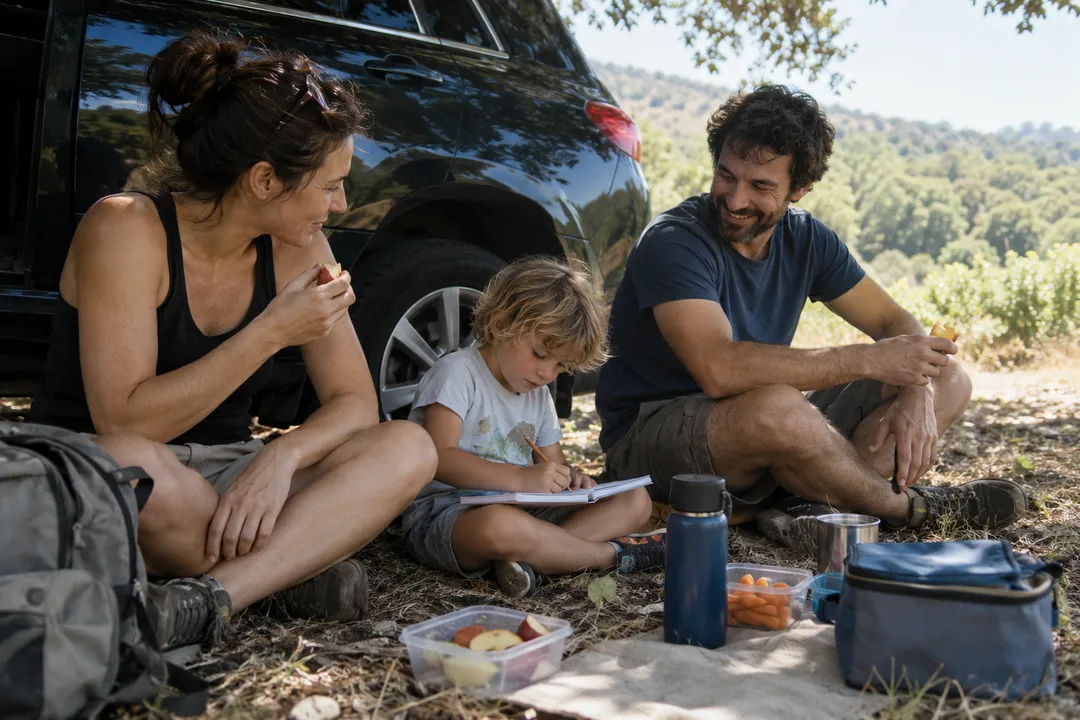
If the car must move, use the pause to reset rather than treating it as dead time. Ask for a place where children can stretch, adults can repack snacks, or everyone can use a restroom. Build that break into the sequence so no one is surprised by a ten-minute stop. The planner can suggest timing, but it cannot see a full lot or a blocked curb. Leave space for ordinary family logistics.
Write a family brief
Try: “Plan a Los Angeles Sunday from 1 to 5 for two adults and children ages five and nine. Use no more than two parking bases, include one hands-on indoor anchor, an early meal, and a short outdoor pause if weather allows. Give a compact version that ends thirty minutes early.” Add the starting district, stroller needs, and a spending cap. Ask for the reason behind each transfer.
Protect an adult pause
A family plan should include a small reset for grown-ups. Ask for a quiet bench, a café corner, or a two-person handoff where one adult can breathe while the other stays with the children. Make the handoff short and visible. Karpo can help place it around the anchor, but the adults need to agree who is responsible. Protecting that pause often prevents a whole itinerary from collapsing after one difficult moment.
Record the boring details
Before departure, read the published address and hours, entry rules, stroller access, parking instructions, and any timed admission with the actual providers. Put the recorded facts beside the suggested sequence. If a detail conflicts, ask for a replacement that serves the same family purpose in the same area. A planning tool can help you ask better questions; it cannot turn a suggestion into a reservation.
Practical Notes: make the finish easy
End near the car or a simple homeward route, with the final optional stop easy to drop. Share the anchor, meal, parking bases, and early-finish version in one note. When the children’s energy changes, revise the ending in the Karpo APP instead of forcing every block. The family will remember an afternoon that allowed for real breaks more fondly than one that covered an ambitious map.
Turn the car into a reset zone
A parking break can be a useful family ritual: water, a snack, a quick restroom visit, and a reminder of what happens next. Ask the planner to place that reset before the children reach their limit, not after. Keep one adult in charge of the next entrance while the other handles bags and coats. A predictable pause lowers the friction of moving through Los Angeles with young travellers.
Keep the final promise small
Choose one modest finish the children can understand—a favorite treat, a short story, or a ride home with music. Tell Karpo that this promise matters more than adding another attraction. If the earlier anchor runs long, protect the promise and remove the optional wander. A family plan feels successful when its ending is reliable, even if the middle had to change.
Put the children’s comfort items in the same note as the route. When the plan includes a coat, a snack, and a place to pause, adults can make a quick adjustment without searching through several messages. Those ordinary details are what make a family afternoon feel prepared rather than overprogrammed.
Make the parking count visible
Write “base one” and “base two” in the itinerary, even if the second is only a possibility. Place the meal, restroom, and family reset beside the relevant base. That small notation helps adults decide quickly whether another move is worth it. Ask Karpo to show what disappears when the second base is dropped. A family afternoon with a visible parking count feels manageable because every transfer has a job and no one is surprised by a new search for a space.
Ask Karpo for more information.
Keep reading
- Mar Vista Winter Farmers Market Picker for Weekend Cyclists
 Downtown LA Winter Farmers Market Picker for Car-Free Hosts
 Larchmont Winter Farmers Market Picker for Kimchi-Making Day