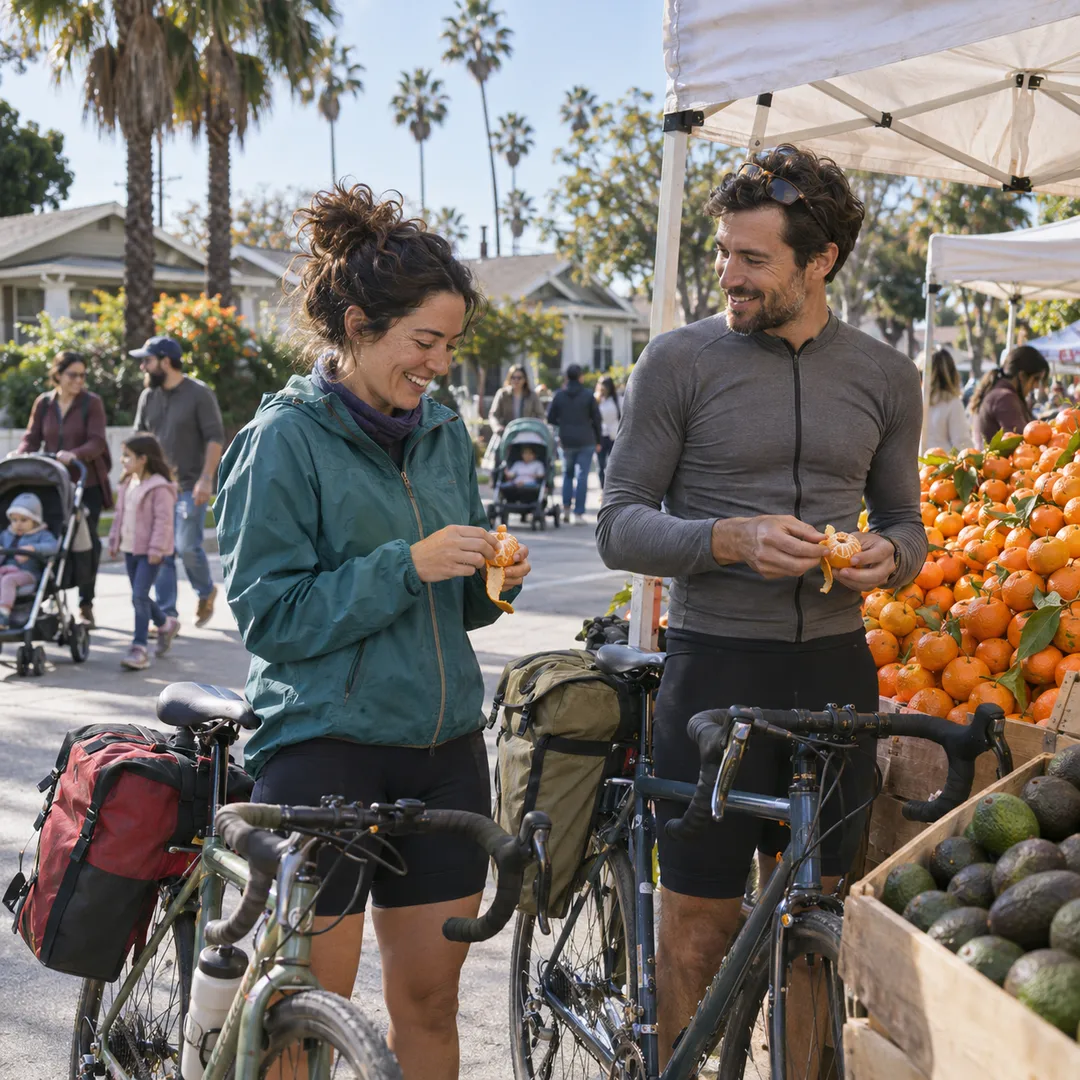
 Mar Vista Winter Farmers Market Picker for Weekend Cyclists
Weekend Plans
LA Weekend Activity Comparator: Bike or Hike Before Lunch
Compare an LA coastal bike ride with a canyon hike through heat exposure, parking effort and equipment needs, then shape a morning that fits your group.
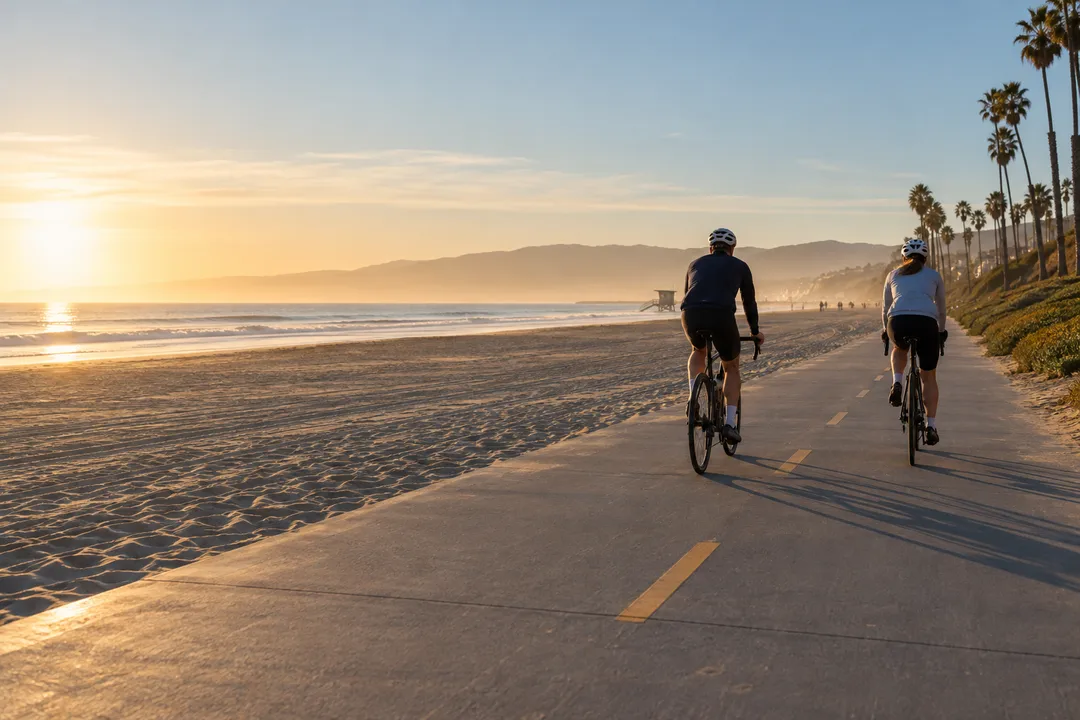
A morning bike ride by the ocean suits people who want steady movement and an adjustable turnaround. A canyon hike suits those who enjoy climbing toward a view and moving at walking pace. Neither wins simply because the photograph looks cooler or the route looks shorter. Use a weekend activity comparator to weigh the entire Los Angeles outing, including equipment, heat and the effort of reaching the start. Tell the Karpo APP where you are leaving from and when you need to be home, then describe what a comfortable morning means to you.
Start with the effort you actually want
Describe the cycling option as a specific kind of ride. An easy roll with frequent stops differs from a workout, even on the same path. Likewise, a short canyon outing can involve more effort than a longer level walk. Give your companions a chance to name their preferred intensity before comparing scenery. Someone who wants conversation and fresh air has a different goal from someone seeking a sustained climb. Ask Karpo to preserve that goal when it lays out the two choices.
The least comfortable participant sets a useful boundary. Bicycle confidence, balance, experience with shared paths and comfort descending on foot all matter. Do not average these into a group fitness score. Instead, identify the constraint that could stop participation altogether. A person who does not enjoy riding should not be assigned a bicycle merely because the route appears gentle. A person avoiding uneven ground needs more than a shorter hiking distance. Record the kind of surface and movement each person can comfortably manage.
Compare exposure across the whole morning
Use the forecast for your intended period as an input, and distinguish sun, temperature and wind. Being beside the ocean does not guarantee a comfortable ride. A canyon route can alternate between exposed stretches and sheltered sections without providing dependable shade. Ask for a comparison based on route information you supply, including elevation and likely time outdoors. Leave a missing shade description unresolved instead of turning a green patch on a map into a promise of tree cover.
Your own tolerance is more useful than the word mild. State whether you prefer to finish strenuous activity before the warmer part of the day, how much water you can carry and whether anyone needs frequent shaded rests. Cycling creates airflow while moving, but a pause or a slow section changes that experience. Hiking effort can increase as the path climbs. These are reasons to plan conservative duration and breaks, rather than reasons to assume one activity protects everyone from heat.

Count parking as a sequence of tasks
For each candidate, separate the drive, finding a legal space, unloading and reaching the usable route. A nearby parking area is not equivalent to a convenient start if your chosen access point is elsewhere. With bicycles, add the time to unload, adjust equipment and secure anything left in the vehicle. With hiking, consider the walk between the car and the trail entrance. Ask for these steps to appear separately so a short drive does not conceal a cumbersome arrival.
Parking ease also depends on the return. A ride that ends where it began can simplify loading, while a route that finishes far from the vehicle creates another transfer. A hike with an out-and-back shape needs enough energy for the return even after the view has delivered its reward. Ask Karpo to compare the complete loops in your plan. It can help reason through the alternatives you describe, but a recommendation is not a prediction of empty spaces or a live reading of a trailhead lot.
Give equipment a place in the budget
An owned bicycle and a rental bicycle create different decisions. Include the relevant rental terms, helmet needs, pickup arrangements and return deadline when those details are available from your chosen provider. Do not assume a rental includes every item your group needs. For walkers, account for suitable footwear, water and a manageable carrying setup. Gear that is already in the cupboard can make one option simpler, but borrowed equipment still takes time to collect and fit.
Build the spending comparison around your own ceiling. Keep transport, parking, equipment and food distinct, and mark any amount you have not obtained. A ride can become less attractive if collecting rentals consumes the cool part of the morning. A hike can become less attractive if reaching it requires a longer trip than you want. Ask which single cost or preparation step changes the choice most. This gives you a practical next decision instead of a precise-looking total assembled from guesses.
Make the turnaround easy to recognize
Choose an end condition before you leave. For a casual ride, that might be a time limit that includes stops and the return journey. For a hike, use the demands of the return and the route description to set a conservative turnaround. A summit is an appealing picture, but it should not become an obligation. State whether the purpose is exercise, a view or time together. A shorter outing can still meet that purpose without requiring the group to finish an ambitious route.
Consider how the plan behaves when someone slows down. A cycling group needs an agreed way to stay together and a route suited to its least confident rider. Hikers need room in the schedule for rests without rushing downhill afterward. Ask for one adjustment that keeps the outing pleasant rather than adding a second destination to compensate. The aim is a morning people can enjoy at their own pace, with enough margin to eat, load up and travel home comfortably.
Send a prompt that leads to a choice
Try this in the Karpo APP: “We are starting in Los Feliz and want to be home by early afternoon. Compare an oceanfront bike ride with a Griffith Park canyon hike. We have our own bicycles, prefer low heat exposure and dislike complicated parking. One friend wants gentle effort. Use the forecast and route notes I provide, show the main tradeoff and suggest a shorter version of each.” Replace those details with yours so the comparison reflects your group rather than a generic ranking.
Read the recommendation by asking what would reverse it. If equipment pickup is the deciding factor, settle that task before committing. If heat tolerance is decisive, use your stated limit to choose the shorter or less exposed option. Once the group agrees, keep the route, meeting point and turnaround together in one concise plan. Leave parking availability and day-of conditions as external facts to obtain from the appropriate sources. The useful result is a clear choice with honest assumptions and a manageable route home.
Ask Karpo for more information.
Keep reading
- Mar Vista Winter Farmers Market Picker for Weekend Cyclists
 Downtown LA Winter Farmers Market Picker for Car-Free Hosts
 Larchmont Winter Farmers Market Picker for Kimchi-Making Day