 El Sereno Urban Staircase Walk Planner for a Study Break
Free Things to Do
Street Art Near Me in the Arts District
A free Downtown LA Arts District mural walk with warehouse-scale walls, route tips, respectful viewing rules, and nearby food and gallery stops.
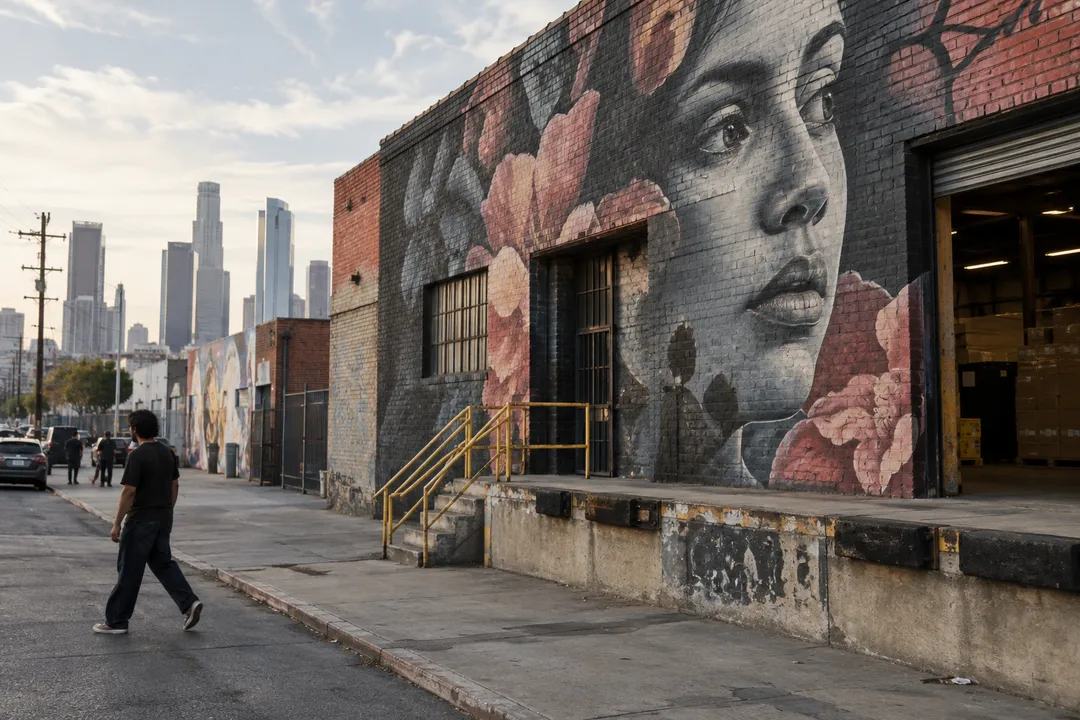
When Downtown Los Angeles returns street art near me results, the Arts District is usually the neighborhood that deserves extra time. Its murals are inseparable from warehouses, studios, loading bays, restaurants, galleries, and old industrial streets. This is not a single attraction; it is a walkable field of walls where scale is part of the experience. Because warehouse height gives many pieces a scale that photos understate, Arts District Murals gives the opening choice a local anchor, and Los Angeles feels easier to read from there.

The district's identity grew from manufacturing and rail-adjacent blocks into a mix of creative offices, galleries, restaurants, breweries, and residential conversions. Large blank walls became one of the area's most visible forms of expression. Some murals feel polished and commissioned, while others keep the rougher rhythm of old brick, roll-up doors, and alley surfaces. Around Arts District Murals, the detail to notice is that loading bays remind visitors that the neighborhood still works during the walk; it keeps the stop from becoming a generic wall on a map.
Use Alameda, Traction, Mateo, and nearby side streets as a loose grid, then walk. Hopping in and out of cars misses how the walls relate to each other. A mural on a warehouse corner may lead to a painted gate, then to an alley composition, then to a courtyard edge you would never have noticed from a ride. Use this route cue near Arts District Murals: Traction and Mateo make a useful grid without turning the route rigid. That Arts District Murals cue helps visitors decide when to pause and when to move.
The strongest pieces use building anatomy. Pipes, seams, loading docks, windows, vents, and brick scars become part of the image. On some walls, height creates drama; on others, the surprise is how a painting wraps around an industrial detail. The area teaches you to see architecture and mural work together instead of separating them. At Arts District Murals, notice that brick seams and roll-up doors often become part of the composition. That Arts District Murals texture matters when the block is busy, shaded, or changing by the minute.
Respect the working neighborhood beneath the creative polish. Trucks still move through, loading zones matter, and many photogenic walls sit on active private buildings. Do not step into driveways for a better angle, and avoid photographing workers without permission. The art is public-facing, but the labor around it is not there for display. For timing at Arts District Murals, remember that Hauser & Wirth can reset the eye between outdoor walls. Around Arts District Murals, light, traffic, and comfort can change the pace of looking.
Early afternoon can make colors pop, especially on walls with strong graphic contrast. Weekday mornings are calmer if you want to hear traffic, spot trucks, and stay clear of moving vehicles. Late afternoon works well for food plans, but shadows from warehouses can make some murals harder to read depending on the block. Etiquette feels clearer at Arts District Murals when you remember that Little Tokyo adds a food and transit anchor close to the mural blocks. The art at Arts District Murals still sits inside a working Los Angeles neighborhood.
Hauser & Wirth is a useful cultural anchor, even if your main goal is outdoor art. Wurstkuche, coffee counters, Little Tokyo, and the LA River edge can all become pauses in a longer route. Build in breaks because the area is more spread out than first-time visitors expect, and sun on pavement can drain energy. Planning stays flexible at Arts District Murals when parked trucks may hide a wall and reveal a better side street is treated as useful context, not a promise that every visit will match.
The district changes faster than a printed guide can keep up with. A wall you saw online may be painted over, blocked by construction, or hidden by a parked truck. Treat that uncertainty as part of the walk. The best discoveries often come from turning a corner rather than checking off famous images. A smaller loop around Arts District Murals works well because weekday mornings make the industrial traffic easier to read and respect can pull attention away from the obvious wall.
Transit and parking both require planning. A single legal parking spot can make the walk calmer than repeated short drives, but public transit plus walking may be easier on event-heavy days. Pay attention to signs, meters, and private lots. The free art can become expensive if parking is careless. Nearby, warehouse height gives many pieces a scale that photos understate can reset the day, giving Arts District Murals a second rhythm after the first sweep of color.
Bring a camera, but also bring patience. Delivery vehicles, diners, cyclists, and other visitors constantly pass through the frame. Waiting thirty seconds can turn a cluttered image into a clean one. At the same time, a little street activity often makes the mural feel more honest than a perfectly empty composition. Let the frame include the fact that loading bays remind visitors that the neighborhood still works during the walk at Arts District Murals; real street life often explains scale better than an empty shot.
The Arts District is not only about murals. Gallery windows, old signage, restaurant interiors, rail infrastructure, and converted warehouses all contribute to the visual field. If you rush from wall to wall, you miss why artists and developers both found the area compelling. The neighborhood's layered surfaces explain the art as much as the images do. Look for how Traction and Mateo make a useful grid without turning the route rigid changes the surface, because Arts District Murals carries weather, repair, and neighborhood use together.
For a shorter visit, pick a few blocks near Traction and Mateo, then wander outward only if your energy holds. For a longer afternoon, connect the murals to Little Tokyo or a river walk. The district rewards flexible routing because construction, private events, and changing business hours can redirect you without warning. As of October 2026, brick seams and roll-up doors often become part of the composition is the sort of current detail worth checking before crossing Los Angeles.
Practical Notes: exterior murals are free to view, while galleries, restaurants, and special events follow their own schedules. Wear comfortable shoes, stay alert at driveways, and keep water handy. If a wall is behind a fence, in a courtyard, or on a closed business, respect the boundary and move on. Hauser & Wirth can reset the eye between outdoor walls keeps this street art near me result specific to Arts District Murals, not interchangeable with another mural district.
The mood here is more urban and architectural than beachy or boutique. You may see polished destination murals, experimental pieces, faded remnants, and new work competing on the same block. That mix is exactly the point. Downtown LA's mural landscape is not tidy, and the messiness gives it its charge. Practical planning improves when Little Tokyo adds a food and transit anchor close to the mural blocks is handled before arrival, leaving more attention for the free outdoor art.
Leave time for one unplanned turn before you finish. The Arts District's best wall may not be the one you came to see; it may be the side elevation glowing between parked trucks or the painted door half-hidden beside a cafe. Walk attentively, keep out of active work zones, and the neighborhood will do the rest. For the last pass, parked trucks may hide a wall and reveal a better side street gives Arts District Murals a memory beyond the search phrase and the first photograph.
Ask Karpo for more information.
Keep reading
- El Sereno Urban Staircase Walk Planner for a Study Break
 Santa Monica Urban Staircase Walk Planner Before Meetings
 Mount Washington Urban Staircase Walk Planner: Hike Prep