 Mar Vista Winter Farmers Market Picker for Weekend Cyclists
Weekend Plans
Tuft Land Rug Tufting Studio: Saturday Size Guide
Tuft Land at 18958 Labin Ct makes Rowland Heights a hands-on rug tufting studio stop. Learn the frame, yarn, and finishing choices before booking.
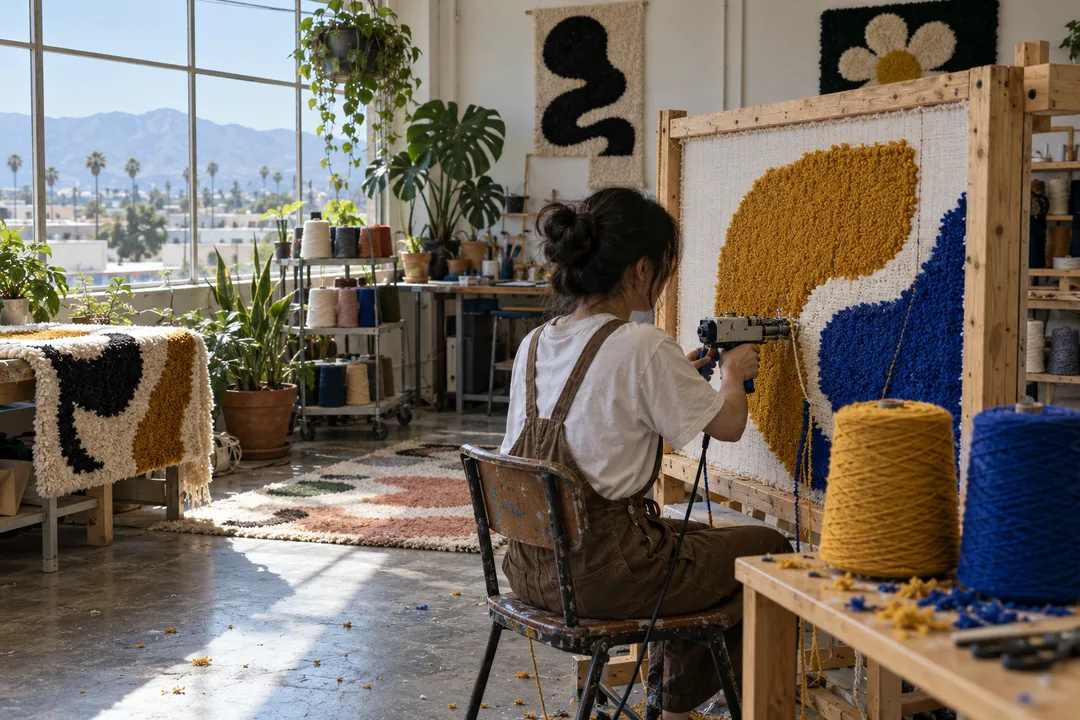
Tuft Land puts the rug tufting studio experience in a useful middle ground: it is more focused than a quick craft counter, but less intimidating than a professional textile classroom. At 18958 Labin Ct in Rowland Heights, you arrive with an image or a loose idea, translate it into a frame-sized design, and spend the session learning how yarn becomes a surface rather than simply buying a finished object. That hands-on sequence is the reason to make the drive.
Why Tuft Land Works
The first surprise is how much of the finished rug depends on setup. The frame has to hold the backing cloth firmly, the outline needs to be readable from a short distance, and the yarn has to feed without tangling. A good beginner does not rush the first color. Spend a few minutes looking at the frame, testing the direction of the line, and asking where the studio wants you to stand. Those small decisions make the later fills cleaner.
What The Frame Changes
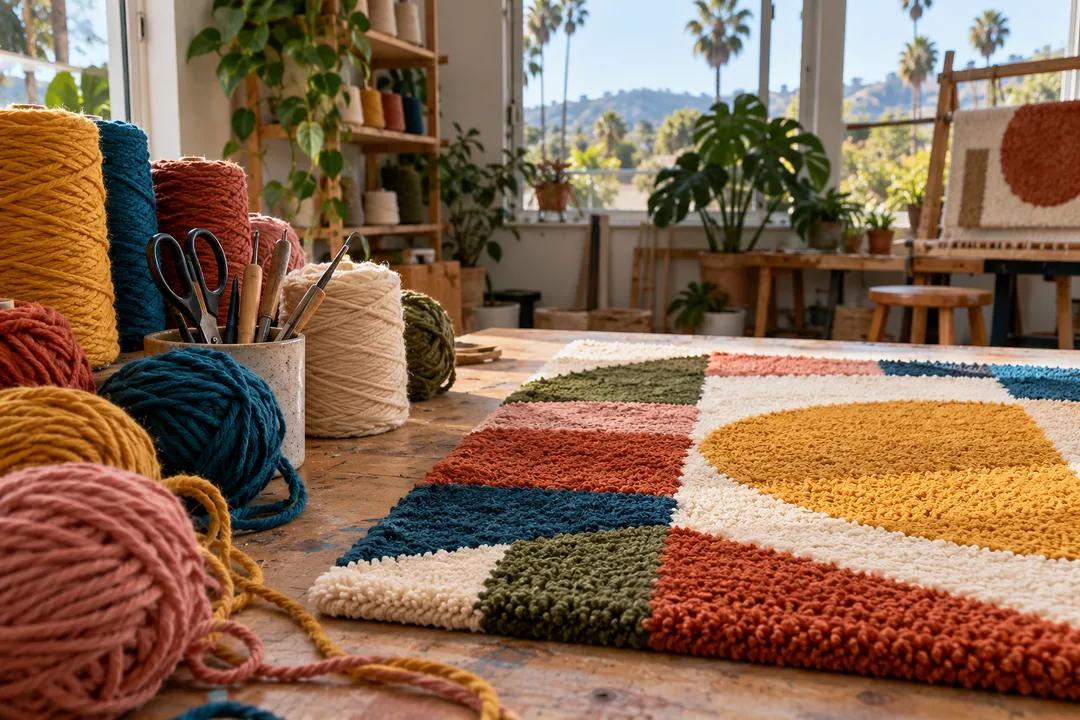
Bring a design with a strong silhouette rather than a page crowded with tiny details. A bold checker, a simple flower, a block letter, or a two-color animal shape gives you room to feel the tufting gun move. Fine facial features and narrow lettering are harder to keep legible at small scale. Tuft Land is the better choice when you want a rug that looks intentionally graphic from across a room, not a sketch that only works close up.
Choosing A Design
The practical lesson is to separate drawing time from tufting time. Mark the major color fields first, then work one region until the backing is evenly filled. Jumping between five colors creates loose ends and makes it harder to see whether the pile is dense. When a line feels wobbly, do not keep forcing it; lift the gun, reset your angle, and restart a few stitches back. The correction is usually faster than trying to disguise a crooked run.
The Studio Rhythm
There is also a quiet studio rule worth remembering: the frame is shared equipment, so keep yarn, scissors, and loose backing cloth inside your own work zone. Ask before moving a neighboring cone or leaning across another person’s canvas. That courtesy matters when a group is working on different designs at once. The experience is social, but each rug still needs a clear lane and a little concentration.
What To Bring
Your finished piece is a small record of the day because the texture preserves every decision: the denser corners, the slightly softer edge, and the moment you learned to pull away instead of overworking a patch. Expect the making itself to be the main event. If you are seeking a perfectly uniform commercial rug, order one. If you want an object that carries the memory of a Saturday in Rowland Heights, the irregularities are part of the value.
A Rowland Heights Walk
For a neighborhood add-on, keep the outing local rather than trying to stack the workshop with a rushed cross-town itinerary. Start with a meal in Rowland Heights, leave enough time for the session, and make the post-workshop stop something low-pressure: tea, a dessert run, or a slow look through nearby shopping plazas. The best pairing is one that lets you talk about the design while the colors are still fresh in your mind.
Practical Notes
A second useful strategy is to treat the official site as the planning desk. Save the reference image, note the address, and build in travel time before you choose a slot. Wear clothes that can tolerate stray fibers, keep long accessories out of the way, and arrive ready to listen to the safety demonstration. You do not need an art-school background. You do need patience for the first few minutes while your hands learn the tool.
Who belongs here? Couples who want a souvenir they actually made, friends who prefer a project to a passive hangout, and solo visitors who like repetitive work with a visible finish line. Parents with older children may also find the process appealing when everyone can commit to a design. The strongest fit is anyone willing to accept that a first rug is a learning piece, not a portfolio commission.
One honest skip: do not overpack your design with gradients. They sound ambitious, but a first session is more satisfying when the color blocks are decisive and the edges are easy to read. Use texture, shape, and contrast to create interest instead. If your reference image depends on subtle shading, simplify it before you arrive; the result will feel more finished, and you will spend less time unpicking mistakes.
The route home is part of the payoff. Photograph the surface in side light, note which color you would change next time, and let the rug settle before judging every edge. A handmade piece looks different when it is on the floor than when it is stretched on the frame. That change is not a flaw; it is the final lesson in why tufting is both drawing and construction.
The most useful question to ask yourself before the session is where the rug will live. A bedside piece can be soft and irregular; a wall-hung piece needs a stronger silhouette; a playful entryway design should survive being read quickly. That answer guides the scale, outline, and palette more effectively than chasing a generic idea of what a rug should be. It also gives you a satisfying reason to edit the reference before you arrive.
Leave a little room for the final conversation, too. Compare the front and back of the rug, ask which parts need more trimming, and make a note of the tool movement that felt most natural. That reflection turns a pleasant craft outing into useful practice. You will remember the next project more clearly if you can name the exact moment the design stopped feeling like a sketch and started feeling like a surface.
Practical Notes: Tuft Land is listed at 18958 Labin Ct, Rowland Heights, CA 91748. The official website is tuftland.com, which is the place to use for the studio’s booking details and project information. Put the complete address into your map before leaving, and keep the design reference accessible offline. The core promise is simple: you make the rug yourself, one controlled line of yarn at a time.
Ask Karpo for more information.
Keep reading
- Mar Vista Winter Farmers Market Picker for Weekend Cyclists
 Downtown LA Winter Farmers Market Picker for Car-Free Hosts
 Larchmont Winter Farmers Market Picker for Kimchi-Making Day