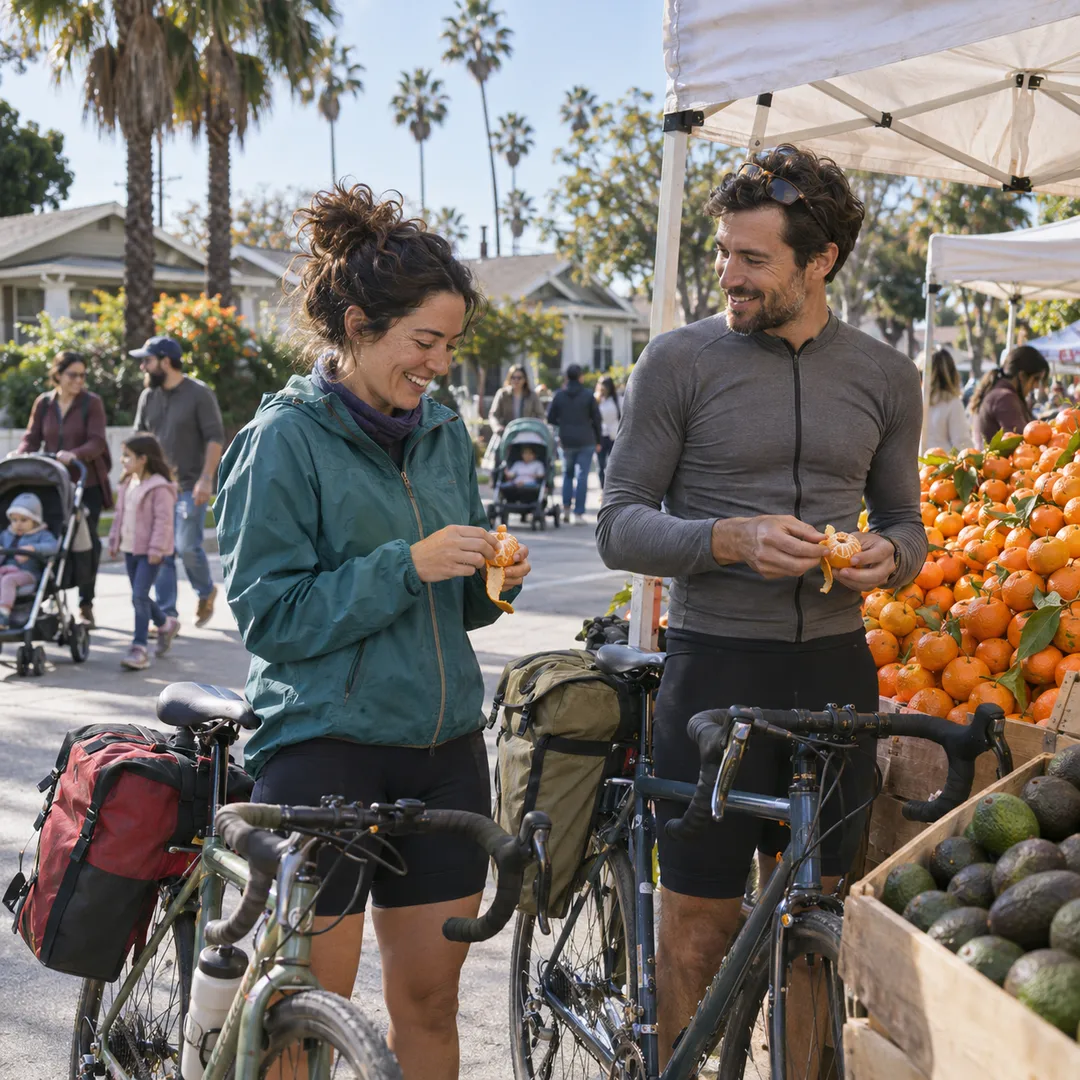
 Mar Vista Winter Farmers Market Picker for Weekend Cyclists
Weekend Plans

Arts District Riverside Linear Park: Rails And River
Shape a Downtown Arts District riverside linear park walk around rails, river edges, visual pauses, and a compact return for changing energy levels.
Rails and river set the Arts District tone: ask for hard-surface texture, visual pauses, and a compact loop that keeps industrial edges legible. Downtown Arts District is the right fit for a riverside linear park plan when industrial texture matters as much as green space. Tell Karpo APP whether you want a short decompression walk after galleries, a photo route that follows rails and concrete, or a river-edge loop that ends with food nearby. The planner can keep the path central while treating murals, bridges, and planted verges as optional visual chapters. Start with the mood and time limit, then let the route decide how much city to include. Industrial edges are part of the appeal, not an obstacle to hide. The strongest sequence often starts with a hard industrial frame, moves through one planted edge, and ends at a quieter river-facing pause where conversation can restart.

Start Where Rails Meet Water
Midday clarity reveals walls, bridges, and channel geometry, while later light softens those lines. Let the preferred visual mood guide the timing. The Arts District route works through contrast: hard edges beside small planted margins, warehouse scale beside a narrow pedestrian line, and bright daylight giving way to rail shadows. Ask for an opening that establishes the river relationship before adding street detail. One visible turn is enough for orientation. The best plan does not pretend the neighborhood is a continuous park. It acknowledges the transitions and uses them to create a deliberate walking sequence. Rail lines and bridge shadows make strong orientation markers. Cyclists and walkers can share the corridor more comfortably when the route names a clear stopping side before the first visual waypoint.
Follow Texture Through The Channel
A strong route brief describes crossings, pavement, and the exact kind of river-facing pause that makes the walk feel intentional rather than incidental. Use waypoints for observation rather than destinations. A bridge shadow, an open view toward the channel, or a quiet edge near vegetation can become a short pause between walking segments. Karpo APP should show those pauses in order and leave the group permission to skip one. That makes the route useful for visitors who want photographs, people who need a breather, and walkers who would rather keep moving through the industrial scenery. A visual pause can be brief and still change how the next block feels. An extra bridge or mural is useful only if it changes the view. Repeating similar blocks adds distance without adding a new chapter.
Use Pauses As Visual Anchors
For the neighborhood extension, choose one modest street loop after the water and leave room for a quiet landing before the next activity. Plan a core loop and a rail-side extension. The core should be easy to finish if traffic, heat, or fatigue changes the mood. The extension can add another texture—mural wall, underpass, or planted setback—without forcing the entire group to commit. Ask for a reunion point when the route branches. In a dense district, that small decision matters more than a grand mileage goal because it keeps the outing coherent. Branching works when the reunion point is named in advance. Keep the finish near the next cultural stop or meal so the walk feels like part of the Arts District plan instead of a separate errand.
Give The Loop A Clear Scale
Photographers can request changing angles, parents can ask for short stages, and friends can prioritize two places to stop and talk. Midday brings the clearest reading of walls, bridges, and hard surfaces. Late afternoon adds long shadows and softer color. Choose the light that matches the purpose of your walk. I would skip a maximal loop during the hottest part of the day and keep the river segment compact. The Arts District is rewarding in layers, so a shorter route that leaves time for one gallery or meal can feel fuller than a long march through exposed pavement. Light on concrete and steel changes quickly in this district.
Let The Light Set The Pace
Carry water, wear shoes suited to pavement, and leave enough battery for the return. Practical details are part of the experience here. Name the constraints that make the outing comfortable: avoid unnecessary crossings, favor a level line, and keep one sheltered alternative available. If rain is possible, ask for a route with a quick indoor reset nearby, then return to the water only if the group wants it. The planner should present those choices clearly, without claiming live crowd or traffic data. You are deciding how to move through the district, not outsourcing every judgment. A weather branch protects the walk from becoming an all-or-nothing plan.
Name Crossings Before You Go
The halfway decision should be visible: continue along the river, take the compact return, or pause where the group can reset together. For the neighborhood extension, choose one modest street loop after the river rather than stacking destinations. A mural-facing pause, a coffee stop, or a shaded block can soften the hardscape before the return. Ask for an optional finish that remains close to the core line. The Arts District is strongest when the river walk and the surrounding creative fabric speak to each other, not when the route becomes a scavenger hunt. The neighborhood add-on should soften the route, not compete with it.
Choose One Street Extension
Begin the prompt with the story you want the landscape to tell, then add distance and finish so the route serves more than a pin on a map. Write different prompts for different walkers. A photographer can ask for changing angles on bridges and rail structures. A first-time visitor can request obvious orientation points. A couple can ask for two quieter pauses and a short finish near dinner. A group with a deadline needs the compact branch. These choices give Karpo APP the information it needs to build a useful sequence instead of returning a generic list of nearby attractions. Different prompts produce genuinely different experiences along the same corridor.
Ask For The Right Camera Rhythm
Industrial surfaces become more expressive when movement alternates with looking, allowing rails, bridges, and water to change the scene in sequence. Practical notes: carry water, use shoes suited to pavement, and leave battery for the return. Tell the app if you need transit at one end or a simple pickup point at the other. Save the compact route and the extension before you start. That keeps the plan ready when the district feels busier or hotter than expected. Good preparation protects attention for the textures, sounds, and sudden glimpses of the river. Good shoes and battery are small but decisive urban-walk details.
Keep Shoes And Battery Ready
Different walking speeds work when the route offers a named reunion point and a shorter branch that still keeps the river as the main subject. Use a little time at the start to agree on what counts as the center of the walk: a river view, a rail shadow, or one planted pause. Keep the finished plan honest about the corridor’s mixed character. Rails, warehouses, concrete, planted margins, and river glimpses belong in the same sequence, and the route works when those changes are intentional. Save a compact loop for a gallery day, a longer branch for cooler weather, and a clear finish near the next meal or exhibition. That balance makes the Arts District walk repeatable without making it predictable. Each return can emphasize a different texture while the river remains the steady thread that keeps the outing legible.
Ask Karpo for more information.
Keep reading
- Mar Vista Winter Farmers Market Picker for Weekend Cyclists
 Downtown LA Winter Farmers Market Picker for Car-Free Hosts
 Larchmont Winter Farmers Market Picker for Kimchi-Making Day