 Mar Vista Winter Farmers Market Picker for Weekend Cyclists
Weekend Plans
LA Rainy Day Museum Planner: 3 Pasadena Cultural Stops
Pasadena's Norton Simon Museum, USC Pacific Asia Museum and the Gamble House make a calm rainy LA day of old masters, Asian art and Craftsman wood.
Pasadena feels like a different city when it rains. The San Gabriel Mountains disappear behind cloud, the arcades of Old Pasadena fill with people ducking out of the weather, and the museums along Colorado Boulevard and Los Robles Avenue suddenly become the obvious plan. This route links three very different places, a world-class painting collection, a museum of Asian art in a former treasure house, and one of the great Arts and Crafts houses in America, and keeps the walks short enough that a decent umbrella is all you need.
Why Pasadena Suits a Wet Day
The appeal is scale. None of these three stops is a sprawling campus that leaves you tramping across open plazas. Each one rewards an hour or two of close looking, the town between them is full of cafés and bookshops, and the Metro A Line runs straight into Old Pasadena from downtown Los Angeles, so nobody has to fight the freeway in the rain. Pasadena has also kept its pre-war character, which means the buildings themselves are part of what you came to see.
Stop One: Norton Simon Museum
The Norton Simon Museum stands at the western end of Colorado Boulevard, where the Rose Parade turns the corner every New Year's Day. The building opened in 1969 as the Pasadena Art Museum, and the industrialist Norton Simon took it over in the mid-1970s to show his collection. Frank Gehry later reworked the interior galleries, which are low, quiet and lit with care.
The collection is far bigger than the building suggests. Upstairs you move from Raphael's small, glowing Madonna with the Book to Rembrandt portraits, Zurbarán's still life of lemons, oranges and a rose, and a long run of Impressionist and Post-Impressionist painting, including Van Gogh and a whole room of Degas, from pastels of dancers to the bronze figures cast from his wax models. The lower floor holds sculpture from South and Southeast Asia, some of the finest outside the region, in dim rooms that feel almost like a temple on a grey day.
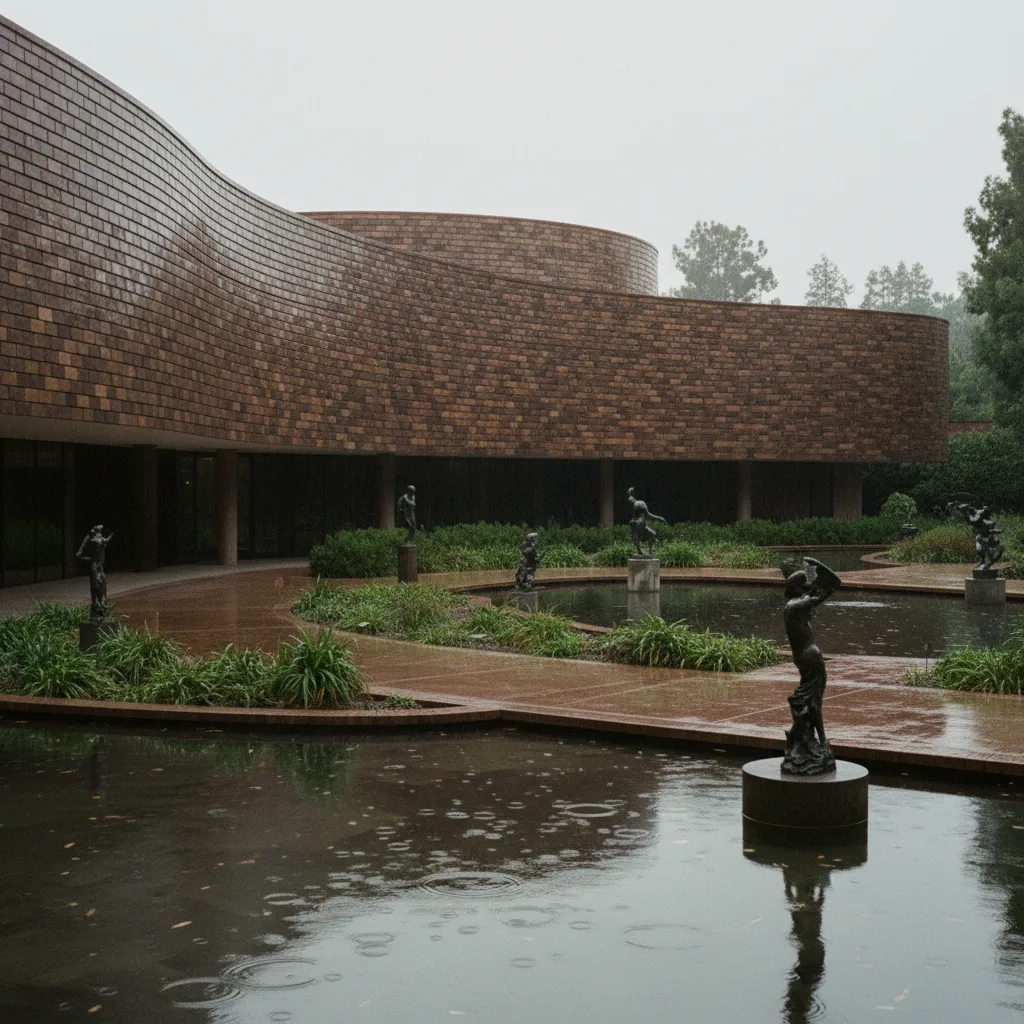
The sculpture garden, planted around a pond inspired by Monet's garden at Giverny, is lovely in the rain if you stay under the covered walkway along the building, where you can watch the drops hit the water lilies without getting soaked.
Stop Two: USC Pacific Asia Museum
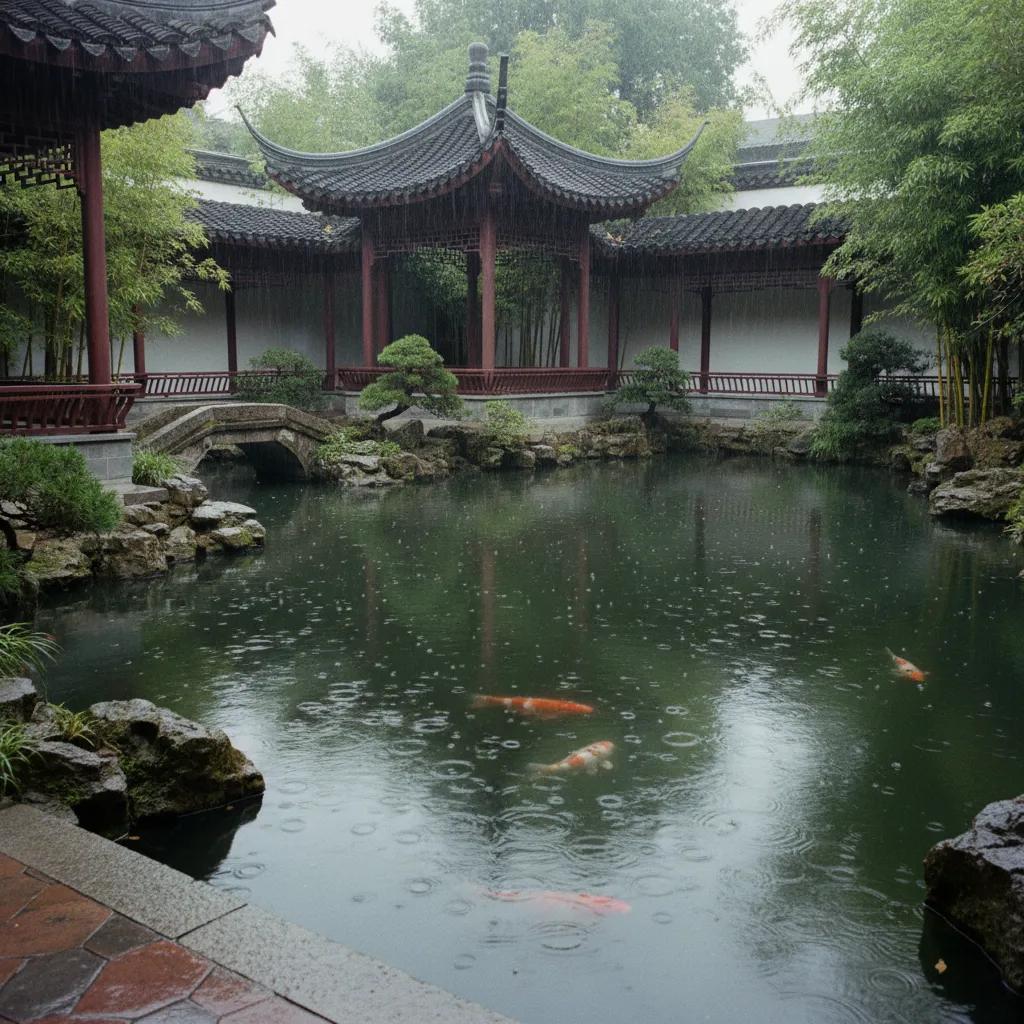
From Old Pasadena it is a short walk east to Los Robles Avenue and the USC Pacific Asia Museum. The building was completed in the 1920s for the collector and dealer Grace Nicholson, who modeled it on Chinese imperial palace architecture and called it her Treasure House of Oriental Art. It has green-tiled roofs, upturned eaves and a central courtyard garden with a pond and rock work, and it was taken over by the University of Southern California in 2013.
Inside, the galleries show art from across Asia and the Pacific, with ceramics, textiles, paintings and contemporary work rotating through the rooms around the courtyard. The courtyard itself is the reason to come in the rain. Standing under the eaves while water runs off the tiled roofs into the pond is one of the most peaceful ten minutes you can spend in the area.
Stop Three: The Gamble House
The Gamble House was built in 1908 by the architects Charles and Henry Greene for David and Mary Gamble, of the Procter and Gamble family. It is the best-known example of the Greenes' Arts and Crafts work, with deep eaves, hand-rubbed teak and mahogany, leaded art glass and furniture designed for every room. The family gave it to the City of Pasadena and the University of Southern California in 1966, and it is a National Historic Landmark.
Visits are by docent-led tour, and the tours stay indoors, which makes the house a perfect rainy-day choice. The guides are good at pointing out details you would miss, such as the way joinery is pegged rather than nailed and how the sleeping porches were meant to catch evening breezes. Photography is not permitted inside, so the experience feels unhurried and focused. The house sits in a quiet neighborhood about a mile north of the Norton Simon, so most people drive or take a short ride rather than walk in heavy rain.
A Sensible Order
The Norton Simon makes a strong opening because it needs the most attention and is busiest in the afternoon. Lunch in Old Pasadena follows naturally, with the arcades and side streets around Colorado Boulevard full of places to sit. The USC Pacific Asia Museum is a calm early-afternoon stop, and a Gamble House tour finishes the day, since tours run on a set schedule and are easier to fit around than gallery hours.
If you only want two stops, choose by mood. Painting lovers should pair the Norton Simon with the Gamble House. Anyone more drawn to design and gardens will enjoy the Pacific Asia Museum's courtyard followed by the Gamble House's woodwork.
Getting There
The Metro A Line stops at Memorial Park station in Old Pasadena, a few blocks from both the Pacific Asia Museum and the shopping streets along Colorado Boulevard. The Norton Simon is a longer walk west along Colorado, past the shops and cafés, and buses run the boulevard if the rain is heavy. Parking at the Norton Simon is in the museum's own lot, and street parking near the Gamble House is the usual choice for tour visitors.
Practical Notes
Gamble House tours are small and sell out on wet weekends, so book a tour slot as soon as the forecast turns. The Norton Simon is closed on some weekdays, so plan the day around its opening days. Bags and umbrellas are handled at the front desk in most of these places, and the old floors in the house tour mean comfortable flat shoes are a good idea.
Fitting It Together in Karpo
Tell Karpo APP how long you have, whether paintings, Asian art or architecture is the priority and where you are coming from, and Karpo suggests an order for these three stops, compares a two-stop afternoon with the full day and recommends lunch in Old Pasadena. It works from your inputs and published information. Tour slots, opening days and train times come from the museums and Metro.
Ask Karpo for more information.
Keep reading
- Mar Vista Winter Farmers Market Picker for Weekend Cyclists
 Downtown LA Winter Farmers Market Picker for Car-Free Hosts
 Larchmont Winter Farmers Market Picker for Kimchi-Making Day