 Mar Vista Winter Farmers Market Picker for Weekend Cyclists
Weekend Plans
LA Rainy Day Museum Planner: 3 Miracle Mile Gallery Hubs
The Academy Museum, La Brea Tar Pits and LACMA sit side by side on Wilshire's Miracle Mile, so one rainy LA day covers film, fossils and art on foot.
Los Angeles does not get many rainy days, which is exactly why a wet one catches people out. Beaches and hiking trails are off, traffic slows to a crawl, and nobody wants to sit on a freeway for an hour to reach one indoor attraction. The Miracle Mile solves that. Between Fairfax Avenue and Curson Avenue, the Academy Museum of Motion Pictures, the Los Angeles County Museum of Art and La Brea Tar Pits share a single stretch of Wilshire Boulevard, with the Petersen Automotive Museum on the opposite corner. Park once, or ride a Wilshire bus, and the whole day happens within a few minutes' walk.
How the Block Fits Together
Think of the strip as three rooms in one house. The Academy Museum holds the western end at Fairfax. LACMA's buildings fill the middle of the park behind it, and the Tar Pits museum sits at the eastern edge of Hancock Park, beside the lake where the asphalt still bubbles to the surface. Walking from one end to the other takes about as long as finishing a coffee, though the park paths are open to the sky, so an umbrella earns its place in the bag.
The order matters less than the pacing. Film lovers tend to start at the Academy Museum and finish with LACMA. Families with children who have been promised dinosaurs should do the Tar Pits first, while energy is high, and save the art for after lunch. If you only have half a day, choose two neighbors and skip the third.
Film History Inside a Streamline Moderne Landmark
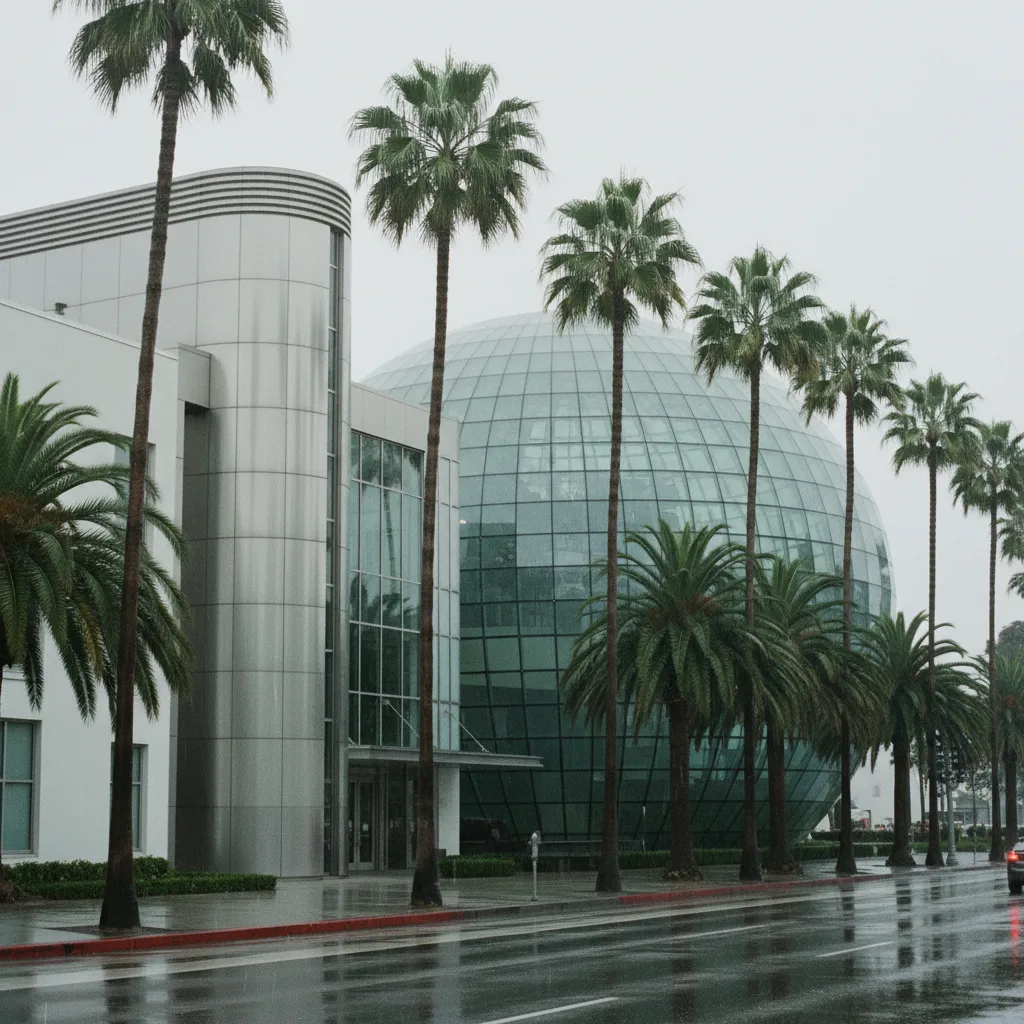
The Academy Museum opened in 2021 in two connected buildings. The main one is the old May Company department store from 1939, the building with the gold mosaic cylinder on the corner that Angelenos used to call the perfume bottle. Renzo Piano's team restored it as the Saban Building and added a glass-and-concrete sphere behind it that holds the David Geffen Theater. A pair of glass bridges connects the two, so you never have to step back outside once you are in.
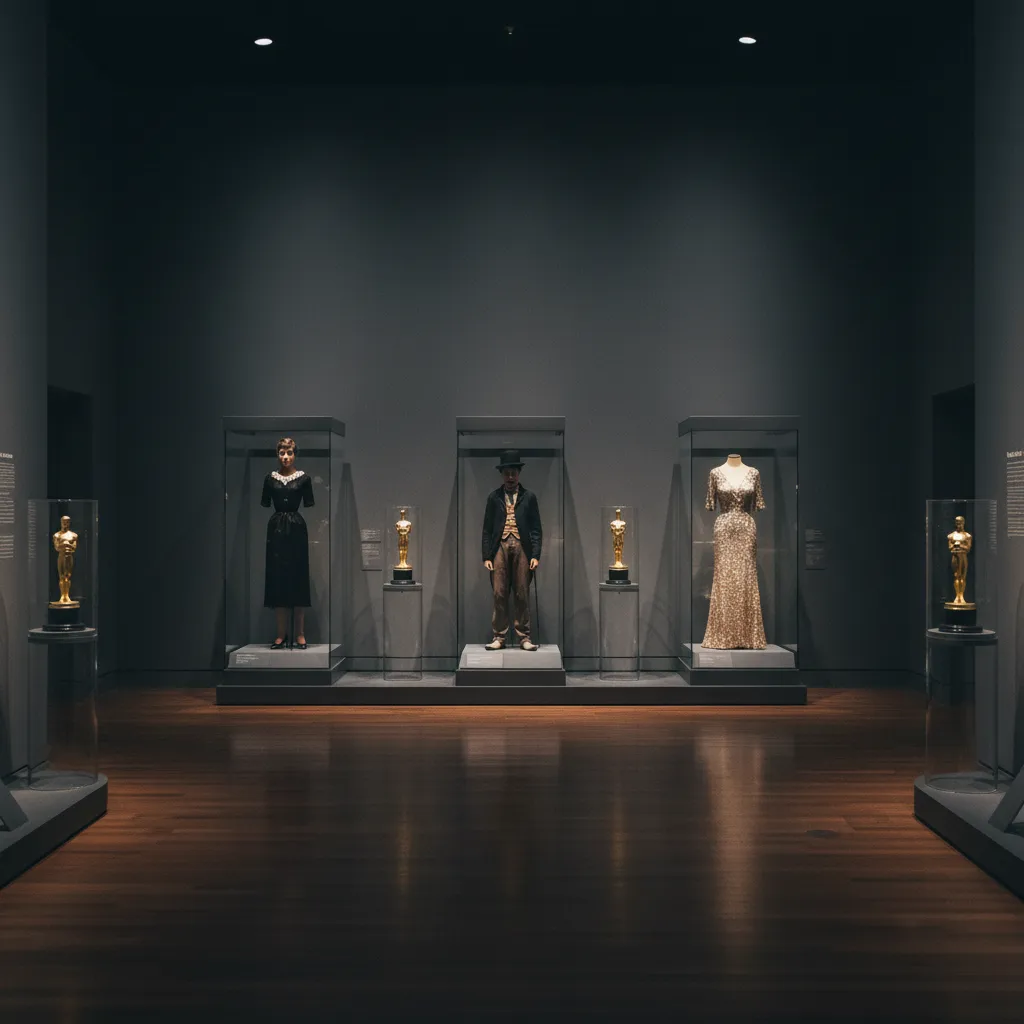
The long-running core exhibition, Stories of Cinema, moves through several floors of the Saban Building, mixing costumes, scripts, cameras, animation cels and clips. Visitors often head straight for the ruby slippers from The Wizard of Oz, which draw a small crowd, but the quieter rooms on how films are cast, scored and edited tend to stay with people longer. Temporary exhibitions rotate on the upper floors. The rooftop terrace on the sphere has one of the great views of the Hollywood Hills on a clear day, and on a stormy one you can skip it without regret.
Fossils, Tar and a Window Into the Lab
Walk east through Hancock Park and you reach La Brea Tar Pits, where scientists have been pulling Ice Age fossils out of natural asphalt for more than a century. The museum building opened in 1977, and its best feature for a rainy day is the Fossil Lab, a glass-walled workroom where paleontologists and volunteers clean and sort bones while you watch. On a weekday morning you might see someone working through a tray of tiny rodent teeth, and on a busy weekend the window is three deep with children.
Inside the galleries, the wall of dire wolf skulls is the image most people remember, hundreds of them lit in neat rows. Skeletons of a saber-toothed cat, a mammoth and a ground sloth fill the central hall. Outside, the Lake Pit with its life-size mammoth sculptures is worth a look from under an umbrella, because rain makes the methane bubbles and tar sheen easier to see on the dark water.
Art Across the LACMA Campus
LACMA was founded in 1965 and is the largest art museum in the western United States, so a rainy day here is about choosing rather than seeing everything. The Broad Contemporary Art Museum and the Resnick Pavilion, both designed by Renzo Piano, host many of the large special exhibitions and much of the modern and contemporary work. The rest of the campus rotates through collections that range from Latin American and Korean art to European painting and costume and textiles.
Chris Burden's Urban Light, the grid of restored cast-iron streetlamps on the Wilshire frontage, is the most photographed spot on the block. It looks different in the rain, with the lamps doubled in the wet pavement, and it costs nothing to stand among them for a minute before heading back indoors. Michael Heizer's Levitated Mass, the boulder balanced over a sunken walkway, is nearby but entirely outdoors, so save it for a dry visit.
A Fourth Door Across Fairfax
If you have time left over, or a car enthusiast in the group, the Petersen Automotive Museum stands on the opposite corner of Fairfax and Wilshire behind its red facade and sweeping stainless steel ribbons, added in a 2015 renovation. Three floors of galleries cover race cars, film cars and design history, and the Vault downstairs holds a much larger collection on separate guided tours. Crossing Fairfax is the only real street crossing of the day, so time it with the signal and keep moving.
Getting There and Staying Dry
Metro buses run the length of Wilshire Boulevard and stop on both sides of the museum block, which spares you the search for parking. Drivers can use the garages attached to the museums, including the structure on the Academy Museum side and the lot behind the Petersen. Rain in Los Angeles tends to come in bursts, so a short wait inside a lobby is often enough for the worst of it to pass.
Practical Notes
Timed tickets for the Academy Museum and the Tar Pits sell out on wet weekends, because everyone in the city has the same idea, so booking a morning slot makes the day easier. Coat checks are limited, which makes a compact umbrella and a light shell more useful than a heavy coat. The museums each have cafés, and Fairfax Avenue just to the north has plenty of casual food. Wear shoes with grip for the park paths, which turn slick after a downpour.
Planning the Loop With Karpo
Karpo APP works from what you tell it. Give it the time you have, the ages in your group and whether film, fossils or art matters most, and it suggests an order for the block, compares a two-museum morning with a full day and recommends somewhere nearby to eat afterwards. Ticket slots, exhibition dates and bus times come from the museums and Metro, so book those directly once the plan feels right.
Ask Karpo for more information.
Keep reading
- Mar Vista Winter Farmers Market Picker for Weekend Cyclists
 Downtown LA Winter Farmers Market Picker for Car-Free Hosts
 Larchmont Winter Farmers Market Picker for Kimchi-Making Day