 Mar Vista Winter Farmers Market Picker for Weekend Cyclists
Weekend Plans
LA Rainy Day Museum Planner: 3 Exposition Park Pavilions
Exposition Park puts the Natural History Museum, California Science Center and CAAM beside one E Line stop, so a wet LA day needs no car and little walking.
Exposition Park is the place Los Angeles parents have quietly relied on for generations when the weather turns. Three museums share the park just south of downtown, the Metro E Line stops at its northern edge, and the walks between doors are measured in minutes. On a rainy Saturday the lawns empty out, the rose garden is left to the sparrows, and everyone ends up inside looking at dinosaurs, fish and art. This rainy day museum planner is built around who you are bringing, because the right order for a five-year-old is not the right order for a teenager or for two adults on a slow afternoon.
Who Is Coming Changes the Order
With young children, the Natural History Museum is the anchor, and everything else is a bonus. With school-age kids who like to press buttons, start at the California Science Center and cross the park after lunch. With adults, the California African American Museum is the quietest and most reflective stop, and pairing it with one of the two big science museums makes a well balanced day. Trying to do all three thoroughly is a lot for any group, so pick a main course and treat the rest as tasting plates.
A sample day for a family with two young children might look like this: Natural History Museum from opening until lunch, sandwiches in the museum café, a short dash across the rose garden to the kelp tank at the Science Center, and home before naps fall apart. Adults on their own could reverse it, with a long morning at CAAM, lunch near USC and an afternoon among the minerals and fossils.
Dinosaurs Under the Rotunda
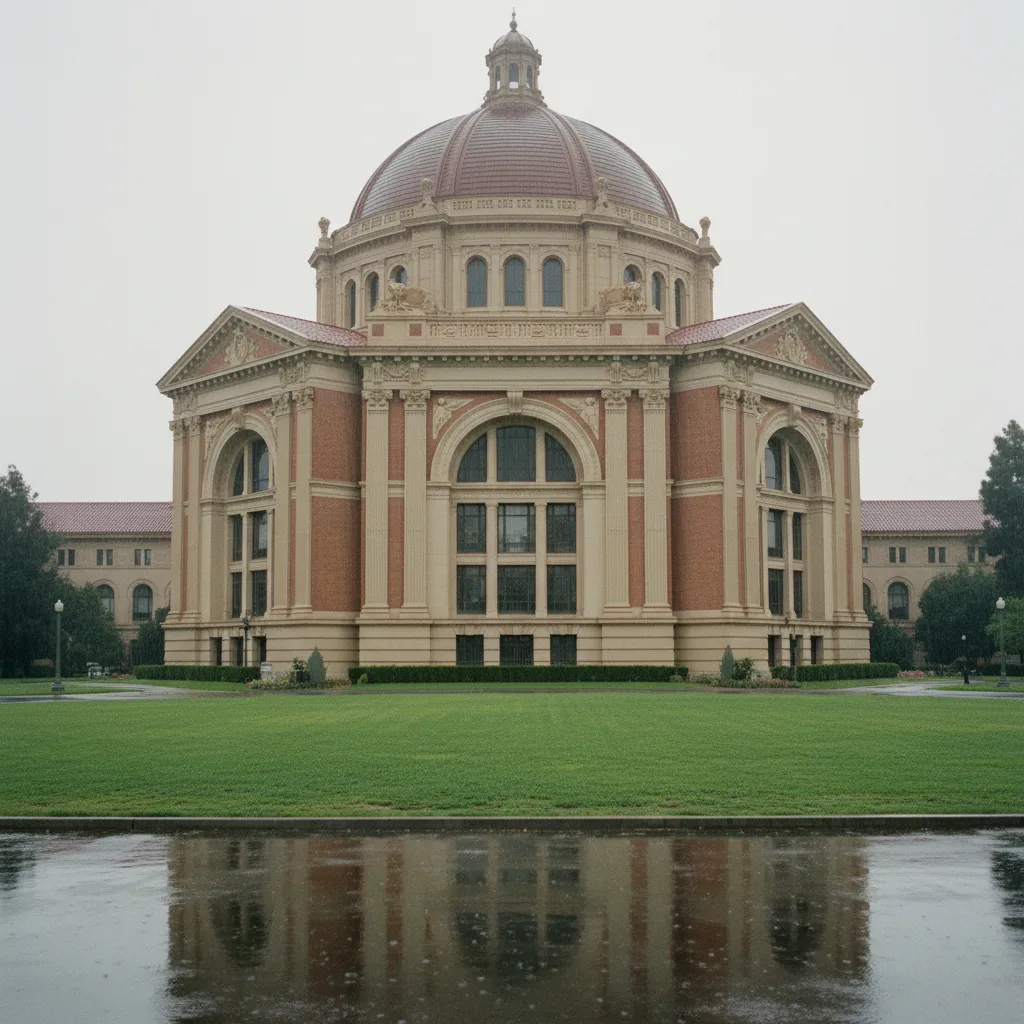
The Natural History Museum of Los Angeles County opened in 1913 in a Beaux-Arts building with a domed rotunda, marble floors and stained glass, and the original hall still feels grand on a dark day. The Dinosaur Hall, reinstalled in 2011, is the main draw. Its centerpiece is a growth series of Tyrannosaurus rex skeletons, from a toddler-sized juvenile to a full adult, which lets children see how the animal changed as it grew.
The newer NHM Commons, a glass-fronted welcome hall opened in 2024, holds Gnatalie, a long-necked sauropod skeleton whose bones are tinted green from minerals in the rock where it was found. It is a striking first thing to see when you walk in out of the rain. The Gem and Mineral Hall, with its vault of gold and crystals, is the other room children tend to beg to revisit, and it is dim and quiet enough to calm an overexcited group.
The Nature Gardens and the seasonal outdoor butterfly pavilion are wonderful on a sunny day but less fun in a downpour, so leave them for another visit and keep to the galleries.
Science You Can Touch
The California Science Center sits across the park and is built for hands-on learning. The Ecosystems galleries are the highlight for most families, especially the kelp forest tank, where leopard sharks and schools of fish weave through tall fronds of giant kelp. There are rooms on deserts, rivers, polar regions and city ecology, each with something to crawl through, touch or listen to.
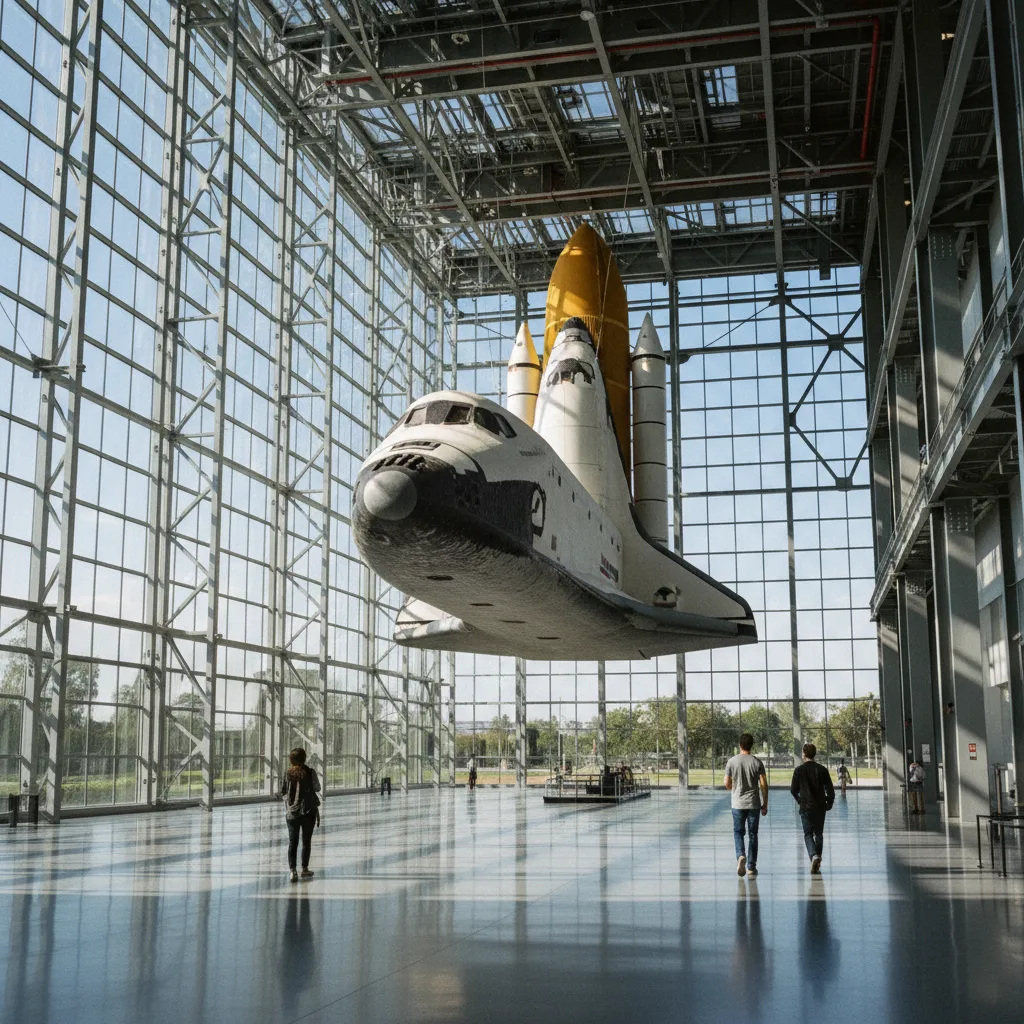
The center is also home to the Space Shuttle Endeavour, which arrived in Los Angeles in 2012 after its famous slow trip through city streets. The shuttle has been off public view while it is stacked upright, with its fuel tank and boosters, for the new Samuel Oschin Air and Space Center, which is due to open in November 2026. That work changes which space galleries are open from month to month, so the space story is best treated as a bonus rather than the reason for the trip this season.
A Quieter Hour at CAAM
The California African American Museum was founded in 1977 and moved into its building in Exposition Park in time for the 1984 Olympic Games. It collects and exhibits art, history and culture of African Americans, with an emphasis on California and the West, and it runs several exhibitions at once across its galleries and central sculpture court.
CAAM is a good place to slow down after the noise of the science museums. The skylit court is calm and bright even on a grey afternoon, and the galleries are rarely crowded. Many visitors spend an hour here, though the archival exhibitions and the work by Los Angeles artists can easily stretch that to two.
Getting In and Around
The Metro E Line stops at Expo Park/USC station, on the northern edge of the park, and Expo/Vermont is close to the other side. From the platform it is a short walk to any of the three museums. Drivers can use the parking structures inside the park, though they fill quickly on rainy weekends and on days when there is a game or concert at the stadium next door.
Between buildings, the paths through the park are open to the sky, but the distances are short. The Natural History Museum and the Science Center face each other across the rose garden, and CAAM sits right beside the Science Center, so the longest walk of the day is only a couple of minutes.
Practical Notes
Book timed entry to the Natural History Museum for weekend mornings, when school-age crowds are heaviest. The Science Center's special exhibits and its IMAX theater run on separate tickets from the main galleries. Bring a light rain shell rather than a big umbrella, because the halls are crowded and there is little space to stash wet gear.
Food is easy. Each museum has a café, and the neighborhood around USC to the north has plenty of quick lunches. Restrooms and stroller parking are spread throughout the museums, which makes this one of the more forgiving rainy-day outings for families with small children.
Karpo for Expo Park
Open Karpo APP, enter who is coming, how many hours you have and what the children are most excited about, and Karpo suggests an order for the park, compares a one-museum day with a two-stop plan and points you to lunch nearby. It works from what you tell it and from published information. Exhibit tickets and train times come from the museums and Metro.
Ask Karpo for more information.
Keep reading
- Mar Vista Winter Farmers Market Picker for Weekend Cyclists
 Downtown LA Winter Farmers Market Picker for Car-Free Hosts
 Larchmont Winter Farmers Market Picker for Kimchi-Making Day