 Mar Vista Winter Farmers Market Picker for Weekend Cyclists
Weekend Plans
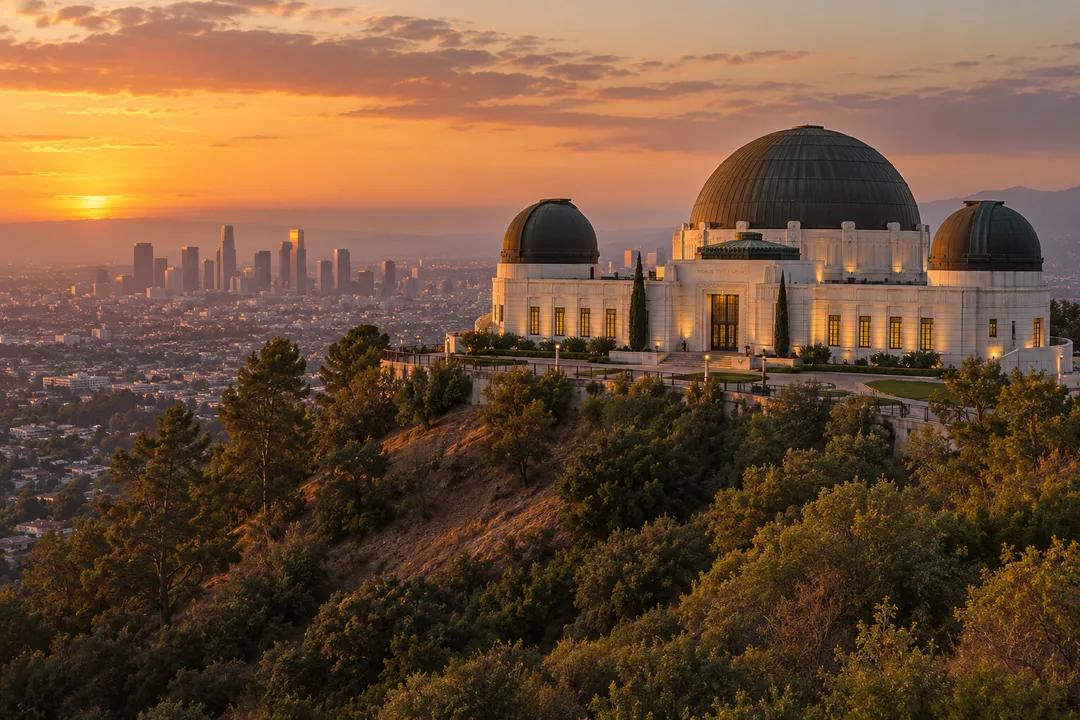
Planetarium Near Me in Griffith Park: Samuel Oschin Planetarium
A Griffith Park guide to the Samuel Oschin Planetarium at Griffith Observatory, featuring Zeiss Mark IX projection, same-day dome tickets, and Los Feliz strolls.
Locating a world-class planetarium near me in Los Angeles directs stargazers straight to the iconic heights of Griffith Park, where the Samuel Oschin Planetarium crowns Griffith Observatory. Perched at 2800 East Observatory Road along the southern slope of Mount Hollywood, this celebrated astronomical theater ranks among the most visited civic science landmarks in North America. Opened in May 1935 through the visionary bequest of industrialist Griffith J. Griffith, the observatory underwent a massive comprehensive restoration between 2002 and 2006, expanding underground while outfitting its historic copper-domed theater with state-of-the-art optical and digital projection systems that submerge audiences into dazzling cosmic realms.
Ascending to 2800 East Observatory Road is convenient via multiple transit routes designed to bypass mountain traffic congestion. The Los Angeles Department of Transportation operates the DASH Observatory bus, picking up passengers at the Vermont and Sunset Metro B Line subway station every fifteen minutes. Visitors driving private vehicles can utilize the paid parking lot directly beside the observatory for $10.00 per hour, though spaces routinely fill by early afternoon on weekends. Savvy locals often park at the Greek Theatre lots lower down the hill and take the pleasant paved hillside paths or the quick DASH shuttle to the observatory summit.
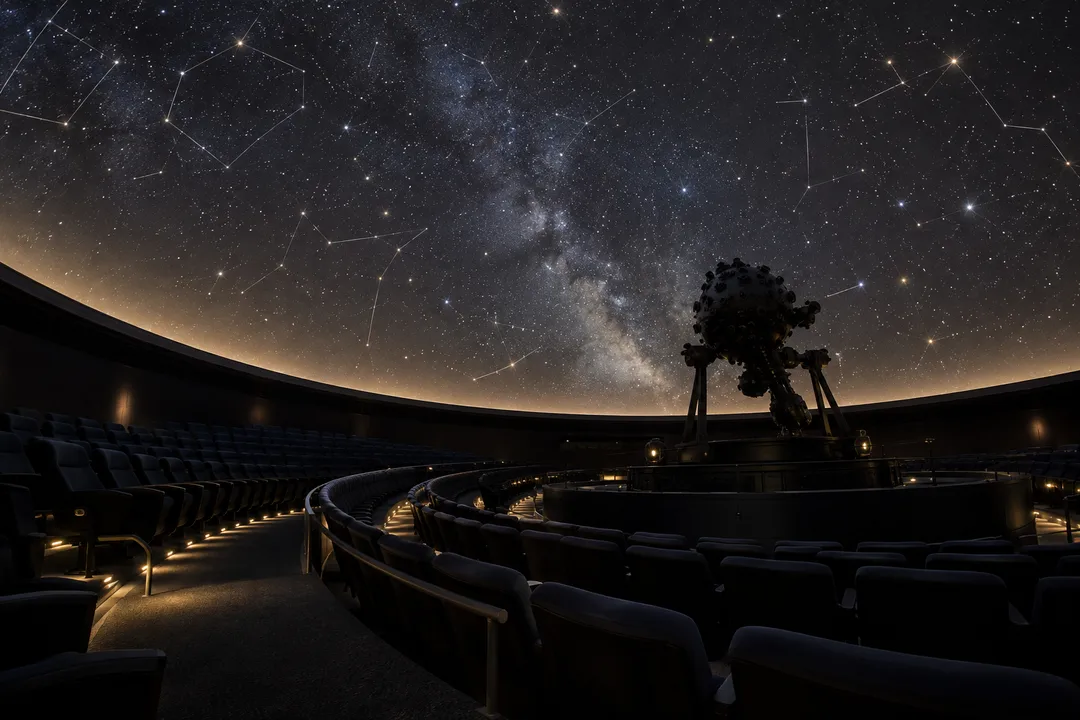
The engineering heart of the Samuel Oschin Planetarium revolves around its seamless seventy-five-foot perforated aluminum dome ceiling. At the center of the auditorium rises a custom-built Zeiss Mark IX Universarium star projector, a mechanical and optical marvel manufactured in Jena, Germany. Coupled with an array of ultra-high-resolution digital laser video projectors, the system casts thousands of pinpoint stars, distant nebulae, and planetary surfaces across the concave sky. A synchronized multichannel spatial audio array envelops the hall in resonant acoustic vibrations, matching deep gravitational hums with live narrative commentary delivered by trained resident storytellers.
Securing planetarium passes requires attention to the observatory ticketing protocol. Admission to the observatory building, museum galleries, and lawn telescopes is free, but planetarium shows require designated theater tickets. Prices are set at $12.00 for adults ages thirteen to fifty-four, $10.00 for seniors age fifty-five and older, $10.00 for students and teachers with school identification, and $8.00 for children ages five to twelve. Children under age five are admitted free of charge only to the first show of the day (12:45 pm on weekdays and 10:45 am on weekends) and must sit on an adult lap; they are not admitted to subsequent showtimes. Tickets are sold exclusively at the observatory physical box office on the day of the show, meaning early arrival is crucial.
The planetarium presentation lineup highlights three distinctive cinematic narratives running on alternating schedules throughout the afternoon and evening. Centered in the Universe explores humanity evolving cosmic perspective from ancient sky lore to modern astrophysics, complete with live narration that guides viewers through celestial mechanics. Another signature presentation, Signs of Life, investigates the chemical conditions for extraterrestrial biology across the icy moons of Jupiter and Saturn. A third educational presentation, Water Is Life, designed specifically for school groups, illuminates where California's water originates and how regional conservation sustains communities across the state.
Inside the auditorium, two hundred ninety contoured reclining seats are arranged in concentric tiers around the central Zeiss projector. Because show tickets do not designate specific row numbers, seating operates on a first-come, first-served basis once the boarding doors open ten minutes prior to showtime. The prime acoustic and visual sweet spot sits in the middle and upper rows, where guests can recline comfortably and take in the full expanse of the dome without turning their heads. The chamber maintains a regulated ambient temperature of sixty-eight degrees Fahrenheit, offering a cool respite from Southern California sunshine.
Strategizing your arrival time ensures a relaxed and unhurried observatory visit. Griffith Observatory welcomes the public Tuesday through Friday from 12:00 noon to 10:00 pm, and Saturday through Sunday from 10:00 am to 10:00 pm, remaining closed on Mondays. Midday weekday afternoons offer the shortest box office lines and easiest parking availability. If you plan an evening visit to catch sunset over the Pacific Ocean and view planets through the historic twelve-inch Zeiss refracting telescope on the roof deck, aim to arrive before 4:00 pm to buy your preferred evening planetarium tickets.
Observing theater etiquette preserves the pristine sensory environment of the dome. Once the airlock security doors close and the lights dim to complete blackness, ushers enforce an absolute no-entry rule, and ticket holders arriving late forfeit their admission. All cellular phones, digital watches, and light-emitting gadgets must be switched off completely before the presentation begins. In addition, food, beverages, chewing gum, and bulky camera equipment are prohibited inside the theater, though personal belongings can be kept neatly tucked beneath your assigned seat.
Beyond the planetarium theater, the observatory extensive galleries provide hours of educational exploration. On the main floor, the Ahmanson Hall of the Sky showcases solar dynamics through live coelostat telescope feeds, displaying real-time sunspots and solar flares on overhead monitors. The Wilder Hall of the Eye traces the evolution of observational tools from Galileo brass lenses to orbital space observatories. Descending into the lower level Gunther Depths of Space gallery reveals scale models of the planets, a genuine nickel-iron meteorite touch specimen, and cosmic perspective exhibits.
The historical legacy of Griffith Observatory is woven into the civic identity of Los Angeles. Griffith J. Griffith envisioned a public observatory where ordinary citizens, rather than just academic researchers, could look through telescopes and discover the wonder of the cosmos. Architects John C. Austin and Frederick M. Ashley executed this vision in a striking blend of Beaux-Arts and Art Deco styles, featuring three majestic green copper domes and a grand central rotunda decorated with Hugo Ballin astronomical ceiling murals celebrating science and human discovery.
Pairing a planetarium screening with outdoor recreation in Griffith Park enriches any weekend schedule. Scenic dirt footpaths like the West Observatory Trail and Charlie Turner Trail meander from the parking terraces toward Mount Hollywood, rewarding hikers with panoramic vistas of the Hollywood Sign, Downtown Los Angeles skyscrapers, and the shimmering Pacific coastline. For a leisurely stroll, wander the paved terrace promenades where landscaped lawns host picnickers and evening telescope clubs sharing glimpses of lunar craters and Saturn rings.
When the show concludes, descending Mount Hollywood leads directly into the culinary hub of Los Feliz Village along North Vermont Avenue and Hillhurst Avenue. Visitors can stop by historic neighborhood institutions for artisan wood-fired pizzas, savory handmade pasta, or freshly pressed citrus juices. Cozy sidewalk parklets, independent bookstores, and local ice cream parlors hum with evening energy, providing the ideal backdrop to debrief planetary physics and constellation charts over warm espresso drinks.
Practical information helps streamline your excursion to Mount Hollywood. Samuel Oschin Planetarium is located inside Griffith Observatory at 2800 East Observatory Road, Los Angeles, CA 90027. The facility provides comprehensive ADA accessibility, featuring wheelchair positions within the theater, assistive listening receivers available upon request, and elevator connections across all exhibit levels. Restrooms and a casual dining cafe operate on the lower terrace.
Planning Your Griffith Park Planetarium Outing
The Samuel Oschin Planetarium remains an unmatched jewel of celestial education and architectural splendor in Southern California. Whether you are seeking a memorable family afternoon under simulated starlight or an inspiring evening exploring deep space discoveries, its breathtaking dome presentations inspire wonder across all generations. Let the Karpo APP curate your Los Angeles outings, chart scenic park walks, and uncover neighborhood culinary favorites throughout the city.
Ask Karpo for more information.
Keep reading
- Mar Vista Winter Farmers Market Picker for Weekend Cyclists
 Downtown LA Winter Farmers Market Picker for Car-Free Hosts
 Larchmont Winter Farmers Market Picker for Kimchi-Making Day