 Mar Vista Winter Farmers Market Picker for Weekend Cyclists
Weekend Plans
Paranormal Museum Near Me: The Banning Museum Victorian Haunt in Wilmington
Tour General Phineas Banning's 1864 Greek Revival mansion in Wilmington, featuring twenty preserved period rooms, historic stagecoaches, and documented harbor ghost archives.
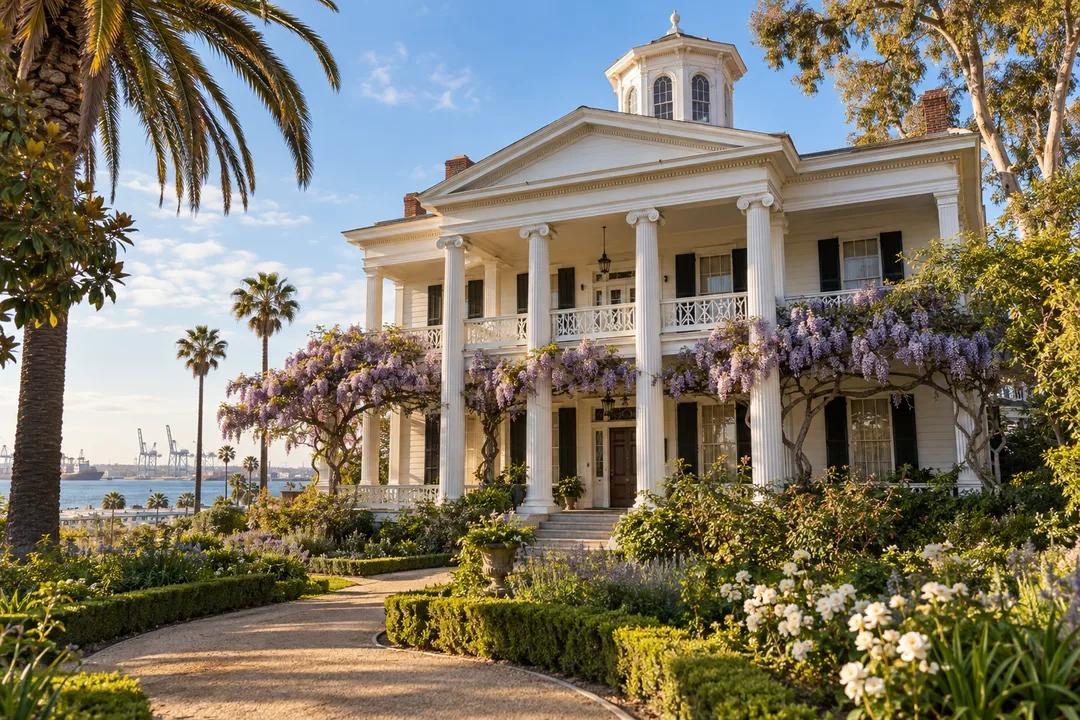
The Banning Museum at 401 E M St in Wilmington stands as a stately 1864 Greek Revival monument overlooking the industrial waterways of Los Angeles Harbor. For travelers hunting for an authentic paranormal museum near me in the South Bay, this twenty-three-room mansion offers a compelling departure from staged entertainment. Built by General Phineas Banning, celebrated as the Father of the Port of Los Angeles, the residence operates as an active historical showpiece where documented apparitions, phantom footfalls, and unexplainable thermal drops have been cataloged by staff and regional paranormal researchers for over half a century.
Antebellum Greek Revival Architecture on the Pacific Coast
Constructed during the height of the American Civil War using heart-pine and redwood hauled from Northern California lumber mills, the three-story mansion was designed to project civic permanence in frontier California. Phineas Banning lived here while orchestrating stagecoach routes, pioneering Southern California's initial railroad connections, and commanding Union militia forces stationed around San Pedro Bay. Walking through the central reception hallway reveals original nineteenth-century gas chandeliers, hand-printed wallpaper patterns, and floor-to-ceiling glass display cases filled with nineteenth-century decorative porcelain and personal family ledgers.
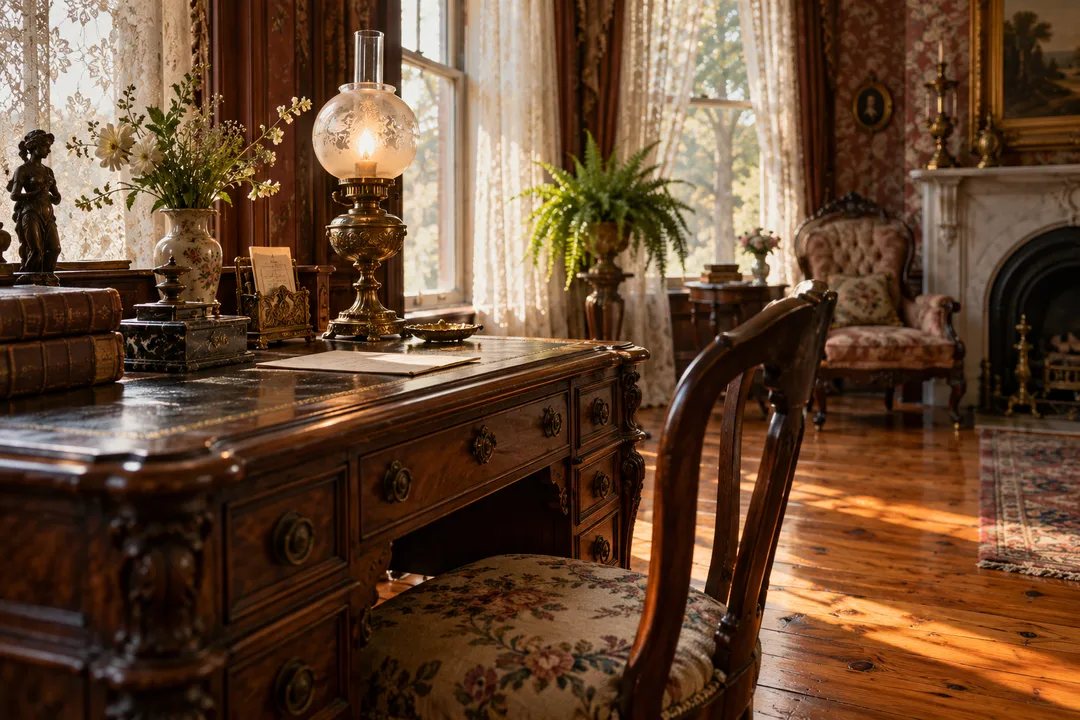
Twenty restored period rooms contain authentic decorative artifacts donated directly by Banning descendants and pioneer Los Angeles families. The formal parlor features a square grand piano manufactured in Boston, hand-carved mahogany armchairs upholstered in deep burgundy horsehair, and heavy brocade draperies that buffer exterior street noise. Down in the adjacent barn and carriage house, visitors inspect pristine nineteenth-century wooden stagecoaches, delivery wagons, and leather harnesses that carried freight across the untamed San Gabriel Valley, creating a tactile bridge to nineteenth-century transit history.
Documented Spectral Occurrences in the Upper Bedchambers
Paranormal interest centers heavily on the second-floor residential suites, particularly the north-facing bedroom where General Banning spent his final days before passing away in 1885. Volunteer docents and municipal caretakers have repeatedly recorded sudden temperature drops exceeding ten degrees in the master suite, even during sweltering midsummer heat waves in the harbor flatlands. Heavy carved bedroom doors that have been securely latched for the evening have been found swung wide open by morning custodial staff without any evidence of forced latch failure.
Sightings of a distinguished gentleman wearing an ebony frock coat and standing by the balustrade of the third-floor cupola have been reported by both neighborhood residents and evening museum guards. Other recurring anomalies include the delicate floral scent of antique rose water wafting through unoccupied corridors, accompanied by the muffled rustle of stiff Victorian silk skirts along the back staircase. Regional historical societies and paranormal investigators conducting electromagnetic surveys have recorded anomalous electronic voice phenomena echoing through the children's nursery quarters.
Docent Schedules, Tour Registration, and Gate Access
Public access to the interior rooms is conducted exclusively through docent-led guided tours offered on Tuesday, Wednesday, and Thursday at 12:30 pm, 1:30 pm, and 2:30 pm. On Saturday and Sunday, an additional late afternoon departure is added to the schedule, providing departures at 12:30 pm, 1:30 pm, 2:30 pm, and 3:30 pm. Rather than charging a mandatory commercial gate tariff, the museum operates on a modest suggested donation of $5.00 for adults and $1.00 for children under twelve years of age.
Tour groups depart promptly from the visitor reception area adjacent to the carriage house, with each guided walk lasting approximately ninety minutes to ensure thorough historical context across all three residential floors. Because space on each tour cycle is limited to ensure artifact preservation, arriving fifteen minutes before your preferred departure slot guarantees inclusion in the group. Visitors register directly at the entrance desk on arrival, with staff processing cash or check contributions on site before distributing commemorative site guides.
Visitor Etiquette Across Polished Heart-Pine Flooring
Because the residence retains its nineteenth-century heart-pine timber flooring and original velvet upholstery, specific visitation protocols must be honored throughout the interior. All guests are required to wear flat, non-marking shoes with rubber soles to protect delicate antique floorboards, while spiked high heels, muddy athletic cleats, and wheeled shoes are strictly banned. Backpacks, umbrellas, and bulky shopping bags must be deposited in the secure locker area inside the visitor center before stepping into the historic mansion.
Interior non-flash photography is permitted for personal keepsake purposes in all public hallways, though the use of tripods, selfie sticks, and external illumination equipment is prohibited to avoid tripping hazards. Visitors are instructed to avoid touching exposed furniture fabric, delicate marble washstands, or antique wallpaper borders. Parents accompanied by younger children must maintain close physical oversight, as several rooms feature historic gas fixtures, raised thresholds, and roped-off nineteenth-century heirloom collections.
Wilmington Harbor Strolls and Maritime Detours
Following your mansion walkthrough, take time to explore Banning Park's twenty lush park acres, landscaped with towering eucalyptus groves and California pepper trees planted during the Banning family's residency. Walk four blocks north along Banning Boulevard to explore the Drum Barracks Civil War Museum, which preserves the original 1862 junior officers' quarters from Southern California's primary Union Army garrison. This proximity allows visitors to experience two deeply connected Civil War-era historical installations in a single afternoon itinerary.
Head south along Avalon Boulevard toward Wilmington's waterfront district to discover authentic local dining along Pacific Coast Highway. Stop by Maya Mexican Restaurant at 110 W C St for handmade corn tortillas and slow-simmered carnitas platters served in a welcoming neighborhood dining room established decades ago. A five-minute drive west brings you to the waterfront promenade at Banning's Landing Community Center, offering scenic vistas of harbor tugboats, container cranes, and passing pelicans across the main harbor channel.
Practical Transit Logic and Arrival Precautions
The Banning Museum is positioned at 401 E M St, Wilmington, CA 90744, near the intersection of Pacific Coast Highway and the Interstate 110 Harbor Freeway corridor. Public transit riders can take the Metro J Line busway to the Harbor Freeway and Pacific Coast Highway transit station, transferring to the Metro Bus Route 246 directly to the park perimeter.
Free vehicular parking is accessible within the dedicated paved lot situated along East M Street directly adjacent to the museum grounds, supplemented by unrestricted on-street parking on surrounding neighborhood blocks. The interior museum spaces remain naturally cooled by harbor sea breezes, making a light jacket advisable during late autumn afternoons when coastal marine layers drift ashore. For curious explorers seeking a genuinely preserved paranormal museum near me in southern Los Angeles, this historic estate delivers authentic nineteenth-century maritime gravity.
Ask Karpo for more information.
Keep reading
- Mar Vista Winter Farmers Market Picker for Weekend Cyclists
 Downtown LA Winter Farmers Market Picker for Car-Free Hosts
 Larchmont Winter Farmers Market Picker for Kimchi-Making Day