 Mar Vista Winter Farmers Market Picker for Weekend Cyclists
Weekend Plans
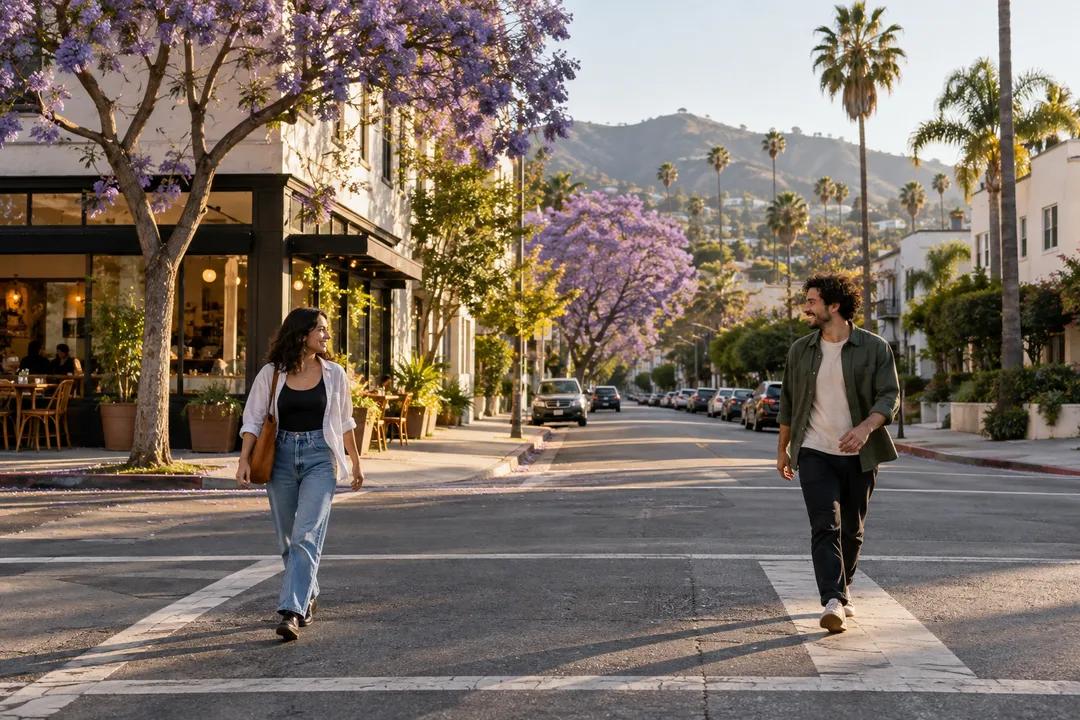
LA Midpoint Meetup Planner: Share the Cross-Town Dinner Trip
Compare Culver City and Mid-City for a Santa Monica–Silver Lake dinner, weighing departure windows, parking effort and the journey home before choosing.
The friend in Santa Monica wants a dinner that feels worth crossing town for. The friend in Silver Lake wants to avoid being the one who always travels farther. A midpoint meetup planner can give that conversation a useful shape: compare a small set of possible meeting areas against the same evening, the same departure assumptions and the same idea of fairness. For this LA planning example, start with Culver City and Mid-City as candidates to investigate, without declaring either the automatic halfway point.
Ask what a fair dinner actually means
Equal distance is only one possible rule. Your group might prefer similar travel times, the shortest combined journey, or a place that protects the person with an early finish. These rules can produce different answers. Agree on one before anyone falls in love with a restaurant. Otherwise a disagreement about travel can hide inside apparently simple comments about cuisine, atmosphere and who knows a good place.
Try asking each friend for a comfortable travel limit and a departure window. A person leaving an office has a different starting point from the same person leaving home later. Keep the precise addresses in individual navigation tools rather than broadcasting them to the whole group. Neighborhood-level origins are enough for the first conversation, and more exact route information belongs with the people making that journey.
Give Culver City and Mid-City the same test
Treat the two candidate areas as competing proposals. For each one, define a tentative arrival time, the kind of meal you want and the parking arrangement you would accept. Ask travelers to assess their own route at the proposed departure time. Comparing one person's immediate departure with another person's later departure makes the result misleading, even if the displayed travel numbers look precise.
Keep the first comparison at neighborhood level. An area can look convenient while the final destination adds an awkward approach, a long walk or another round of circling. Once a candidate survives the broad test, narrow it to a particular dining block. The final choice needs an actual entrance and an arrival arrangement, not a colored patch on a map that everyone interprets differently.
Put the parking walk inside the journey
For drivers, arriving near dinner and sitting down to dinner are separate events. A useful comparison includes the approach to parking, the walk to the entrance and any coordination needed to find the others. Nobody needs an invented parking allowance in minutes. Each traveler can supply an estimate based on the actual arrangement they intend to use, and label it separately from driving time.
Suppose the group prefers a designated lot over street parking. Make that a selection condition before building the dining shortlist. If someone needs a shorter or step-free approach, describe the required route rather than treating every nearby space as equivalent. A venue's parking description can support a plan, but it does not establish that an empty space will be waiting when the group arrives.
Build an evening around the shared window
Work backward from the earliest necessary departure. If the Silver Lake friend needs to leave first, a later arrival from Santa Monica reduces the time together even when both journeys seem tolerable on their own. Decide whether dinner needs one continuous sitting or whether a drink can absorb staggered arrivals. A flexible opening activity can help, provided nobody feels obliged to purchase something just to wait.
The group's meal preferences also influence the timing. A quick casual dinner and a long celebratory meal require different amounts of shared time. State the purpose in ordinary language: we want to talk without rushing, or we want a simple meal before heading home. That purpose makes it easier to reject a technically central option that leaves too little time for the reason you arranged the meetup.
Turn the agreed constraints into a useful request
Karpo describes a conversational approach to discovering places and plans: share your mood, budget, neighborhood and companions. In Karpo APP, those details form a clearer request than simply asking for somewhere in the middle. You could describe a relaxed dinner for two friends, identify the candidate areas and explain the group's travel priorities. The value is a focused discovery brief, with fewer unrelated suggestions to sort through.
LA here is an editorial example, rather than a promise of local product coverage: Karpo's published FAQ lists New York City, San Francisco, Miami and London as its initial supported cities. Use the destination options actually offered in the app. Keep your cross-town comparison as a separate planning exercise when LA discovery is unavailable, and obtain journey estimates from navigation services rather than assuming a dedicated midpoint calculator exists.
Send a decision people can respond to
Share a compact proposal with a reason attached. For example, offer Culver City if the agreed parking arrangement makes arrival easier, and Mid-City if the travelers' own route estimates give it the stronger overall result. Those are conditional decision rules, not claims that either area always wins. Ask friends to identify a practical obstacle, such as an incompatible departure window, instead of reopening every preference at once.
Settle the area before collecting a long list of restaurant names. Then compare a small number of dining options for budget, dietary needs and the sort of conversation you want. Karpo's FAQ describes sharing picks and comparing options with friends. Use that kind of shortlist to support the group's decision, while leaving any table arrangement to the restaurant's own booking process and retaining its actual acknowledgment.
Practical Notes for the organizer
Your final message should identify one destination, one meeting time and one gathering point. Include whether friends are meeting at the entrance or inside, who will handle the table and what happens if one traveler is delayed. A drink stop should remain optional unless everyone has agreed to it. Keep the fallback close enough to the chosen arrival arrangement that changing plans does not send one person back across the area.
Afterward, ask one narrow question: did this travel split feel fair enough to repeat? The answer helps the next meetup more than collecting another list of fashionable restaurants. You might retain the same neighborhood, alternate which side travels farther, or move dinner to a different departure window. A workable cross-town habit grows from the group's actual experience, with enough room for changing work locations and evenings when somebody simply has less energy.
Ask Karpo for more information.
Keep reading
- Mar Vista Winter Farmers Market Picker for Weekend Cyclists
 Downtown LA Winter Farmers Market Picker for Car-Free Hosts
 Larchmont Winter Farmers Market Picker for Kimchi-Making Day