 Mar Vista Winter Farmers Market Picker for Weekend Cyclists
Weekend Plans

LA Midpoint Meetup Planner: 4 Koreatown Arrival Decisions
For Manhattan Beach and Hollywood friends, test Koreatown against four arrival decisions: travel limits, parking arrangements, walking needs and departure.
Koreatown enters the conversation as a possible gathering area for friends coming from Manhattan Beach and Hollywood. Before turning that suggestion into dinner, use a midpoint meetup planner to settle four arrival decisions. Who has the tighter journey limit? What parking arrangement can each driver use? Which walking conditions matter? And how will everyone get home? This is a proposal to evaluate, not a claim that Koreatown is the mathematically central location or the fastest option for both starting points.
Decision one: whose limit would cancel the evening?
Ask every attendee what would make the trip unworkable. A strict departure deadline, a long day behind the wheel or a need to collect somebody afterward can outweigh a preference for perfectly equal journeys. Separate a hard limit from a wish. Saying that you prefer a shorter drive is different from saying that you cannot attend if the total outing extends beyond a particular window.
Do not infer effort from the place name alone. Manhattan Beach and Hollywood each cover more than one possible departure point, and friends may be leaving workplaces rather than homes. Let travelers assess their individual routes for the proposed evening. Their estimates belong alongside their constraints, with the time of departure attached. The organizer's job is to compare those inputs, not to supply a confident travel time without a route calculation.
A group can also decide to rotate inconvenience. Perhaps this gathering favors the Hollywood side, while the next one happens closer to the South Bay. Write that agreement down plainly. Rotation is a social arrangement, and it only feels fair when everyone has accepted it. It should not become a justification for repeatedly asking the same tired friend to cross town because they have been accommodating before.
Decision two: choose the parking method before the table
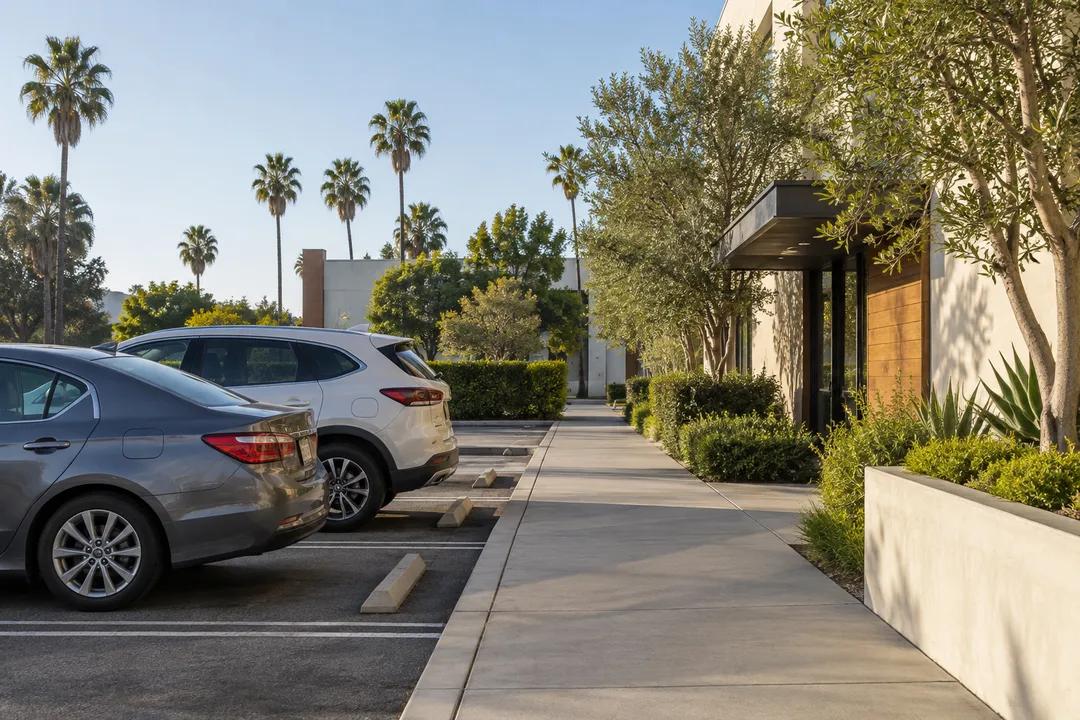
A plan that says parking nearby leaves too much unresolved. Decide whether the party accepts street parking, wants a designated lot or is willing to use valet. These are different arrival methods with different implications for cost, walking and departure. They should be filters for the venue search, rather than small details added after someone has persuaded the group to choose a favorite restaurant.
If a candidate mentions validation, use the operator's stated conditions as the basis for the proposal. Establish which parking facility participates, what action earns validation and which conditions apply to your visit. Do not convert the word validated into a promise of free parking. When the candidate provides no reliable parking terms, leave those terms out of the recommendation rather than filling the gap with an attractive assumption.
For valet, distinguish the vehicle drop-off from the restaurant entrance and the later retrieval. Someone who needs a quick departure may prefer another arrangement. For a lot, establish the pedestrian way out and the route to the door. You are choosing an arrival process that fits this group. Neither an advertised lot nor a valet service guarantees that the arrival will take a particular number of minutes.
Decision three: make the last stretch part of access
Ask about the actual experience between the vehicle and the table. A short distance can still be unsuitable if the route includes steps or a difficult crossing. Describe needs in functional terms: a continuous step-free approach, a place to rest while waiting or an entrance close to the drop-off. That gives the person selecting venues something concrete to work with and avoids assuming that all attendees walk in the same way.
The group should use a specific destination for this part of the comparison. A neighborhood recommendation cannot establish the accessibility of an individual entrance. Give the person with the access requirement space to assess the arrangement without asking them to explain private medical information in a group conversation. If the necessary details are missing, keep the candidate provisional and continue with options that have enough information to support a decision.
Seating also belongs in arrival planning. Friends may not arrive simultaneously, and the first person should know whether to wait at the door or join the table. A comfortable waiting arrangement can matter to somebody with a limited standing tolerance. Avoid making that person the designated early arrival simply because they are the most punctual. Assign responsibilities around preferences and practical needs, rather than habits nobody has discussed.
Decision four: protect the exit as carefully as the entrance
Plan backward from the person who needs to leave first. Include reaching the parked vehicle or pickup point, rather than treating the end of dinner as the end of travel. A long shared meal can be enjoyable and still leave too little time for the journey home. A shorter gathering with a clear finish may produce more conversation than an ambitious evening interrupted by people repeatedly watching the clock.
Have a practical response to a delayed arrival. The group might begin with food that can be ordered individually, or move the meeting time if everyone agrees. Do not promise that a restaurant will hold a table or accommodate a late party without a venue acknowledgment. Keep any booking record with the person handling it, and give the rest of the group the information they need to meet comfortably.
Describe the gathering without inventing a product feature
Karpo APP's public introduction invites people to share their mood, budget, neighborhood and companions to get outing ideas. For this scenario, those inputs become a brief for a relaxed gathering with clear access and parking preferences. Asking for ideas is different from having the app validate a lot, calculate a fair midpoint or monitor vehicle spaces. Use navigation and venue information for those separate parts of the decision.
Karpo's FAQ identifies New York City, San Francisco, Miami and London as the first supported cities. The Koreatown scenario illustrates a planning method and does not assert LA coverage. Where the app offers your destination, use the agreed brief to focus discovery. Otherwise retain it for your group's own search, and avoid treating a general product description as proof of a specific local capability.
Practical Notes for a calmer group arrival
End with a proposal that names the destination, the agreed arrival window and the chosen parking method. State the walking arrangement in terms useful to attendees, with a shared entrance pin where appropriate. Keep personal travel limits private unless the friend wants them shared. If the candidate cannot meet a hard requirement, change the candidate rather than asking the person affected to quietly absorb the problem.
A successful meetup leaves everyone knowing what they have agreed to do. The group should be able to explain why this location works tonight, who handles any reservation and what triggers the fallback. You do not need to declare a universal halfway winner. You need four arrival decisions that support a real conversation, an attainable finish and a trip that your friends are willing to make again.
Ask Karpo for more information.
Keep reading
- Mar Vista Winter Farmers Market Picker for Weekend Cyclists
 Downtown LA Winter Farmers Market Picker for Car-Free Hosts
 Larchmont Winter Farmers Market Picker for Kimchi-Making Day