 El Sereno Urban Staircase Walk Planner for a Study Break
Free Things to Do
LA Local Event Finder: Pick Your Mood in Minutes
Describe your mood to a local event finder in LA, comparing conversation, crowds and participation before asking the Karpo APP for suitable ideas.
You know the kind of evening you want in Los Angeles, but none of the usual event categories quite describes it. “Live music” could mean listening closely or struggling to hold a conversation. “Arts” could mean watching quietly or joining in. Use a local event finder by describing the atmosphere first. In the Karpo APP, begin with how you want to feel, then add the conditions that would make an event comfortable enough to choose.
Replace a broad adjective with something observable
“Chill” can mean seated, uncrowded, inexpensive, informal, or simply familiar. Choose the meaning that matters to you. If conversation is the priority, say you want to hear a friend without raising your voice. If the aim is to switch off, say you would prefer something absorbing that asks little of you. These descriptions communicate a desired experience more clearly than an adjective that different people interpret differently.
Try a brief such as: “I want an LA outing that feels relaxed and curious. I would like to browse or listen, sit down for part of it, and leave without interrupting a formal program.” This is a description of preferences, not evidence that a particular event provides those conditions. It gives the search a sensible direction. Add your area and available day so the atmosphere request is attached to a practical outing.
Compare quiet attention with easy conversation
A quiet room does not automatically make a good catch-up venue. A talk, reading, or listening session may expect the audience's attention. Conversely, a social setting can offer room to talk while still feeling busy. Separate these goals in the request: do you want silence around you, permission to converse, or both? If you are meeting someone you have not seen in months, that difference can decide the evening.
Ask for a comparison organized around what you will actually do. One option might center on watching and a second on mingling. For each, ask what the format implies about conversation and participation. Avoid turning those implications into claims about a specific room's volume. Without event-specific details, the useful conclusion is a preference for a format, not a guarantee about acoustics. A description such as “intimate” alone does not establish whether two people can comfortably chat.

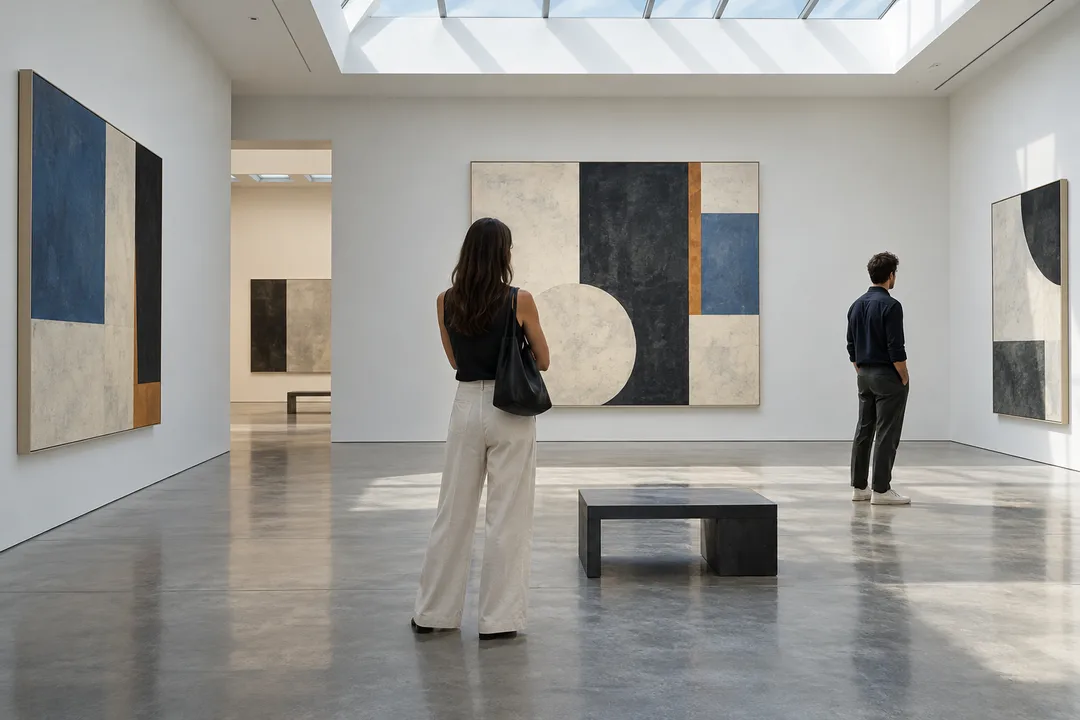
AI-created atmosphere study illustrating a social setting rather than an advertised gathering.
Distinguish welcoming from participatory
You might want to feel included without being asked to perform, introduce yourself, or join a team. Put that boundary into words. “I am happy to attend alone, but do not want audience participation” is a useful condition. So is “I would enjoy a guided activity with other beginners.” Both can describe a friendly evening, yet they lead toward very different arrangements and different levels of social effort.
For someone curious about joining in, explain the kind of structure that helps. A demonstration followed by an optional activity differs from arriving in a room where everyone already knows the rules. Ask for the participation expectation to be stated plainly in any suggested option. When that detail is absent, keep it absent in your decision notes. An appealing image or casual description is not enough to establish that a beginner will have a supported place.
Use two contrasting briefs to discover what fits
Sometimes it is easier to recognize a preference through comparison than to name it from scratch. Write two short versions of your evening. The first could prioritize a seated, focused experience where the activity carries the attention. The second could prioritize moving around and talking with friends. Keep your travel limit and spending boundary the same. That way you are comparing atmosphere rather than accidentally comparing two completely different budgets or journeys.
Read both versions as if a friend had invited you. Which sounds like relief, and which sounds like another obligation? You can take that reaction back to the conversation: “The focused option sounds better, but I still want a little time to talk afterward.” This adds a useful detail without demanding an entirely new set of interests. It also suggests a simple shape for the outing: one main activity with an optional conversation afterward.
Describe the mood without relying on a photograph
A photograph can convey daylight, spacing, colors, and composition. It cannot establish a scheduled event's crowd size or the behavior of the people attending. The images on this page are generated illustrations of possible settings, not depictions of advertised LA events. Use them to think about what appeals visually, then express the underlying preference in words. “Open air and room to move” is a more portable request than “somewhere like this picture.”
The same care applies to descriptions such as lively, cozy, or atmospheric. They are useful starting points, but you can ask what creates that impression. Is the appeal the subject matter, the layout, the audience format, or the chance to talk? If an option is described only in broad mood words, ask for the concrete reasons it was suggested. A brief explanation lets you decide whether the interpretation matches your own.
Adjust one atmosphere variable at a time
If the first ideas feel too energetic, reduce the participation or crowd preference before abandoning the whole topic. If they feel too solitary, ask for a format with a shared task or an informal social element. Keep the characteristics that worked. A message like “Keep the visual-art direction, but look for something where talking is part of the experience” is specific enough to make the next request different in a meaningful way.
There is no need to invent a personal profile full of labels. Tonight's mood can be temporary. Explain a relevant condition such as being tired after work, wanting an excuse to dress up, or hoping to spend time outside. Those are planning preferences, not permanent personality types. You can ask for a different experience next time without justifying the change. The point of the conversation is to help choose this outing, on your terms.
Make the final request small and actionable
Once the atmosphere is clear, add the practical limits that could rule an option out: date, starting neighborhood, transport choice, cost boundary, and departure deadline. These limits keep a mood-led search from drifting into a beautiful but unusable suggestion. Request a few distinct ideas and an explanation of the fit. Any actual session still needs its own established attendance details. A suggested mood match does not establish admission or reserve a place.
Open the Karpo APP with a sentence you could say naturally to a friend: “I want something curious and low-pressure in LA, with a little room for conversation and no expectation to perform.” Then add where and when. You do not need the right category name to start. You need a description clear enough that you can tell whether an idea matches it. That is the useful work of choosing by atmosphere.
Ask Karpo for more information.
Keep reading
- El Sereno Urban Staircase Walk Planner for a Study Break
 Santa Monica Urban Staircase Walk Planner Before Meetings
 Mount Washington Urban Staircase Walk Planner: Hike Prep