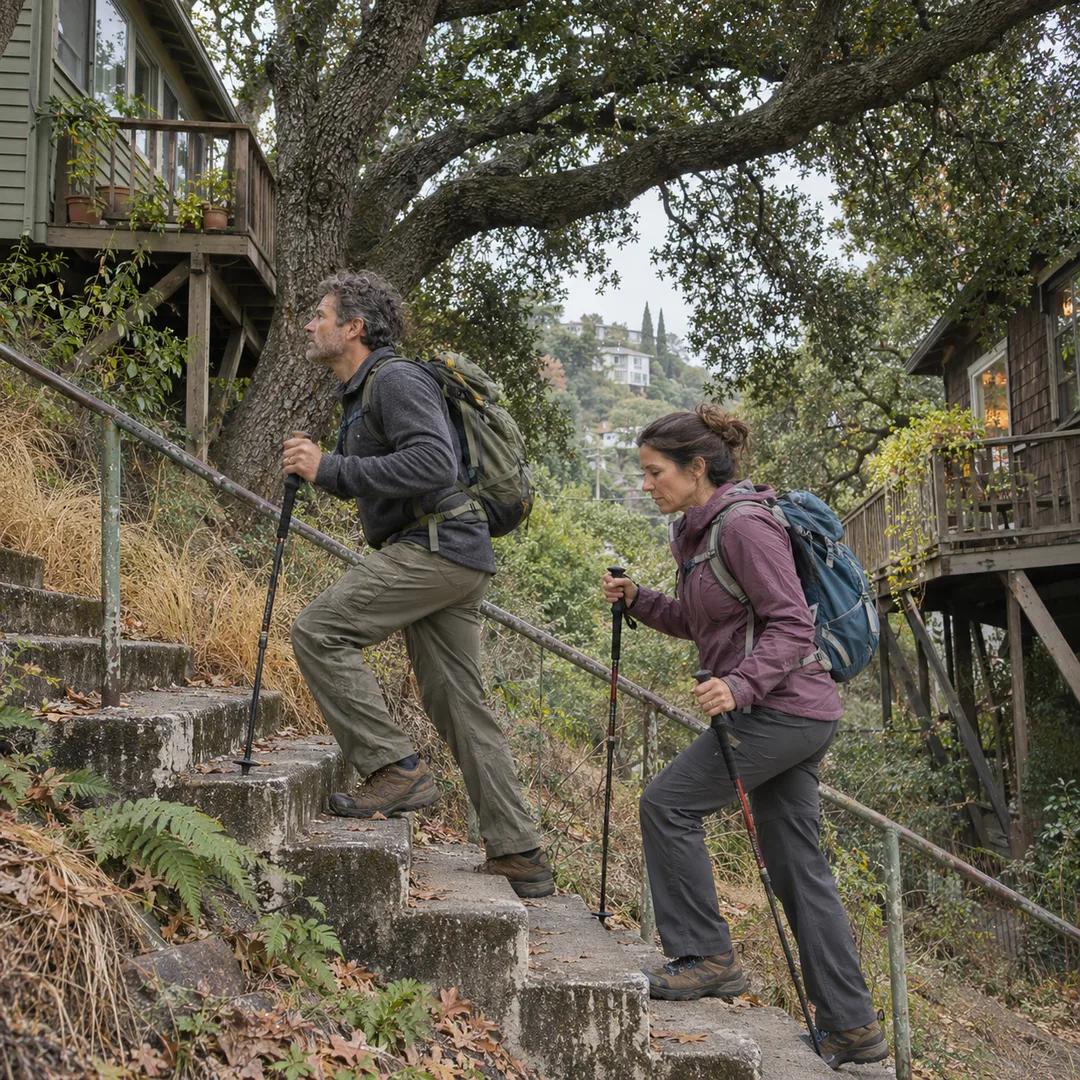
 El Sereno Urban Staircase Walk Planner for a Study Break
Free Things to Do

LA Local Event Finder: Fill a Free Evening
Use a local event finder in LA to narrow an open evening by time, energy and admission budget, then choose one manageable idea in the Karpo APP.
An unexpectedly empty evening in Los Angeles can disappear into choosing what to do. A useful local event finder starts with the time you actually have, the area you can reach, and how much effort you want to spend. Open the Karpo APP and describe those three things in a message. Ask for a small shortlist of ideas, with one reason each might suit you. The aim is a manageable decision that leaves enough evening to enjoy the outing.
Give the evening a beginning and an end
“I am free tonight” leaves too much room for interpretation. A person leaving work in Downtown has a different starting point from someone already home on the Westside. Include your starting neighborhood and the time you need to return. Your return deadline matters as much as the event start. A performance that begins comfortably inside your window can still be a poor fit if its length leaves no room for the journey back.
Write your limits in ordinary language. For example: “I will be near Culver City after dinner, and I want to be home before my usual bedtime. Suggest three low-effort event ideas in that part of LA.” This is an example request, not a report of events happening tonight. Replace the neighborhood with your own and add whether you will walk, drive, or use transit. There is no need to share a home address to describe the search area.
Decide whether free means time or money
A free evening describes an empty calendar. Free admission describes a price. Make the distinction explicit so an inviting suggestion does not miss the brief. If you want to spend nothing on entry, say that. If you have a spending limit, explain whether it includes travel and food as well as a ticket. A plan with no admission charge can still involve expenses that matter to your decision.
You can ask for ideas without naming a dollar amount: “Prioritize options without an entry fee, and keep optional purchases separate from anything required.” That sentence gives the comparison a useful structure without claiming any particular outing is free. When a suggestion has no published admission information, leave its cost unresolved rather than mentally counting it as zero. The distinction helps you compare evidence instead of filling an information gap with optimism.

Generated courtyard illustration for an evening-planning example, not a photograph of a listed event.
Ask for three different shapes of evening
Three versions of the same crowded show do little to improve a shortlist. Request meaningful variety: one seated option, one activity with a flexible arrival, and one option that involves a little participation. These are search directions, not statements that such events are running nearby. They help expose what you want from the time: to watch, wander, make something, or talk. If one format immediately feels exhausting, that reaction is useful information.
Keep the list small enough to read in one sitting. Ask for a sentence on the main attraction and a sentence on the main practical drawback. A seated performance might require a fixed commitment. A drop-in format might offer more freedom but less structure. You do not need a numerical ranking for every feature. You need to see which tradeoff you would accept tonight, while the outing still sounds appealing.
Turn a vague rejection into a better request
“Nothing looks good” is difficult to act on. Identify the reason the first set misses: too far, too loud, too formal, too much standing, or too dependent on buying something. Then change that variable in your next message. For example, “The seated idea is closest to my mood. Give me alternatives with a similarly gentle pace, but a shorter commitment.” This preserves the useful part of the search instead of restarting with an equally broad question.
Be clear about which limits can move. You might accept a longer journey for something unusual, but refuse an outing that ends late. Say so. Otherwise a compromise on one preference can quietly become a compromise on everything. A short follow-up with one firm boundary and one flexible preference often conveys more than a long list of unrelated interests. Stop refining when one candidate meets the essentials and you are comfortable choosing it.
Read an event suggestion as an invitation to decide
A discovery conversation helps frame options. The organizer's event details establish what a particular session actually offers. Separate an idea's appeal from the practical information attached to it: date, location, entry conditions, and how admission works. A general venue description does not establish tonight's program. Likewise, a familiar event name does not show that its next edition falls inside your available evening. Keep those questions tied to the particular session you are considering.
If the details do not establish a workable event, choose another supported option or keep the suggestion as an idea for another day. You can ask for a different format without turning uncertain information into a promise. This article provides request examples rather than a calendar of live events. It does not claim a seat, place in line, ticket, or booking has been secured. The decision remains yours, and any admission transaction has its own terms.
Keep the rest of the outing deliberately light
An open evening does not need to become a complicated itinerary. Choose one main activity and leave room around it. If you want food, describe it as a simple stop within the same area rather than a second destination across town. If you want a short walk afterward, make it optional. An outing with a single clear purpose is easier to abandon or shorten when your energy changes during the evening.
For a friend joining you, share the proposed activity and the commitment it requires. “A short seated event, followed by heading home” is more helpful than sending a collection of unrelated listings. Agree on who will handle any required admission and where you will meet. An enthusiastic reply is not evidence of a purchased ticket. Keeping the social arrangements separate from the discovery conversation prevents an avoidable misunderstanding at the point of leaving.
Practical notes for choosing without another hour of scrolling
Before you send your first message, settle three personal facts: where you will start, how much time is available, and the type of effort you want. Add the cost boundary if it matters. Ask for three distinct ideas and a concise comparison. After reading the response, give one targeted correction or choose a candidate with sufficient event information. This creates a useful stopping point instead of making discovery a second evening-long activity.
Use the Karpo APP as the place to begin that conversation. A strong opening is: “Help me use an open evening in LA. I am starting in my neighborhood, want a gentle outing, and need a short list with clear tradeoffs.” Add your real limits before sending. You are asking for help narrowing a decision, not asking a general list to know your mood. The small amount of personal context is what makes the request worth making.
Ask Karpo for more information.
Keep reading
- El Sereno Urban Staircase Walk Planner for a Study Break
 Santa Monica Urban Staircase Walk Planner Before Meetings
 Mount Washington Urban Staircase Walk Planner: Hike Prep