 El Sereno Urban Staircase Walk Planner for a Study Break
Free Things to Do

LA Local Event Finder: Plan for All Ages Together
Give a local event finder in LA your family ages, pace and practical needs, then use the Karpo APP to shape a shortlist everyone can consider together.
A family event search in Los Angeles becomes easier when “family” stops being the only filter. A toddler, a teenager, and a grandparent can all attend the same outing while needing very different things from it. Start a local event finder request with the ages, the pace, and one interest people share. Ask in the Karpo APP for ideas that respect those differences, then compare the practical demands before choosing a program.
Start with the people who have the least flexibility
An adult can often tolerate an activity outside their interests for a little while. A young child who needs a nap or an older relative who needs regular seating may have less room to adapt. Build the first version around those constraints. Describe what someone needs to participate comfortably rather than assigning a label. “Needs a place to sit frequently” gives more useful planning information than “suitable for grandparents.”
You do not need to send names, birthdays, or medical histories. Approximate ages and functional needs are enough for an outing brief. For example, “Two adults, a preschooler, a teenager, and an older adult who prefers limited standing” sketches the group without sharing private details. Add whether a stroller or mobility device is part of the journey. Those details guide the questions to ask about a particular program, without claiming that any recommended location meets them.
Look for an overlapping interest, not universal enthusiasm
A family does not need to agree that an activity is everyone's favorite. It needs a reason each person can enjoy being there. Start with a broad overlap such as making something, seeing how something works, hearing music, or spending time outdoors. Then identify what would keep each person engaged. A teenager might care about having some independence, while a younger child might need a simple task and an adult nearby.
Turn that overlap into a request: “Suggest LA event formats involving making or experimenting, where a younger child can join and an older child will not be treated as a preschooler.” This is a search brief rather than a claim about a real workshop. If the response points toward an age-specific activity, retain the distinction. A children's event is not automatically suitable for every child, and an all-ages label alone does not describe the difficulty of participation.
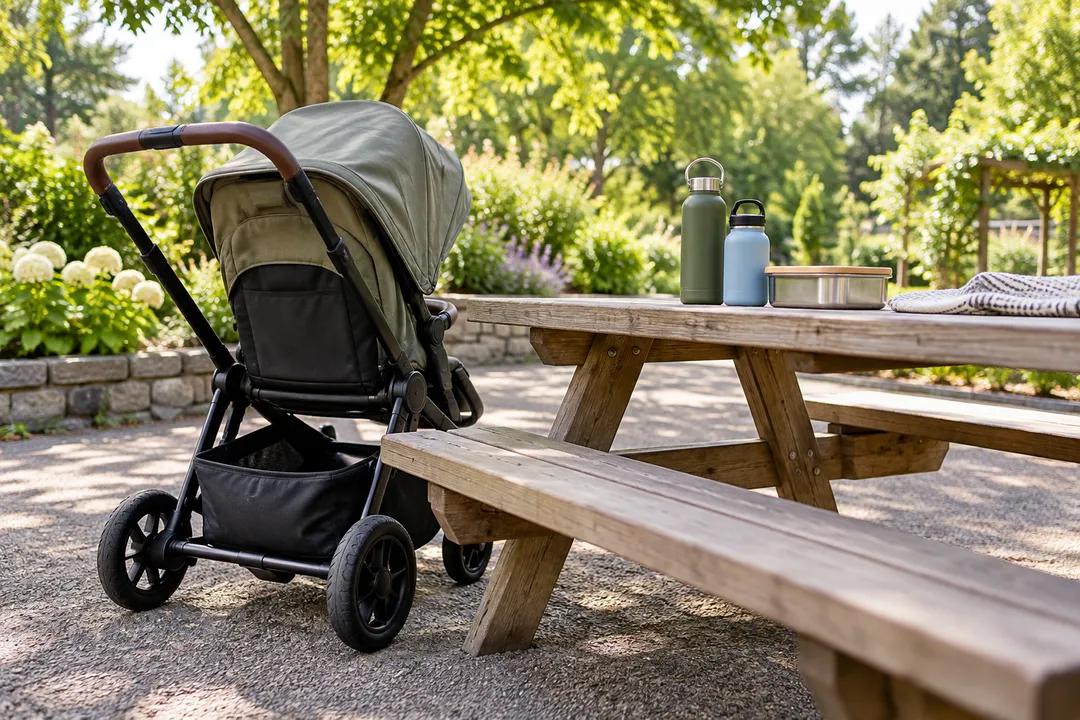
Generated family-outing illustration showing a stroller and a place to rest, not a photograph of a specific venue.
Put the travel and recovery time on the same page
The event itself is only part of the commitment. Describe the family's starting area, transport arrangement, and how long people are comfortable away from home. A short program can still become a long outing when arrival, meals, and the trip back are included. Use the whole window in the brief. If different households are meeting, choose a shared starting arrangement before looking for a program that appears convenient to only one of them.
Avoid a schedule that depends on every transition taking the shortest possible time. Leave room for a bathroom stop, a pause, or someone deciding they need food. You can ask for a single main activity with no additional destination required. That makes the event's value easier to judge: would it still be worth doing if the family went straight home afterward? If not, the plan may depend on too many extras to suit the group.
Separate age eligibility from the experience on offer
Admission age and activity suitability answer different questions. An event might admit children without providing anything aimed at them. A hands-on session might have a minimum age even when the venue generally welcomes families. The relevant information belongs to the particular event session. Do not infer it from the venue's name, a general family description, or the fact that another program in the same building accepts younger children.
When evaluating a candidate, keep a short distinction between established terms and unanswered questions. The terms might identify an age minimum, adult supervision requirement, or a separate place for each participant. If the event details do not establish those conditions, do not mark them as satisfied. Ask for an alternative with clearer attendance information. That is a useful decision based on the evidence you have, rather than an assumption that the word family settles everything.
Count every person affected by a booking decision
Think about adults who will supervise without joining the activity, children who will participate, and anyone accompanying the group. A participant place and admission to the room are not necessarily the same arrangement. The organizer's terms determine what is required for the actual session. Do not assume an accompanying adult can enter without a place, or that a family ticket includes every combination of ages and group size.
If money is a firm limit, describe the total amount you are willing to spend and what it must include. You can also prioritize ideas with no entry charge, while keeping transport and optional purchases separate. This page quotes no event prices. In your own comparison, an unpublished fee stays unknown. That rule matters more for a family than for one visitor, because an apparently small per-person expense can affect several people at once.
Give the family a workable way to leave
The ability to shorten an outing can matter more than squeezing in an extra activity. Consider whether your group needs a flexible departure or can commit to the full duration of a program. If leaving midway would be disruptive or impractical, that belongs in the decision. Phrase the request around your need: “Prioritize a format that lets us take a break without missing the whole experience.” It is a preference to match, not an assumed event policy.
Agree among the adults on what happens if one person needs to stop. You might travel together and leave together, or arrange an independent return for part of the group. Make that choice before promising the outing to children. A clear exit arrangement reduces the pressure to keep going simply because the plan has become complicated. You can still have an enjoyable afternoon without completing every optional part of it.
A family brief that another adult can understand
Write the final request in a compact paragraph: starting area, approximate ages, shared interest, available window, essential access needs, and spending boundary. For instance, “We are planning a daytime outing in our part of LA for adults and two school-age children. We want a creative activity, frequent seating for one adult, and a simple trip home. Give us a few different formats with their main tradeoffs.” Replace each detail with your family's actual situation.
Bring that brief to the Karpo APP and use the conversation to narrow the possibilities. Share the resulting candidate with the other adults as a proposal, with the attendance conditions attached. A suggestion is not a family reservation, and the chat does not establish that everyone's needs have been accommodated. Choose when the event information and the family arrangement fit together. The successful outcome is a plan people can comfortably take part in, not the longest list of attractions.
Ask Karpo for more information.
Keep reading
- El Sereno Urban Staircase Walk Planner for a Study Break
 Santa Monica Urban Staircase Walk Planner Before Meetings
 Mount Washington Urban Staircase Walk Planner: Hike Prep