 Mar Vista Winter Farmers Market Picker for Weekend Cyclists
Weekend Plans
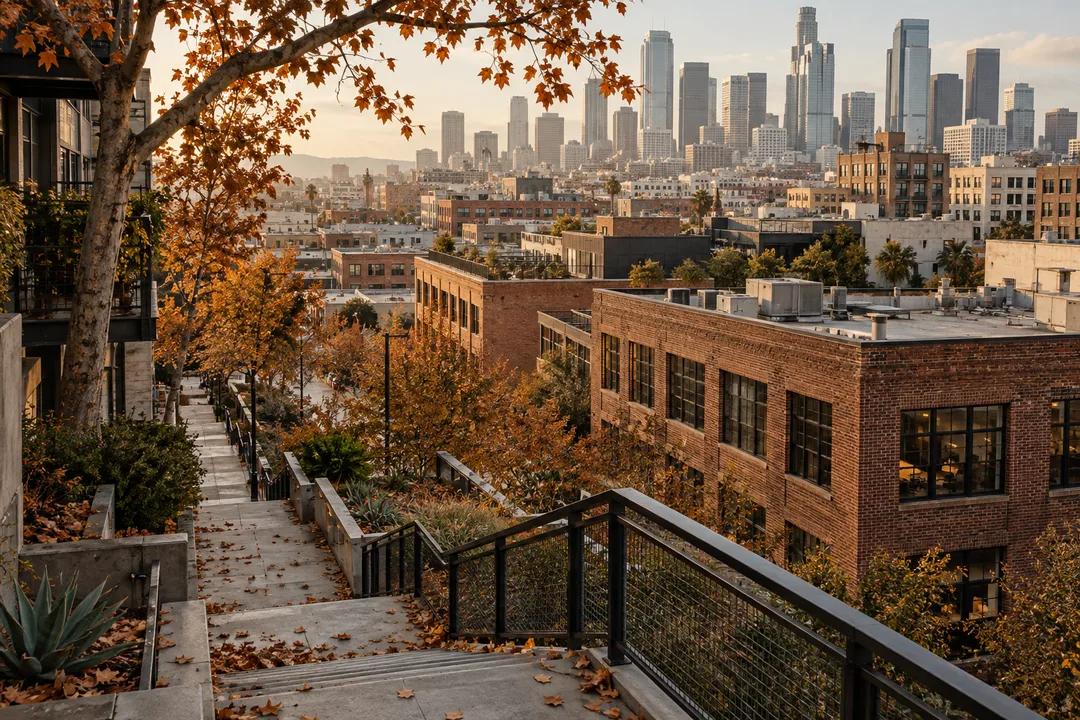
Arts District Late Fall Urban Hike: Flexible Blocks
Shape an Arts District late fall urban hike around murals, rail edges, river corridors, and short or long blocks that keep the afternoon flexible.
A late fall urban hike through the Arts District works when it treats downtown Los Angeles as a sequence of textures instead of a list of destinations. Start with murals and industrial edges, move toward a more open riverward feeling, and keep a short return ready before the route begins. The neighborhood can shift from busy to spacious in a few blocks. Use Karpo APP to save different distances so the group can follow the mood rather than a rigid schedule.

Open With Street Texture
Begin with a block that gives everyone room to arrive and orient. The Arts District rewards close looking: painted walls, warehouse proportions, rail lines, planted pockets, and the changing shadow under larger structures. Ask walkers to choose one visual detail and one sound before moving on. This creates a shared pace without pretending every wall needs a stop. Regroup before major crossings, then let the next block carry the conversation.
Murals are easy to treat as a checklist, but the better route lets them sit inside the walk. Move past one image, notice how the building edge frames it, and keep going until another texture changes the story. Pause only where the group can stand clear of driveways and foot traffic. The goal is a moving gallery, not a queue. In the app, mark an optional photo loop rather than a mandatory sequence.
As the route leaves the densest mural blocks, change the walking prompt. Look for the relationship between old industrial surfaces and newer public spaces, or notice where planted areas soften the hard grid. A slower block after a busy crossing helps the group reset. If anyone wants to stop longer, give them a clear side position and a reunion cue. That keeps the route inclusive without making everyone wait in the same spot.
Let the Blocks Breathe
The Arts District has a useful alternation between compressed streets and open infrastructure views. Let the route breathe after each loud or complicated section. People can talk, compare colors, and notice how the sky changes over the buildings. Keep attention on crossings and loading edges; urban walking is easier when the group anticipates movement instead of reacting late. A steady rhythm gives the route a sense of design without turning it into a tour script.
At the midpoint, choose between more visual detail and more open air. The shorter version can loop through quieter blocks and finish near a simple transit choice. The longer version can continue toward a river corridor or another broad public edge. Put both lines in Karpo APP before leaving the midpoint. A visible fork prevents the group from spending twenty minutes negotiating while standing in the same patch of sidewalk.
A Flexible Midpoint
Use the midpoint pause to check the group's actual energy. Ask whether people want another mural chapter, a quieter stretch, or a direct finish. The answer may differ from what sounded appealing at the start, especially if the sun has moved or the pavement feels warmer. Make the decision together and save it. A productively flexible route changes shape without making anyone feel they have lowered the ambition.
Keep the pause practical. Water, a layer check, and a brief look at the map are enough. Avoid turning the route into a search for a particular shop or menu; those details can change and are not necessary for the walking story. If someone needs a longer break, let the rest of the group know the reunion point and keep the route legible. The afternoon remains enjoyable when the plan can absorb different bodies.
The return should use a new visual register. If the outbound walk emphasized murals, bring the group back through building shadows, rail perspectives, or planted corners. If the route has become crowded, choose the calmer line even when it adds a few minutes. Stay alert at driveways and service edges, and let the rear walker set the crossing pace. A gentle finish protects the route's final impression better than one last forced landmark.
Choose the Return Character
Late fall light in Los Angeles can change the Arts District quickly. A low sun may turn a wall vivid while a shaded underpass feels suddenly cool. Carry water and one layer, and keep the open-edge section optional if the temperature drops. Karpo APP can hold the sheltered return beside the longer line. The useful promise is adaptability: the group can keep exploring without pretending the afternoon will stay constant.
Treat every block as shared working space. Leave loading zones, driveways, and bike movement clear. Keep voices moderate near residential conversions, and do not climb fences or touch public art surfaces. When a photo needs time, place the group to one side and let pedestrians pass. These rules make the walk safer and more respectful, while also improving observation because attention is not spent managing a crowd that the group created.
Keep Light on Your Side
Comfort planning is straightforward. Use shoes that handle long pavement, carry water, and keep sunscreen or a light layer reachable. Assign one route holder and one rear walker, especially if the group crosses busy streets. Decide how to signal a pause before the first mural stop. A shared plan helps visitors and locals alike because nobody has to shout the next turn or search for a missing person after every photo.
Set Karpo APP anchors for a mural opening, a texture change, a midpoint decision, and two exits. Then add a short and long route that share the same first chapter. This makes the plan easy to explain: start together, decide together, and return by the line that matches the day. Use the app to keep the route visible, not to claim live certainty about every block. The neighborhood itself remains the evidence.
Practical Notes
A good photo sequence mirrors the route's structure. Make one close image of a surface, one frame that shows a whole wall in its block, and one wider scene where walkers occupy the urban scale. Do not photograph while crossing or while standing in a loading path. After each frame, walk several blocks without the phone. The alternation keeps the story tactile and prevents the visual record from becoming repetitive.
Do not overload the afternoon with distant add-ons. The Arts District already offers a full arc from intimate details to open infrastructure and back to a quieter grid. Another far-off destination may look close on a map but can make the return feel rushed. If the group wants food, shopping, or another stop, make that a separate next step. The hike should end with the city still feeling available rather than exhausted.
Why the Arts District Route Works
Practical notes: gather on a spacious block, brief the group on loading edges and crossings, and save short and long routes in Karpo APP. Assign a route holder and rear walker. Keep water and a light layer accessible. Pause to photograph only where the group can stand clear. Let the midpoint choice reflect real energy and light. Respect murals, gates, driveways, residents, and other pedestrians throughout the walk.
This Arts District late fall urban hike works because it gives visual density and breathing room equal weight. Murals, industrial edges, open corridors, and quieter returns create a route with several natural endings. The group can stay together while choosing different amounts of distance, which is the real luxury of a city walk. Open Karpo APP when you are ready to arrange the blocks, keep the exits visible, and let the changing light set the pace.
Ask Karpo for more information.
Keep reading
- Mar Vista Winter Farmers Market Picker for Weekend Cyclists
 Downtown LA Winter Farmers Market Picker for Car-Free Hosts
 Larchmont Winter Farmers Market Picker for Kimchi-Making Day