 Downtown LA Comedy Club Night Picker for a Team Outing
Bars & Nights Out
Holiday Office Party Venue Picker: Koreatown BBQ and Karaoke
Koreatown office parties pair a private Korean barbecue room with a karaoke suite a short walk away. Ask for one big table and plan the second stop first.
Koreatown gives a holiday office party something most LA neighborhoods cannot, a natural two-act structure built into the streets. Act one is a private Korean barbecue room where the team grills, toasts and passes plates. Act two is a karaoke suite a short walk away where everybody, including the manager who never talks in meetings, takes a turn on the mic. For a group of twelve to sixty that wants laughter instead of speeches, a venue picker should send you here.
Why Koreatown Works for Teams That Need a Push
The neighborhood packs an enormous number of restaurants, bars and entertainment rooms into a dense grid around Wilshire Boulevard and Western Avenue, much of it open well past the hour when other parts of the city go quiet. Korean dining culture is built around sharing, pouring for each other and building the night in stages, which happens to be exactly what a team holiday party needs. People who barely know each other end up cooking for one another within ten minutes.
Koreatown also handles groups without fuss. Many restaurants and karaoke venues have private rooms of different sizes, and staff are used to large parties that arrive in waves. The grand old Art Deco buildings along Wilshire add a sense of occasion when your team walks between stops, especially when the lobbies and storefronts are lit for the holidays. It feels like a proper night out without the formality of a hotel ballroom.
Act One: Choosing the Barbecue Room
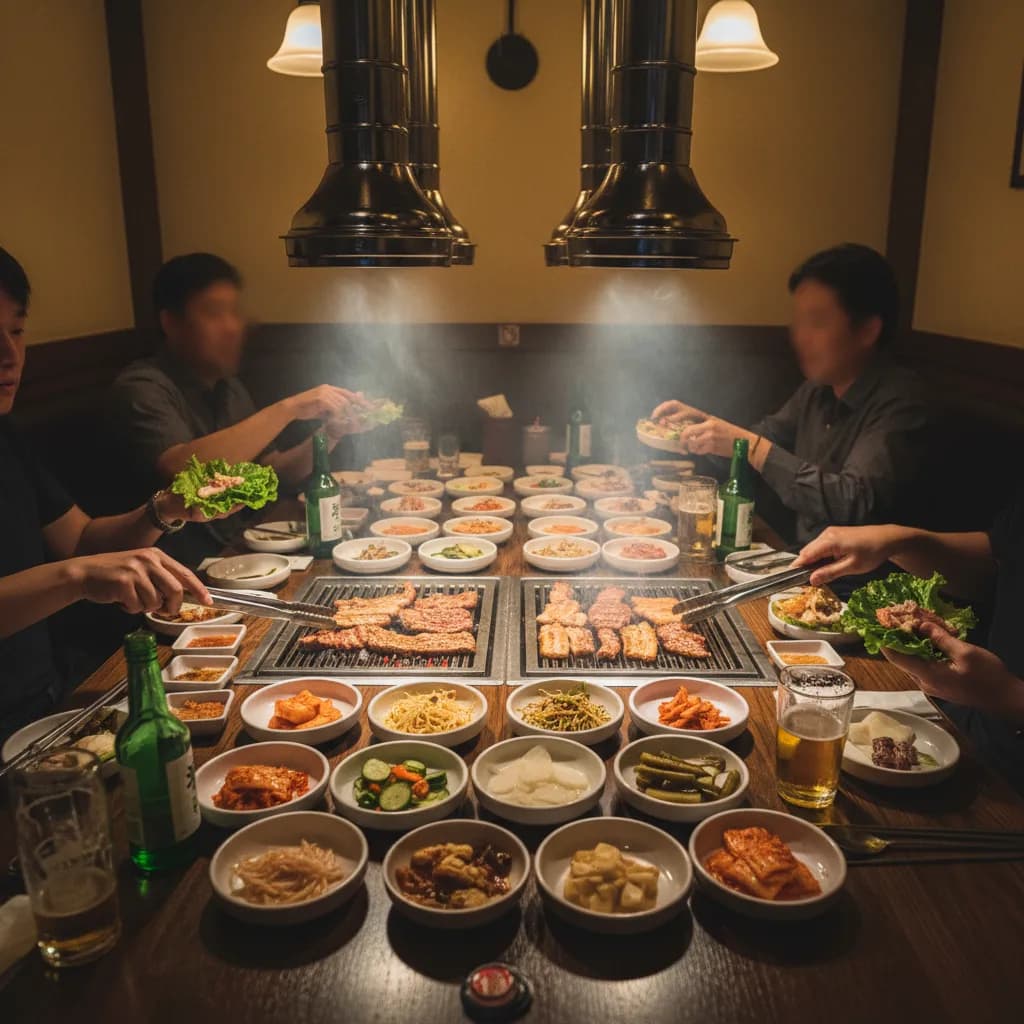
Start with the dinner room, because it anchors everything else. Look for a restaurant with a private or semi-private room that can seat your whole group at connected tables, ideally with a grill for every four to six people. Ask whether staff will cook the meat for you or leave it to the table. Having servers handle the grilling keeps the food coming at a good pace, while self-grilling gives the team something to do with their hands.
Set menus are the easiest route for a group. Most barbecue houses offer combinations of beef, pork and sometimes seafood, with banchan side dishes, rice and a stew to finish. Share dietary needs early, since a vegetarian guest at a meat-centered table needs real options like tofu, mushrooms or a seafood pancake. Ventilation varies too, so warn guests that clothes may smell of smoke afterwards and suggest they avoid wearing their favorite wool coat.
The toast matters in Korean dining. Encourage the team to pour for each other instead of themselves, and to turn slightly away when drinking in front of the most senior person, a small gesture that delights anyone who knows the custom. Soju and beer are standard, but most rooms also serve soft drinks, tea and sometimes non-alcoholic beer. Make sure the non-drinkers have something to raise, so the toasts include everyone at the table.
Act Two: Picking the Karaoke Suite
Noraebang, or Korean karaoke rooms, are the secret weapon of a Koreatown party. Instead of singing in front of a whole bar, your group gets a private room with sofas, a big screen, microphones and a tablet full of songs in many languages. Book a room that fits slightly more than the number you expect, because people drift in from dinner and some will want to sit and watch rather than sing. Larger suites often come with snacks and drink service.
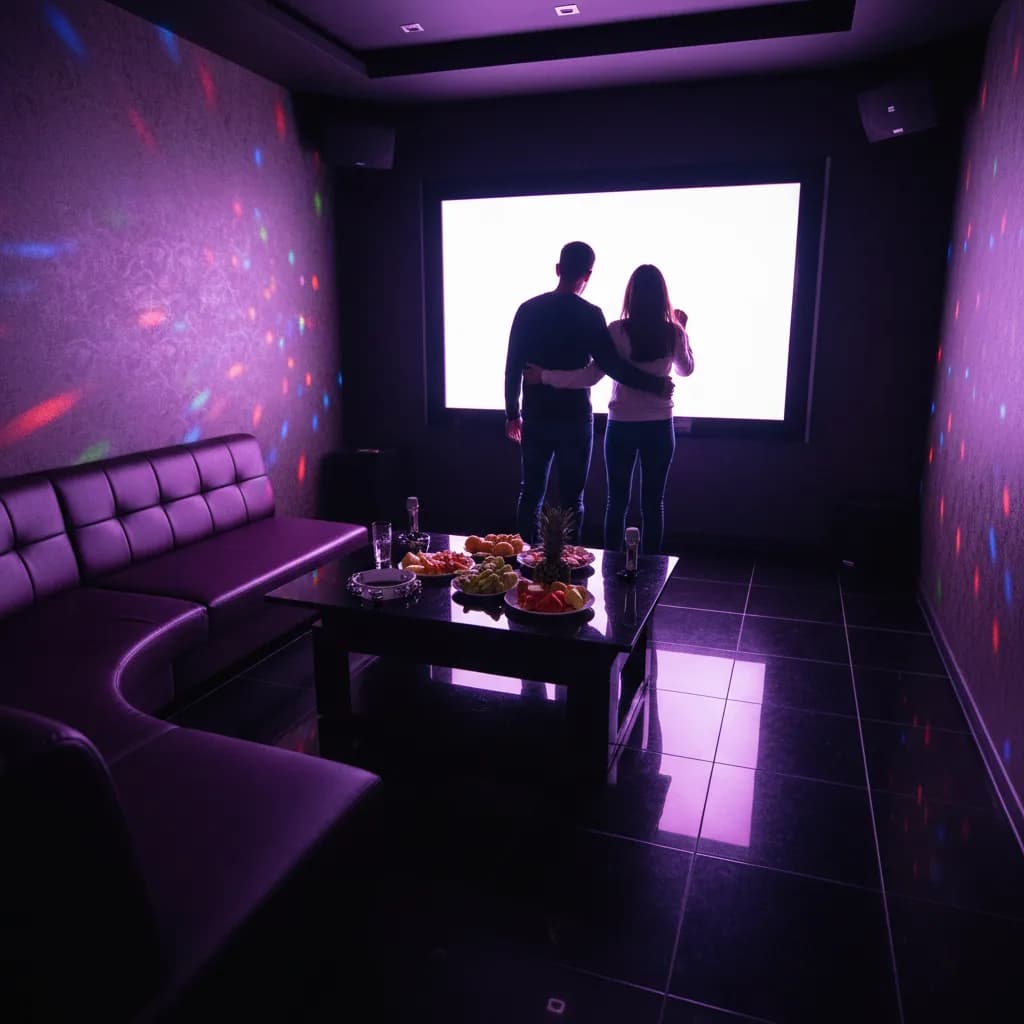
Plan the handoff carefully. Walking from dinner to karaoke should take a few minutes at most, so choose the two venues as a pair. Send the karaoke location with the dinner invite so nobody gets lost in the dense blocks. A playlist of crowd favorites, from holiday classics to big pop choruses, helps the first song land. After that, the room usually takes care of itself, and the hardest job becomes getting people to leave.
Common Koreatown Party Mistakes
The most frequent mistake is skipping the reservation for a big group and assuming you can walk in. Popular barbecue spots have long waits on Friday and Saturday nights in December, and a team of thirty standing on the sidewalk is a mood killer. The second mistake is trying to cram dinner and karaoke into too short a window. Give each act enough time, and accept that some people will head home after dinner while the night owls carry on.
Transport is the third trap. Parking structures in Koreatown fill fast and can be confusing to navigate, and street parking on a busy evening is a gamble. The Metro D Line runs under Wilshire, so colleagues coming from Downtown can ride in, while others should share rideshares. Agree on a pickup point on a main street at the end of the night, since side streets get crowded with double-parked cars.
When Koreatown Is Not the Right Fit
Skip Koreatown if your team wants quiet conversation, a formal plated dinner or an outdoor setting with fresh air. Barbecue rooms are loud, smoky and busy by design, and karaoke is not everyone's idea of fun. If a big share of the team is shy, sensitive to noise or avoids drinking, consider a calmer dinner elsewhere and make karaoke an optional late add-on. A good planner reads the room before choosing the room.
How Karpo Helps You Pair the Two Venues
Karpo APP makes the pairing step easier. Describe your group size, the vibe you are after and the fact that you want dinner followed by karaoke, and Karpo suggests Koreatown spots that could work together. Save your favorites, share the list with your co-organizer and decide as a team. Reach out to the restaurant and the karaoke venue yourself to settle the rooms and terms, then send a single invite that covers both stops.
Practical Notes for Koreatown Planners
Put both addresses, the start time and the pickup point in one message. Tell guests to come hungry, wear layers they do not mind getting smoky and bring their best karaoke song. Name a host to manage the tab at each venue and keep an eye on the clock. Collect dietary notes with the invite, not on the night. Most of all, set the tone early by singing first yourself, since a team follows whoever picks up the mic.
Ask Karpo for more information.
Keep reading
- Downtown LA Comedy Club Night Picker for a Team Outing
 Fairfax Comedy Club Night Picker for Aspiring Comedy Writers
 Santa Monica Comedy Club Night Picker for a Shy Date