 Mar Vista Winter Farmers Market Picker for Weekend Cyclists
Weekend Plans
Los Feliz Holiday Lights Walk Planner for Architecture Fans
Love old LA houses? This Los Feliz lights walk reads Spanish Revival, Craftsman and mid-century homes after dark, then winds down along Hillhurst and Vermont.
Los Feliz is one of the best neighbourhoods in Los Angeles for looking at houses, and December gives you a reason to do it after dark. Every style of LA home seems to be represented on these slopes, and each one takes holiday lights differently. This holiday lights walk planner is written for people who notice rooflines and window frames first and inflatables second, with a route that treats the evening as a slow architecture tour lit by the season.
Why Lights Change How You See a House
In daylight a house shows you its materials. At night, with lights along its edges, it shows you its shape. A string of bulbs traces a roofline, a lit doorway reveals the depth of an arch, and glowing windows tell you how the rooms are arranged. For anyone who loves architecture, a December evening walk is a chance to read buildings in a completely different way.
Los Feliz is ideal for this because so many styles sit side by side. Spanish Revival homes with tile roofs share streets with Craftsman bungalows, Tudor-style cottages and sleek mid-century houses tucked into the hillside. Watching how each owner decorates, often in a way that respects the style of the house, is half the fun.
Spanish Revival Courtyards in Warm Light
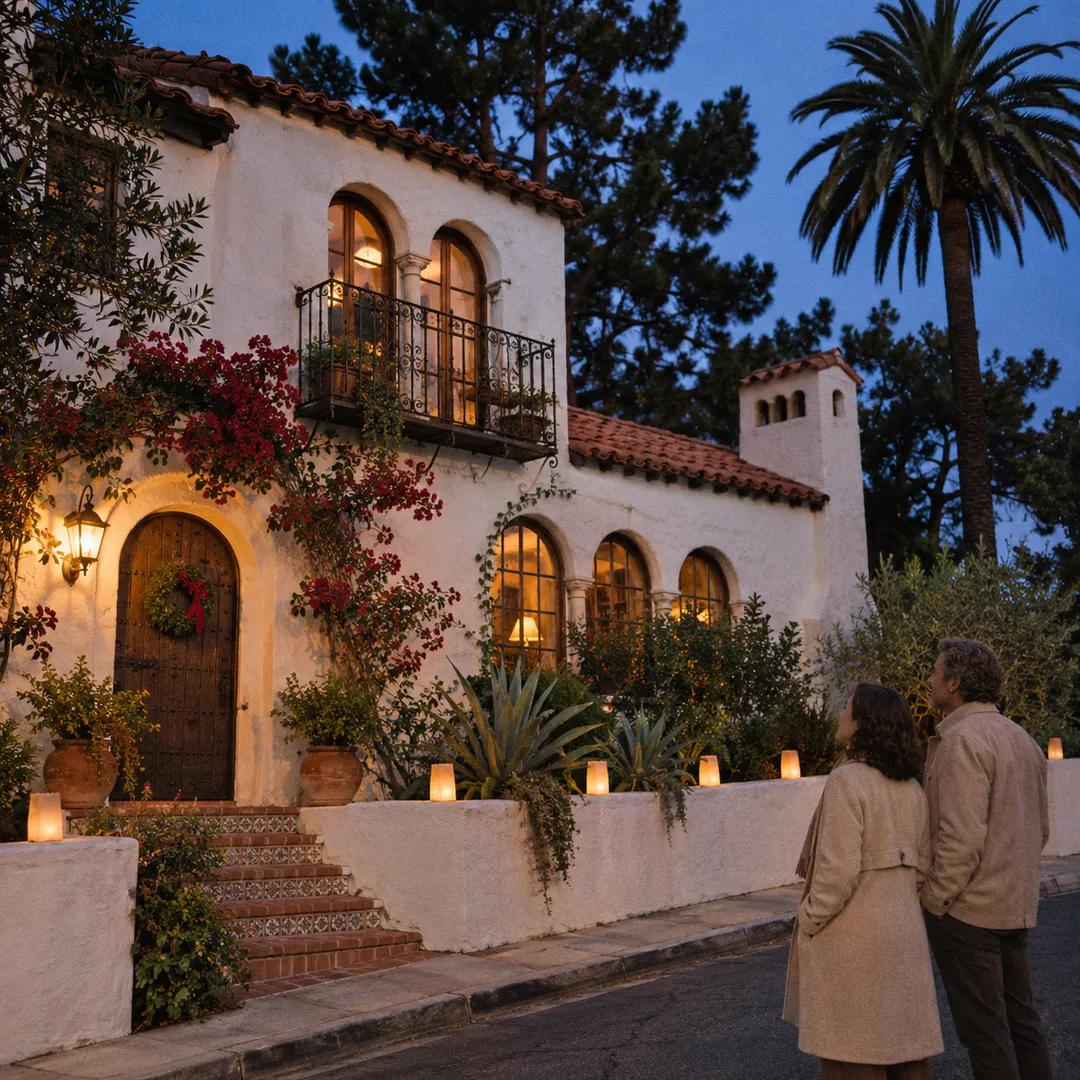
Start among the Spanish Revival homes on the gentler slopes. With their white stucco walls, red tile roofs and arched windows, these houses suit warm, simple decorations, and many owners lean into that with candle-like lights along walls, lanterns by heavy wooden doors and wreaths framed by wrought iron. The effect is closer to an old mission at dusk than a typical suburban display.
Pay attention to courtyards and garden walls. A string of lights behind a low wall can turn a whole front garden into a glowing room, and arched gateways frame decorations like a stage set. Stand back on the opposite pavement to see the full composition, then step closer to notice the tiles, ironwork and painted details the lights pick out.
Craftsman Porches and Tudor Gables
The Craftsman bungalows are the most generous decorators in many LA neighbourhoods. Their deep front porches and tapered columns are made for lights, garlands and a couple of chairs set out for the evening. Look at how the exposed rafter ends and wide eaves catch the glow, and how the porch becomes a kind of lit stage facing the street.
Tudor-style houses, with steep gables and half-timbered fronts, look almost storybook at this time of year. A single line of lights along a steep roof shows off the pitch beautifully. Compare them with the Craftsman porches nearby and you start to see how much the shape of the building decides what kind of decoration looks right.
Mid-Century Glass After Dark
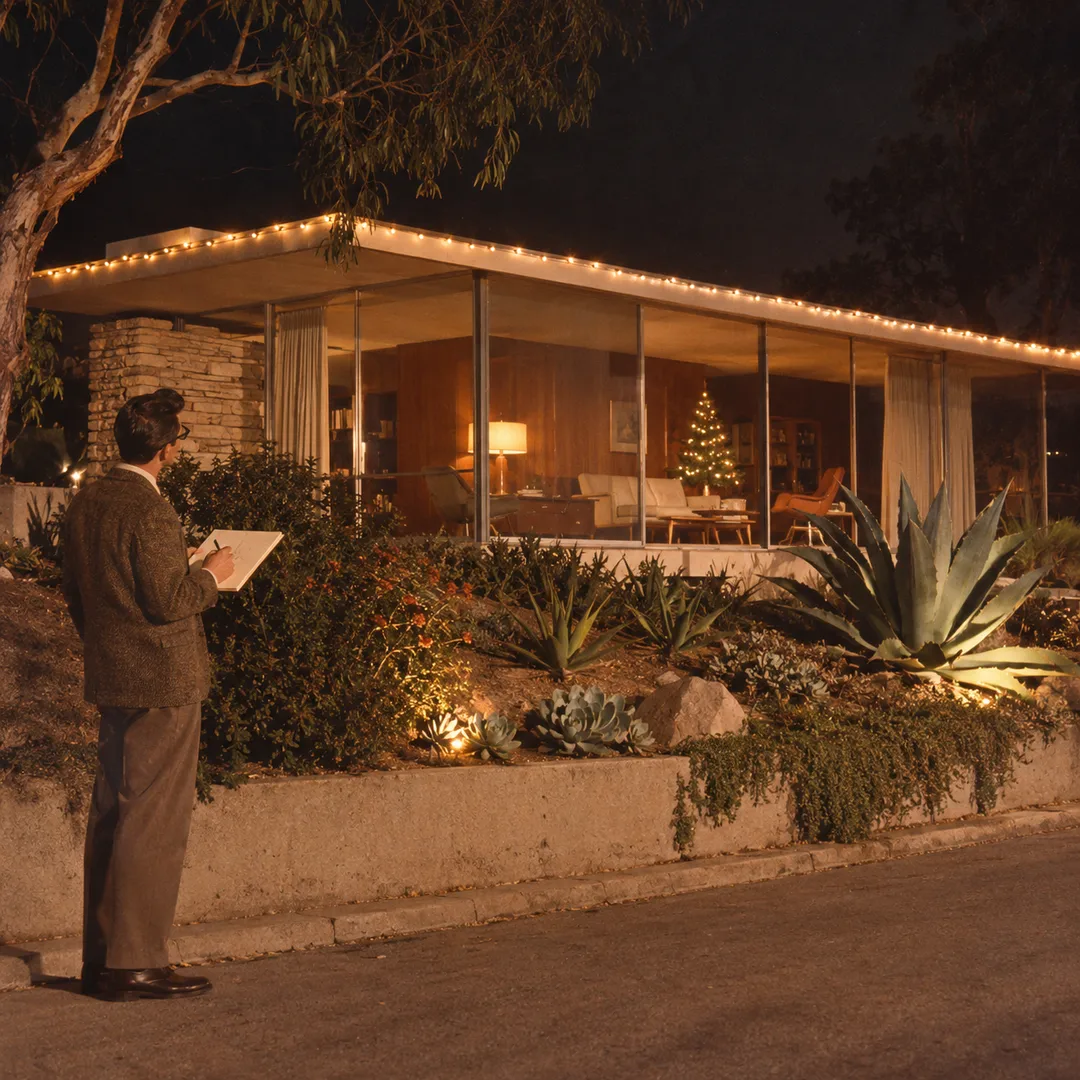
Climb higher and you reach the mid-century houses, with flat or low-pitched roofs, long horizontal lines and walls of glass. These owners often keep it minimal, maybe one crisp line of white light along the roof edge and a tree glowing behind the glass. At night these homes become lanterns, and from the street you can read the open-plan layouts that made the style famous.
Be respectful here. Glass houses show a lot, and people are at home living their evening. Admire the architecture from the pavement, avoid lingering in front of windows, and never point cameras into rooms. A good rule is to photograph the roofline and the garden, not the people inside.
Landmarks Seen From the Street
Los Feliz is home to famous works of architecture, including houses by Frank Lloyd Wright. Hollyhock House sits in Barnsdall Park, a public park on a hill with wide views, and walking its grounds in the late afternoon before heading into the residential streets sets the tone for the whole evening. Other well-known homes in the area are private, so enjoy them from the public street only.
From some corners in the hills you will also catch a glimpse of Griffith Observatory glowing on the ridge above. It makes a fine backdrop for the walk, a reminder of how the neighbourhood sits at the foot of the park. Treat these as moments along the way rather than destinations to rush between.
Planning a Comfortable Route
The higher streets are steep and winding, with narrow pavements or none at all, so walk in small groups, wear shoes with grip and bring a small torch. Start lower on the slopes while there is still some daylight, then climb as the lights come on, finishing with the mid-century homes once it is fully dark and the glass walls glow brightest.
Weeknights are quieter than weekends, which matters on narrow streets where cars and walkers share the road. Allow around two hours for a relaxed loop with plenty of stops. If you are carrying a camera or sketchbook, add more. The point is to linger, not to tick off a list.
Bring a friend who sees things differently. A walking partner who notices gardens, colours or the stories behind the houses will point out details you miss, and you will return the favour with rooflines and windows. The best architecture walks are shared conversations rather than solo study sessions.
Winding Down on Hillhurst and Vermont
End the walk by heading down to Hillhurst Avenue or Vermont Avenue, the neighbourhood's two main strips of shops, cafes and restaurants. After the hush of the hills they feel bright and lively, and both streets have their own holiday windows and string lights. It is a natural place to sit down, warm up and compare notes on your favourite houses.
If you brought a sketchbook, this is the time to fill in the details while they are fresh. Architecture lovers often find that drawing a roofline from memory is the best way to understand it. Even a few quick notes on your phone about which streets surprised you will help you plan an even better walk next year.
Using Karpo to Build Your Route
The Karpo APP can help turn this idea into a plan. Tell Karpo you want an evening architecture and lights walk in Los Feliz, how steep you are happy to go and how long you have, and it can help you sketch a loop that moves from Spanish Revival courtyards to mid-century glass in a sensible order.
Karpo can also suggest when to start based on sunset, where to finish for dinner, and how to shorten the route if a friend is less keen on hills. It does the logistics so you can focus on the rooflines, the arches and the way December light changes everything about them.
Ask Karpo for more information.
Keep reading
- Mar Vista Winter Farmers Market Picker for Weekend Cyclists
 Downtown LA Winter Farmers Market Picker for Car-Free Hosts
 Larchmont Winter Farmers Market Picker for Kimchi-Making Day