 Mar Vista Winter Farmers Market Picker for Weekend Cyclists
Weekend Plans
Arts District Hidden Courtyard Garden: Free Gallery Escape
The Arts District hides its courtyard gardens inside converted mills and warehouses. Start at a free gallery courtyard, then walk to a Little Tokyo garden.
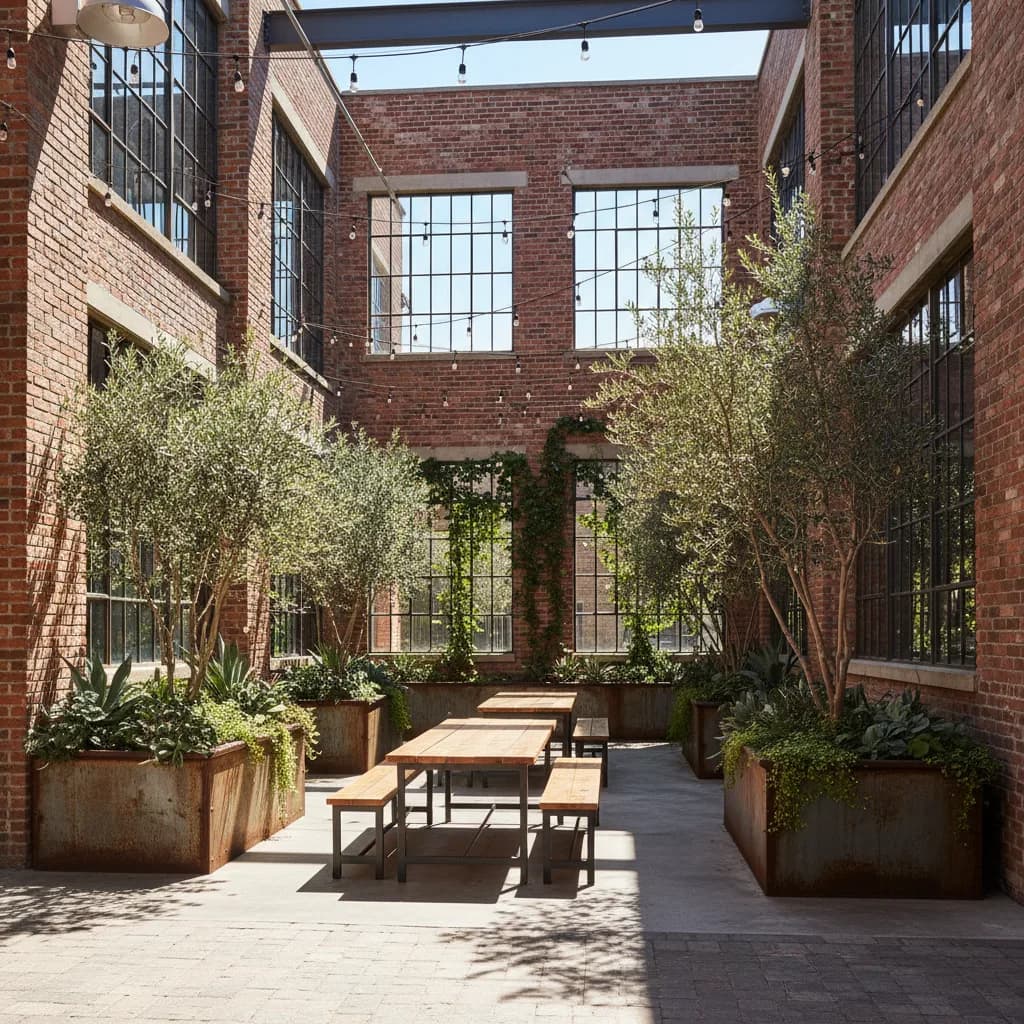
A hidden courtyard garden is not the first thing people expect in the Arts District. This is a neighborhood of rail spurs, loading docks and murals, where old factories now hold galleries, studios and breweries. Yet that industrial bones-first layout is exactly why the greenery here feels so surprising. Walk through an archway off a busy street and you can land in a brick courtyard full of olive trees, raised planters and birdsong. This guide is a planner for finding those pockets, pairing them with a true Japanese garden just a short walk west.
Why Warehouses Make Great Courtyards
Factory complexes were built around yards where trucks turned and workers took breaks. When artists and developers converted them, many of those yards became shared courtyards, and some were planted heavily to soften all the brick and steel. The result is a set of quiet interiors you cannot see from the sidewalk. The Arts District does not have a formal walled garden, so the honest approach is to treat it as a treasure hunt through public courtyards, gallery grounds and small green corners, rather than one destination with a gate.
The fun is in the contrast. Outside, you hear freight trains on the edge of the district, delivery vans and music drifting from a taproom. Step inside a planted courtyard and the noise drops, sunlight filters through olive leaves and the smell shifts from asphalt to rosemary. Visitors tend to be gallery-goers, designers working remotely, couples on a slow weekend date and photographers looking for texture. The unspoken rule in shared courtyards is to keep voices low and treat the space as borrowed, not owned.
Start at the Flour Mill Gallery Courtyard
The anchor for most garden walks here is Hauser and Wirth Los Angeles, a major contemporary art gallery set inside a historic flour mill complex. Admission to the galleries is free, and the complex wraps around an open courtyard where trees, planters and long tables give the brick buildings a softer, almost Mediterranean feel. There is also a planted garden on the grounds, a working patch that brings a hint of farmyard to a downtown industrial block. It is the closest thing the district has to a courtyard you can linger in.
How to use it well: browse one or two exhibitions first, then settle in the courtyard with a coffee or simply a bench and a book. Weekday mornings tend to be the calmest, while weekend afternoons bring families, tourists and art crowds. Respect the artwork on the grounds, keep kids from climbing installations and save loud phone calls for the street. If the courtyard is busy, take a lap of the surrounding blocks and come back later, because the mood changes noticeably between morning and late afternoon.
Small Green Corners Between the Murals
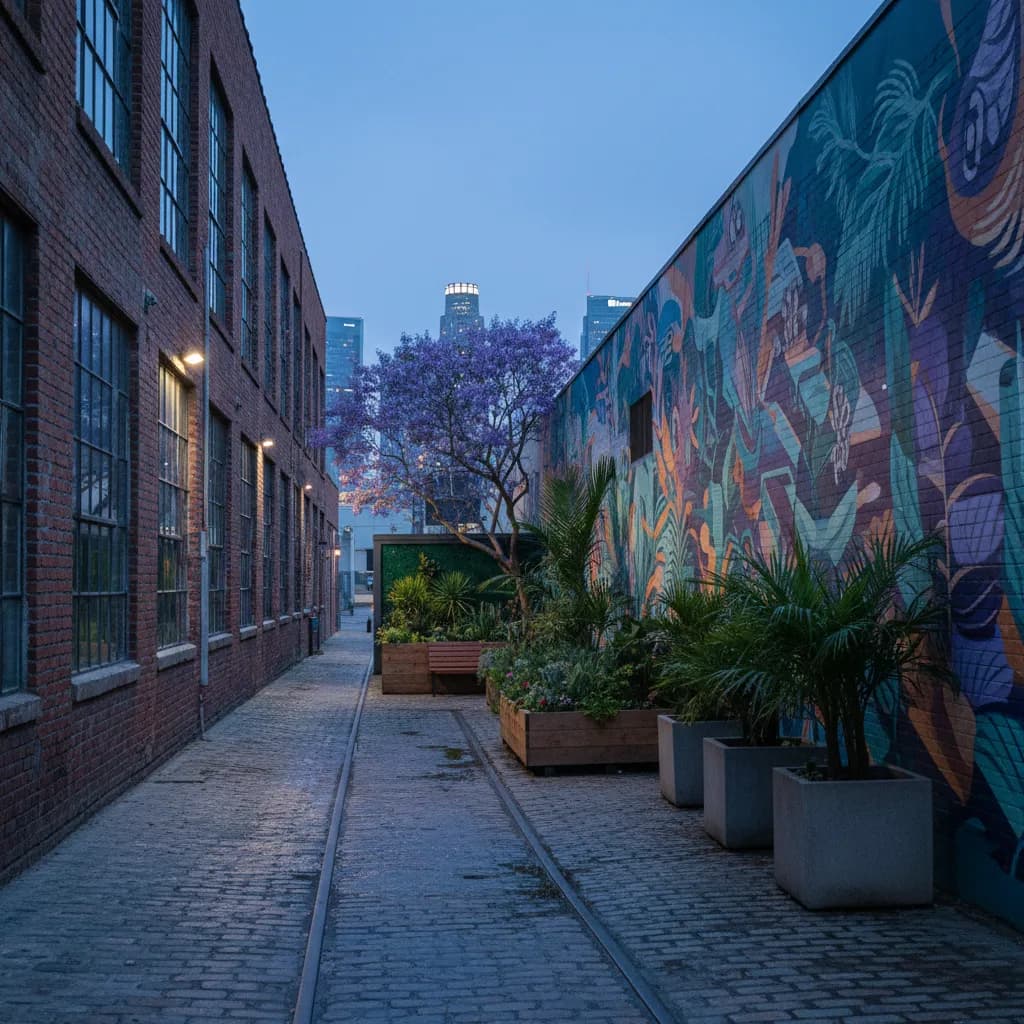
Beyond the gallery, the Arts District rewards slow walking. Look for the small neighborhood park tucked among warehouses near the heart of the district, a patch of lawn and trees where residents walk dogs and remote workers take calls in the shade. Narrow alleys often hide potted palms, planter boxes and benches set against massive murals. Some converted buildings have courtyards behind their lobbies or cafes, and if a door is open and the space is clearly public, you are welcome to step in and look around.
Honest verdict: some of these corners are small, and a few are only open when the businesses around them are. That is part of the charm, but it also means planning matters. Go with a flexible route rather than a strict checklist. If you want a truly enclosed, contemplative garden, keep walking west, because the most beautiful hidden garden near the Arts District actually sits across the line in Little Tokyo, and it is worth every extra step.
Little Tokyo's Stream Garden: The Real Hidden Courtyard
Tucked below street level at the Japanese American Cultural and Community Center, the James Irvine Japanese Garden is one of downtown's best-kept secrets. Its Japanese name, Seiryu-en, means garden of the clear stream, and a winding stream runs through it beside stone lanterns, maples, azaleas and bamboo. Because it sits lower than the surrounding plaza, many people walk right past without knowing it exists. Inside, the sound of water covers the city, and the garden feels like a private courtyard in Kyoto rather than a block from busy streets.
The garden is cared for by the center and its volunteers, and its openings follow the center's own schedule, so check with the community center before you make the trip. When it is open, move slowly, stay on the paths and avoid stepping on moss or stones. Visitors include Little Tokyo regulars, culture lovers coming from museums nearby and people simply looking for calm. Combine it with a stroll through the Japanese Village Plaza for snacks, then wander back east to the Arts District at your own pace.
A Half-Day Arts District Garden Route
Begin with coffee in the Arts District, then visit the flour mill gallery and its courtyard while the light is fresh. Wander south and east through alleys and murals, pausing at the neighborhood park for a rest. Continue west toward Little Tokyo and spend time in the Japanese stream garden. Finish with lunch in Little Tokyo or loop back to an Arts District taproom. The whole route is walkable, and you can reverse it if you prefer to start in the garden and end with art.
Want a shorter version? Choose just the gallery courtyard and the Japanese garden, connected by a direct walk. Want more art? Add another gallery or a studio building to your loop. Visiting in summer heat? Do the outdoor stretches early and save gallery interiors for midday, when shade and air conditioning matter. Bringing kids? The open courtyard and the stream garden both make good places for children to slow down and watch water, birds and plants.
Let Karpo Shape Your Route
Open the Karpo APP and tell it you want a hidden courtyard garden afternoon in the Arts District, how far you like to walk and whether you would rather end at a taproom or a noodle counter. Karpo will help you shortlist the gallery courtyard, the green corners and the Little Tokyo garden, then put them in a sensible order. It suggests and organizes options. For garden visits and events, the community center team is the right contact.
Practical Notes for the Arts District
Getting there: Metro rail stations in Little Tokyo put you within walking distance of both the Japanese garden and the Arts District. Costs: gallery entry, public courtyards and the neighborhood park are free. Footwear: wear comfortable shoes, because sidewalks can be uneven around rail crossings and loading docks. Etiquette: many courtyards belong to private businesses that welcome the public, so buy a coffee if you plan to sit for a long time, and keep music off.
Photography: courtyards glow in soft late afternoon light, and murals look best when the sun is low. Safety: stick to busier streets and well-lit routes in the evening, and keep valuables close. Families: kids enjoy spotting animals in murals and watching the stream garden's water. Timing: plan for three to four hours for the full route. Weather: downtown can feel hotter than coastal neighborhoods, so carry water and plan shady stops.
Ask Karpo for more information.
Keep reading
- Mar Vista Winter Farmers Market Picker for Weekend Cyclists
 Downtown LA Winter Farmers Market Picker for Car-Free Hosts
 Larchmont Winter Farmers Market Picker for Kimchi-Making Day