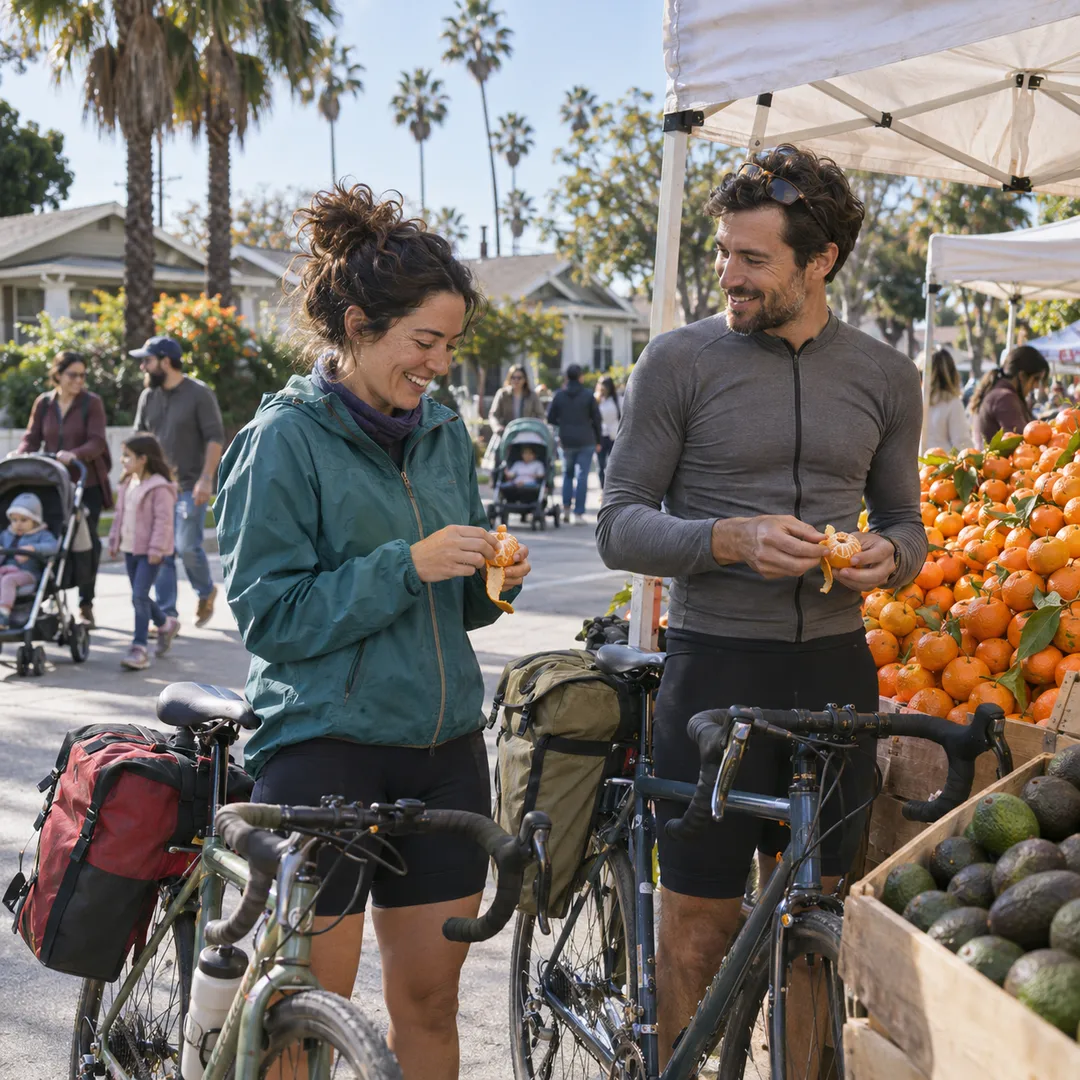
 Mar Vista Winter Farmers Market Picker for Weekend Cyclists
Weekend Plans
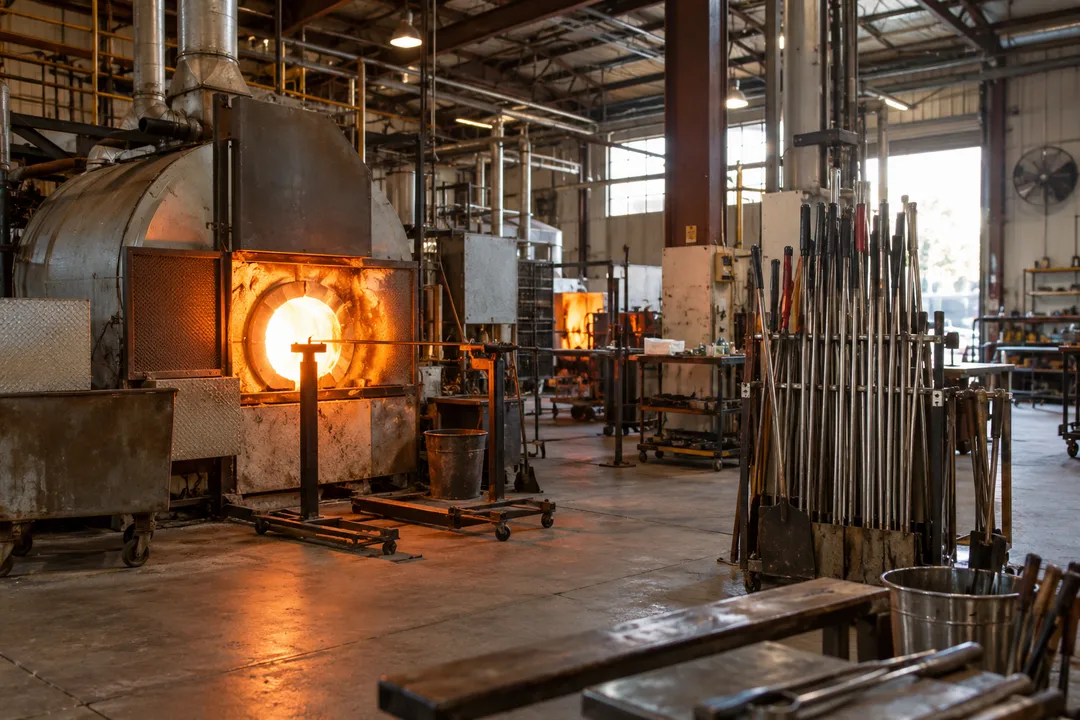
Glassblowing Studio Near Me in Gardena: Pacific Art Glass Workshop
Train inside the expansive hot shop and glass warehouse at Pacific Art Glass in Gardena, mastering furnace glassblowing, color frit roll-ups, and kilnforming since 1989.
Occupying a sprawling commercial warehouse complex along West 157th Street in Gardena, Pacific Art Glass stands as one of Southern California's most comprehensive glass art institutions. Founded in 1989, the multi-acre facility operates simultaneously as an industrial supplier of specialty sheet glass, dichroic coatings, and kilns, and as a world-class educational campus featuring an active hot shop, a flameworking torch lab, and extensive kiln-forming classrooms. Walking onto the warehouse floor reveals towering racks stocked with thousands of square feet of imported Bullseye, Oceanside, and Wissmach glass in every imaginable tint and texture. In the dedicated hot glass annex, heavy gas furnaces, commercial glory holes, and industrial annealing ovens rumble continuously, providing students and professional gaffers with the serious industrial capacity needed to tackle complex hot glass projects.
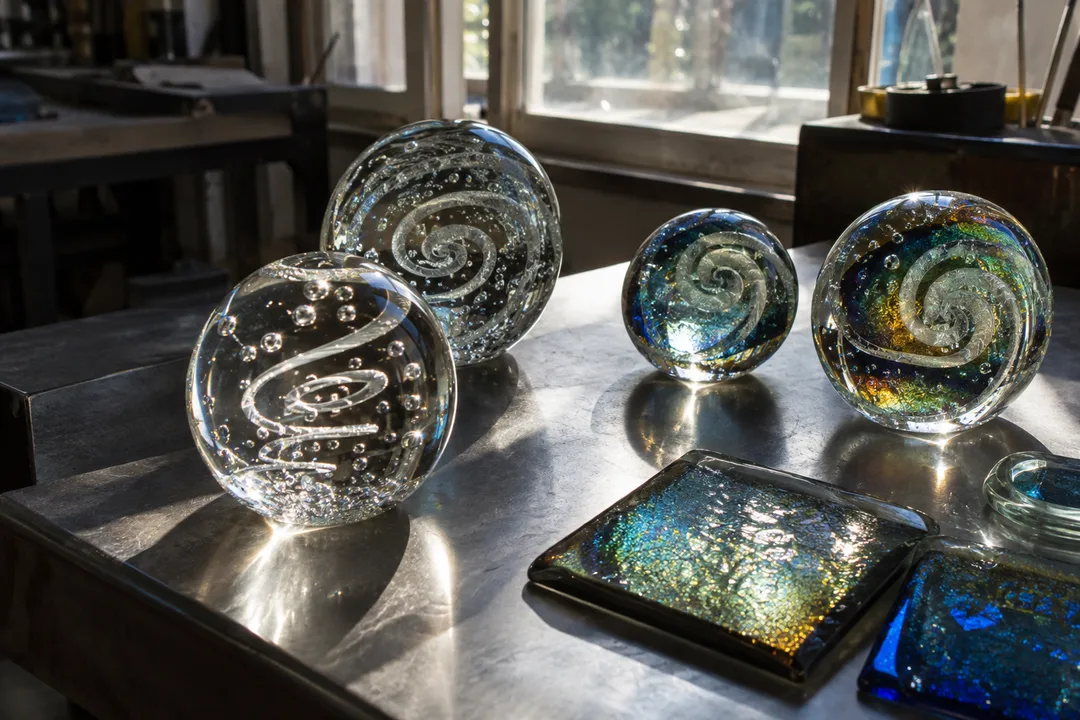
Inside the Expansive Gardena Hot Shop Annex
The hot shop at Pacific Art Glass is engineered to professional studio standards, giving students access to the exact industrial machinery utilized in premier artisan production houses. At the center of the facility stands a massive continuous-melt pot furnace maintaining hundreds of pounds of molten crystal clear soda-lime glass at a scorching 2150 degrees Fahrenheit. Surrounding the melt tank are multiple secondary reheating chambers, known across the industry as glory holes, equipped with pneumatic foot pedals that allow blowers to open and close heavy insulated doors without removing their hands from their spinning pipes.
Beginner students start their training on heavy stainless steel blowpipes and solid punty rods, learning the physical choreography of gathering hot glass. The gaffer instructors emphasize body posture: keeping your feet firmly planted on the concrete floor, bending at the knees rather than the waist, and maintaining a constant, hypnotic rolling motion with your fingertips. When you gather from the deep crucible, the radiant heat is visceral, demanding swift, confident movements as you wind the molten glob out of the furnace and transfer it directly to the marvering table.
On the thick chilled steel marver, you learn to shape the hot gather into a smooth bullet, rolling it with measured downward pressure to establish a centered core. From there, you take your seat at the gaffer bench, sliding the pipe onto the polished steel rails. Holding the carbon jacks in your dominant hand and wet wooden cherry blocks in the other, you shape the molten mass while an assistant puffs air into the hose, watching the initial bubble inflate within the glowing glass wall.
Structured Curriculum from Solid Paperweights to Vessels
Pacific Art Glass organizes its hot shop education into methodical, progressive steps designed to build lasting technical competence. The flagship introductory course, Beginning Glass Blowing 1, focuses on solid hot sculpting by teaching students how to make decorative paperweights. Working with solid gathers rather than hollow vessels allows beginners to master fundamental heat management, tool positioning, and color application without the added complexity of wall-thickness collapse.
Students learn to roll their hot gathers through trays of vibrant colored glass frit and fine stringers, melting the color into the surface before applying a second gathering of clear glass over the top. This encapsulation technique creates mesmerizing three-dimensional depth, trapping spiral bubbles and suspended floral patterns inside heavy solid spheres. As confidence builds, students transition to Beginning Glass Blowing 2, where they tackle hollow vessel construction, learning to shape drinking glasses, fluted bowls, and delicate bud vases.
Beyond traditional furnace work, the facility offers specialized classes in roll-up techniques, where flat sheets of intricately patterned fused glass are preheated on a hot plate, rolled around a molten blowpipe collar, and inflated into complex patterned vases. The studio also runs comprehensive programs in kiln casting, copper foil stained glass assembly, and precision torch flameworking, making it a true multidisciplinary glass campus.
Tuition Pricing, Material Supplies, and Class Enrollment
Pacific Art Glass maintains transparent and competitive pricing across its extensive educational roster. The three-hour Beginning Glass Blowing 1 solid paperweight workshop is priced at $350 per student, limited to a strict maximum of four participants to ensure maximum hands-on furnace access and continuous instructor oversight. The follow-up Beginning Glass Blowing 2 hollow vessel series is also priced at $350 per student for a three-hour intensive session.
Specialized collaborative workshops, such as custom fused-glass roll-up events where students inflate their own pre-fused decorative panels into three-dimensional vessels, run $125 per piece. For makers interested in kiln-fused glass and warm glass jewelry, introductory fusing workshops are priced at $95 per participant, which covers all baseline clear glass bases, colorful accessory glass packs, kiln firings, and diamond grinding services.
Because Pacific Art Glass is also a major international distributor of glass art supplies, students enjoy convenient access to an unmatched retail inventory of sheet glass, frit, rods, tools, and protective safety gear on site. Class registrations must be completed online through the studio portal or by calling the administrative office directly. Workshop fees are non-refundable within seven business days of the class date due to the high energy costs required to maintain continuous furnace operations.
Strict Safety Regulations, Heat Protection, and Annealing Schedules
Working in an industrial hot shop housing multiple 2150-degree furnaces requires unwavering personal discipline and strict compliance with safety rules. Every student entering the hot shop floor must wear 100 percent natural fiber clothing, such as cotton denim jeans, heavy cotton canvas work pants, and plain cotton t-shirts. Synthetic fabrics like polyester, nylon, fleece, and moisture-wicking athletic tops are completely prohibited on the working floor because they can melt and fuse to human skin upon accidental contact with stray hot sparks.
Closed-toe footwear made of genuine leather or heavy cotton canvas is required; sandals, mesh sneakers, and slip-on canvas shoes are strictly prohibited. The studio provides all necessary personal protective equipment, including shaded infrared-blocking safety glasses, heavy Kevlar forearm sleeves, and leather handling gloves. Long hair must be tied securely back, and dangling jewelry, scarves, and loose outerwear must be removed before crossing onto the hot shop floor.
All freshly formed glass objects must be slowly cooled inside a computerized annealing lehr to relieve internal structural stresses. Placing hot glass directly into room air causes it to crack and shatter violently due to uneven contraction. At Pacific Art Glass, finished pieces are placed into the annealing kilns at 960 degrees Fahrenheit, where automated digital controllers slowly step down the temperature over a twenty-four to thirty-six hour cooling curve. Students return to collect their annealed, fully stabilized glassware after 48 hours, or arrange for domestic postal shipping.
Gardena Culinary Culture and South Bay Community
Located in the heart of the South Bay, Gardena offers an exceptional culinary landscape celebrated for its historic Japanese-American dining institutions, casual noodle houses, and craft breweries. After hours of intense focus over roaring furnaces and hot glory holes, students can recharge at some of the finest dining destinations in Southern California, located just minutes from the studio warehouse.
Head west along 162nd Street toward Western Avenue to discover Marukai Market and the surrounding Pacific Square shopping center, where you can pick up fresh sushi rolls, bento boxes, and matcha ice cream. For hearty sit-down dining, Kotohira serves handmade sanuki udon in rich dashi broths alongside crisp shrimp tempura, while Shin-Sen-Gumi Yakitori on Redondo Beach Boulevard grills savory skewers of seasoned chicken, pork belly, and vegetables over white binchotan charcoal.
Craft beer enthusiasts can explore Honest Abe Cidery and Meadery or visit the nearby El Segundo Brewing taproom to enjoy fresh local IPAs in relaxed warehouse taprooms. The blend of rich neighborhood heritage, exceptional authentic cuisine, and active industrial craft culture makes spending a workshop day in Gardena a deeply satisfying South Bay adventure.
Warehouse Location, Highway Access, and Arrival Tips
Pacific Art Glass is situated at 125 W 157th St, Gardena, CA 90248, positioned between South Main Street and South Broadway just south of the Gardena Freeway (CA-91). The facility features an expansive industrial warehouse presence with prominent commercial signage and dedicated roll-up loading bays. Visitors enter through the main front showroom entrance, which leads directly into the retail glass supply store and check-in counter.
The property offers ample free private parking directly in front of the building and along the paved side lots, accommodating students and commercial buyers without any street meter stress or tight city time limits. For motorists arriving from greater Los Angeles, the studio is easily accessible via the I-110 (Harbor Freeway) or CA-91, exiting onto Redondo Beach Boulevard or Vermont Avenue.
Students should plan to arrive fifteen minutes prior to their scheduled class time to complete standard safety waivers, tour the warehouse aisles, and meet their lead gaffer. The showroom and classrooms are fully accessible on the ground level with flat concrete flooring.
Ask Karpo for more information.
Keep reading
- Mar Vista Winter Farmers Market Picker for Weekend Cyclists
 Downtown LA Winter Farmers Market Picker for Car-Free Hosts
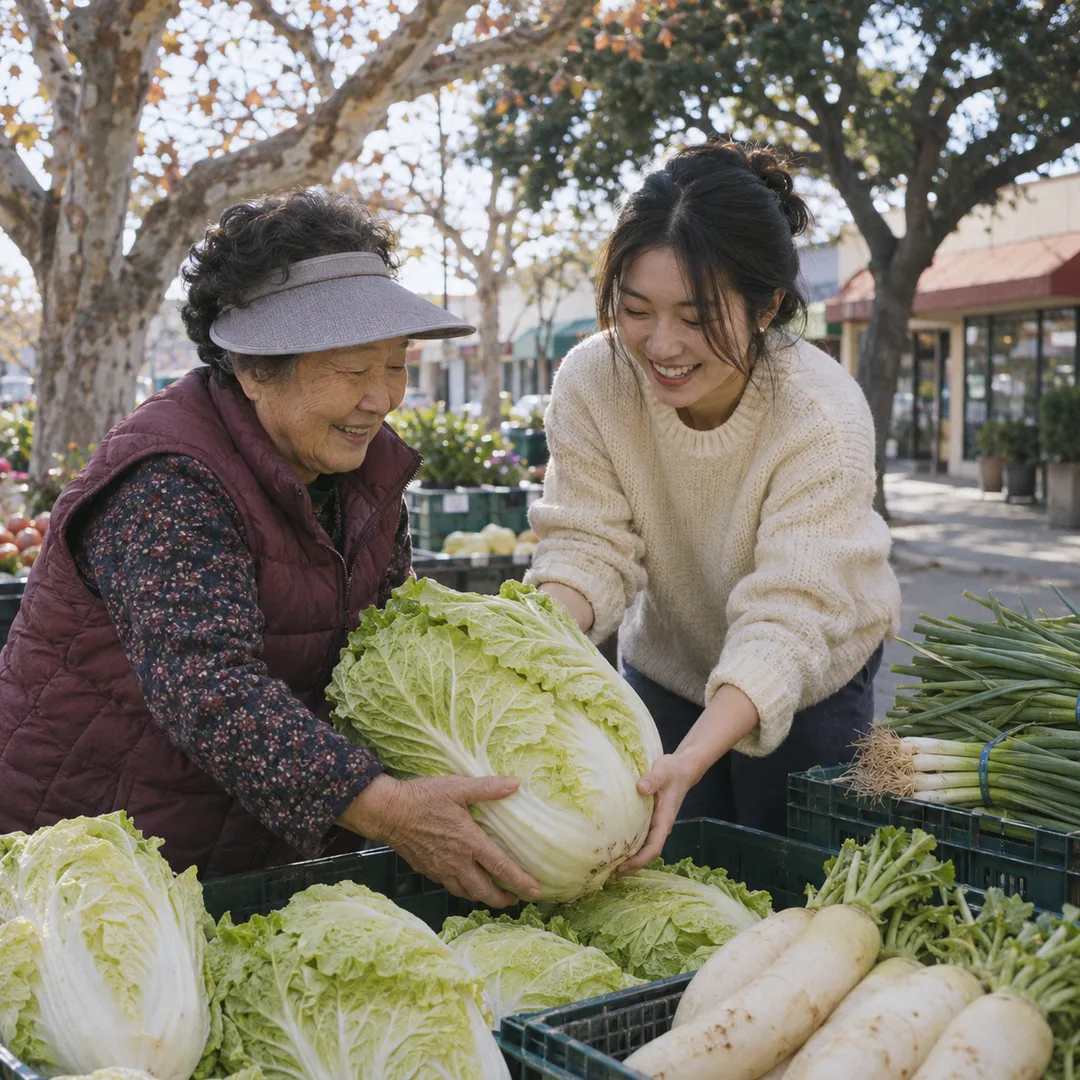 Larchmont Winter Farmers Market Picker for Kimchi-Making Day