 Mar Vista Winter Farmers Market Picker for Weekend Cyclists
Weekend Plans
Glassblowing Studio Near Me in West Adams: KT Glassworks Workshop
Step into KT Glassworks on West Jefferson Boulevard in West Adams to gather molten glass from a 2100 degree furnace and sculpt custom drinkware beside master gaffer Kazuki Takizawa.
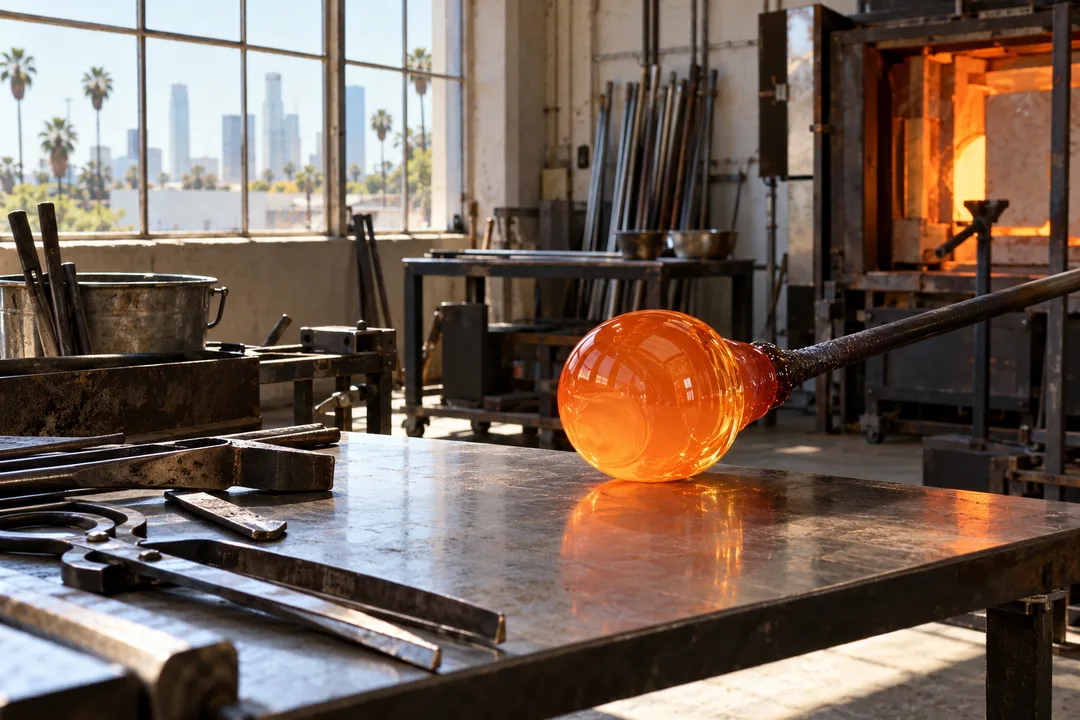
Tucked along the industrial stretch of West Jefferson Boulevard in West Adams, KT Glassworks represents one of the premier independent hot shops operating across central Los Angeles. Founded in 2018 by master gaffer Kazuki Takizawa, a graduate of the Cleveland Institute of Art renowned for his intricate glass installations, the private studio functions as an active artist workspace and an immersive educational facility. Stepping through the wide roll-up doorway places visitors directly in front of a roaring gas-fired furnace that maintains a steady molten reservoir of clear soda-lime glass at 2100 degrees Fahrenheit. The radiant heat washes over the concrete floor, instantly signaling that this is a professional production floor rather than a sanitized classroom. Unlike commercial group entertainment spots that rush dozens of hobbyists through hurried cookie-cutter projects, KT Glassworks prioritizes classical bench etiquette, careful heat management, and deliberate one-on-one apprenticeship.
Gathering Liquid Crystal from the West Adams Furnace
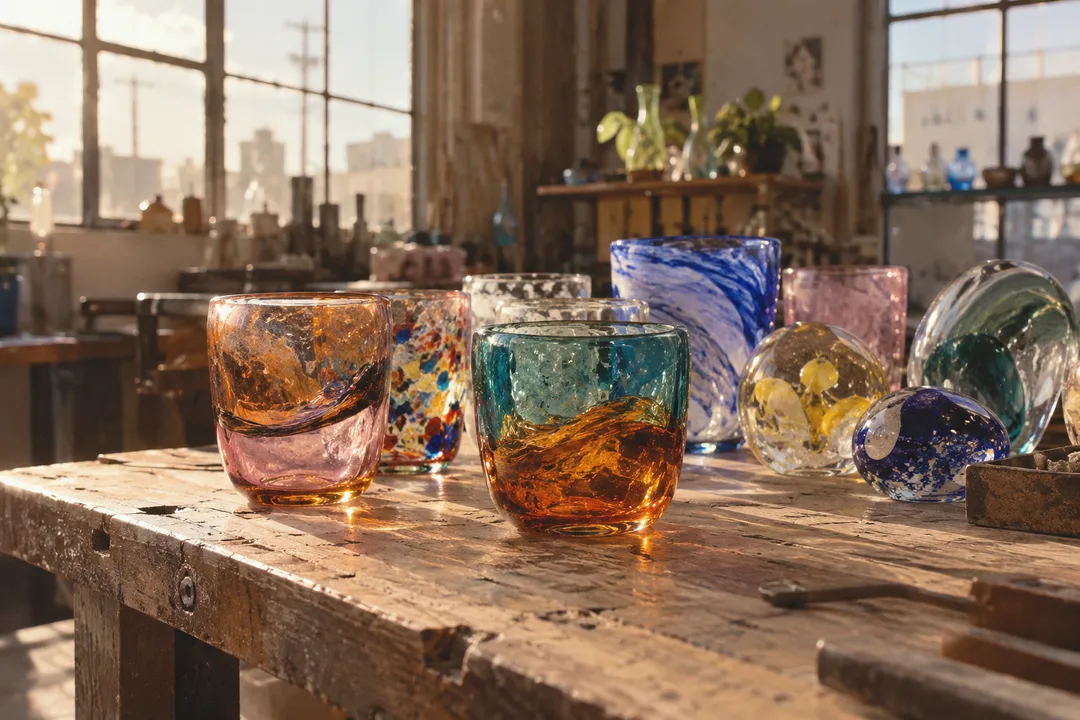
Instruction begins with an intensive walkthrough of hot shop navigation, body ergonomics, and tool handling before you ever approach the furnace door. Students are introduced to the primary instruments of the craft, including hollow stainless steel blowpipes, solid punty irons, cherry wood shaping blocks, carbon-coated jacks, and diamond shears. The gaffer demonstrates how to hold the heavy pipe horizontally, maintaining a constant rotation with the non-dominant hand while steadying the center of gravity. When the furnace door glides open, you step forward onto the metal footplate, angle the preheated tip of the blowpipe into the bubbling core of molten glass, and execute a fluid gathering motion akin to twisting honey onto a spoon.
Withdrawing the glowing gather requires uninterrupted spinning to keep the viscous 2100-degree glob from drooping toward the floor. You immediately guide the pipe to the marver, a polished thick steel table that draws heat from the outer crust while establishing a concentric cylindrical shape. Rolling the hot glass along the steel surface cools the exterior skin just enough to support the initial air bubble, creating the crucial foundation for every subsequent hollow vessel. The physical sensation is immediate and demanding, requiring rhythmic coordination between your hands, your breathing, and the natural fluid dynamics of liquid crystal.
Once the initial skin forms on the marver, the instructor guides you to seat yourself at the glassmaker bench. Resting the pipe across the polished metal arms, you keep it rolling smoothly backward and forward with your left palm while taking the carbon jacks in your right hand. Squeezing the spring-loaded blades gently into the glowing shoulder of the glass sets the jack line, a narrow constriction near the pipe head that dictates the future rim or break point of the finished piece. Every subtle adjustment in pressure leaves an indelible mark, teaching students to respect the exact balance between structural stiffness and molten fluidity.
Private Hot Shop Mentorship with Founder Kazuki Takizawa
What sets KT Glassworks apart from regional craft cooperatives is the singular focus on individualized coaching. Takizawa works side by side with each participant, offering continuous verbal cues and subtle physical support to prevent premature slumping without taking over your project. When applying vibrant color to the clear gather, students roll the hot cylinder through trays of crushed colored glass known as frit. Crushed cobalt, emerald, and amber crystals fuse instantly onto the clear core, creating brilliant swirled veins and cloudlike gradients as the piece is reheated inside the glory hole.
Returning the colored gather to the glory hole requires managing high ambient temperatures while keeping the blowpipe centered within the secondary heating chamber. You observe the glass soften through the viewing window, watching the jagged frit melt into a glassy smooth surface. Once the desired heat is achieved, you carry the pipe back to the bench, where you puff a sharp burst of air into the mouthpiece and immediately seal it with your thumb. The trapped air expands as it warms, creating a uniform interior bubble that blooms cleanly inside the gathering.
Throughout the creation of a heavy-bottomed drinking tumbler or a decorative optic-molded vessel, you learn to read the temperature of the glass by its shifting glow. As the piece transitions from fiery yellow-orange to salmon pink, its working viscosity narrows, requiring quick, confident shaping strokes with wet wooden blocks and pacioffis. Takizawa provides real-time guidance on when to reheat and when to shape, giving students genuine agency over the final form rather than treating them as passive observers.
Tuition Breakdown, Private Rates, and Advance Scheduling
Because KT Glassworks operates on a strict reservation basis without walk-in studio access, every session must be booked well ahead of time through direct communication. The studio structures its core educational offerings around intensive private and semi-private formats to guarantee dedicated furnace time. A one-on-one private introductory lesson runs $350 for a comprehensive three-hour session, covering safety protocols, gathering mechanics, and the creation of two distinct hand-blown objects such as a paperweight and a drinking tumbler.
For couples or friends who prefer to share furnace time, the studio offers a two-student private workshop priced at $500 total, which translates to $250 per participant for an extended four-hour session. During this shared workshop, partners alternate between acting as the primary blower and serving as the gaffer assistant, holding tools, shielding radiant heat, and opening the annealing oven door. In addition to private bookings, the studio periodically hosts collaborative introductory craft workshops in partnership with local cultural institutions such as Craft Contemporary, where enrollment tickets run $235 per seat.
Payment is collected at the time of reservation to secure the dedicated propane furnace and fuel allocation. Cancellations or rescheduling requests must be submitted at least seven business days prior to the reserved slot, as the furnace operates on extensive continuous heating cycles that cannot be shut down on short notice. Group studio buyouts for private creative gatherings of four to six participants are available upon special inquiry, with custom pricing calculated based on total studio hours and material usage.
Safety Standards, Protective Attire, and Annealing Times
Operating inside an active glass hot shop demands rigorous adherence to personal safety regulations from the moment you step onto the premises. Students must arrive dressed in natural fibers, specifically 100 percent cotton denim jeans, cotton canvas trousers, and heavy cotton t-shirts or work shirts. Synthetic fabrics like polyester, nylon, acrylic, or athletic fleece are strictly forbidden on the studio floor because synthetic fibers can instantly melt upon accidental contact with stray radiant embers or hot pipe shafts.
Footwear is equally non-negotiable. Sturdy closed-toe shoes made of genuine leather, heavy canvas sneakers, or leather work boots are required; open sandals, mesh running shoes, synthetic knit sneakers, and high heels are prohibited. Long hair must be tied securely back behind the neck, and dangling necklaces, loose bracelets, rings, and scarves must be removed before touching any studio tools. KT Glassworks supplies all necessary protective equipment on site, including infrared-blocking safety glasses, Kevlar heat sleeves for the forearm, and heavy split-cowhide leather heat shields.
A critical reality of the glassblowing process is that you cannot take your finished artwork home on the day of your class. Freshly blown glass cools too rapidly in ambient room air, which creates severe internal structural stresses that cause the object to shatter violently into shards. Instead, every completed vessel is transferred using insulated tongs into an electric annealing oven preheated to 960 degrees Fahrenheit. The computer-controlled kiln gradually ramps the temperature down to room level over a twenty-four to thirty-six hour cycle. Students return to the studio to collect their cooled, stabilized pieces after 48 hours, or coordinate packing and domestic postal shipping for a nominal packaging fee.
Neighborhood Craft Scene and Dining in West Adams
The West Adams district has emerged as one of Los Angeles's most dynamic creative corridors, pairing rich historic architecture with an influx of independent galleries, culinary spots, and artisanal studios. After spending hours working over hot glory holes, most visitors find themselves eager for cold beverages and satisfying food. Located just a short five-minute walk down Jefferson Boulevard, Highly Likely serves exceptional chilled nitro cold brews, natural wines, and savory grain bowls topped with pickled vegetables, making it the neighborhood's undisputed daytime hub for local makers and designers.
If your workshop concludes in the late afternoon, head two blocks north toward West Adams Boulevard to explore the surrounding creative cluster. Mizlala West Adams provides an airy outdoor patio where you can order crisp falafel plates, za'atar fries, and fresh sumac-dusted skewers while sharing post-class excitement with your workshop partner. For craft beer enthusiasts, Party Beer Co operates a colorful taproom and beer garden nearby, pouring crisp West Coast IPAs and house-made hard seltzers alongside wood-fired sourdough pizzas.
Art enthusiasts can easily pair their morning glass session with an afternoon self-guided tour of the neighborhood's independent art spaces. Notable local destinations including the Band of Vices gallery and surrounding street art murals along Adams Boulevard showcase contemporary works from emerging Los Angeles creators. The entire area retains an unpretentious, community-rooted creative energy that perfectly complements the tactile, analog craftsmanship experienced inside the glass shop.
Location Details, Parking Realities, and Arrival Guidance
KT Glassworks is situated at 5029 W Jefferson Blvd, Los Angeles, CA 90016, near the intersection of Jefferson Boulevard and South La Brea Avenue. The studio exterior features an understated urban industrial facade with clear street numbering visible above the roll-up service bay. Because the facility operates as an active working glassblowing studio, the front entrance remains locked between scheduled appointments to maintain workplace safety and prevent unannounced pedestrian entry into hot working zones.
Parking along West Jefferson Boulevard consists primarily of unmetered street parking spaces, alongside neighborhood curbs along adjacent residential side streets such as South Mansfield Avenue and South Orange Drive. During weekday mornings and early weekend hours, street parking is readily accessible within one to two blocks of the studio door. However, drivers must carefully inspect posted street cleaning signs, which typically restrict parking on alternating sides during designated morning maintenance windows.
Visitors arriving via public transit can utilize the Metro E Line (Expo Line), exiting at the La Brea Station just half a mile south of the facility. From the station platform, it is a straightforward ten-minute walk north along La Brea Avenue to Jefferson Boulevard. Students should plan to arrive ten minutes before their scheduled appointment time to check in, stow personal belongings in designated storage cubbies, and put on their protective eyewear.
Ask Karpo for more information.
Keep reading
- Mar Vista Winter Farmers Market Picker for Weekend Cyclists
 Downtown LA Winter Farmers Market Picker for Car-Free Hosts
 Larchmont Winter Farmers Market Picker for Kimchi-Making Day