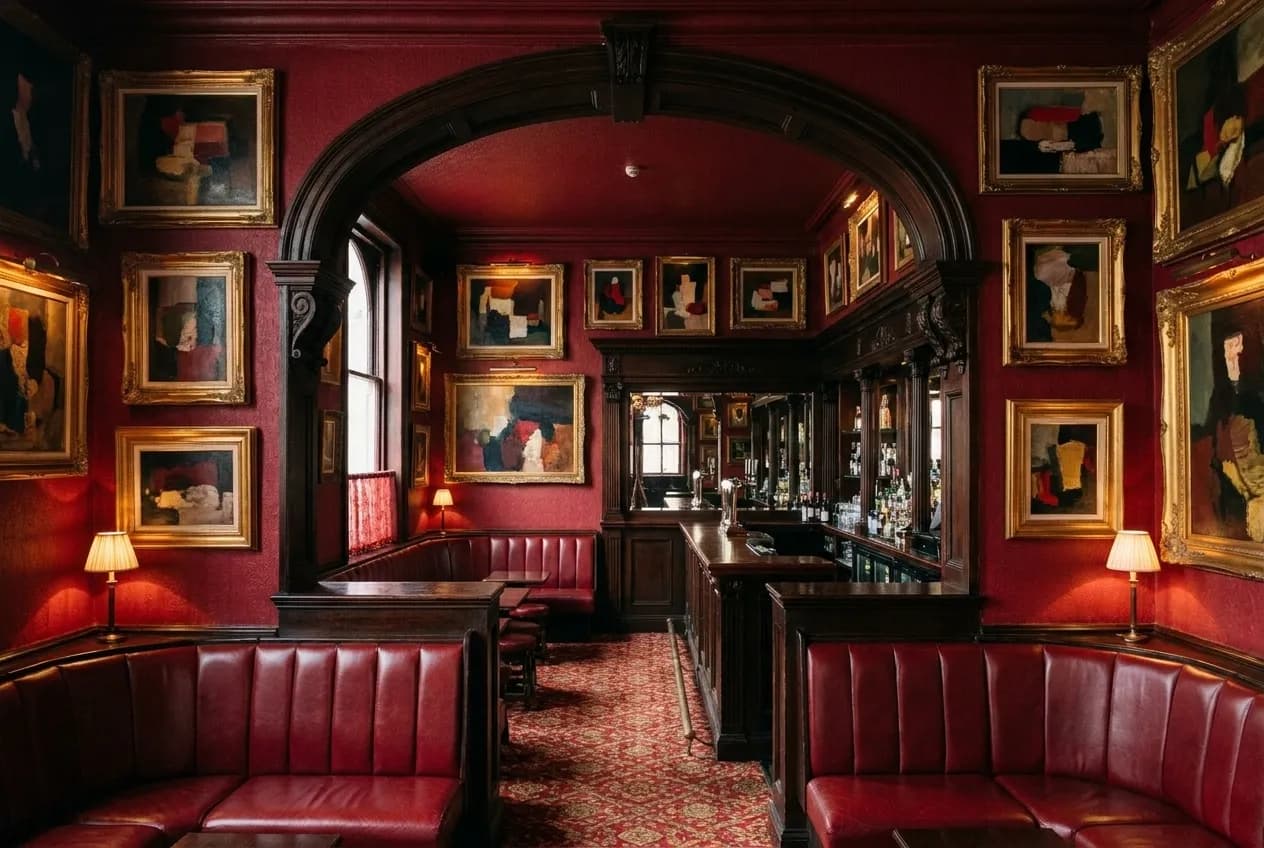
A food open near me search in Los Angeles at midnight returns a handful of results, most of them drive-throughs, and misses the neighbourhood where the whole point is that the night runs long. Koreatown's drinking houses — pocha, short for pojangmacha, the tented street stalls the format descends from — serve food designed to be eaten slowly alongside alcohol, and Dan Sung Sa on West Sixth Street is the one people have been going to for decades. It opens at four in the afternoon and it runs until two in the morning, every day of the week.
Ask Karpo how busy the booths are tonight, what to order for the size of your table, and what else in Koreatown is still going at two.
The room is the first thing
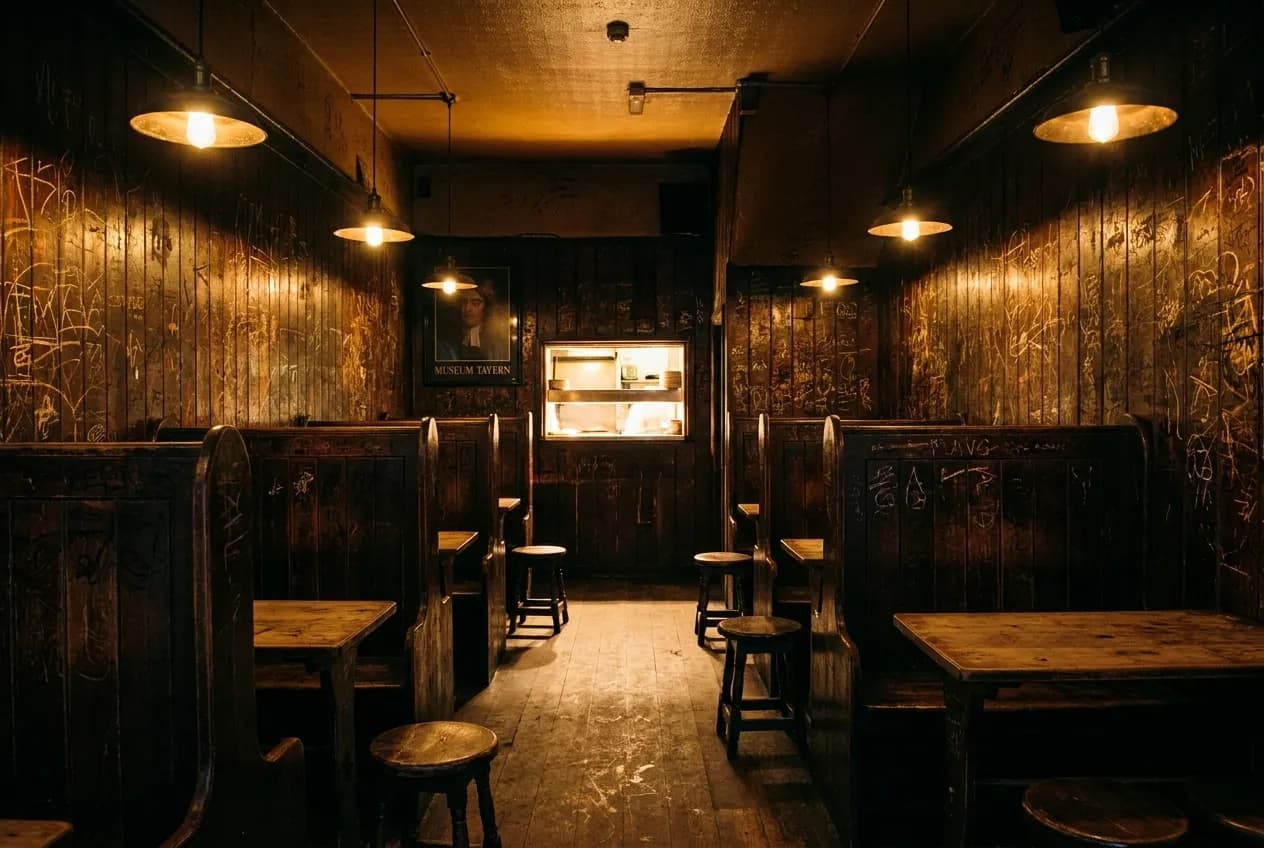
The interior is timber: narrow wooden booths, low light, and walls and partitions covered in layers of writing left by customers over many years. It reads as a deliberately rough space rather than a designed one, and it is closer to a cave than a dining room. That atmosphere is not incidental to the format — a pocha is meant to feel enclosed, dark and unhurried, because the food is a reason to keep drinking rather than a meal with a beginning and an end.
Because the booths are small, the room works best for groups of two to four. A party of eight will be split or seated awkwardly, and the experience depends on being able to hear each other across a small table. Arrive early in the evening if you want a specific spot; by ten on a Friday the room is full and staying full.
What anju means, and how it changes the ordering
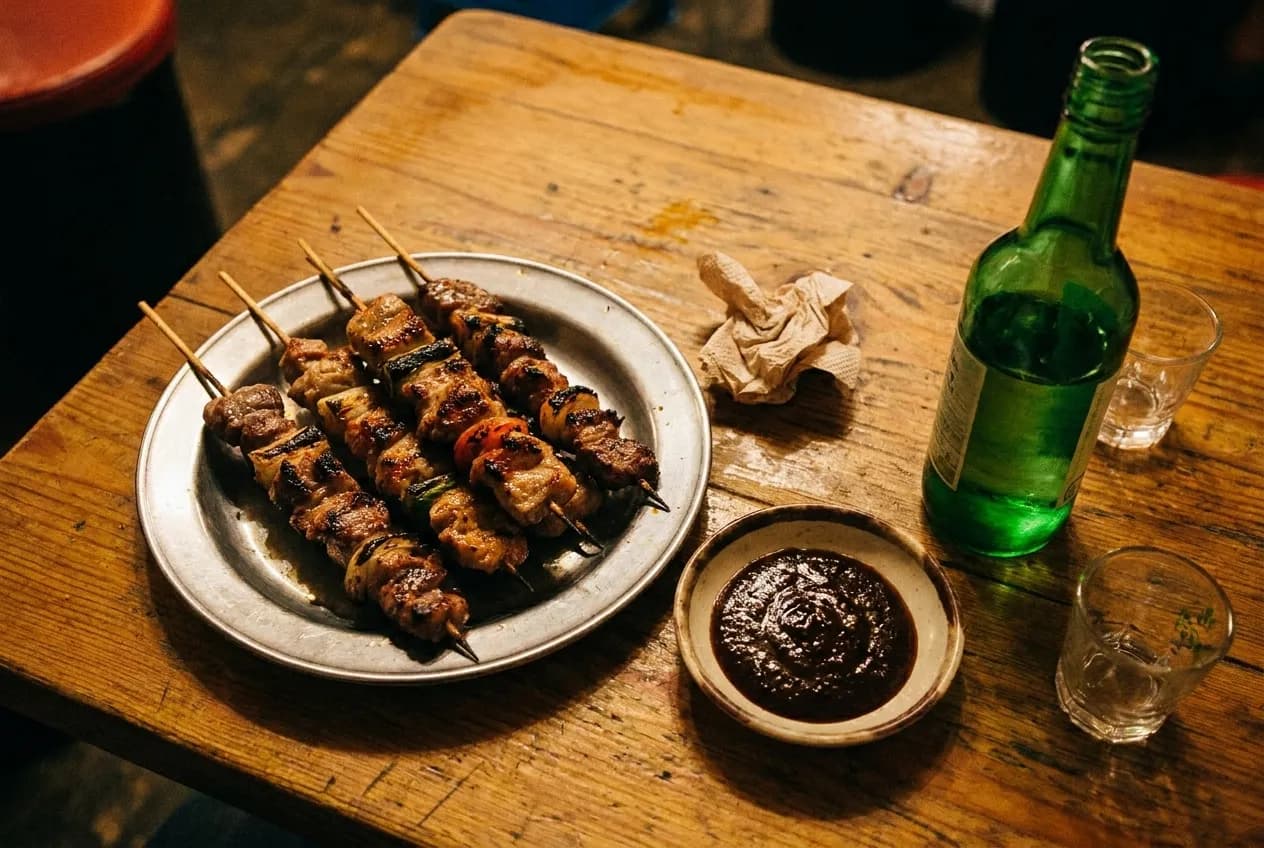
Korean drinking food has its own category name — anju — and it is not the same as bar snacks. Anju is salty, spicy, chewy, often skewered or stewed, and constructed to be shared across a table over hours rather than eaten as a course. The correct approach is to order two or three things at the start, drink, then order more as the table decides, rather than putting in one large order at the beginning.
Skewers are the core of what this kitchen does, and the useful discipline is to spread the order across textures: something grilled, something fried, something in broth. A table of four skewers and nothing else gets monotonous by the second round, and the stews and soups on the menu exist precisely to reset the palate.
Soju, beer, and the etiquette that comes with them
Soju is the default, it is ordered by the bottle, and it is poured for other people rather than for yourself — pouring your own is the one habit that marks a table as unfamiliar with the convention. Receive a pour with two hands, or with one hand touching the other forearm, especially from anyone older than you. None of this is enforced and all of it is noticed.
Somaek, soju cut with beer, is the standard way to make a long night survivable, and it is the reason the food is salted the way it is. If you are not drinking, order the same food anyway; a pot of stew and a plate of skewers is a perfectly good dinner without alcohol, and nobody will make it awkward.
Ten hours a day, seven days a week
Four in the afternoon to two in the morning, daily, is an unusually generous and unusually consistent schedule for Los Angeles. It means there is no closed day to plan around and no seasonal variation, and it means the four-to-seven stretch — when most kitchens in the city are between services — is fully available.
That early evening window is the underused one. The room is quiet, the booths are free, the kitchen has time, and Koreatown before dark is a completely different neighbourhood from Koreatown at midnight. The late half is louder and better if you want the atmosphere the place is known for.
Koreatown Los Angeles is worth understanding as a district rather than a strip, because it is unlike its counterpart in Manhattan. This is a dense, largely residential neighbourhood of mid-century apartment buildings and mini-malls covering several square miles, with the restaurants and bars stacked two and three storeys up in buildings that give away nothing from the street. Half the places worth going to in this neighbourhood are on the second floor of a shopping plaza behind a car park, which is why walking around looking for somewhere good rarely works and why knowing the address matters more here than almost anywhere in the city.
Getting home from Koreatown
This is the practical piece most people leave until too late. The Metro B and D lines run through Koreatown with stations at Wilshire/Vermont and Wilshire/Normandie, and they stop well before the bars do. After midnight the answer is a rideshare, and at closing time on a weekend the whole neighbourhood is requesting one simultaneously.
Order the car before you settle up rather than after, and if you are driving, park in a structure rather than on the street — Koreatown street parking is heavily restricted and enforcement does not observe your evening. Sixth Street has enough density that walking between two or three places is realistic, which is the better way to use the neighbourhood than driving between them.
Practical notes
Dan Sung Sa is at 3317 West 6th Street in Koreatown, Los Angeles, open 4pm to 2am every day. It is a pocha-style drinking house with wooden booths and a skewer-heavy anju menu meant for sharing alongside soju and beer. Order in rounds rather than all at once, and spread the order across grilled, fried and broth dishes. Booths suit groups of two to four. Metro rail stops nearby close earlier than the bar does.
Tags: #FoodOpenNearMe #Koreatown #DanSungSa #KoreanPocha #LateNightLA #LAEats #LANeighborhoods #WhereToEatLA #LAFoodGuide #Soju #Anju #LANightlife #SixthStreet #KtownLA
All trademarks are the property of their respective owners.
Ask Karpo first
Want to know how busy the booths are tonight, what to order for the size of your table, and what else in Koreatown is still going at two? Ask Karpo for tonight's hours, an anju order that covers the range, and a walkable second stop on Sixth Street.