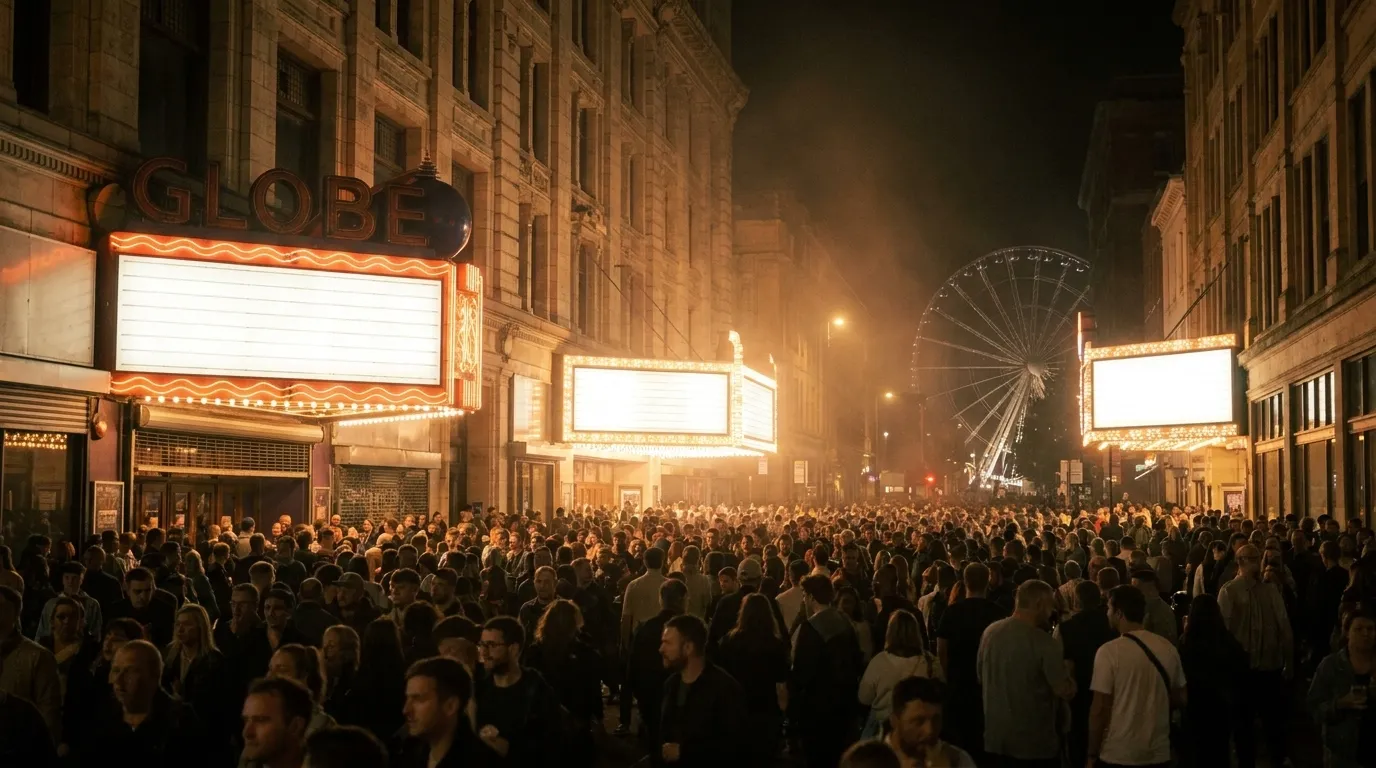
Broadway in downtown Los Angeles holds twelve historic theatres and movie palaces in a few blocks, the densest concentration of its kind anywhere, and for most of the year the great majority of them are locked. Broadway Night Lights is the night that changes. Several blocks of Broadway close to traffic, a free festival fills the street, and a handful of the theatres open their doors to the public. The event descends from Night on Broadway, which began in 2015 as part of the Bringing Back Broadway initiative, and was revived under the new name after a gap of several years.
The theatres open for a limited window and the guided tour slots are the first thing to go. Ask Karpo when Broadway Night Lights is running and which theatre to head for first.
Getting inside is the actual prize
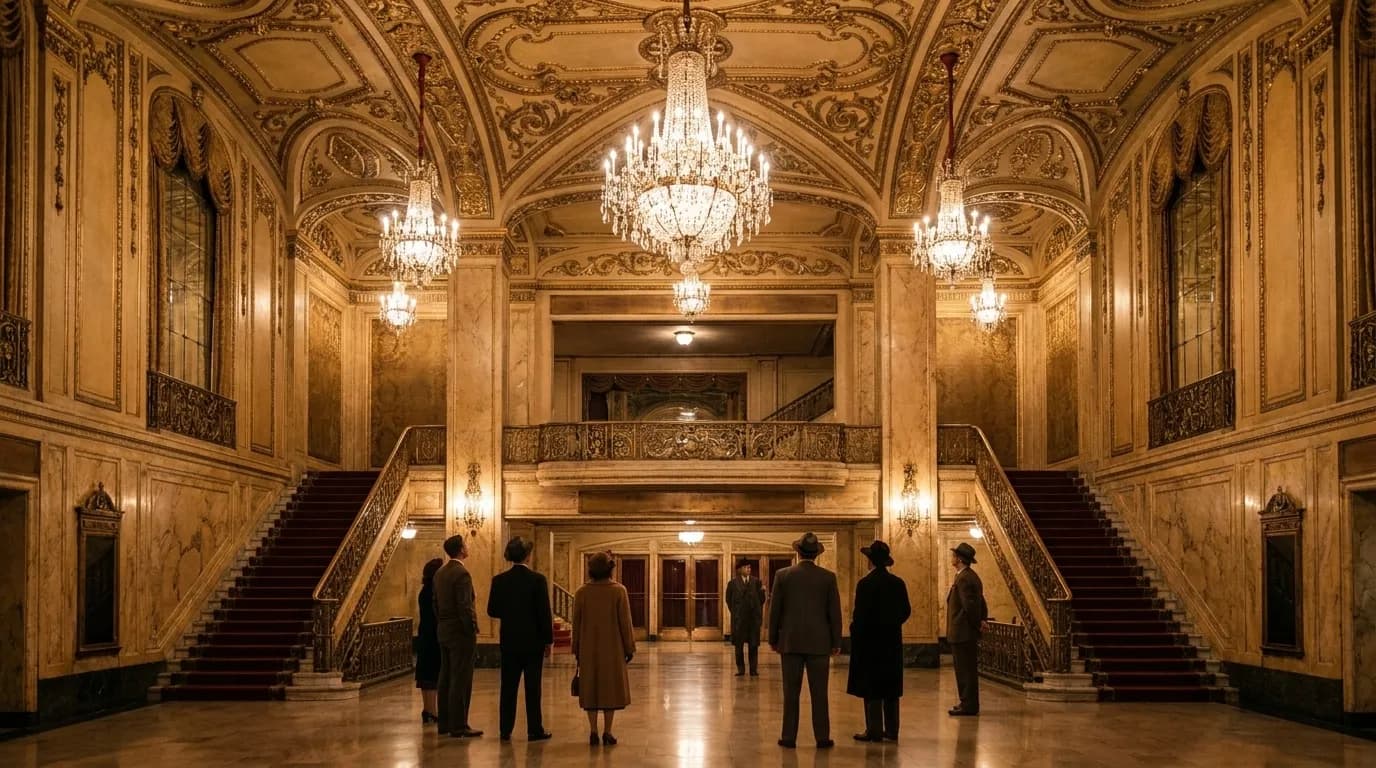
Everything else at this festival — and there is a lot of it — is available somewhere else in Los Angeles on some other weekend. Standing inside the Los Angeles Theatre, or the Million Dollar, or the Palace, is not. These are 1910s and 1930s auditoriums built when downtown Broadway was the entertainment centre of the western United States, and most of them have no regular public programme.
At the most recent editions, three of downtown's most iconic theatres opened from around 4pm to midnight, with the Los Angeles Theatre offering free guided tours through the Los Angeles Conservancy starting at 4pm, and the Million Dollar and Palace theatres open for self-guided exploration.
Tour versus wander
The two formats give you different things and it is worth knowing which you want. A Conservancy-guided tour tells you what you are looking at — the architectural history, the original use, what was changed and when — which for a building of this kind is most of the value, since the detail is invisible without explanation.
Self-guided access to the other theatres lets you move at your own pace and spend twenty minutes in a lobby if you want to. The efficient plan is to do the guided tour first, take the explanation with you, and then use it on the other two rooms.
A word on what these rooms actually are. The Los Angeles Theatre opened in 1931 and is the last and most extravagant of the Broadway palaces, built with a lobby modelled on Versailles and a basement that once held a ballroom and a children's playroom. The Million Dollar dates from 1918 and spent decades as a Spanish-language variety house. The Palace goes back to 1911. None of that is obvious from the street.
The festival around the theatres
The street programme is deliberately broad. Recent editions have run two main stages and two smaller stages of local talent, plus circus performances, Lucha Libre wrestling matches, art installations, glow-in-the-dark activities, a Ferris wheel, a kids' zone, a classic car show, street performers, food trucks and markets.
That is a lot of unrelated things in one place, and it is intentional: the festival is trying to bring a broad public onto a stretch of Broadway that many Angelenos have not walked down in years. The theatres are the reason it works; the wrestling and the Ferris wheel are how it gets people there.
Photography is the other reason to prioritise the interiors early. Once a lobby is full of people the architecture disappears, and the ceilings and staircases that make these buildings worth preserving are only legible when there is space in front of them. The first hour after doors is the only reliable window.
It is free, and that shapes the crowd
There is no admission charge, which produces a genuinely mixed, family-heavy, largely local crowd rather than a festival audience. It also means the density is unpredictable — free events with no ticket cap can be quiet at five and difficult to move through at nine.
The practical response is to arrive early. Four o'clock, when the theatres open, is the right time to be there: the street is still walkable, the tours have just started, and you can see the interiors before the queues build.
Broadway after the festival
The corridor is worth knowing outside the event as well. Grand Central Market, the Bradbury Building and the Historic Core are all within a few blocks, and several of the old theatre buildings now house shops at street level, which means you can see the exteriors and some of the lobbies any day of the week.
Metro serves downtown from across the county and Broadway is a short walk from several stations, which is the correct way to arrive on a night when the street itself is closed. Parking structures in the Historic Core are cheap in the evening if you do drive.
Practical notes
Broadway Night Lights is a free street festival on Broadway in downtown Los Angeles, descended from Night on Broadway which began in 2015 under the Bringing Back Broadway initiative. Recent editions have closed Broadway between roughly 3rd and 8th Streets and opened three of downtown's historic theatres from about 4pm to midnight, with free Los Angeles Conservancy guided tours of the Los Angeles Theatre starting at 4pm and the Million Dollar and Palace theatres open for self-guided exploration. The street programme has included two main and two smaller stages, circus acts, Lucha Libre, art installations, a Ferris wheel, a kids' zone, a classic car show and food trucks. Arrive at four to see the interiors before the queues build. Metro reaches downtown from across the county; Broadway itself is closed to traffic during the event.
Tags: #EventsNearMe #LosAngelesEvents #BroadwayNightLights #DowntownLA #HistoricTheatres #FreeThingsToDo #MoviePalaces #StreetFestivals #LAConservancy #LuchaLibre #ThingsToDoInLA #EventsLA #LAHistory #CarShows
Sources consulted: broadwaynightlights.com · downtownla.com · historictheatrephotos.com
All trademarks are the property of their respective owners.
Ask Karpo first
Want to know whether the festival is running this year, which theatres are opening, and when the Conservancy tours start? Ask Karpo for the current Broadway Night Lights details, an arrival time that beats the theatre queues, and a short Historic Core walk to do around it.


