 Mar Vista Winter Farmers Market Picker for Weekend Cyclists
Weekend Plans
Day of the Dead Events Near Me on Olvera Street
A practical Los Angeles guide to Olvera Street's 2026 Day of the Dead season, with altar etiquette, procession timing, family planning, transit, food stops, and plaza pacing.
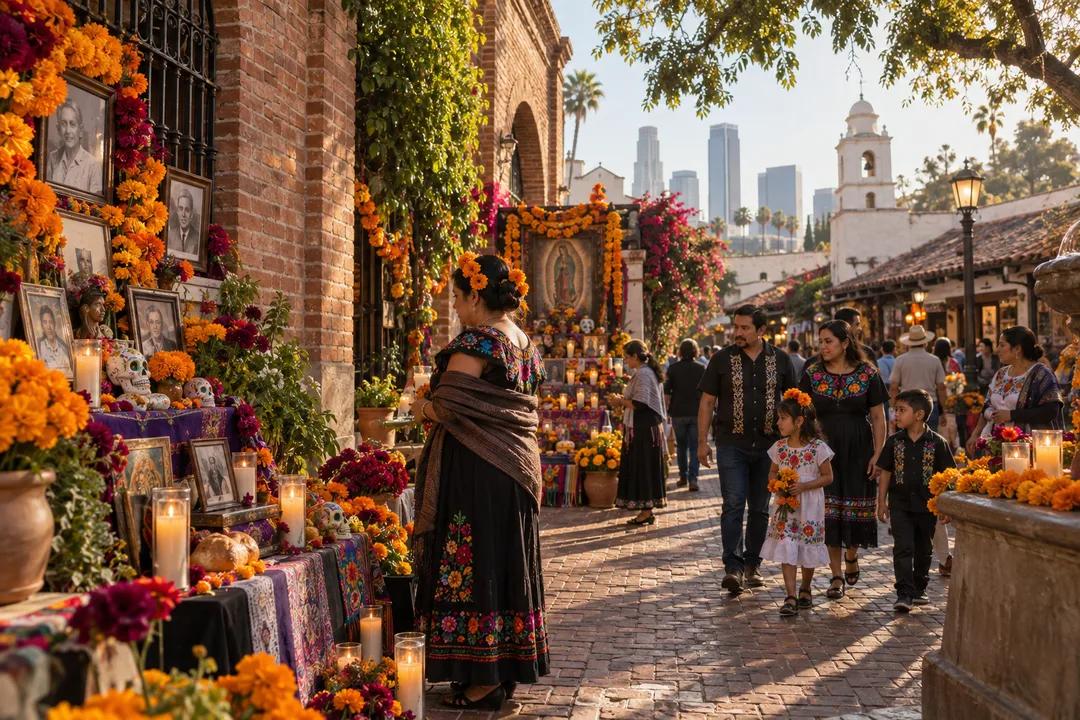
If you are searching for day of the dead events near me in Los Angeles, Olvera Street is the rare answer where the setting carries as much weight as the program. The 2026 season belongs in the historic plaza, with community altars, marigolds, merchants, music, and evening procession energy packed into a compact Downtown corridor that visitors can actually understand on foot.
The core location is El Pueblo de Los Angeles Historical Monument, where Olvera Street runs between brick buildings, small restaurants, vendor stalls, and the old plaza. That geography matters for planning. You are not driving from venue to venue or hunting for a hidden entrance. Arrive at the plaza, slow down, and let the route unfold between the market lane, the church-side gathering points, and the altar areas.
For 2026, treat the public celebration as a multi-part season rather than one night. Olvera Street traditionally builds toward late October community programming, then keeps November 1 and November 2 focused on the remembrance days themselves. Check the official El Pueblo calendar before leaving, but plan around daytime altar viewing, family-friendly plaza activity, and evening Novenario-style processions when the street becomes more crowded and ceremonial.
Olvera Street works because it is not a blank event lawn. The market has taquerias, leather goods, Mexican candy counters, souvenir stalls, and restaurants that have fed generations of visitors. That can make the day lively, but it also creates pressure points. Eat before the tightest procession window, carry cash for small purchases, and do not block shop doors while photographing the decorations.
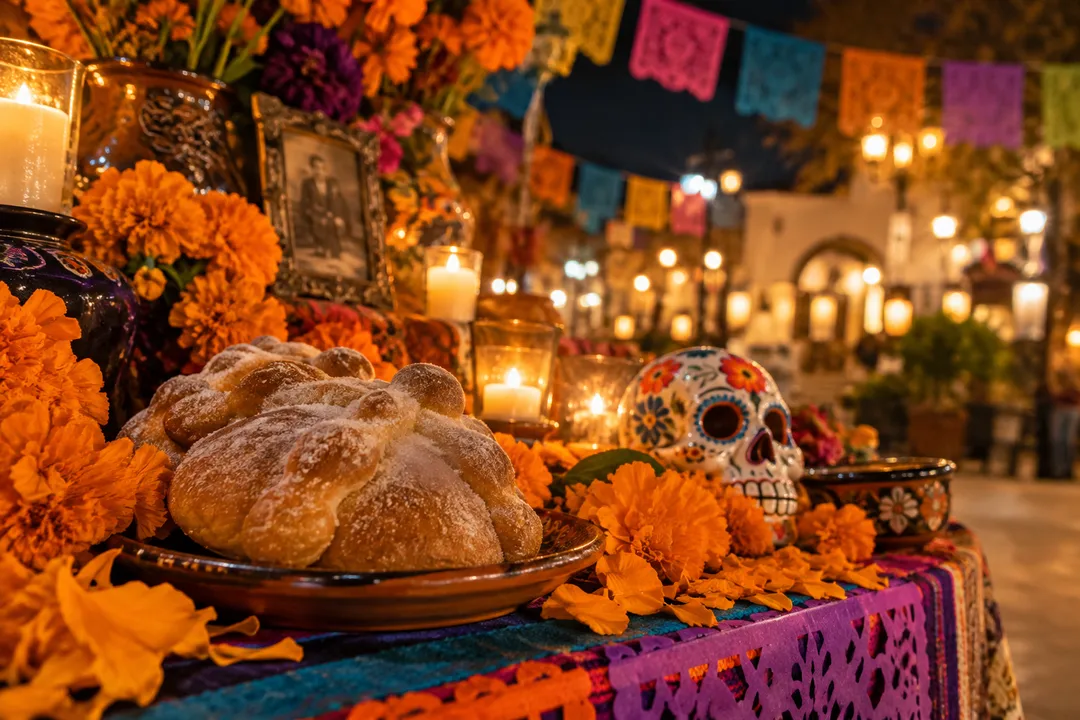
The altars deserve patient viewing. Look for the personal logic of each ofrenda: framed photographs, candles, fruit, sugar skulls, papel picado, water, favorite foods, and marigold paths that turn memory into hospitality. This is not a Halloween prop room. If you bring children, explain before arriving that bright color and skeleton imagery are part of remembrance, not permission to grab offerings.
Crowd strategy is simple but important. Arrive early if you want clearer views of the altar areas, then stay later only if your group is comfortable in a dense plaza. The narrow parts of Olvera Street can tighten quickly around music and processions. A family with a stroller should choose the open plaza edge over the middle of the market lane, especially near dusk.
Food is one of the easiest ways to make the visit feel grounded. Cielito Lindo's taquitos, Mr. Churro, Casa La Golondrina, and the casual counters around the market give visitors options without leaving the district. Prices and hours can change, so treat the meal as flexible: a quick snack before altar viewing may be smarter than waiting until everyone is tired.
Transit is usually easier than parking. Union Station is a short walk across Alameda Street, with Metro rail, Amtrak, Metrolink, and bus connections arriving nearby. Drivers should expect paid lots, street closures, and slow exits when the plaza is busy. If you are meeting friends, pick a landmark like the Avila Adobe courtyard or the plaza edge rather than saying only 'Olvera Street.'
Photography needs restraint. Wide photos of the plaza and detail shots of marigolds are fine, but avoid leaning over an altar, moving objects, using flash inches from framed photos, or turning a memorial into a costume shoot. The best pictures usually come from the side, where candles, flowers, and old brick sit together without forcing mourners out of their own space.
The event also pairs well with a short civic walk. Union Station, LA Plaza de Cultura y Artes, the Chinese American Museum, and the old plaza can turn the afternoon into a compact history route. Keep that route modest if you are staying for evening processions. The point is not to collect landmarks until the holiday becomes background noise.
Accessibility planning should be realistic. The plaza itself is walkable, but crowds, uneven old paving, vendor lines, and temporary barriers can make movement slower than a normal Downtown outing. Bring layers for evening, water for the afternoon, and a plan for anyone who needs seating. If a relative cannot stand for long, arrive before the program peaks and use quieter edges.
The most respectful rhythm is altar first, food second, procession third. That order keeps the reason for the gathering at the center before the plaza becomes a festival space. If your group wants shopping, do it between program moments rather than during a ceremonial pass. Merchants are part of Olvera Street's life, but the memory work should not feel like an accessory.
Practical notes: use El Pueblo de Los Angeles Historical Monument as your navigation anchor, then walk to Olvera Street from Union Station or a nearby lot. Confirm same-day timing on the official calendar, bring cash for small vendors, avoid fragile offerings, and keep bags compact. The event is best for visitors who want a public, historic, very Los Angeles expression of Día de los Muertos rather than a seated show.
Use Karpo APP when you need to turn the plaza visit into a full plan: ask for a Union Station arrival, an early dinner nearby, a quieter altar-viewing window, or a route that works for kids and older relatives. For day of the dead events near me in LA, Olvera Street is the classic choice because the setting, food, altars, and procession culture all speak to each other. One last timing detail: do not treat the plaza like a venue with a single front door. Friends can end up on opposite sides of Alameda, the market lane, or the church-facing plaza if arrival messages are vague. Share a precise meet point, keep phone batteries ready, and decide in advance whether your group will stay for the procession or leave after altar viewing. If you are bringing out-of-town guests, explain the neighborhood before you arrive. Olvera Street is often presented as the birthplace of Los Angeles, but it is also a working tourist market, a civic monument, and a gathering place for people with personal ties to the holiday. That mix is exactly why the event works when visitors move through it with care.
Ask Karpo for more information.
Keep reading
- Mar Vista Winter Farmers Market Picker for Weekend Cyclists
 Downtown LA Winter Farmers Market Picker for Car-Free Hosts
 Larchmont Winter Farmers Market Picker for Kimchi-Making Day