 Mar Vista Winter Farmers Market Picker for Weekend Cyclists
Weekend Plans
Creepy Doll Museum Near Me in Hollywood: Museum of Death
Museum of Death on Selma Avenue in Hollywood houses an extensive archive of antique mortuary instruments, vintage funeral figurines, and historical true crime relics.
If you are seeking an unsettling creepy doll museum near me in Los Angeles, Museum of Death at 6363 Selma Ave, Hollywood, CA 90028 provides an unapologetically raw encounter with historical mortality and eerie figurative art. Founded in 1995 by JD Healy and Catherine Shultz in San Diego inside a former mortuary, the institution relocated north to Hollywood to establish the country's most notorious permanent archive of forensic oddities, crime ephemera, and mortuary artifacts. The museum operates seven days a week from 11 am to 8 pm, admitting curious visitors to explore its sprawling galleries on a self-guided walkthrough that typically lasts between ninety minutes and two hours.
Origins of the World Famous Hollywood Relic Archive
The journey through Museum of Death begins in a low-lit vestibule lined with vintage anatomical models and historical embalming ephemera. Unlike conventional gallery spaces that sanitize morbid topics, this space preserves authentic artifacts spanning more than a century of cultural death rituals, Victorian mourning traditions, and forensic medicine. The atmosphere is quiet, contemplative, and distinctly intense, encouraging patrons to confront the fragile physical reality of human existence.
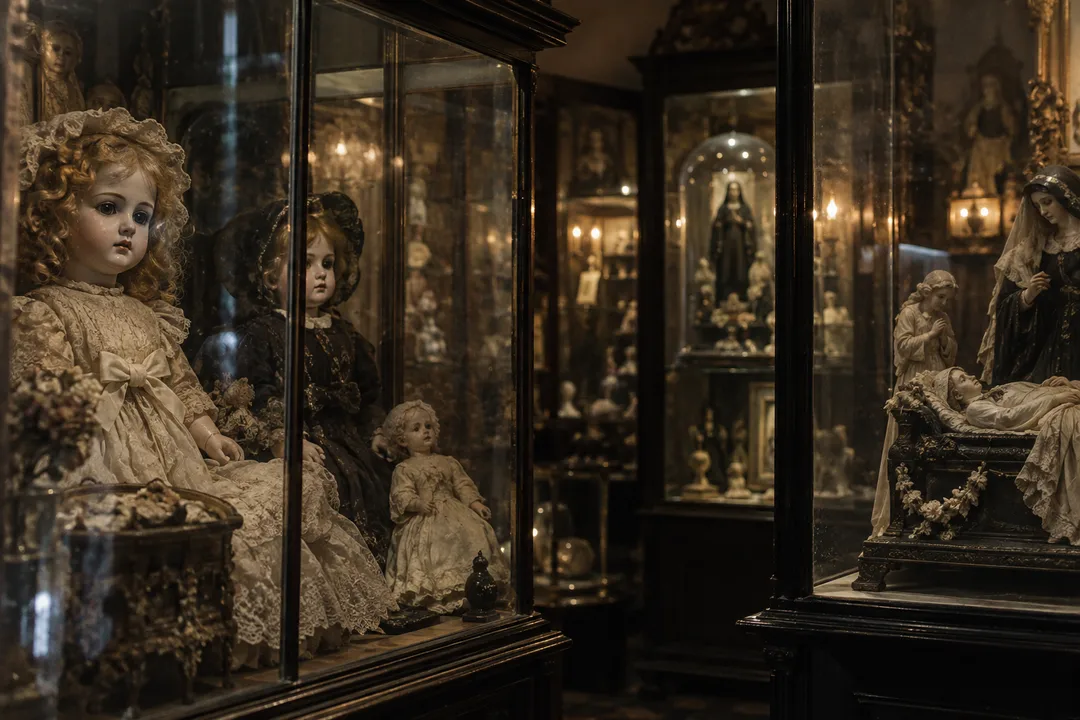
Visitors walking through the initial corridors encounter century-old glass vitrines packed with bizarre handmade figures, Victorian hair wreaths, and antique funeral parlor dolls used during nineteenth-century memorial viewings. These preserved figures reflect a bygone era when families created tactile keepsakes of deceased loved ones, creating an aesthetic that modern audiences perceive as profoundly eerie and hauntingly beautiful.
Deeper within the Hollywood labyrinth lies the serial killer gallery, showcasing original correspondence, prison crafts, and disturbing handmade dolls crafted by infamous American felons. The museum houses authentic artwork created by notorious figures such as John Wayne Gacy, whose unsettling clown portraits and miniature handmade yarn dolls evoke a deep psychological chill. Each piece is mounted behind museum-grade security glass alongside factual biographical plaques that avoid sensationalism while detailing the sobering historical record.
Deeper within the Hollywood labyrinth lies the serial killer gallery, showcasing original correspondence, prison crafts, and disturbing handmade dolls crafted by infamous American felons. The museum houses authentic artwork created by notorious figures such as John Wayne Gacy, whose unsettling clown portraits and miniature handmade yarn dolls evoke a deep psychological chill. Each piece is mounted behind museum-grade security glass alongside factual biographical plaques that avoid sensationalism while detailing the sobering historical record.
Adjacent display cases feature tribal skull collections, shrunken heads from South American ceremonial practices, and hand-stitched spirit dolls used in occult rituals. These physical items illustrate how global societies have historically personified spiritual forces through bone, hair, and woven fibers. The visual contrast between Western porcelain funeral figures and tribal ancestral relics highlights the diverse ways humanity has navigated the unknown through miniature physical effigies.
Curators have intentionally maintained an unpolished, authentic aesthetic where floor-to-ceiling exhibits overwhelm the senses without relying on theatrical jump scares or plastic Halloween props. The raw immediacy of genuine crime scene photographs, vintage coroner uniforms, and original letters invites thoughtful contemplation rather than cheap amusement, distinguishing Museum of Death from typical commercial haunted attractions.
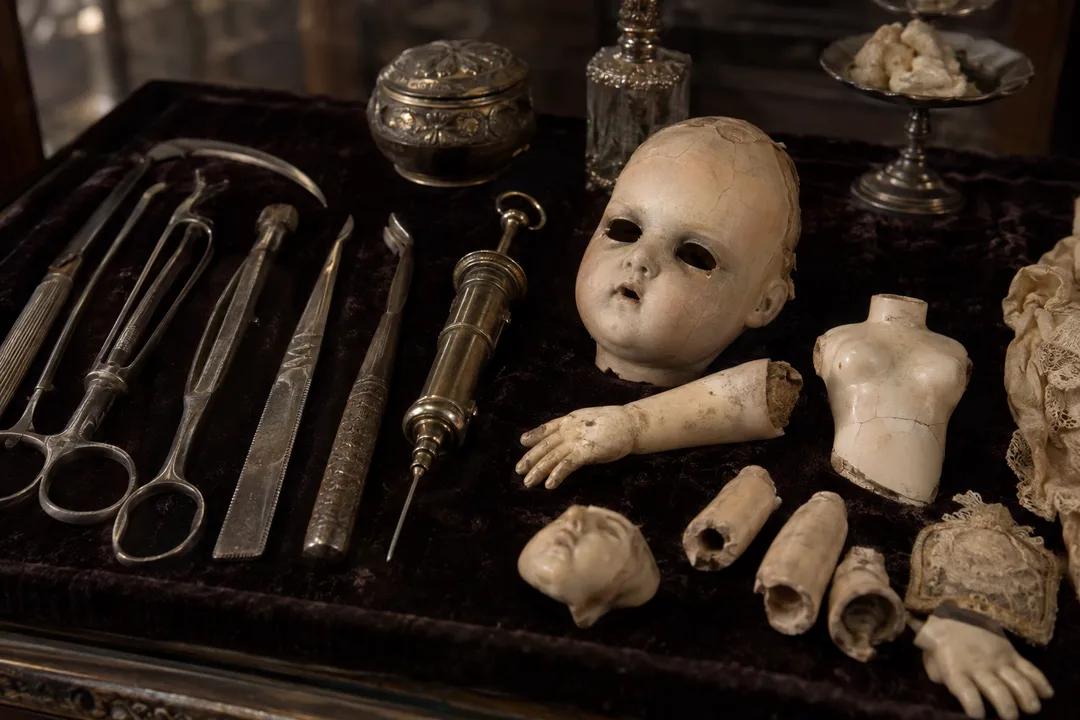
One of the most historically significant sections of the Hollywood facility is the mortuary science hall, which displays genuine early-twentieth-century embalming tables, restoration wax kits, and vintage mortuary makeup mannequins. Before modern mortuary cosmetics became standardized, morticians in the late 1800s utilized hand-painted bisque doll heads and lifelike porcelain busts to practice facial reconstruction techniques following severe trauma. These weathered practice heads, with their fixed glassy stares and cracked composite features, remain among the most visually haunting objects on site.
One of the most historically significant sections of the Hollywood facility is the mortuary science hall, which displays genuine early-twentieth-century embalming tables, restoration wax kits, and vintage mortuary makeup mannequins. Before modern mortuary cosmetics became standardized, morticians in the late 1800s utilized hand-painted bisque doll heads and lifelike porcelain busts to practice facial reconstruction techniques following severe trauma. These weathered practice heads, with their fixed glassy stares and cracked composite features, remain among the most visually haunting objects on site.
Glass cabinets along the eastern corridor contain preserved mortuary instruments, bone saws, antique wicker transport baskets, and Victorian mourning shadow boxes. These shadow boxes often encase miniature wax baby dolls swaddled in black lace, created to commemorate infants lost during nineteenth-century epidemics. The intricate lace trim, dried floral arrangements, and delicate porcelain limbs preserve a deeply personal record of grief that still resonates across centuries.
The museum also exhibits authentic body bags, antique cast-iron infant coffins, and an intact nineteenth-century hearse carriage bell. Standing alongside these brass and velvet artifacts, visitors gain an intimate understanding of how death was integrated into nineteenth-century domestic life before funeral care shifted into sterilized corporate institutions.
Planning a visit to 6363 Selma Ave requires understanding the venue's strict operating guidelines. Admission is priced at $20 per person, with an additional $1 processing fee applied per card transaction. Museum of Death is a strictly cashless business, accepting debit cards, major credit cards, and mobile tap payments exclusively at the box office window. Tickets cannot be reserved online or purchased in advance, meaning all admissions are handled on a first-come, first-served walk-up basis at the front door.
Planning a visit to 6363 Selma Ave requires understanding the venue's strict operating guidelines. Admission is priced at $20 per person, with an additional $1 processing fee applied per card transaction. Museum of Death is a strictly cashless business, accepting debit cards, major credit cards, and mobile tap payments exclusively at the box office window. Tickets cannot be reserved online or purchased in advance, meaning all admissions are handled on a first-come, first-served walk-up basis at the front door.
Due to the graphic nature of forensic crime scene documentation, graphic autopsy footage, and authentic crime exhibits, the museum is strictly intended for mature audiences. Parents are advised that the subject matter is intense and emotionally demanding, making it unsuitable for young children or sensitive viewers. Photography, audio recording, and videography are strictly prohibited inside the galleries, ensuring that visitors remain present and that the dignity of historical materials is preserved.
To avoid the heaviest weekend foot traffic, plan your visit on a Tuesday or Wednesday afternoon between 12 pm and 3 pm when the galleries offer room for unhurried study. Staff members stationed throughout the hall are knowledgeable historians who can answer detailed questions regarding artifact provenance, Victorian preservation techniques, and the historical acquisition of specific gallery items.
Museum of Death sits conveniently one block south of Hollywood Boulevard, making it an easy addition to an afternoon exploring historic central Hollywood. Paid public parking lots are accessible along Selma Avenue and nearby Cahuenga Boulevard, with typical flat rates between $10 and $20 depending on neighborhood event schedules. Public transit riders can take the Metro B Line subway directly to the Hollywood and Vine station, exiting two blocks northeast for an easy five-minute walk to the entrance.
Museum of Death sits conveniently one block south of Hollywood Boulevard, making it an easy addition to an afternoon exploring historic central Hollywood. Paid public parking lots are accessible along Selma Avenue and nearby Cahuenga Boulevard, with typical flat rates between $10 and $20 depending on neighborhood event schedules. Public transit riders can take the Metro B Line subway directly to the Hollywood and Vine station, exiting two blocks northeast for an easy five-minute walk to the entrance.
After navigating the intense galleries, step outside into the southern California sunlight and decompress with a walk through the surrounding historic district. Head two blocks west toward Cahuenga Boulevard to grab a wood-fired slice at Crispy Crust or sit down for artisanal coffee and fresh pastries at Groundwork Coffee on Selma Avenue. Walking north back to Hollywood Boulevard brings you within reach of the historic Egyptian Theatre and vintage vinyl shops, rounding out a memorable exploration of Los Angeles counterculture.
Ask Karpo for more information.
Keep reading
- Mar Vista Winter Farmers Market Picker for Weekend Cyclists
 Downtown LA Winter Farmers Market Picker for Car-Free Hosts
 Larchmont Winter Farmers Market Picker for Kimchi-Making Day