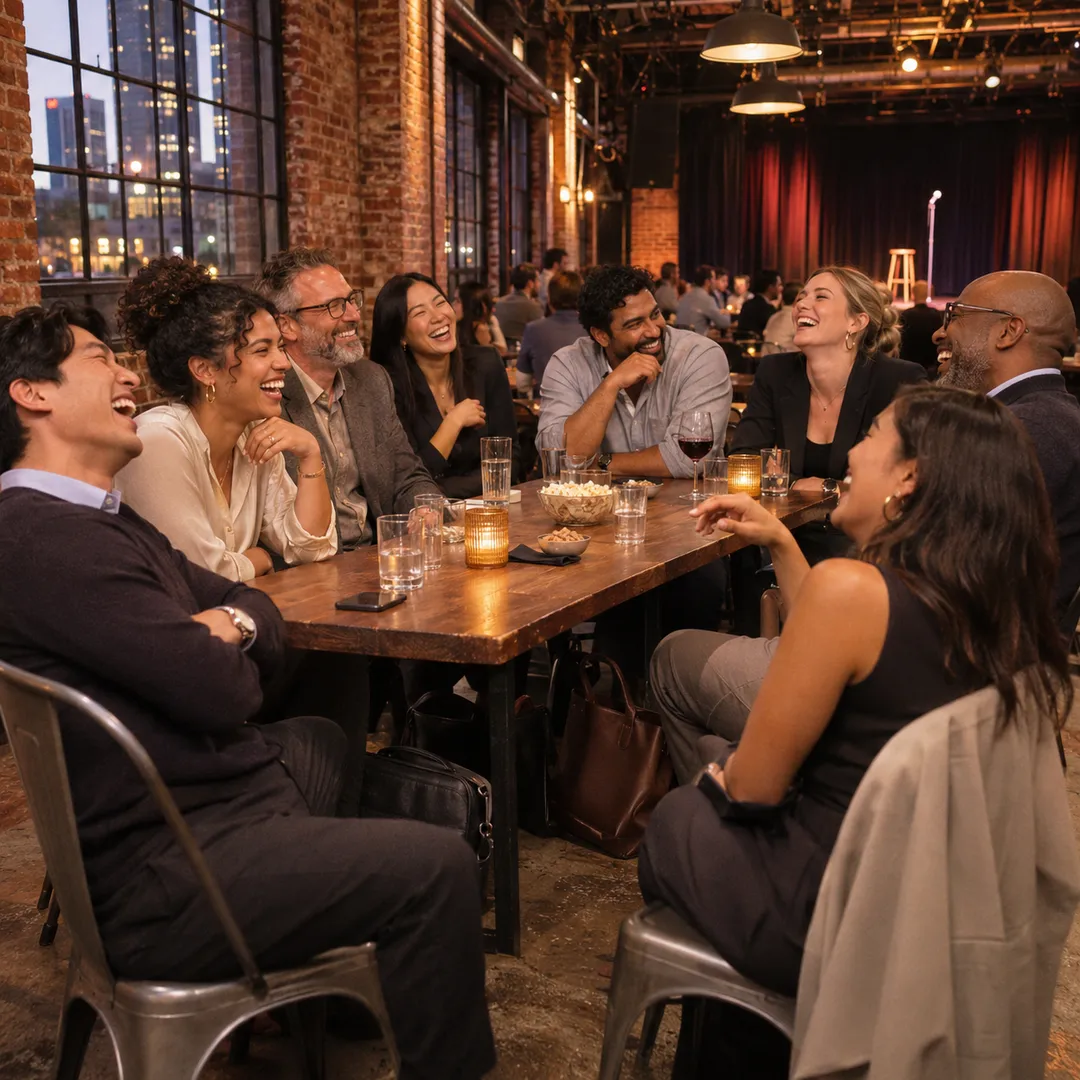
 Downtown LA Comedy Club Night Picker for a Team Outing
Bars & Nights Out

Three Weavers Craft Beer Brewery: Inglewood Flights
Three Weavers at 1031 West Manchester Boulevard is an Inglewood craft beer brewery for fresh flights, local atmosphere, and a measured first round.
Three Weavers gives an Inglewood craft beer brewery visit a clear first move: arrive before the group has decided that every beer must be the biggest one. At 1031 W Manchester Boulevard A-B, the tasting room works for a fresh flight, a short conversation with the bar, and a neighborhood plan that does not depend on racing across Los Angeles for the next stop.
Arrive for the First Flight
Inglewood’s setting matters because the brewery sits inside a real local corridor rather than an isolated beer campus. Manchester Boulevard lets the visit connect to food, music, and ordinary errands. Treat the taproom as the first chapter. The city around it supplies the pause that keeps a flight from becoming a hurried prelude to something else.
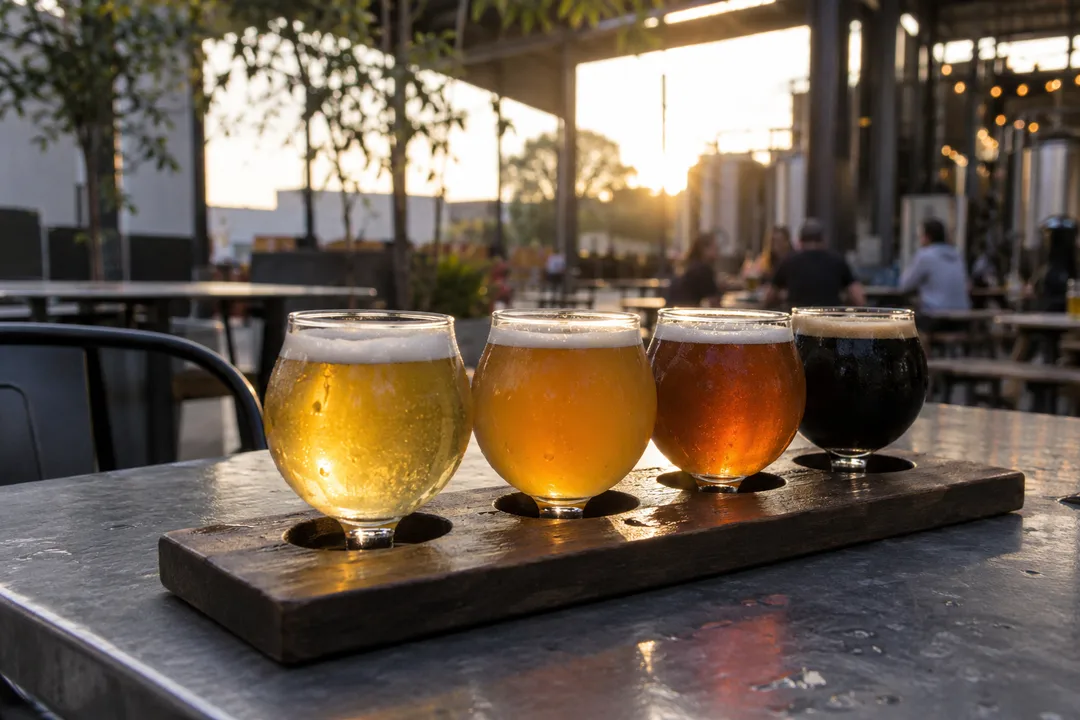
Choose one familiar style and two surprises. A crisp beer makes the baseline clear, a hop-forward pour shows the brewery’s energy, and the wildcard keeps the flight from feeling like a survey. The staff can help with the third choice if you describe your first two. Asking for contrast is more useful than asking for a ranking.
Let Manchester Set the Pace
The brewery’s name suggests collaboration and motion, so let the tasting move. Do not trap the group in one style because the first glass succeeded. Compare how carbonation, aroma, and bitterness change the way the same snack tastes. A good flight should make the second sample feel different, not merely stronger.
Inglewood drinkers may arrive for different reasons. One person may be checking a new release, another may be meeting before dinner, and a third may simply want a comfortable place to learn what they like. The room does not need a single personality. Keep the first order compact, then allow everyone to choose the direction of the second round.
Ask for Contrast
Use the bar’s attention well. A short question about a style or ingredient can make the order more precise, while a vague request for the best beer leaves too much work to the staff. Say whether you prefer dry, juicy, bitter, crisp, or malty. Those words are practical tools, not beer jargon for its own sake.
The first-come idea is most useful as a planning principle, not a promise about seating. Arrive with enough time to settle, especially if the group wants to sit together. If a release has drawn a line, set a limit before you stand there. Ten or fifteen minutes may be fine; an hour changes the evening into a different plan.
Share Before Splitting
Visit early when the goal is comparison. Later hours bring energy, which suits a birthday or reunion, but a louder room makes the subtle parts of a pale ale easier to miss. If the brewery feels full, take the flight slowly instead of adding more samples. One clear impression beats five blurred ones.
Food should keep the table steady. Pick a snack that is easy to share and not so intense that it erases the beer. A salty bite can make bitterness pop; a plain bite can reveal sweetness and finish. Save the full meal for after the first round so the tasting remains the reason for arriving.
Give the Room Space
A short Manchester Boulevard walk is the natural reset. Look at the storefronts, notice how quickly the low-rise blocks change, and let the first beer leave your palate before ordering again. Inglewood’s everyday texture is useful here: it gives the group something to talk about besides the last pour and prevents the outing from becoming a sealed indoor loop.
Plan the ride before the final order. Inglewood is easy to combine with other plans, but beer still deserves a designated driver or rideshare. If somebody is bringing home cans, make sure the route and storage are simple. A careful departure preserves the visit’s best feature: the ability to remember what the beer actually tasted like.
Use the Walk as a Reset
Groups should share the first flight and split the second. That arrangement creates a common starting point but lets individuals follow their own preference. One person may choose a lager, another a hazy beer, and another a dark pour. The table stays social because nobody has to pretend the same beer works for everyone.
A solo guest can make the room a small classroom. Order a compact flight, notice the order of aroma and finish, and ask what the brewer wanted the beer to do. You do not need a notebook. Three remembered details—one bright, one bitter, one soft—are enough to shape your next visit and your next order.
Choose the Return Reason
Skip the beer that sounds impressive only because it is extreme. A high-intensity pour can be the right choice later, but it is a poor opener when the board has range. Start with balance, then increase the volume of flavor. Three Weavers becomes more legible when you give each beer a job.
If the room is too busy, make food the backup and return on another day rather than forcing the tasting. If the first beer disappoints, switch directions quickly; the point is to learn, not to finish a glass out of obligation. A new release can make a future visit feel distinct, so do not treat a crowded night as a final verdict.
Let the Neighborhood Finish
Practical notes: the official Three Weavers site points visitors to 1031 W Manchester Boulevard A-B, Inglewood, CA 90301. Keep the full address in the route because the location uses the A-B unit designation. The official site is also the source for the brewery’s Inglewood tasting-room identity. Build the visit around the first flight, and leave room for a Manchester Boulevard walk afterward. Give the route a little breathing room after the tasting so the group can compare notes without standing in the ordering line. The address is the hard anchor; the rest of the outing can remain flexible. A short meal, an ordinary neighborhood walk, or a direct ride home all work better than forcing a second stop before the first beer has finished telling you what it is.
Ask Karpo for more information.
Keep reading
- Downtown LA Comedy Club Night Picker for a Team Outing
 Fairfax Comedy Club Night Picker for Aspiring Comedy Writers
 Santa Monica Comedy Club Night Picker for a Shy Date