 Mar Vista Winter Farmers Market Picker for Weekend Cyclists
Weekend Plans
Hauser & Wirth LA Contemporary Art Space: Courtyard Hours
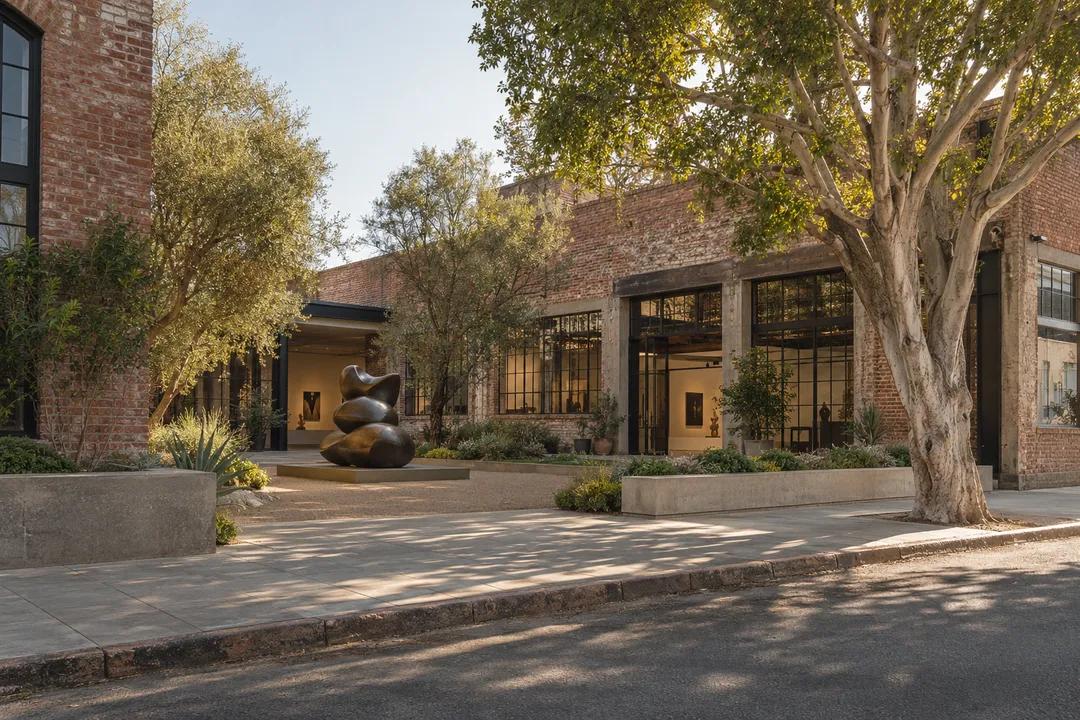
Hauser & Wirth at 901 East 3rd Street pairs free exhibitions with a brick courtyard, a Wednesday-to-Sunday schedule, and an easy Arts District afternoon.
Hauser & Wirth Los Angeles is a contemporary art space at 901 East 3rd Street, in the Arts District, with public hours Wednesday through Sunday, 10am to 6pm. The gallery’s free-admission format and long daytime window make it one of the easiest serious art visits to fit between breakfast and dinner. Start in the courtyard rather than hurrying indoors. The restored industrial setting gives you a sense of the scale before the exhibition narrows your attention, and that transition is part of why the visit feels more like a destination than a single white room.
Why the courtyard is the beginning
The courtyard is not just a picturesque pause. It acts as the hinge between the street and the program: brick, trees, open air, and a changing sculpture or installation create a slower threshold. People arrive in different modes here—some are meeting friends, some are carrying a sketchbook, and some are making a quick stop before a meal. Let the setting reset you. If you enter already trying to rank every artist, the building’s scale can feel intimidating. If you begin by observing the architecture, the exhibition becomes easier to enter.
Read the program before the rooms
Inside, read the exhibition title and short curatorial text before choosing a route. Hauser & Wirth often presents work at a scale that rewards distance, so stand back in the first room before moving close to surfaces or details. Pick one large work, one quieter work, and one piece whose material you cannot identify immediately. That three-part route creates a useful arc without demanding that you understand every reference. The strongest order is not always chronological; it is often spatial, with the room changing as the works become more intimate.
The exhibition rhythm to follow
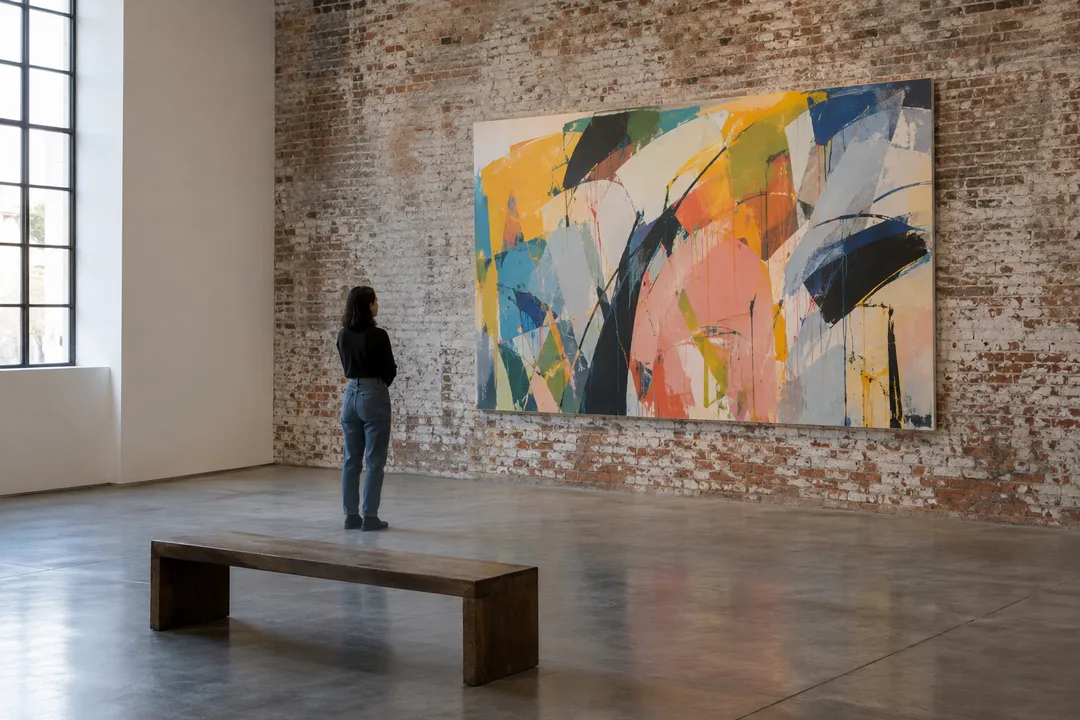
The house rule is consideration at scale. Give other visitors a clear sightline, especially in front of large paintings, and keep conversations low when a video or sound work is running. The courtyard can absorb a group, but the galleries can tighten quickly around a popular installation. If you are with children, name one work to look at together and then let them choose the next direction. If you are alone, use the benches as a reset rather than as a place to scroll. The building rewards attention that is shared but not performative.
How to share a busy gallery
The schedule gives you options most museum visits do not. Arrive at 10am for a quieter first circuit, or use the 4pm-to-6pm window when the day’s heat has eased and the courtyard becomes especially pleasant. Saturday midday is the likeliest time for a social crowd. I would skip trying to see every room before lunch if the current show is dense; choose the main exhibition, take a courtyard break, and return to the work that stayed with you. That is a better use of a large venue than speed-running it.
When the long hours help
For a neighborhood walk, go west and south through the Arts District after leaving the gallery, keeping the route near the industrial blocks rather than making a long museum pilgrimage. Notice the contrast between the gallery’s carefully staged materials and the practical surfaces of the district: loading doors, painted concrete, old brick, and new construction. Stop for a drink only if the place is part of your plan, not because every art outing needs a café ending. The walk is most satisfying when the exhibition’s scale remains in your mind.
A slow Arts District loop
Practical notes: the official address is Hauser & Wirth Los Angeles, 901 East 3rd Street, Los Angeles, California 90013. Public hours are Wednesday through Sunday, 10am to 6pm. Admission is free, and the gallery’s program changes, so the exhibition title matters more than a fixed list of rooms. Wear comfortable shoes, allow time for the courtyard, and keep your bag close in crowded galleries. Karpo APP can help build a short Arts District route around the opening window without turning the day into a chain of unrelated stops.
Practical notes before you go
What Hauser & Wirth does best is make contemporary art feel inhabitable. The courtyard gives the visit a beginning and an ending, while the rooms can carry ambitious work without the institutional heaviness of a huge museum. It is a strong choice for someone who wants one substantial exhibition and a little breathing room around it. It is less useful if your goal is a quick ten-minute photo stop. The right pace is two passes: one to understand the architecture and one to decide which work deserves your memory.
Practical notes before you go
If the main rooms are too busy, step outside rather than abandoning the visit. The courtyard is a legitimate part of the experience, not a waiting area you have failed to leave. Give the crowd twenty minutes to redistribute, then return to the quieter galleries. If you need a shorter backup, see only the central exhibition and save the rest for another day; free admission removes the need to force completion. A good contemporary art space should leave room for a second visit, and this one does.
What this space does best
The practical verdict is simple: choose Hauser & Wirth when you want a polished Arts District afternoon with real exhibition depth and a flexible schedule. The address, free entry, courtyard, and Wednesday-through-Sunday hours make the logistics forgiving. The art asks for more than a glance, but the building gives you places to pause. Start outside, read the program, take two passes, and let the surrounding streets finish the visit. Give the courtyard a second look on the way out. The return trip often feels different because the exhibition has supplied a visual vocabulary: brick, shadow, color, scale, or a particular kind of surface. That is a better souvenir than a rushed list of artists. If you are meeting someone, agree on one room where you will reunite rather than moving as a pair through every doorway. The arrangement keeps the visit social without turning the gallery into a guided march, and it leaves both people free to notice different things. If you have only one hour, prioritize the courtyard and the current headline exhibition, then stop. If you have two, take the longer route and return to the piece you marked mentally on the first pass. That flexibility is part of the venue’s appeal. The free format means you can treat the visit as a complete afternoon or as a measured first chapter before dinner, without feeling that an admission fee has turned a quiet room into an obligation.
Ask Karpo for more information.
Keep reading
- Mar Vista Winter Farmers Market Picker for Weekend Cyclists
 Downtown LA Winter Farmers Market Picker for Car-Free Hosts
 Larchmont Winter Farmers Market Picker for Kimchi-Making Day