 El Sereno Urban Staircase Walk Planner for a Study Break
Free Things to Do

Culver City Family Day at Botanical Conservatory Glasshouse
A Culver City family science day at The Huntington's Rose Hills conservatory, with its rainforest, cloud forest and carnivorous bog, plus planning tips.
Culver City is a studio town, a place built on the business of making believable worlds on soundstages, and it has no botanical conservatory glasshouse of its own. For families on the Westside, the nearest truly great one is across the basin at The Huntington in San Marino, where the Rose Hills Foundation Conservatory for Botanical Science was designed as a hands-on lab for curious kids and adults. This guide plans a family science day from Culver City to that glasshouse and back.
Why a Studio Town Family Should Go
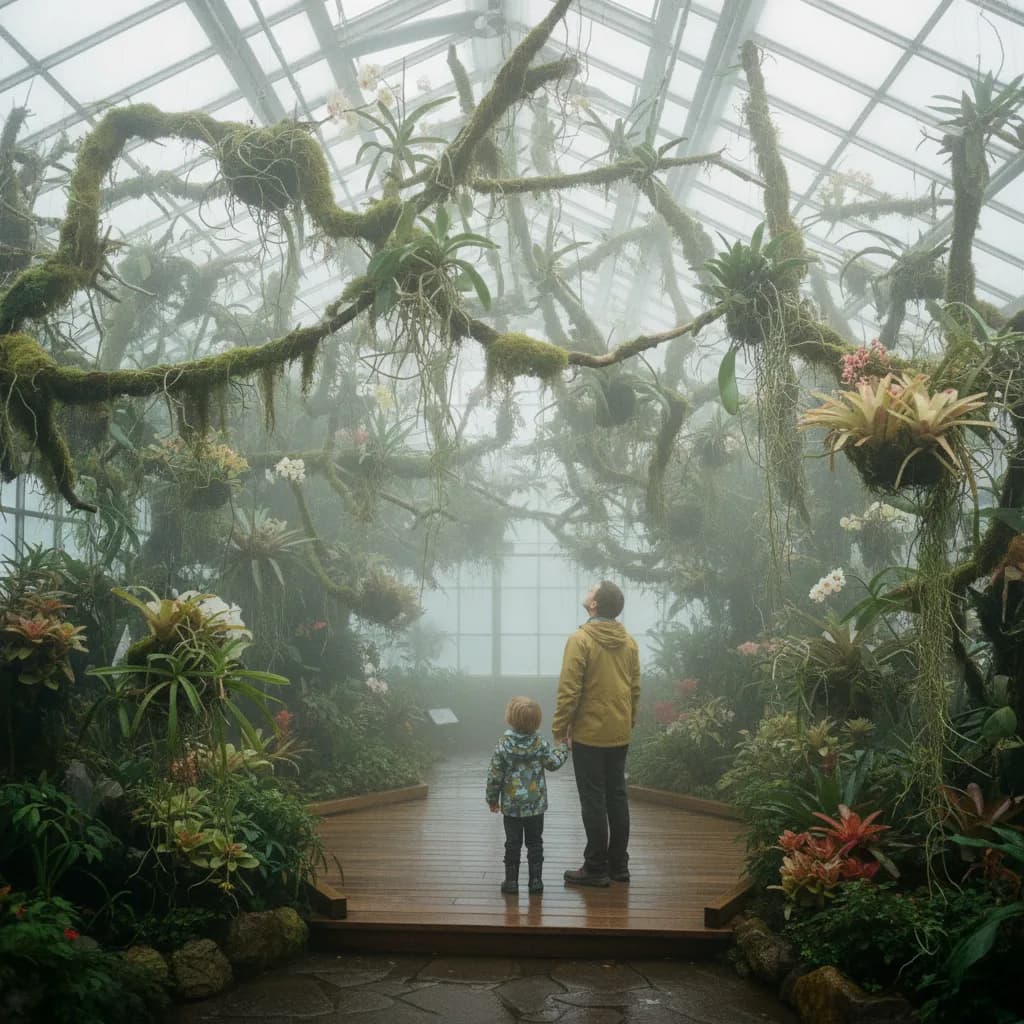
Children who grow up near the old studio lots learn early that a jungle on screen is often painted plywood and potted palms. The pleasure of this trip is showing them the real thing. Inside the Rose Hills conservatory the rainforest is wet, warm and alive, the cloud forest drips with moss, and the bog is full of plants that eat insects. Nothing about it is a set, and kids notice the difference immediately.
The building also makes science feel physical. Instead of reading about photosynthesis or pollination on a screen, children can touch, smell, measure and compare. The conservatory was opened in 2005 as the centerpiece of an education program at The Huntington, and it still feels designed around questions rather than lectures.
There is also a gentle lesson about storytelling. The studios in Culver City are experts at creating mood with light, sound and set dressing, and a good glasshouse does something similar with real materials. Warm air, filtered sunlight, the drip of water and the scent of damp soil all shape how a visitor feels. Talking about that with older children connects their neighborhood's famous industry to the natural world in a way that sticks, and it gives teenagers who might roll their eyes at a garden trip a more interesting reason to pay attention.
Planning the Trip Across the City
From Culver City, most families drive east across the city on the freeways and then north toward Pasadena and San Marino. The route crosses almost the whole basin, so leave early to avoid the heaviest traffic and pack snacks for the back seat. For a rail adventure instead, ride the Metro E Line downtown, switch to the A Line toward Pasadena and finish with a short ride to the gates.
Admission at The Huntington uses timed reservations on its official website, so set that up the night before and choose an early slot. Mornings are calmer, the garden paths are cooler, and young visitors have more energy for exploring before lunch. Bring water bottles, sun hats and a light layer, since the glasshouse is humid while the outdoor paths can be breezy.
Rainforest, Cloud Forest and Bog
The conservatory is divided into distinct habitats. The lowland rainforest is the warmest and wettest room, crowded with giant leaves, vines and fruiting plants. This is also where The Huntington has displayed Amorphophallus titanum, the famous corpse flower, whose rare blooms produce a smell so powerful that crowds line up just to experience it. Ask your kids to guess why a flower would want to smell like rotting meat.
The cloud forest is cooler and misty, a reminder that tropical does not always mean hot. Here orchids, bromeliads and ferns grow on branches with their roots in the air, collecting water directly from fog. Point out how the plants cling to bark and rock, and talk about how they survive without soil, a question that tends to spark more questions.
The carnivorous plant bog is usually the favorite. Venus flytraps, pitcher plants and sundews sit in shallow wet beds, and magnifying lenses help visitors spot tiny insects caught inside traps. Children love trying to figure out which plants snap, which drown their prey and which use sticky glue, and adults rarely leave without being a little impressed too.
Making the Interactive Exhibits Work for You
The galleries hold dozens of interactive stations where visitors can test ideas about seeds, leaves, light and water. Rather than rushing through every station, let each child pick two or three to explore in depth. A slower visit tends to produce better conversations, and it leaves energy for the outdoor gardens afterward.
The adjacent plant lab often runs demonstrations and family programs, and volunteers are generally glad to answer questions. Encourage kids to ask one good question each, then write the answers in a small notebook. Back home in Culver City, that notebook becomes the start of a windowsill experiment or a school project.
Before you arrive, it helps to set a simple challenge for the day. Younger children might hunt for five leaf shapes or three different colors of flower, while older kids can try to find a plant that climbs, one that floats and one that traps. Hand out a pencil and a folded sheet of paper at the entrance. The challenge gives the visit a shape, makes waiting in busy rooms easier and turns the drive home into a lively comparison of discoveries. Keep the rules loose so the game never gets in the way of simply looking.
The Rest of the Gardens
Leave time for the outdoor collections. The Children's Garden nearby is built for play, with water features and small spaces to explore, and it pairs naturally with the conservatory. Older children often enjoy the vast Desert Garden, where giant cacti and strange succulents feel like props from a science fiction film, even though every one of them is real.
The Japanese Garden, with its arched bridge and koi pond, and the Chinese Garden, with its pavilions and lake, offer quieter moments after the excitement of the bog. A simple picnic on one of the lawns lets everyone recharge before the long journey home.
Back to Culver City
The drive west at the end of the day is a chance to compare notes. Ask everyone which room they would want to visit again and which plant they would most like to grow. Then celebrate with dinner in downtown Culver City, where the restaurants around the old studio gates make an easy, family-friendly finish.
Over the following weeks, try connecting the trip to small local experiences. Walk the Ballona Creek path and look for plants that love water, or visit a nearby nursery to buy a small pitcher plant or fern. Those small moments help the science stick long after the visit.
If you would like help building a full family itinerary, including when to leave, where to stop for lunch and which galleries to prioritize, ask Karpo APP to plan a Culver City to Huntington day that fits your children's ages and interests.
Ask Karpo for more information.
Keep reading
- El Sereno Urban Staircase Walk Planner for a Study Break
 Santa Monica Urban Staircase Walk Planner Before Meetings
 Mount Washington Urban Staircase Walk Planner: Hike Prep