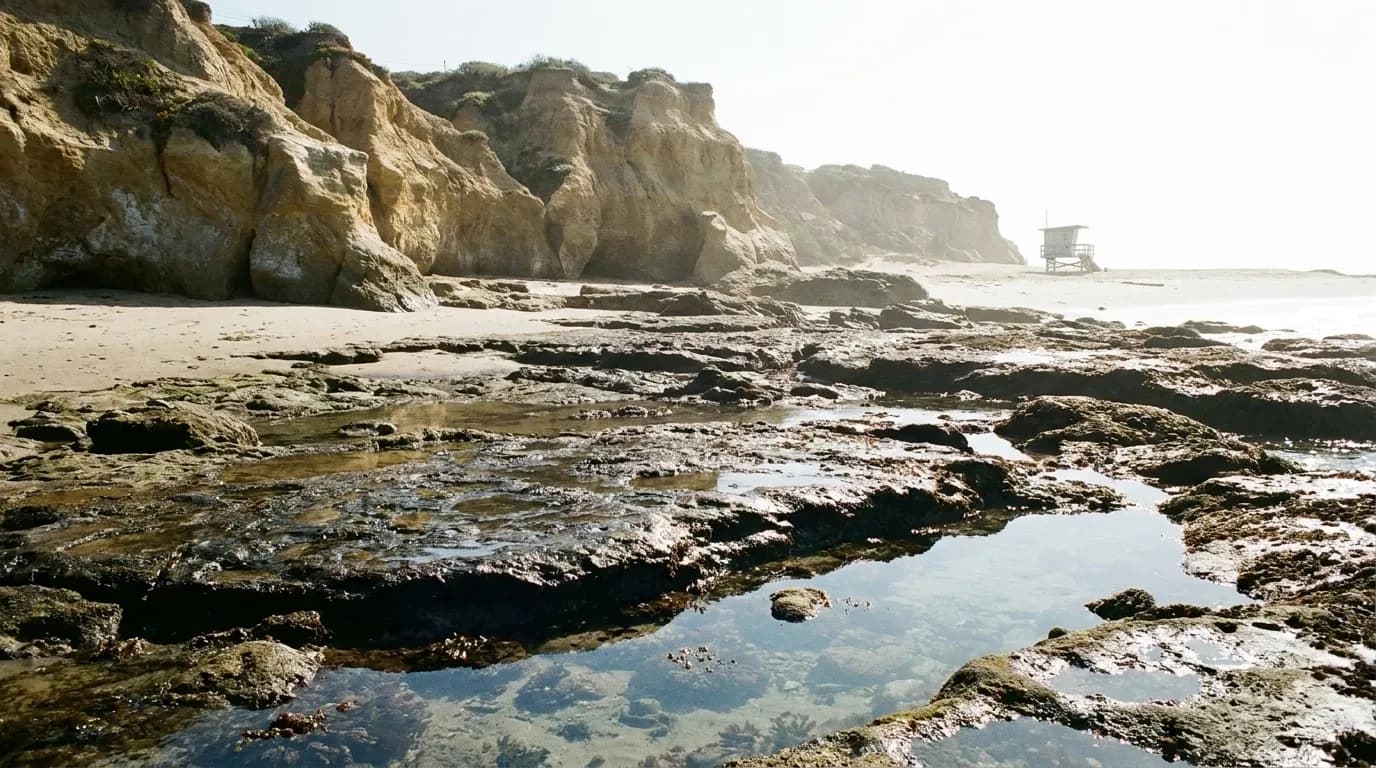
Leo Carrillo State Park occupies a mile and a half of coastline at the far northern end of Malibu, and it is one of the few Los Angeles County beaches where the geology is the main attraction. The park has reefs, tide pools and coastal caves alongside the sand, and it supports swimming, surfing, windsurfing, surf fishing and beachcombing. But the features people actually drive out for are only there some of the time, and that makes the tide table more important than the forecast.
The caves and the tide pools only exist at low tide, which makes the tide table more important than the weather here. Ask Karpo when low tide falls at Leo Carrillo and whether the campground has space.
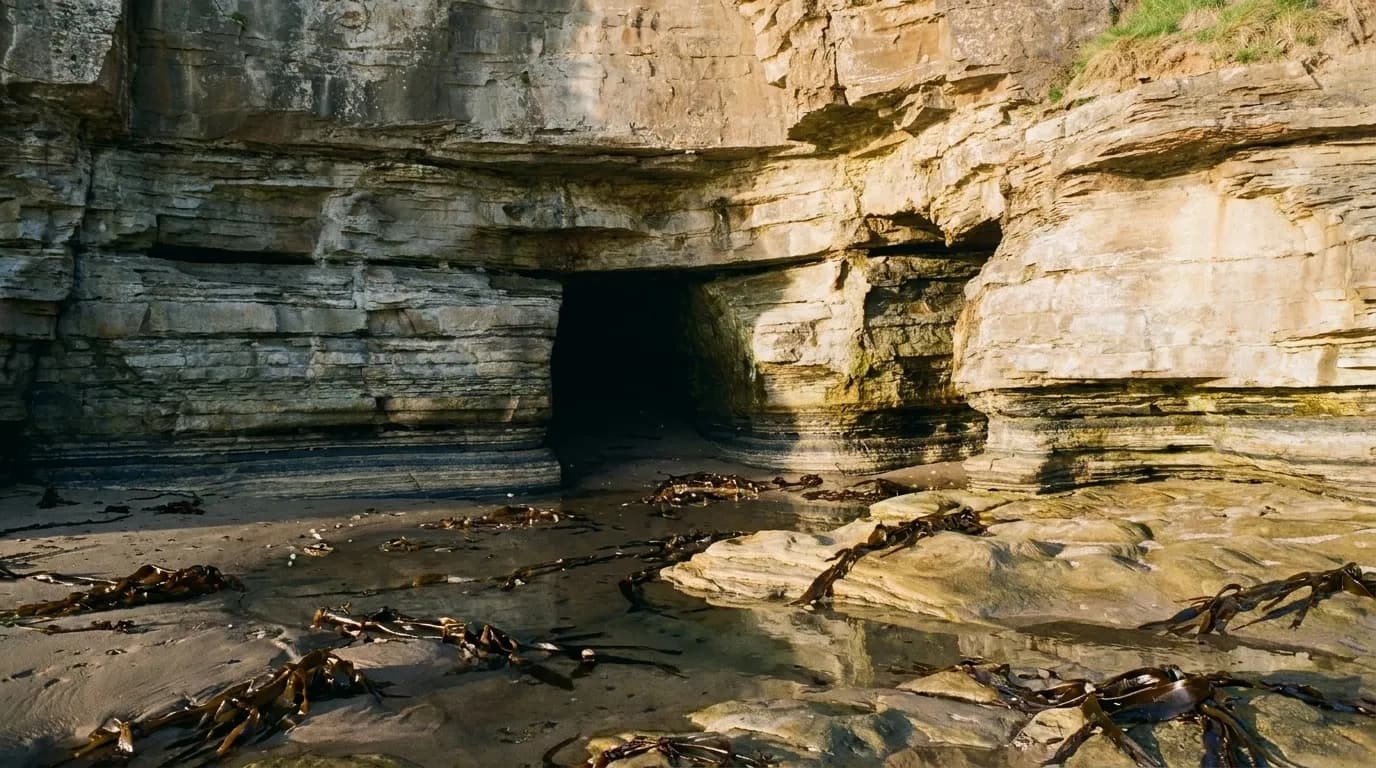
The caves are below the second lifeguard tower
This is the single most useful piece of navigation at the park. The sea caves are found below the second lifeguard tower, and they are accessible at low tide. At high tide the same stretch is water against rock and there is nothing to see.
The tide pools follow the same rule. Crabs and anemones become visible as the water pulls back off the reef shelves, and the window is a few hours either side of low tide rather than all afternoon. Check a tide chart, pick a day where low tide falls in daylight, and build the visit around that hour — everything else at this beach is available any time.
The campground is across the highway
Leo Carrillo has a large campground sitting across the Pacific Coast Highway from the beach, made up of 135 sites, each with its own picnic table and fire ring. As of January 2026, a standard site has run at $45 per night, a site with electrical hook-ups at $60, and the group site at $225. Reservations are available year-round through reservecalifornia.com.
Beach camping within reach of Los Angeles is scarce and demand is high, particularly for summer weekends. The practical advice is the same as for every California state park campground: book as far ahead as the reservation window allows, and check for cancellations if you missed it.
Day use, and the free parking nobody mentions
A large day-use parking area near the campground entrance doubles as overflow. More usefully, free daytime parking is available along the Pacific Coast Highway for visitors not staying overnight — which for a beach in Malibu is a genuinely unusual arrangement and worth knowing.
The trade-off is a walk and a highway crossing, both of which are fine in daylight and both of which get less appealing with a lot of gear and small children. On a quiet weekday the paid lot is the easier choice; on a summer Saturday the free highway parking may be the only choice.
There is a creek and a canyon behind the beach as well, running inland under the highway, with shaded trails and sycamores that feel nothing like the coastline fifty metres away. On a hot day it is the better half of the park, and it is the reason the campground works — you are not stuck between a car park and the sand with nowhere to walk.
What kind of beach day this is
Not a lie-on-a-towel-for-six-hours beach. The character here is rocky and structured — reefs, caves, pools, coves — which makes it a much better destination for anyone who wants to do something than for anyone who wants to do nothing. Children in particular get considerably more out of this than out of a flat sand beach.
Footwear matters accordingly. Reef shelves are sharp, slick with algae and unforgiving of bare feet, and the difference between an enjoyable hour in the tide pools and a cut foot is a pair of shoes you do not mind getting wet.
Surf conditions here are exposed and variable, which suits experienced surfers and makes it a poor choice for a first lesson. The same reef structure that produces the caves and the tide pools also produces uneven breaks and submerged rock, so if you are learning, the sandy beaches further south in Malibu are the sensible place to do it.
Getting there
The park is on the Pacific Coast Highway at the Los Angeles and Ventura county line, which makes it one of the furthest Malibu beaches from central Los Angeles. From the Westside, allow an hour in good conditions and considerably more on a summer weekend afternoon when PCH backs up through Malibu.
That distance is also the reason it is less crowded than the beaches closer in. The extra thirty minutes filters out a substantial share of the traffic, which is the whole argument for driving past four other beaches to get here.
Practical notes
Leo Carrillo State Park is on the Pacific Coast Highway at the northern end of Malibu, with about 1.5 miles of beach for swimming, surfing, windsurfing, surf fishing and beachcombing, plus reefs, tide pools and coastal caves. The sea caves are below the second lifeguard tower and are accessible only at low tide — check a tide chart before going. The campground across PCH has 135 sites, each with a picnic table and fire ring; as of January 2026 standard sites ran $45 a night, electrical sites $60 and the group site $225, bookable year-round at reservecalifornia.com. A large day-use lot sits near the campground entrance, and free daytime parking is available along PCH for non-campers. Wear shoes you can get wet for the reef.
Tags: #BeachNearMe #MalibuBeaches #LeoCarrillo #TidePools #SeaCaves #CaliforniaStateParks #BeachCamping #PCH #LosAngelesOutdoors #WeekendPlans #ThingsToDoInLA #BeachesNearMe #Surfing #FamilyOutings
Sources consulted: parks.ca.gov · hikespeak.com · americasstateparks.org
All trademarks are the property of their respective owners.
Ask Karpo first
Want to know when low tide falls, whether the caves will be reachable, and if there is a campsite left this weekend? Ask Karpo for today's Leo Carrillo tide window, a realistic drive time up the coast, and a backup Malibu beach if the lots are full.