 El Sereno Urban Staircase Walk Planner for a Study Break
Free Things to Do
LA Autumn Stargazing Spot: Silver Lake Without the Climb
Choose a Silver Lake sky break around your comfort with stairs. Compare rooflines, keep the climb optional, and give a short evening a clear return plan.
Choose a Silver Lake autumn stargazing spot by deciding how much climbing belongs in your evening before you decide how much sky you want. This plan uses the reservoir area's residential hillside setting as a starting question: would a short, level sky break suit you better than a route built around steps? The phrase Reservoir Steps describes the planning angle here, not a named observing facility. Nobody needs to earn a look at the Moon by finishing an exhausting staircase circuit, and a higher landing does not automatically deliver a better view.
Start with the person who wants fewer stairs
Ask each companion what makes an evening walk enjoyable. One person might welcome an uphill approach while another would rather stay near a familiar pickup point. Put the more restrictive preference into the route first. A plan that depends on somebody admitting defeat halfway up a flight of steps has already made the social part harder than it needs to be. Agree that choosing the level option is a complete outing, with no obligation to add an uphill extension afterward.
Draw two simple alternatives on your own map: a brief out-and-back and a longer version with a change in elevation. Neither should depend on a gate being unlocked, a private driveway providing a shortcut, or a stair landing being empty. Mark the point where the two versions separate. You can make the final decision there while everyone still feels comfortable. That decision point is more useful than a list of ambitious viewpoints whose approaches you have not considered.
A landing is a pause, not an observing platform
A stair route invites you to stop at the top and admire what opens up. Before turning that pause into an observation, consider the landing's ordinary purpose. People need room to pass, including those carrying bags or accompanying children. Keep the full walking width available. A tripod, even a small one, can create an awkward obstacle in a place where somebody expects a clear exit from the stairs. Carrying less equipment makes it easier to move on naturally.
Look at the view from a stable position with both feet planted. Do not continue looking upward while negotiating a step or stepping backward for a wider frame. If the only useful sightline requires leaning across a railing or standing in the moving path, discard that point. A comfortable place farther down can produce a better evening precisely because nobody has to manage balance while trying to concentrate. The best position for your group is the one you can leave easily.
Let roofs tell you what the walk can deliver

Instead of treating elevation as a score, read the edges around the sky. A nearer roofline may interrupt one direction while leaving another open. Trees can create a changing frame as you move a few paces. These are observations to make on arrival, not assurances about any particular street. Compare the sky you need with the sky you have. When those two do not align, changing the target can be more sensible than adding another climb.
For a first attempt, choose an object that an astronomy chart says should be visible from your location at your intended time. Keep the identification tentative until the direction and surrounding pattern agree. There is nothing disappointing about writing down that you could see the Moon but could not identify the nearby bright point. A specific, honest observation gives you a useful next step. Guessing a planet's name to make the evening feel successful only makes the next attempt more confusing.
Give the walk a social rhythm
Some companions like quiet concentration. Others want to keep talking while they look up. Neither preference needs to win for the entire evening. Suggest a short shared observation followed by an ordinary walk, or let one person watch while another rests nearby in a suitable public place. Avoid creating an informal lesson unless someone has asked for one. A simple question about the shape of the visible sky can begin a conversation without turning everybody into an audience.
If you are bringing someone unfamiliar with the area, describe the route through decisions rather than through impressive promises. Say whether you plan to turn back at the first staircase, where you will choose the shorter option, and how you will reconnect if someone leaves early. Those details establish trust. They also remove the temptation to keep searching for a dramatic view after the original plan has stopped being pleasant. A small outing remains small because somebody protects its limits.
Prepare the sky information before the ascent
Read a dated sky chart while you are still somewhere comfortable. Set the location and proposed observing time, find the direction of the object you want, and note whether the task calls for the lower sky or a higher view. Use a weather source for clouds. This separates an astronomical question from a walking question. You may discover that a low object would be hidden from your likely approach, making a different target a better choice for the same route.
Save one concise note rather than several screenshots. A direction, a target, and a return point are enough for a trial outing. If you use a screen during the walk, stop somewhere out of the moving line to read it. The task should not require somebody to follow navigation instructions while climbing and scanning the sky simultaneously. Put the device away before moving again. Your attention is more valuable underfoot when the path changes level.
Use the neighbourhood request to simplify the evening
Karpo APP can be the place you ask for ideas for a short Silver Lake evening walk. State the human constraints in the request: minimal stairs, an easy meeting point, and a route that can end early. The point is to shape an outing you would actually enjoy. Keep the sky chart, weather reading, and any access information with their own sources. A suggested neighbourhood route does not establish a dark sky, a clear horizon, or permission to use a residential terrace.
Give the route a fallback that needs no celestial performance. You might compare the silhouettes of different rooflines, take one quiet photograph of the changing dusk, or simply walk back together. This is particularly helpful when one companion came mainly for the company. The alternative should be appealing in its own right, rather than feeling like a consolation imposed by clouds. You can decide on it before leaving so the switch does not require a fresh negotiation on the hillside.
Practical Notes
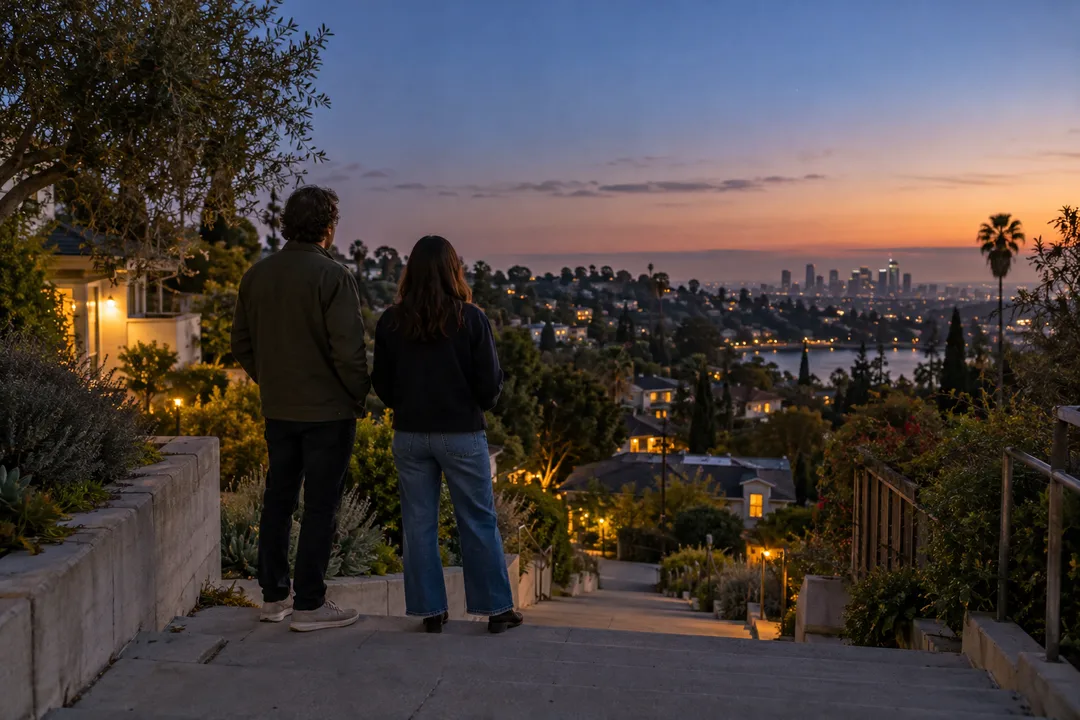
Wear shoes suited to the route you choose, keep your bag compact, and leave both hands available on steps. Use legitimate public access and respect any posted restrictions. The generated illustrations show the mood of preparation, not an exact verified stairway or a promised night sky. After returning, record whether elevation helped, which obstruction mattered, and whether the shorter version would suit the next visit better. Keep the note focused on your own experience. The worthwhile result is a more comfortable next decision, even if this evening's only clear discovery is that you prefer looking up from level ground.
Ask Karpo for more information.
Keep reading
- El Sereno Urban Staircase Walk Planner for a Study Break
 Santa Monica Urban Staircase Walk Planner Before Meetings
 Mount Washington Urban Staircase Walk Planner: Hike Prep