 El Sereno Urban Staircase Walk Planner for a Study Break
Free Things to Do
LA Autumn Stargazing Spot: Santa Monica With a Backup
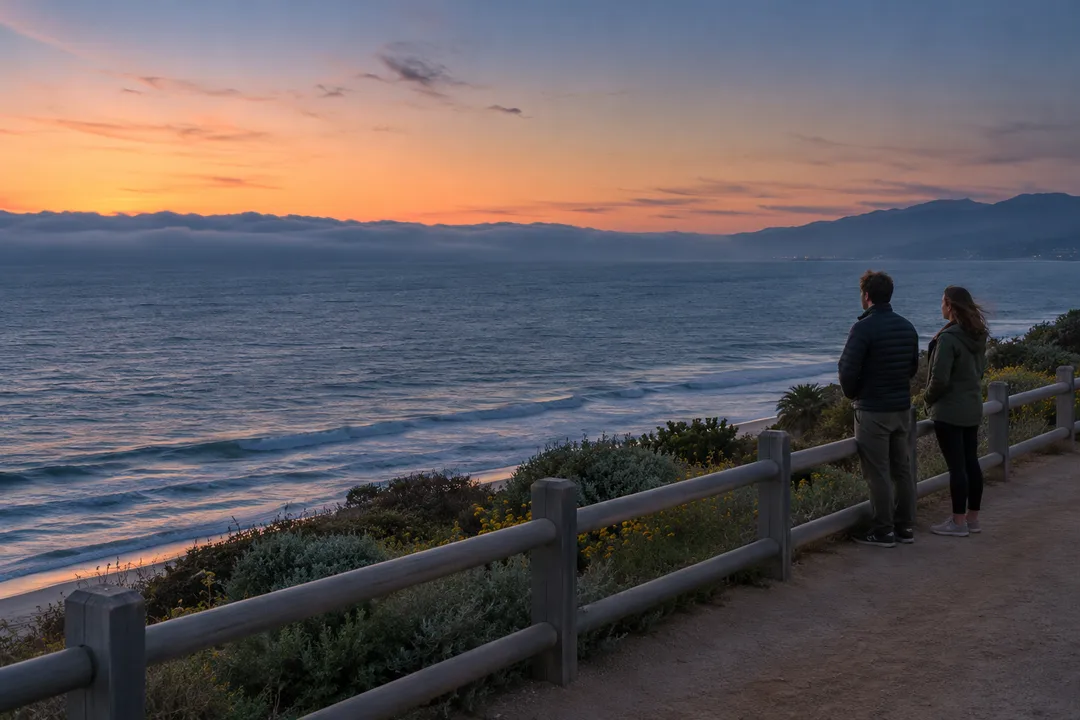
Plan a Santa Monica sky pause with a coastal walk as backup. Separate the target from the ocean view and choose an easy ending when clouds block the sky.
For a Santa Monica autumn stargazing spot, build the evening around the possibility that the ocean view and the sky view will tell different stories. An apparently open horizon can still leave your intended object hidden by cloud, while a pleasant coastal walk can remain worthwhile. This plan treats the coastal bluff as a search setting, not a certified dark-sky destination. Start with a short stay and a satisfying alternative. That combination lets you enjoy an evening near the sea without asking the weather to justify the journey.
Write two versions before leaving home
The first version is an observation: choose a target, use a chart to establish its direction, and find a legitimate public place with the necessary sightline. The second version is a coastal walk that works without a visible target. Give the alternatives equal care. If the fallback consists only of waiting longer in the same spot, it is not really another plan. Think about what you would enjoy noticing at dusk even if the sky above remained entirely blank.
Discuss the changeover in advance with anyone coming along. You might agree to make one patient attempt and then begin walking, or to decide after reaching the first suitable pause. Avoid setting an astronomical deadline that pretends a celestial event should occur on your schedule. The limit belongs to your outing, not to the sky. It simply gives everyone permission to stop waiting when the experience has become more about endurance than curiosity.
Separate the horizon from the target
A broad seaward view feels promising because the foreground can seem less enclosed than an inland street. That feeling does not tell you where an object will appear. Look at the chart for your intended location and time, and identify whether you need a low horizon or a higher patch overhead. If the target is inland, the ocean can be an attractive backdrop while offering little help with the actual question. Knowing this before arrival saves an unnecessary search along the bluff.
Use the chart as a guide rather than treating a bright dot as self-identifying. Match direction and surrounding pattern before assigning a name. If haze or cloud prevents that comparison, write down what was visible and leave the identity unresolved. An observation can be precise without being complete. For a beginner, understanding why the view was inconclusive is often a more useful result than memorising several names that cannot yet be connected to the sky.
Put comfort ahead of the imaginary perfect view
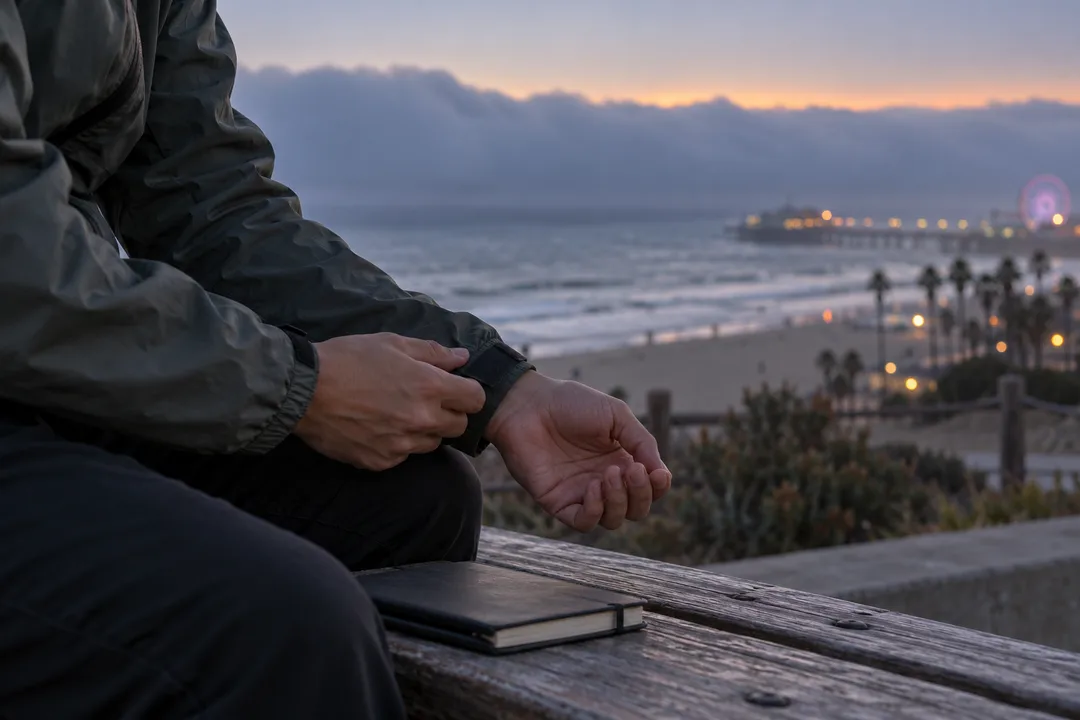
Standing beside the coast and walking beside it are different activities. Pack a layer you can add easily and choose a position where the group can remain comfortable without crowding the path. Decide how you will leave before unpacking anything. If someone becomes cold or tired, the return should be straightforward. Do not make the only warm alternative depend on a particular business being available, especially when you have not made that business the main destination.
Keep the observation on ordinary public ground, away from edges and protected areas. There is no reason to move beyond a barrier for a slightly cleaner photograph. The apparent improvement in the frame does not improve the outing enough to justify an unsuitable position. You can record a railing, a tree silhouette, or a partial view honestly. Those foreground elements explain where you were and make the image a better memory of a real evening.
Let the cloud become part of the walk
When the target disappears, avoid making each new opening in cloud a reason to postpone the rest of the outing. Notice the changing boundary between sea, cloud, and sky instead. You might compare how the horizon looks in two directions or describe the colour changes aloud to a companion. This does not turn cloud into a substitute planet. It gives your attention another subject while allowing the original astronomical question to remain unanswered.
A walk with a partner can benefit from a simple division of attention. One person notices the sky while the other watches the route ahead, and you stop together before looking upward. Swap roles if it feels useful. Do not try to keep your eyes fixed on an object while continuing along a crowded path. Observing works better when movement and looking happen in separate intervals. The small pause also makes it easier to share what each person actually saw.
Choose what a photograph should remember
Before taking a picture, decide whether you want a record of the outing or an image of a celestial object. The first can include the jacket on your arm, the distant shore glow, or your friend's silhouette. The second may call for preparation and equipment beyond a casual walk. Keeping those goals separate prevents a modest evening from becoming an improvised technical session. You can leave with a meaningful image even when it contains no identifiable stars.
Avoid judging the observation by the phone's processed result. A brightened photograph can look quite different from the view you shared with your eyes. In your notes, distinguish what you saw directly from what appears in the image. That distinction becomes especially useful if you return later under different conditions. It helps you compare experiences without being misled by different camera settings, exposures, or expectations about what an urban coastal sky should deliver.
Ask for the part that concerns the city
Use Karpo APP to ask for Santa Monica evening walk ideas that fit a short sky pause and an easy return. Explain whether you want to avoid stairs, prefer a simple out-and-back, or need a plan that separates cleanly when friends leave at different points. Keep weather interpretation with a weather service and celestial positions with an astronomy resource. A city suggestion can organise the human side of the evening without predicting when a cloud bank will move.
Read the relevant official access information for any named public space you choose, and follow restrictions on arrival. This article does not establish nighttime access to every bluff path or promise an unobstructed horizon at a specific point. You can decline an unsuitable option without replacing it with another detour. A useful plan has a graceful ending. Walking back when the view is poor is a sound decision, particularly if everyone enjoyed the coast before the observation began.
Practical Notes
Carry only what you can keep close, allow pedestrians to pass freely, and avoid placing bags where someone might trip. Tell your companions which of the two plans you are following when you switch. The generated photographs are illustrative coastal scenes, with deliberately modest skies. Afterward, record the actual obstruction, your comfort while standing, and whether the fallback felt worthwhile. That brief record will help you decide if another coastal attempt suits you or if your next astronomy outing deserves a different setting and a more deliberate travel commitment.
Ask Karpo for more information.
Keep reading
- El Sereno Urban Staircase Walk Planner for a Study Break
 Santa Monica Urban Staircase Walk Planner Before Meetings
 Mount Washington Urban Staircase Walk Planner: Hike Prep