 El Sereno Urban Staircase Walk Planner for a Study Break
Free Things to Do
LA Autumn Stargazing Spot: Pasadena Between Arches and Sky
Choose a Pasadena sky pause by comparing arches with open sightlines. Keep public access clear and give the architectural walk a purpose of its own.
A Pasadena autumn stargazing spot can begin with an architectural question: how much sky remains when an arcade frames the view? This plan uses the historic shopping streets as a setting for a brief comparison between sheltered walking and open observation. Historic Arcade is a descriptive route label, not the name of a verified viewing venue. An arch may make a lovely foreground while hiding the object you hoped to see. The useful outing is learning to recognise that difference before turning a casual walk into a prolonged search.
Choose between looking at the frame and through it
Decide which experience matters most tonight. If you want an architectural walk with a little sky, an interesting frame can be enough. If you want to identify a particular object, the frame has to serve that target. These priorities can lead to different places to pause. Neither choice is superior, but leaving the question unspoken creates frustration. A companion expecting a gentle stroll may feel stranded when the group spends the entire outing trying to find a precise opening between roofs.
Start with a sketch of the evening rather than a catalogue of buildings. Choose a meeting area, one likely observation interval, and a place where the walk ends. Keep the observing interval flexible enough to move to a suitable public sidewalk if the covered route obstructs the sky. Do not assume that an attractive passage connects through to another street or remains accessible after your main activity. An architectural feature can be admired without becoming a necessary link in the route.
Use the covered section to organise the question
A sheltered pause can be useful for reading your chart before moving to the open part of the walk. Set the chart for the observing location and intended time. Note the direction and whether the object sits low or high in the sky. Then put the screen away and compare that information with the visible opening. This gives the transition from arcade to sidewalk a purpose. You are looking for a specific view, not simply wandering until a space feels suitably atmospheric.
Avoid identifying a point through a single narrow gap and then treating the gap as a permanent viewing position. Consider whether you would have to move into a doorway or obstruct passing pedestrians to keep watching. A point that requires constant repositioning is a poor choice for a relaxed shared outing. You can record a brief sighting and continue. The evening does not become more successful just because you remain beside the same column for longer.
Keep the public route easy to read
The boundary between a public sidewalk and a privately managed forecourt may not be obvious from a photograph. Use the relevant operator's access information when choosing a named destination, and respect signs or staff directions in the actual space. Never infer permission from a quiet entrance. If access is uncertain, stay with a clearly legitimate walking route. There is no need to test a gate or follow another visitor through a doorway to improve your patch of sky.
Keep the group small enough to move aside comfortably. Agree on a short phrase that means you are ready to continue so nobody is left looking upward while others have started crossing a street. Stops and movement should be distinct. Put attention back on the route before walking again. This simple rhythm matters more than elaborate equipment, particularly when an evening combines conversation, architectural details, traffic crossings, and a target that invites you to look away from your surroundings.
Give the architecture its own observation
When the sky does not cooperate, compare how the buildings shape your experience of the street. Notice whether a deep arch feels like a room or a threshold, how a lit interior changes the darkness beyond, or which surfaces hold the last daylight. These are personal observations you can make without inventing a building history. You do not need to attach a construction date or architectural attribution to every detail that catches your attention. Looking closely is a complete activity.
If someone in the group enjoys drawing, suggest a quick outline of the roof and sky boundary. Another person might prefer a single photograph. Neither needs to be polished or shared publicly. The point is to make the frame visible as something you chose to notice. Later, the sketch may explain why a target was hidden more clearly than a vague note saying the view was poor. The record can be useful while remaining small and informal.
Do less with the camera
An arch is an inviting photographic device, and it can tempt you to chase symmetry instead of the evening's purpose. Make one composition from a comfortable public position, then return to looking directly. A photograph should not require standing in a doorway, blocking a ramp, or persuading a companion to watch your bag in the walking line. Accept the imperfect angle. It preserves the relationship between your outing and the place's ordinary use.
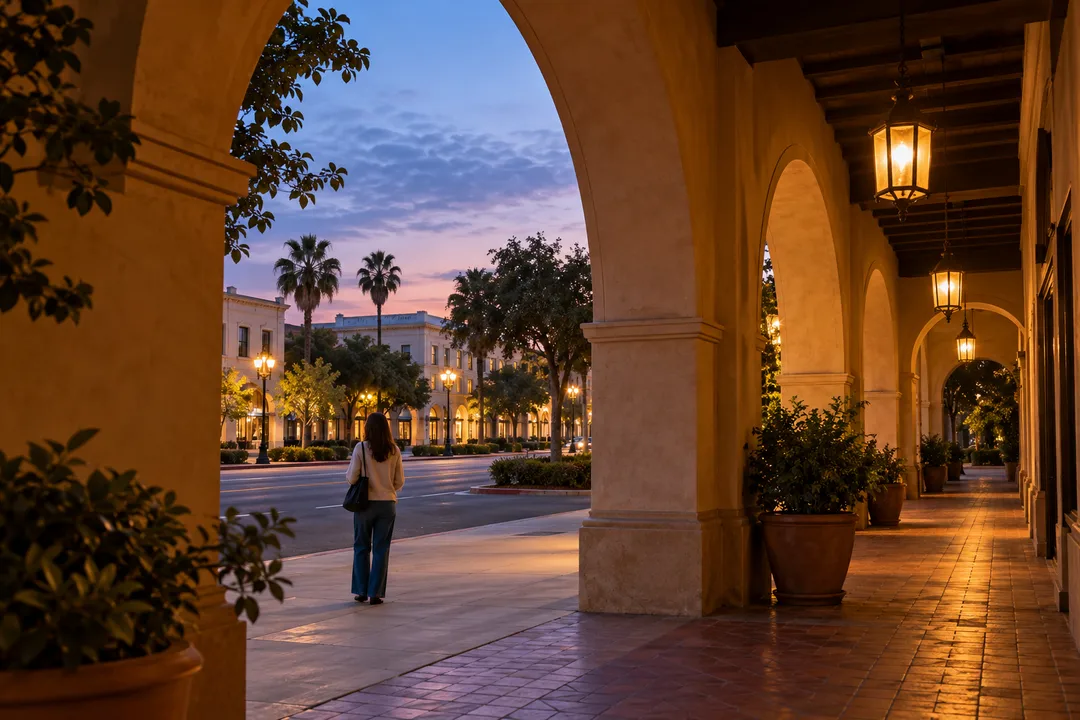
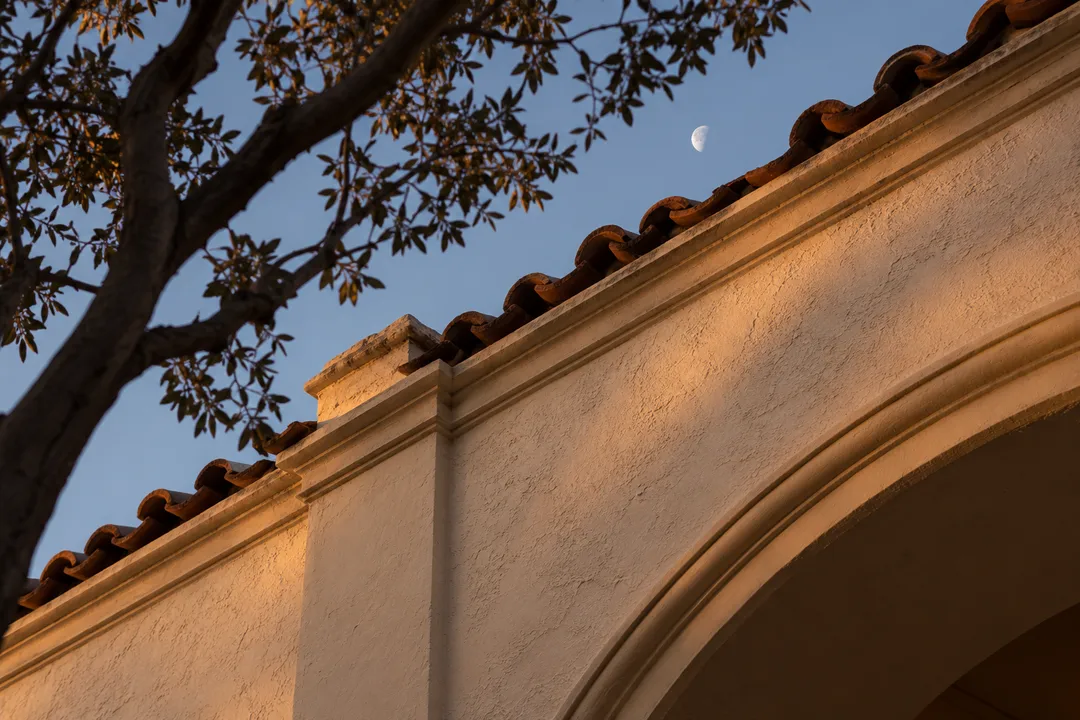
Keep a distinction between the visual story and the astronomical record. The image might show a luminous sky gap without identifying a single celestial object. That does not make it misleading if you describe it as an architectural dusk scene. It becomes misleading only when the image is presented as evidence of a star field or a reliable observing site. The generated illustrations accompanying this article serve the former purpose: they show framing and atmosphere, without documenting a particular arcade's access or sky conditions.
Make the city request about transitions
Ask Karpo APP for ideas for a Pasadena evening walk that can move from an architectural stroll to a brief open-sky pause. Explain whether you want fewer crossings, a compact route, or a simple meeting arrangement for friends coming separately. Keep the request focused on the city experience. Use an astronomy resource for target positions and a weather source for clouds. No neighbourhood suggestion can establish that a decorative arch will align with a planet when you arrive.
Plan an ending that remains pleasant if the observing question stays unresolved. Return through the portion of the route that held your attention rather than adding a speculative detour. A walk can finish with a comparison of two rooflines or a conversation about how enclosed and open spaces feel. That is a worthwhile evening on its own terms. You can reserve a more serious observation for a different outing with different travel and equipment commitments.
Practical Notes
Select one target and one architectural detail to notice, keep entrances clear, and leave private courtyards out of the plan unless their published access supports your visit. Carry a layer suitable for standing still and keep your return arrangements independent of a late stop indoors. Afterward, note whether the frame helped or obstructed your view and whether the transition to open sidewalk felt easy. Those practical observations will make the next plan more precise without turning tonight's simple outing into a claim about Pasadena's darkness or any building's suitability for astronomy.
Ask Karpo for more information.
Keep reading
- El Sereno Urban Staircase Walk Planner for a Study Break
 Santa Monica Urban Staircase Walk Planner Before Meetings
 Mount Washington Urban Staircase Walk Planner: Hike Prep