 El Sereno Urban Staircase Walk Planner for a Study Break
Free Things to Do

LA Autumn Stargazing Spot: Echo Park Without the Rush
Build an Echo Park sky pause around a shared walking pace. Separate reflections from observation and keep a shorter route ready when the group wants home.
An Echo Park autumn stargazing spot works best as a deliberate pause within a small evening outing, rather than a promise of darkness beside the water. The Lotus Circuit label in this plan describes a suggested way to think about the neighbourhood, not a named astronomy route or a claim about seasonal flowers. Choose one question for the sky and one comfortable way home. You can then decide whether a waterside pause supports the evening, without feeling obliged to complete a circuit just because you began one.
Agree on a shared pace before choosing a loop
A loop sounds simple until two people want different evenings. One may want steady movement while another hopes to stay still and look upward. Discuss that difference before setting off. You could make one short observation the shared activity and leave a longer walk optional. Alternatively, choose a walking outing with a single brief pause. Naming the priority gives everyone a fair expectation and removes the pressure to perform enthusiasm for an activity they did not realise they had joined.
Make the route easy to shorten. Pick an agreed return direction and a point where the group can decide whether to continue. Do not assume that going all the way around a body of water is necessary to see it properly. An out-and-back can be more comfortable when someone has limited energy or prefers familiar footing. The shape of the route is a tool, not a challenge. A pleasant evening earns nothing extra by becoming longer than the group wants.
Distinguish reflections from the observing question
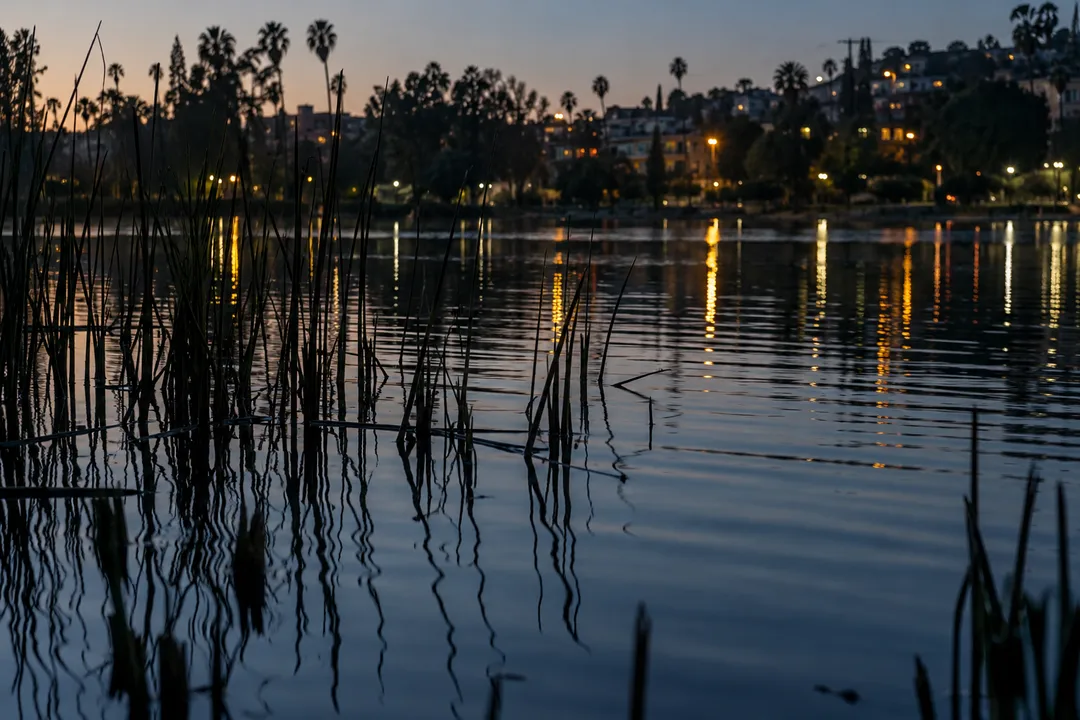
Water can make an ordinary dusk feel eventful. Reflected lamps and bright patches of sky draw the eye downward even when you came to look up. Give that experience a place in the outing, but keep it separate from identifying celestial objects. A reflection can be beautiful without telling you anything about the sky's darkness. Describe it as light on water rather than treating it as evidence of a successful astronomical observation.
Stand comfortably back from the edge when you look upward. Keep the moving path available to others and avoid arranging bags or photographic equipment where they narrow it. There is no benefit in approaching the water to improve a view of something far overhead. If trees or structures block your target, compare another legitimate public position or accept that the target is not available from this part of the route. Neither choice requires stepping off the normal path.
Give a beginner one thing to recognise
If a companion is new to skywatching, choose a manageable question before the outing. The Moon can provide a different sort of activity from recognising a constellation, and the intended object should come from a dated astronomy chart for your location and time. Show the companion what direction you are trying to face and what makes you think the object belongs there. Keep the explanation short enough that they have time to look for themselves.
Avoid praising a guess merely because it sounds plausible. Ask what they noticed: the object's position, the surrounding pattern, or the way an obstruction interrupts the view. If neither of you can establish the identity, keep the observation unnamed. That encourages careful looking instead of rewarding speed. A short note about an unidentified point is an honest record. It can become something to investigate later without turning the shared walk into an exam or a competition.
Let conversation resume between pauses
Skywatching asks for attention, and a companion may not want to hold it for long. Use small intervals: stop together, look, describe what each person saw, then return your attention to the path before walking. Conversation can continue during the moving portion. This rhythm prevents the uncomfortable situation in which one person keeps stopping while the other gradually walks ahead. It also gives the outing a structure that is easy to abandon when interest or energy changes.
For a group, avoid making the most enthusiastic person responsible for every decision. Ask someone else to choose when the next pause should end or whether the shorter route now feels preferable. A shared stopping rule makes the evening more welcoming than an open-ended search. Nobody should have to produce a reason strong enough to outweigh another person's excitement. Wanting to go home is sufficient. You can plan a longer astronomy outing another time with people who specifically want one.
Keep the photograph close to the experience
Decide whether you want a portrait of your companion, a reflection study, or a record of the sky before lifting the camera. Trying to combine all three can turn a quiet pause into a lengthy arrangement. One simple image can preserve the mood better than a collection of difficult night shots. Avoid asking anyone to stand near the edge or remain in a walking line while you adjust a frame. The scene should accommodate your position comfortably.
Label the result honestly in your own notes. A photograph of water and city light is a photograph of water and city light, even if you took it during a skywatching outing. A processed image may reveal details that were not apparent to the unaided eye. Keep that distinction when comparing evenings. The illustrative photographs here show a modest urban waterside mood. They do not document access, certify a particular viewpoint, or promise flowers, a clear horizon, or a sky full of stars.
Turn preferences into a useful request
Use Karpo APP to ask for a compact Echo Park evening walk with a short pause and a straightforward return. Explain whether the group prefers fewer decisions, wants an out-and-back, or needs a version that can end early. Keep the sky information with an astronomy source and the cloud information with a weather service. Those separate roles make the plan easier to assess. A neighbourhood idea can organise the walk without claiming to track celestial objects or reserve public viewing space.
For any named public space you choose, read the relevant official access information and follow signs on arrival. A route suggestion does not establish that every segment is available during your visit. Have an alternative that stays within legitimate access and does not depend on entering a restricted waterside section. If the whole observation falls away, keep the conversation and the walk. A shared evening can remain complete when its original question is still unanswered.
Practical Notes
Leave with a target, a preferred pace, and an agreed way to finish. Keep equipment compact, give other path users room, and stop moving before looking upward. After returning, note whether the waterside setting helped your concentration or distracted you, whether the group enjoyed the pauses, and what you would shorten next time. Those details are more useful than a grand verdict about the neighbourhood. They turn a casual autumn outing into a better personal plan while preserving the freedom to choose a different kind of evening next time.
Ask Karpo for more information.
Keep reading
- El Sereno Urban Staircase Walk Planner for a Study Break
 Santa Monica Urban Staircase Walk Planner Before Meetings
 Mount Washington Urban Staircase Walk Planner: Hike Prep