 Where to Eat Near Penn Station That Isn't a Chain
US Open 2026
Juno Temple Indie Film Screenings Near 2026 US Open
A practical guide to pairing art house cinema with US Open week in Queens, for fans who appreciate character-driven storytelling and Grand Slam tennis.
If you're traveling to Flushing Meadows for the 2026 US Open and you've spent the past few years following character-driven television—the kind that rewards patience, wit, and emotional nuance—you might be wondering how to balance tennis sessions with the quieter cultural rhythms of Queens. The borough that hosts the tournament is also home to a growing constellation of independent cinemas, repertory screening rooms, and community film series that cater to audiences who value storytelling craft. Planning a visit that honors both the energy of a Grand Slam and the intimacy of an art house lobby requires attention to transit connections, neighborhood geography, and the practical realities of moving between Flushing Meadows and the cultural pockets along the 7 train corridor.
Text Karpo with your US Open session time and Queens starting point, and we’ll turn this Art house cinemas for Ted Lasso fans during Queens tennis week into a practical local plan.
Why Queens Works for Film and Tennis
Queens is the most linguistically diverse urban area in the world, and that diversity extends to its cultural programming. The same transit spine that delivers tens of thousands of tennis fans to the Billie Jean King National Tennis Center each August and September also connects neighborhoods with longstanding traditions of independent cinema, international film festivals, and community-driven screening series. The 7 train runs express and local service between Manhattan and Flushing, with stops in Long Island City, Woodside, Jackson Heights, and Corona—each offering distinct food, bookshop, and gallery scenes that reward a few hours of exploration before or after a tennis session.
The US Open runs for two weeks, typically from late August into early September, with day and night sessions that create natural windows for other activities. According to the official event schedule at usopen.org, sessions are structured to allow visitors to plan around match times, though specific start times and court assignments are confirmed closer to the tournament. That flexibility makes it possible to build a day that includes a morning film screening in Astoria, an afternoon quarterfinal at Arthur Ashe Stadium, and an evening walk through Flushing Meadows Corona Park as the lights come up over the Unisphere.
Art House Cinema Geography Along the 7 Train
The 7 train corridor is the practical backbone of any US Open visit that includes cultural stops. Long Island City, the first Queens stop after Manhattan, has become a hub for galleries, performance spaces, and occasional pop-up screenings in converted industrial buildings. Astoria, a few stops further east, has historically supported repertory cinema and independent screening series, often hosted in partnership with local cultural organizations. Jackson Heights and Corona, closer to Flushing Meadows, offer community film programs that reflect the neighborhood's South Asian, Latin American, and East Asian populations, with subtitled international features and documentary series that rarely appear in Manhattan multiplexes.
Flushing itself, the eastern terminus of the 7 train and the neighborhood adjacent to the tennis center, has a vibrant commercial district with occasional film screenings tied to cultural festivals and community centers. The Museum of the Moving Image in Astoria, a short walk from the Steinway Street station, programs year-round repertory series, director retrospectives, and experimental film showcases. Checking the museum's public calendar in advance of your US Open trip allows you to coordinate a matinee screening with an evening tennis session, using the 7 train to move efficiently between venues.
Timing Film Screenings Around Tennis Sessions
US Open day sessions typically begin around the posted time, and night sessions start around the posted time, though these times are subject to change and should be confirmed on the official usopen.org event schedule. That structure creates two natural windows for film programming: early morning or late afternoon screenings that don't conflict with your ticketed tennis time. Many independent cinemas in Queens offer matinee pricing and less crowded showtimes before noon, making it possible to catch a the posted time feature in Astoria, take the 7 train to Mets–Willets Point, and arrive at the tennis center in time for the first matches of the day session.
If you're attending a night session, consider a late afternoon screening in Long Island City or Astoria, followed by dinner in one of the neighborhood's many cafes or delis before heading east to Flushing Meadows. The MTA's official US Open transit guide at new.mta.info/guides/stadiums/us-open provides real-time service updates and recommended routes, which is especially useful during the tournament when ridership on the 7 train increases significantly. Building buffer time into your schedule—at least 30 minutes more than the estimated transit time—helps account for crowding, service changes, and the walk from the subway platform to your cinema or tennis gate.
What to Carry and What to Leave Behind
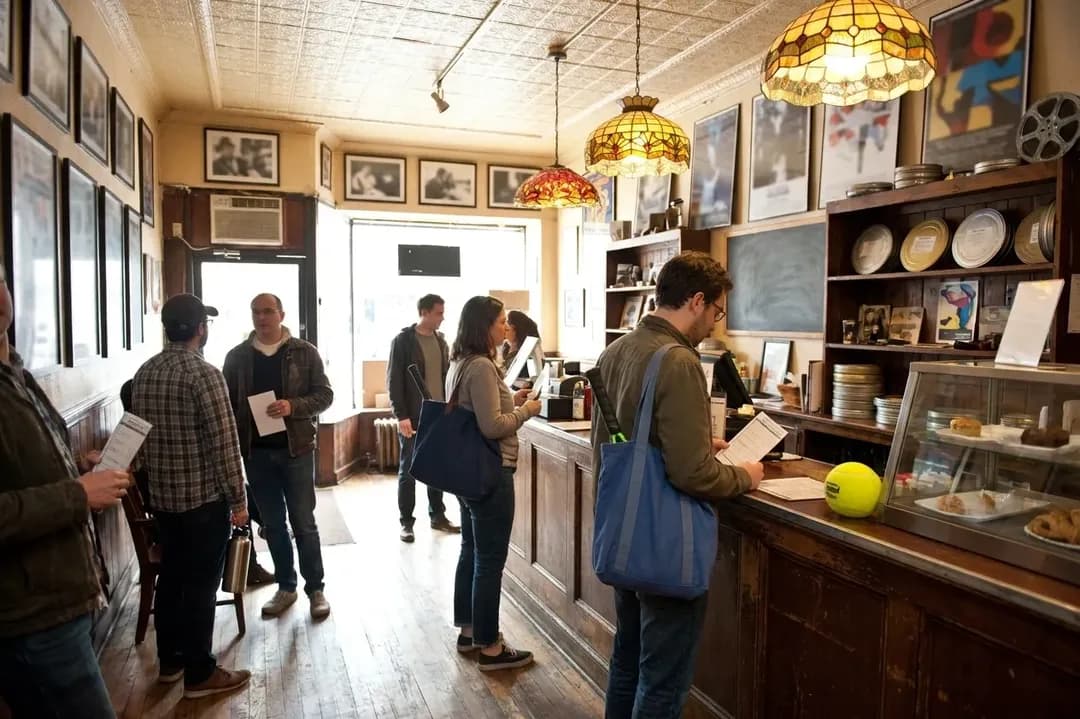
The US Open has specific restrictions on bag size, outside food, and prohibited items, detailed in the official guide at usopen.org/en_US/visit/prohibited_items.html. If you're planning to visit a cinema before or after your tennis session, pack accordingly: a small crossbody bag or backpack that meets the tournament's size limits will also work for a day of film screenings and neighborhood exploration. Most independent cinemas in Queens allow outside snacks and non-alcoholic beverages, but it's courteous to check individual venue policies before bringing in food purchased elsewhere.
Comfortable walking shoes are essential. You'll be moving between subway platforms, cinema lobbies, tennis grounds, and neighborhood streets, often covering several miles in a single day. The US Open grounds are large, and the walk from the 7 train station at Mets–Willets Point to the main entrance can take 10 to 15 minutes depending on crowd flow. Similarly, many of Queens' best independent cinemas are located a few blocks from their nearest subway stop, requiring short walks through residential or commercial districts.
Practical Notes for Film and Tennis Days
- Check the Museum of the Moving Image's public calendar and independent cinema schedules at least a week before your US Open visit to identify screening times that align with your tennis sessions.
- Use the MTA's real-time service status page at new.mta.info to confirm 7 train service before you leave your hotel or starting point each day.
- Plan to arrive at the US Open grounds at least 30 minutes before your session start time to allow for security screening and crowd flow, as outlined in the official visitor A-Z guide at usopen.org/en_US/visit/a_z.html.
- Bring a refillable water bottle; both the tennis center and most Queens neighborhoods have public water fountains and refill stations.
- If you're attending a night session and a late afternoon screening, eat a substantial meal in between—many cinemas in Astoria and Long Island City are within a block or two of excellent delis, bakeries, and cafes.
- Download offline maps of Queens and the 7 train corridor in case cellular service is slow during peak tournament hours.
Exploring Flushing Meadows Corona Park Between Events
Flushing Meadows Corona Park, the 897-acre public park that hosts the US Open, is worth exploring beyond the tennis grounds. The park is home to the Unisphere, the Queens Museum, the New York Hall of Science, and miles of walking and cycling paths. According to NYC Parks at nycgovparks.org/parks/flushing-meadows-corona-park, the park is open year-round and offers free admission to its green spaces, playgrounds, and public art installations. If you have a gap of several hours between a morning film screening and an evening tennis session, the park provides a quiet, expansive setting for a walk, a picnic, or a visit to one of its cultural institutions.
The Queens Museum, located near the Unisphere, houses the Panorama of the City of New York, a 9,335-square-foot scale model of the city that was built for the 1964 World's Fair. The museum also programs rotating exhibitions of contemporary art, often with a focus on immigrant and diaspora communities. Checking the museum's public hours and exhibition schedule before your visit allows you to build a layered cultural day that moves between film, tennis, and visual art without feeling rushed.
Respecting Local Rhythms and Neighborhood Context
Queens neighborhoods are residential, multilingual, and densely populated. The influx of US Open visitors each year is significant, and local residents navigate the same subway lines, sidewalks, and parks that tourists use to reach the tennis center. Practicing basic courtesy—yielding space on crowded trains, keeping noise levels low in residential areas, supporting local businesses, and asking permission before photographing storefronts or public art—helps ensure that your visit contributes positively to the neighborhood. Many of the independent cinemas and cultural spaces along the 7 train corridor are volunteer-run or operate on thin margins; purchasing tickets in advance, arriving on time, and respecting house rules supports their continued operation.
If you're unfamiliar with Queens geography, consider spending a few hours exploring without a fixed agenda. Walk a few blocks in any direction from a 7 train stop, visit a bookstore or bakery, and ask staff for recommendations. The neighborhoods between Long Island City and Flushing are rich with cultural detail that doesn't always appear in guidebooks, and some of the most memorable experiences come from unplanned conversations and discoveries.
Final Considerations for a Balanced Visit
Pairing independent cinema with US Open tennis requires advance planning, realistic transit expectations, and a willingness to move at the pace of public infrastructure. The 7 train is reliable, but it's also heavily used, especially during the tournament. Building extra time into every leg of your journey—whether you're traveling from a cinema in Astoria to the tennis center in Flushing, or from a night session back to your hotel in Manhattan—reduces stress and allows you to enjoy the experience without constant clock-watching.
Confirm all cinema showtimes, museum hours, and US Open session schedules on official sources close to your visit. Websites like usopen.org, new.mta.info, and individual cinema pages provide the most current information on hours, accessibility, and any temporary changes to service or programming. If you're traveling from outside New York, allow at least one full day to acclimate to the city's transit system and neighborhood geography before attempting a tightly scheduled film-and-tennis itinerary.
Tags: #USOpen2026 #Queens #FlushingMeadows #KarpoFinds #Karpo #junotemple #NewYorkLocal #TennisTravel #NYCLocalLife #TennisTravel
Sources consulted: usopen.org — Official event schedule · usopen.org — Official visitor A-Z guide · usopen.org — Official transportation directions · usopen.org — Official prohibited-items guide · MTA — Official US Open transit guide · NYC Parks — Flushing Meadows Corona Park · NYC Tourism — Queens · MTA — Service status
All trademarks are the property of their respective owners.
Ask Karpo first
Want to know what is actually open, how to time the trip, and where to pause around Queens? Ask Karpo for the latest public US Open context, a respectful visitor plan, and a live route around Flushing Meadows before you head out.
Ask Karpo for more information.
Keep reading
- Where to Eat Near Penn Station That Isn't a Chain
 Andytown Coffee in the Outer Sunset: The Snowy Plover Explained
- Best Things to Do in Chicago: What the City Gives Away