 Outer Richmond Restaurants Open Near Me: PPQ Beef Noodle House
Hidden Gems & Odd Finds
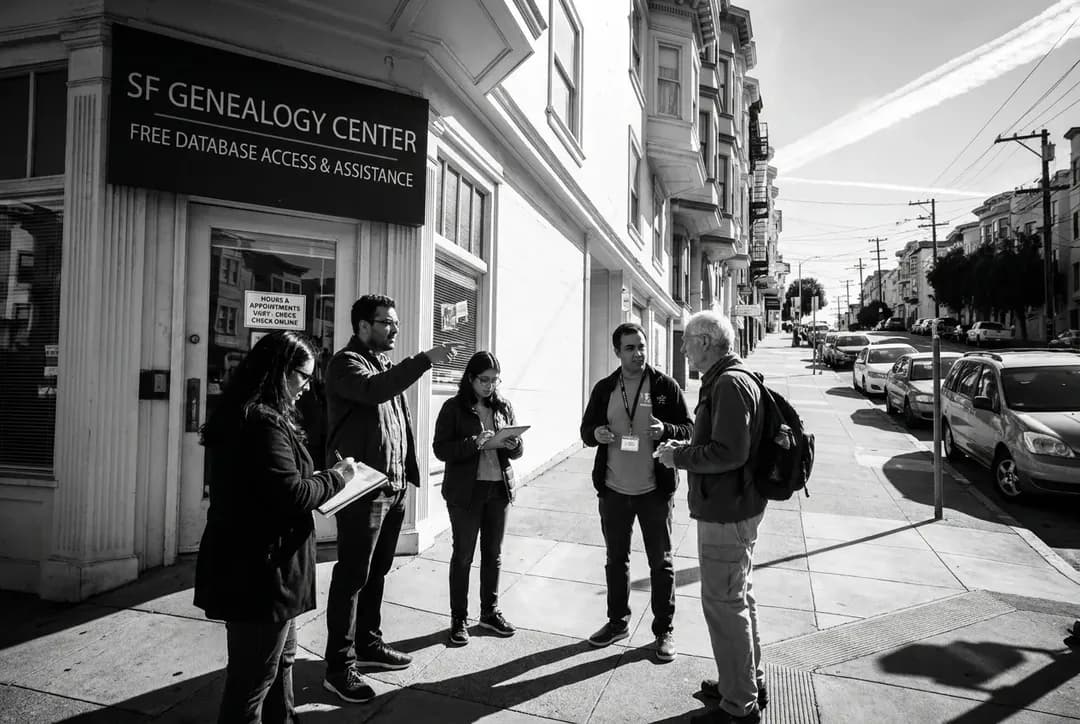
Julie Tetart Name Search: SF Genealogy Centers for Tracing Unfamiliar Public Figures
San Francisco's public genealogy resources help educators and researchers trace unfamiliar names from news cycles using free databases and volunteer expertise. Weekend sessions at library branches and nonprofit centers offer intermediate-level tools for verifying public figures who surface unexpectedly.
When a name such as julie tetart appears in a news headline or social media thread, history teachers building media-literacy lessons often face a puzzle: who is this person, and how do I verify their background without falling into misinformation traps? San Francisco's network of public library branches and nonprofit genealogy centers offers a practical solution for educators and researchers working solo on weekend afternoons. These facilities provide free access to subscription databases, digitized records, and volunteer assistance that can transform a single search term into a documented trail of census entries, immigration manifests, or historical newspaper mentions. The process demands patience and intermediate-level skill with genealogy tools, but the city's resources reduce the cost barrier that typically limits independent fact-checking. Bringing preliminary search terms, a notebook for citation tracking, and flexibility about appointment policies will help you make the most of a Saturday or Sunday session.
Text Karpo the name you're researching, whether you need help with databases, and your available weekend hours. We'll send two SF genealogy centers with free access and volunteer schedules, plus one online database tutorial if you prefer remote research.
Why Public Genealogy Centers Suit Media-Literacy Research
Classroom educators often encounter names in breaking news or viral posts that lack immediate context—a local official, a historical figure resurfacing in controversy, or a community advocate whose background students question. Commercial genealogy subscriptions cost hundreds of dollars annually, and search-engine results mix credible archives with user-generated content of uncertain provenance. Public genealogy centers bridge this gap by offering the same premium databases—Ancestry Library Edition, HeritageQuest, newspaper archives—without subscription fees, alongside volunteers trained to distinguish primary sources from derivative summaries. A weekend afternoon session allows time to explore multiple spelling variants, cross-reference city directories with voter rolls, and photograph screen results for later citation.
The tradeoff lies in access logistics versus convenience. Unlike home research, you must travel to a physical branch during posted hours, sometimes securing a computer reservation in advance or waiting for a genealogy-section terminal to open. Branch schedules vary: the Main Library at 100 Larkin Street operates Sunday 12–6 and Monday 9–6, while neighborhood branches like Mission at 1234 Valencia Street follow patterns such as Sunday 1–5 and weekday evenings until 8. Confirming current hours and any appointment requirements before departure prevents wasted trips, especially if you plan a multi-hour deep dive into records that require sequential searches.
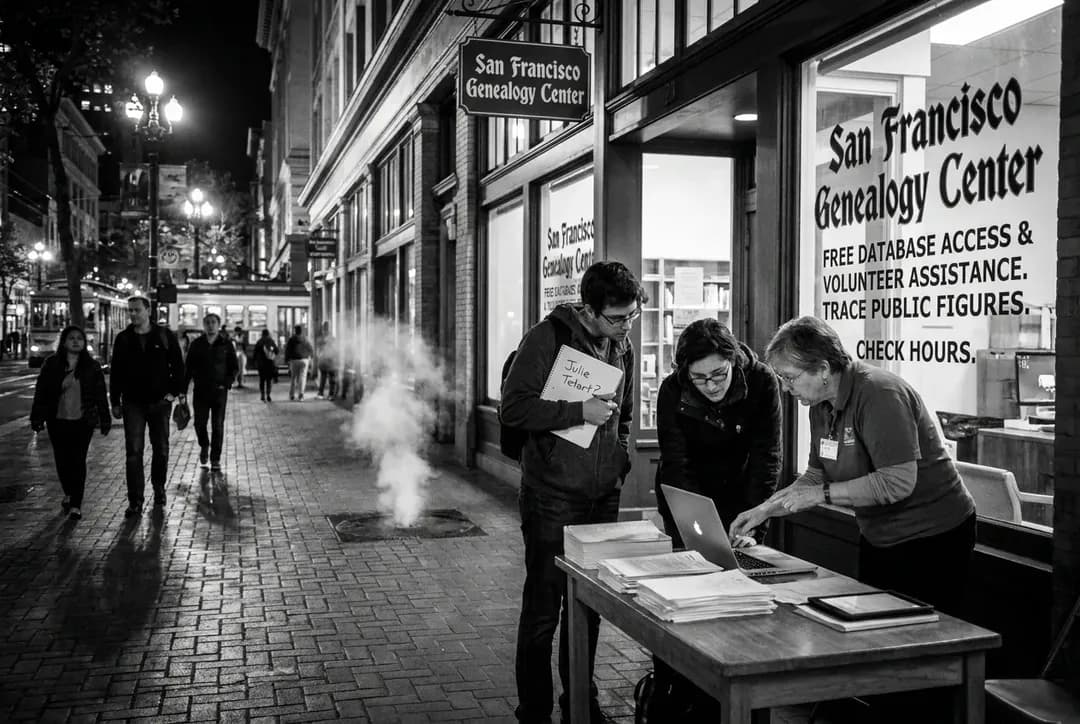
Choosing Between Main Library and Neighborhood Branches
The San Francisco Public Library's Main branch concentrates genealogy resources in a dedicated section with the largest number of terminals running specialized databases, plus a reference desk staffed by librarians familiar with tracing obscure names. Its central location near Civic Center makes it accessible via multiple Muni lines, and the building's size means you can shift between genealogy databases, microfilm readers for old newspapers, and general reference books without leaving the facility. Weekend hours—Sunday 12–6, Saturday 10–6—align well with educators' schedules, though the popularity of the genealogy section can mean competition for computers during peak afternoon windows.
Neighborhood branches such as Richmond at 351 9th Avenue, Sunset at 1305 18th Avenue, or Excelsior at 4400 Mission Street offer quieter environments and shorter waits, but typically provide fewer genealogy-specific terminals and may lack on-site volunteers with deep archival expertise. These branches follow similar weekend patterns—Sunday 1–5, Saturday 10–6—and serve researchers who prefer a local stop or plan to combine library work with errands in a particular district. The decision hinges on whether you prioritize maximum database variety and expert help (Main) or reduced travel time and a calmer workspace (neighborhood branch). Testing both over successive weekends can reveal which environment better suits your concentration style and the complexity of your search.
Preparing Search Terms and Verification Steps
Arriving with a clear search strategy transforms a genealogy session from aimless clicking into productive investigation. Write down the exact name as it appears in your source material, plus common misspellings, alternate first names, and maiden names if applicable. Note any associated dates, locations, or institutional affiliations mentioned in the news item or social media post—these become filters that narrow database results from thousands of matches to a manageable handful. Bring a smartphone or camera to photograph screen results, since many databases prohibit downloading or printing without additional steps, and a notebook to record citation details: database name, document type, archive location, and retrieval date.
Verification requires cross-referencing at least two independent sources. A census record showing a person's age and occupation gains credibility when a city directory from the same year lists the same address and profession, and a newspaper obituary provides a third data point. Genealogy databases often surface records that share a name but belong to different individuals—distinguishing them demands attention to birth years, family members' names, and geographic consistency. Volunteers at the genealogy desk can demonstrate how to pivot between databases, but they cannot perform the research for you; their role is teaching navigation and suggesting record types you might overlook. Patience becomes essential when a promising lead dead-ends or when OCR errors in digitized newspapers require manual scrolling through page images.
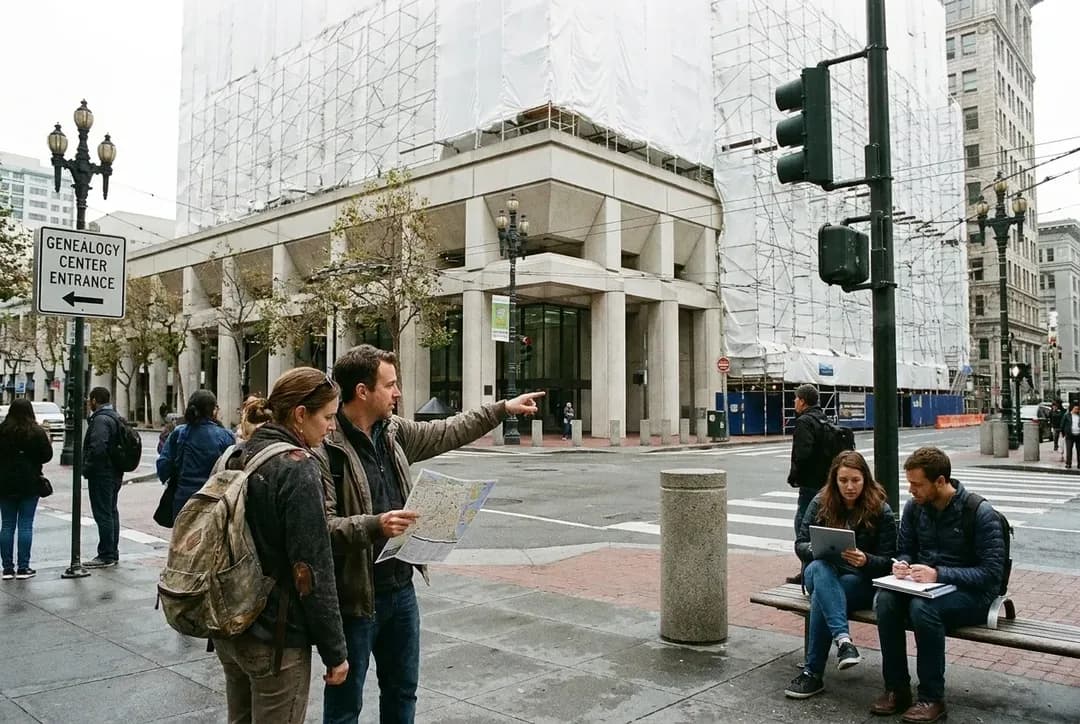
Nonprofit Genealogy Centers and Volunteer Networks
Beyond the public library system, San Francisco hosts nonprofit genealogy societies and volunteer-run research centers that welcome walk-in researchers or operate by appointment. These organizations often maintain specialized collections—immigration records for specific ethnic communities, local cemetery indexes, or transcribed church registers—that complement library databases. Volunteers at these centers typically pursue genealogy as a serious hobby or retired profession, bringing decades of experience in deciphering handwriting, understanding historical naming conventions, and navigating archives that lack digital indexes. Their assistance proves invaluable when a search stalls or when you need context about a historical period's record-keeping practices.
The tradeoff involves less predictable availability. Nonprofit centers may open only one or two afternoons per week, rely on volunteer schedules that shift month to month, or require advance contact to ensure someone will be present to unlock collections. Membership fees sometimes apply, though day-use policies vary; some centers welcome nonmembers for a small donation, while others reserve resources for paid members. Calling ahead or checking online calendars prevents wasted trips, and explaining your research goal—tracing a name for educational media-literacy work—can prompt volunteers to suggest overlooked resources or alternative search angles. Combining a library session with a nonprofit center visit across two weekend afternoons often yields richer results than relying on a single venue.
Transportation Routes and Session Logistics
Reaching genealogy centers via public transit reduces parking hassles and allows you to review notes during the commute. Muni serves the Main Library at 100 Larkin Street through multiple bus and rail lines, with the Civic Center BART/Muni station a short walk away; the SFMTA trip planner at SFMTA.com/Go maps routes from any starting point in the city. Neighborhood branches sit near bus stops—Richmond branch at 351 9th Avenue connects to the 1 and 38 lines, while Mission branch at 1234 Valencia Street lies steps from the 14 and 49 routes. Walking from a Muni stop to a branch typically takes under five minutes, and the city's bike-share network offers an alternative for researchers comfortable navigating San Francisco's hills.
Plan session length around your stamina and the branch's closing time. A focused two-hour block allows time to search one or two databases thoroughly, photograph results, and consult a volunteer without rushing. Arriving an hour before closing risks incomplete research if you encounter a promising lead that requires follow-up searches. Bringing a water bottle, snacks for a courtyard break, and a phone charger sustains concentration during longer sessions. Note that library policies prohibit food and drink near computers, so step outside to refuel. If your search remains incomplete after one session, jot down where you stopped—database name, search terms tried, next steps—so you can resume efficiently on a return visit rather than duplicating effort.
Tags: #genealogyresearch #SanFranciscoPublicLibrary #medialiteracy #nameverification #historicalrecords #weekendresearch #publicdatabases #nonprofitarchives #Munitransit #factcheckingtools
Sources consulted: Source 1: sf.gov · Source 2: sfmta.com · Source 3: sfpl.org · Source 4: sf.gov
All trademarks are the property of their respective owners.
Ask Karpo first
Ask Karpo to turn this San Francisco idea into a current plan for your date, budget, companion, transit preference, and energy level. Karpo can narrow the route and flag what to verify before you go.
Ask Karpo for more information.
Keep reading
- Outer Richmond Restaurants Open Near Me: PPQ Beef Noodle House
 Bar Crudo Divisadero: Premier Seafood Near Me, Raw Bar Excellence
 Woodhouse Fish Co. Castro: Best Seafood Near Me, San Francisco