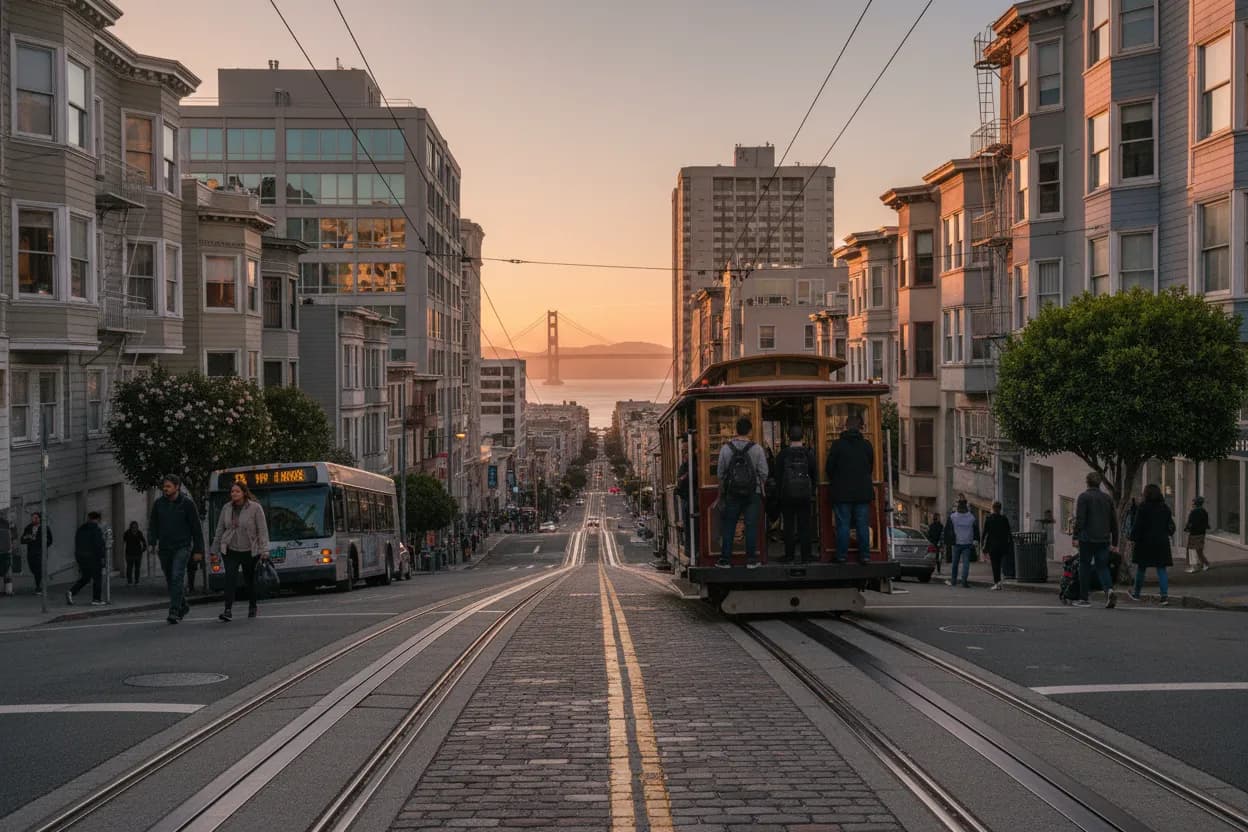
A search for julian newman can send a student down a fast, messy rabbit hole: highlight clips, old profiles, reposts, arguments, and claims that may or may not connect to San Francisco at all. Treat that curiosity as a back-to-school assignment, not a rumor chase. The city gives you enough public infrastructure to turn a trending name into a practical afternoon of verification: start at San Francisco Public Library, compare sources before forming an opinion, plan the ride through SFMTA, and use SF.gov for civic context when a question touches public services or local government. This guide does not claim an appearance, affiliation, endorsement, or private access. It gives you a public plan you can execute, check, and revise before leaving home.
Want a tighter route before you pack the laptop, library card, and charger? Text Karpo with your start neighborhood, study goal, and time window, and ask for a verification-first San Francisco plan.

Turn curiosity into a research question
The useful move is to convert the name julian newman into a question you can actually test. For a student, that might be: What can primary sources tell me about a public figure before I trust social posts? For a parent, it might be: Where can my teen research safely in public, compare information, and get home without improvising late in the day? A vague search is endless; a research question creates an exit.
Write the question down before opening tabs. Then divide it into three columns: what is directly documented, what is commentary, and what is unverified. Do not add San Francisco claims unless an official or primary source supports them. This is especially important when a name is timely online. Search attention is not the same as a local event, school connection, public program, or confirmed visit.
Start with a reliable public resource
San Francisco Public Library is the strongest first stop because its public site organizes research, learning, locations, hours, events, exhibits, accessibility services, borrowing help, homework help, job resources, and a library card pathway in one place. The Main Library is listed at 100 Larkin Street, San Francisco, CA 94102, with telephone contact 415-557-4400. Its posted Main Library hours are Sunday 12–6, Monday 9–6, Tuesday 9–8, Wednesday 9–8, Thursday 9–8, Friday 12–6, and Saturday 10–6; verify the live page before you go.
For a back-to-school route, the Main Library works best when the assignment requires databases, articles, books, quiet comparison, or help finding materials. SFPL’s site includes Articles/Databases, Research & Learn, eLearning, Homework Help, Print from Home, Accessibility Services, and branch pages. If Civic Center is not convenient, the site lists branches across the city, including Anza, Bayview, Chinatown, Excelsior, Ingleside, Mission, Mission Bay, Noe Valley, North Beach, Richmond, Sunset, West Portal, Western Addition, and more. Check the specific branch page rather than assuming identical hours.
If the research subject starts as a sports personality or social media topic, begin with library tools instead of fan summaries. Look for dates, original publication sources, author credentials, and whether a claim is repeated from one source or independently documented. A library session is not about proving a pre-decided take; it is about slowing down the first ten minutes of internet certainty.
Compare primary reporting before opinions
Make the first hour mechanical. Search library-accessible articles or databases, note the publication date, identify whether the writer is reporting, analyzing, reviewing, or aggregating, and keep links or citations. If an article mentions an event, team, school, or city, look for the original source behind that detail. When the original source is missing, mark the claim as unverified rather than repeating it with confidence.
SF.gov is useful when the question shifts from a person to the city itself. Its public portal points users to services, departments, jobs, City Hall, public meetings or events, permitting, business, housing, government, public records, elected officials, contact options, and 311 support. That does not verify a celebrity rumor, but it can help you understand how to check official city information when a claim involves public space, city services, meetings, or local government.
Keep opinions for last. Commentary can be valuable, but it should sit on top of verified facts, not replace them. For a student assignment, use a simple color code: green for official or primary documentation, yellow for reported but not independently checked material, and red for unsourced claims. That habit is more useful than any single answer about a viral name.
Choose a study stop that fits the task
Pick the location by the job, not by habit. If you need broad research support, start with SFPL’s Main Library page and confirm hours, address, and any access notes. If you need a shorter neighborhood session, use the Library Locations & Hours list and open the branch page closest to your route. If you need digital work, check SFPL’s Research & Learn, Articles/Databases, eLearning, and Print from Home resources before deciding what to carry.
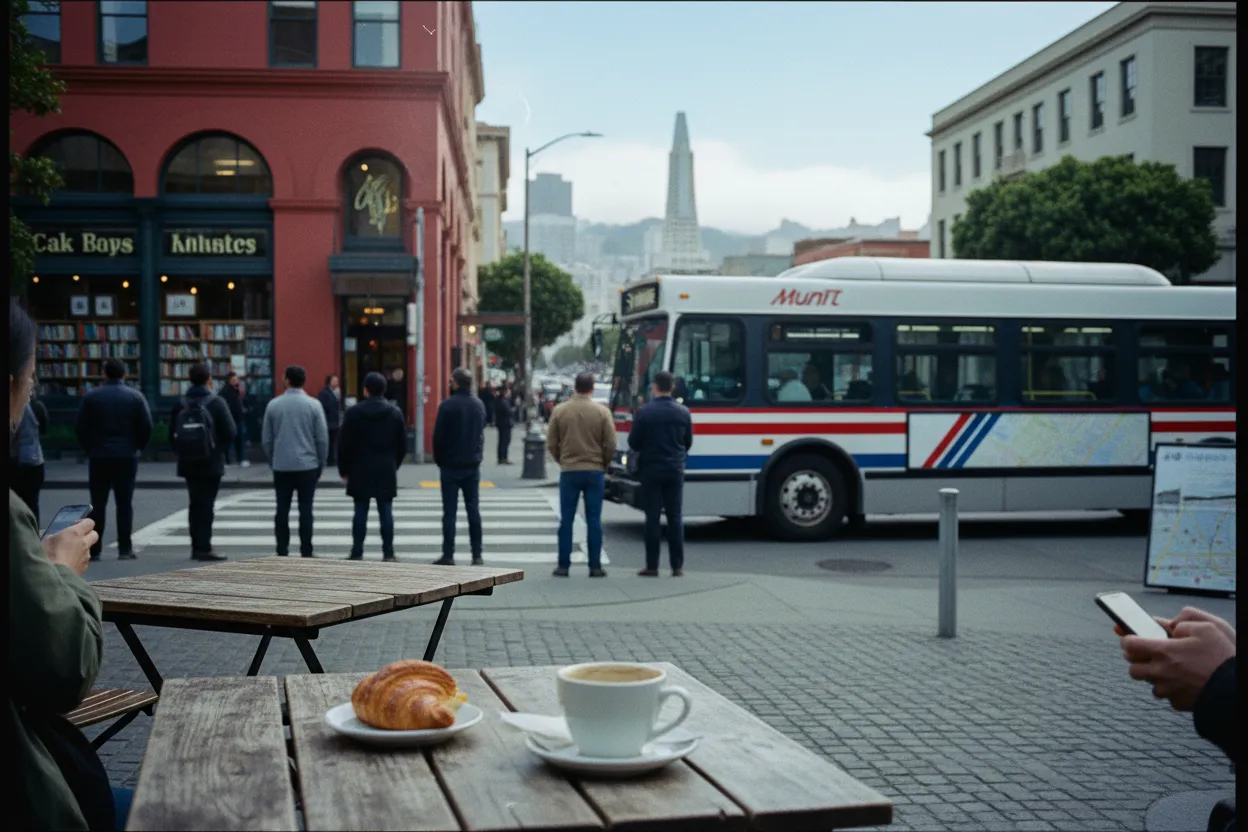
Plan the trip through SFMTA before you commit. The SFMTA site includes a Trip Planner with starting location, ending location, and travel choices for Muni, bike, walk, drive, and parking. It also posts Muni routes and stops, visitor guidance, neighborhood information, travel maps and guides, travel and transit updates, and Muni Metro elevator status. Because alerts can change quickly, read the live alert area before leaving; the official page notes recent alerts and reroutes, which is exactly the kind of detail that can break an after-school plan.
Build in crowd risk. Libraries can be affected by school dismissal waves, nearby civic activity, branch events, weather shifts, and transit delays. The official extracts do not guarantee crowd levels, so do not pretend they do. Instead, set a decision point: if arrival is delayed by more than your tolerance, switch to a closer branch, a shorter research goal, or a digital-only session.
Add one low-cost reset nearby
A good study plan includes a reset that does not depend on buying something. At SFPL, check the current events and exhibits pages before leaving. The library site highlights events, exhibits, reading lists, digital magazines through Flipster, and free movie streaming through Kanopy with a Library Card. Availability, access requirements, and timing should be verified on the official page before you build them into the day.
For Monday, August 10, 2026, SFPL’s homepage extract lists multiple morning programs across branches, including storytimes and family activities. That matters less as a recommendation and more as a reminder: libraries are active public buildings, not silent warehouses. If your student needs deep focus, check the event calendar for the branch and time window you plan to use.
If you are near the Main Library, a short reset can be as simple as stepping away from the screen, reviewing notes, and deciding what claim still needs proof. If your plan includes City Hall or another civic errand, use SF.gov to confirm the relevant service page first. Do not add an extra stop because an online itinerary says it is easy; add it because the official source supports your purpose.

Verify hours and access before leaving
The final check should happen the same day. Open SFPL for the exact branch page, posted hours, research tools, events, accessibility services, and any library-card needs. Open SFMTA for the Trip Planner, Muni routes and stops, travel updates, alerts, and elevator status if that affects your trip. Open SF.gov when your question involves city services, departments, public meetings, City Hall, or contacting 311.
Carry a backup choice that does not require perfect conditions. Option A can be the Main Library at 100 Larkin Street during verified hours. Option B can be a branch from SFPL’s official locations list, selected because it is closer to home, school, or a transit line you can confirm. Option C can be a digital session using SFPL’s online research and learning resources if transportation becomes unreliable.
The point is not to drain the curiosity out of a search. It is to keep the search from using up the whole afternoon. A name like julian newman can be the hook, but the back-to-school skill is verification: check the source, check the route, check the access, and know what you will do if the first plan fails.
Tags: #juliannewman #SanFrancisco #BackToSchool #SFPL #SFMTA #SFGov #StudentResearch #LibraryPlan #TransitCheck #CivicLearning #HomeworkHelp #AskKarpo #BeforeYouGo #CityGuide
Sources consulted: sfpl.org · sfmta.com · sf.gov
All trademarks are the property of their respective owners.
Ask Karpo first
Ask Karpo first when a search term feels bigger than the facts. Share your San Francisco starting point, the student’s task, mobility needs, and deadline. Karpo can help turn a noisy topic into a checked route, a realistic study block, and a backup before anyone leaves home.


