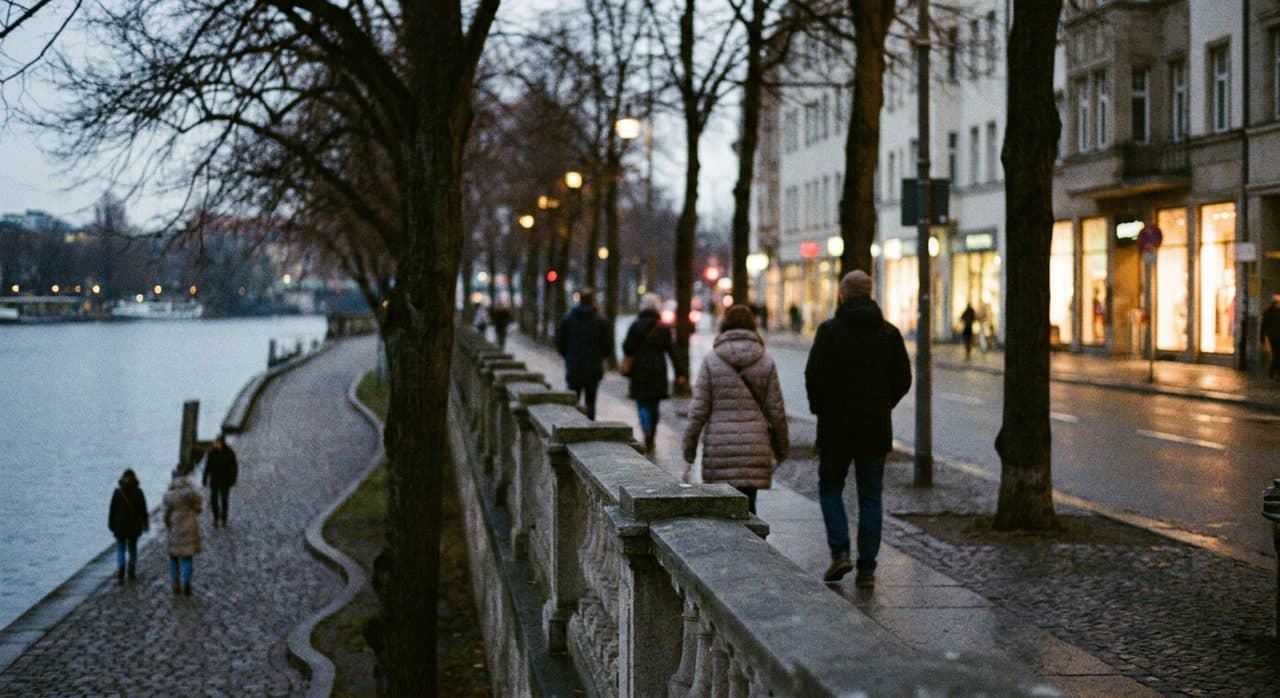
You've just ridden the Roosevelt Island Tram because someone told you to, because it's iconic, because it's in a movie you half-remember. But here's the thing: the tram is the prologue, not the story. The walk after — looping the island's perimeter on foot, letting the city skyline tilt and shift with every block — that's where the daydream actually lives.
The descent into a different tempo
Step off at the Roosevelt Island station and resist the urge to immediately photograph the skyline. You'll have better angles later. Instead, walk south along Main Street, past the Duane Reade and the CVS that anchor this sliver of land like misplaced suburban outposts. The rhythm here is slower, almost disorienting if you've just come from Midtown's sprint. Elderly residents shuffle toward the post office. A kid drags a hockey stick toward the sports complex. The island hums at a frequency the rest of Manhattan forgot decades ago.
Head toward the southern tip, where Four Freedoms Park opens up like a granite stage set. The park closes at dusk in winter, earlier than you'd think, so time this right. Midafternoon light in autumn hits the Queensboro Bridge at an angle that makes the steel look molten. You're not here for the FDR memorial at the point — though it's stark and worth a moment — you're here because the benches along the western promenade let you watch the East River's current shove against itself, all that water going nowhere urgently.
Where the regulars actually sit

Loop back north along West Road, the walking path that hugs the island's spine. There's a small Korean bakery near the Octagon building that opens early and stays quiet. The egg tarts come out warm mid-morning, the kind with custard that doesn't quite set, still wobbly in the center. A handful of regulars — mostly older women with canvas grocery carts — claim the window seats and stay for hours, murmuring in languages that aren't English. The fluorescent lighting is unforgiving, the linoleum scuffed, but the pastries cost a few bucks and the coffee is strong enough to recalibrate your afternoon.
The Octagon itself, a converted asylum turned luxury apartments, looms behind like a Victorian ghost trying on modern clothes. You can't go inside unless you know someone, but the exterior courtyard is open. In summer, the landscaping tries too hard. In winter, the bare trees and iron benches feel more honest, like the building stopped pretending to be anything other than what it was.
The chapel nobody mentions
Keep walking north and you'll hit the Chapel of the Good Shepherd, a small stone church that sits alone near the island's midsection. It's Episcopal, built in the late eighteen hundreds, and it smells like old hymnals and radiator heat. The door is usually unlocked on weekday afternoons. Inside, light filters through stained glass that hasn't been restored to jewel-tone perfection — the colors are muted, dusty, which makes the whole space feel like a photograph from someone else's childhood.
Sit in one of the back pews for a minute. The silence isn't the absence of sound; it's the presence of a specific kind of quiet, the kind that exists only in small churches on islands where nobody's in a hurry. You'll hear the building settle, the wood creak, maybe a tugboat horn from the river. This is the moment that sticks, not the tram.
The eastern promenade where the light changes
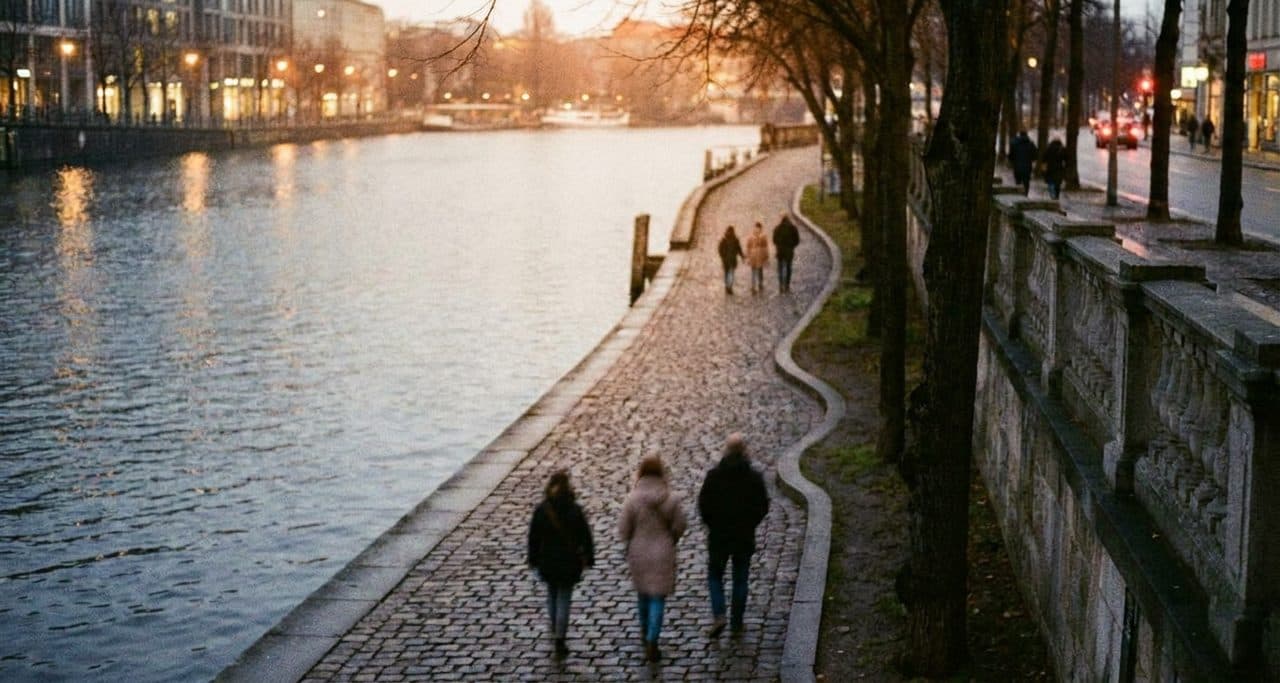
Cross back to the eastern side of the island and follow the promenade north. This is the stretch most visitors skip, and that's the point. The path runs parallel to Queens, close enough that you can see laundry hanging on fire escapes in Long Island City, close enough to hear the occasional shout from a construction site. The East River here is narrower, more intimate. Cormorants dive for fish near the seawall. The benches face the water but also the city behind it, so you're never fully away, just adjacent.
Late afternoon in spring, the light here turns amber and soft, the kind that makes you want to text someone you haven't spoken to in years. You won't, but you'll think about it. There's a stretch near the Blackwell House where the path curves and for a moment you lose sight of both bridges, just water and sky and the industrial tangle of Queens. It's the closest New York gets to a coastline that doesn't perform.
The grocery store as cultural hub
Stop at the Gristedes near the tram station on your way back. It's not charming. The aisles are narrow, the produce is fine, the lighting is aggressively bright. But watch the checkout line for five minutes and you'll see the island's whole demographic stack: young families with strollers, older folks buying single portions, hospital workers still in scrubs grabbing dinner. The cashiers know half the customers by name. Someone's arguing about a coupon. Someone else is asking about a neighbor's surgery. It's mundane and deeply specific, the kind of scene that only happens in places where people actually live, not just pass through.
Grab a bottle of water or a bag of chips you don't need. Pay in cash. The transaction is unremarkable, which is exactly why it matters. This is the daydream's punctuation mark, the moment that reminds you the island isn't a set piece, it's a neighborhood that happens to float.
Practical Notes
The tram runs frequently throughout the day, connecting to the F train at Lexington Avenue. You can also take the F directly to Roosevelt Island station if you want to skip the aerial approach. The full perimeter walk takes about an hour at a leisurely pace, longer if you stop. Four Freedoms Park has seasonal hours and closes earlier in winter months, so check before you go if that's a priority. The island is small enough that you won't get lost, but bring layers — the wind off the river is sharper than you expect, even in mild weather. Most spots mentioned are free or low-key cheap. Weekday afternoons are quietest. Weekends bring families and the occasional tour group, but even then, the southern and eastern paths stay mostly empty.
Tags: #RooseveltIsland #TheLongWayHome #NewYorkWalks #EastRiver #HiddenNewYork #NYCNeighborhoods #UrbanHiking #SlowTravel #ManhattanAlternative #CityDaydreams #QuietNewYork #RooseveltIslandTram #NYCInsider #WalkableCity #OffTheBeatenPath
Sources consulted: timeout.com · atlasobscura.com · nycgo.com
All trademarks are the property of their respective owners.


