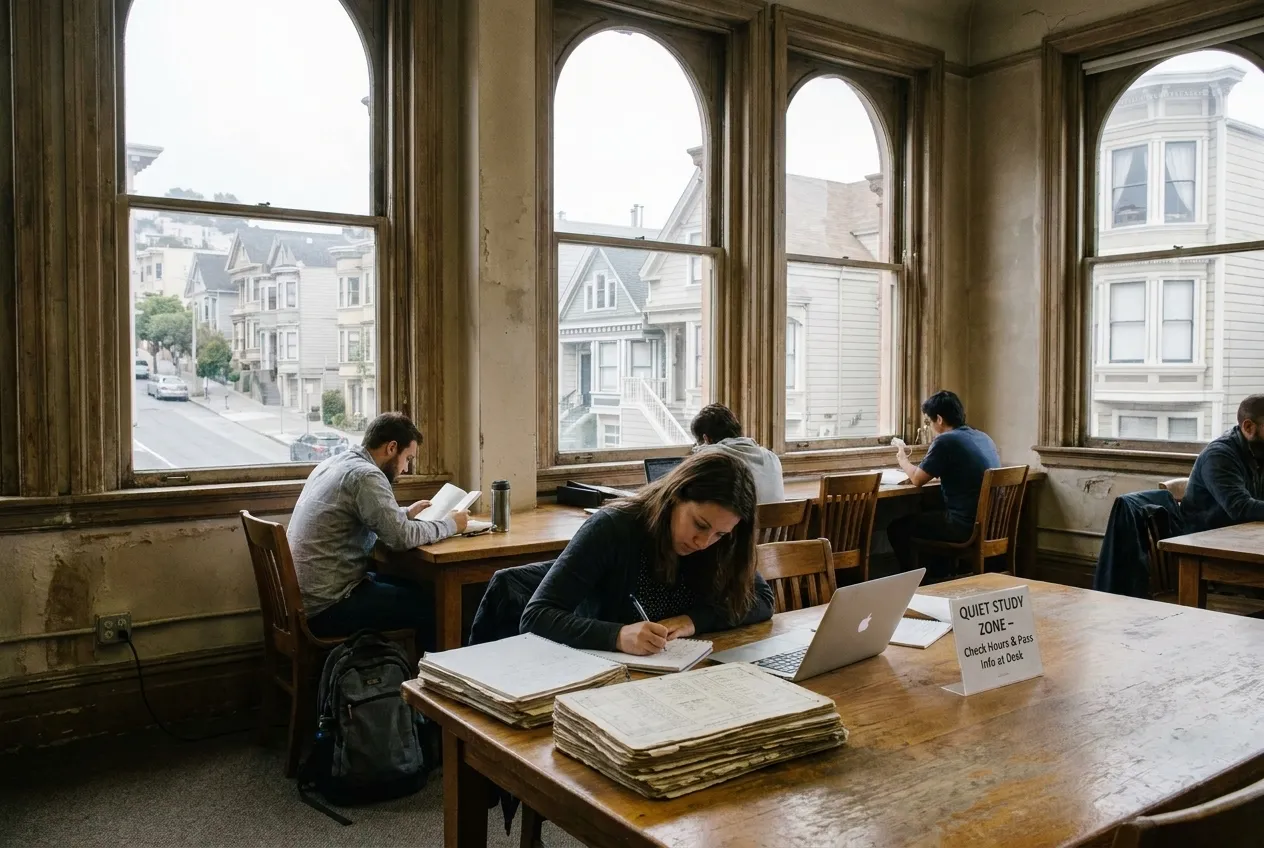
When a name like jeanine john taele begins trending online, freelance journalists face a familiar challenge: sifting through noise to verify facts requires sustained concentration that coffee shops and home offices rarely provide. San Francisco's public library system offers an alternative through its network of branch reading rooms, where silence policies and dedicated study spaces create conditions for the kind of focused investigative research that demands hours of uninterrupted attention. These lesser-known rooms scattered across neighborhoods from the Main Library at 100 Larkin Street to branches in Glen Park, Mission Bay, and the Richmond provide environments where the skeptical, methodical work of tracing viral stories can unfold without the ambient distractions that fragment concentration. For researchers working solo during weekday morning blocks—when branch hours typically begin at 9 or 10 AM depending on location—the question becomes not whether these spaces exist, but which branch configuration matches the specific demands of advanced investigative work.
Text Karpo the name or topic you're researching, your preferred SF neighborhood, and how many hours you need. We'll send three hidden library reading rooms with archive access and outlet availability, plus one backup university library guest pass if public branches are full.

Matching Branch Architecture to Research Intensity
The Main Library's reading rooms operate on a different scale than neighborhood branches, presenting a tradeoff between resource depth and atmospheric intimacy. Larger facilities offer extensive database access and reference librarian availability, but their size means more foot traffic and potential for disruption during peak hours. Smaller branches like Bernal Heights at 500 Cortland Avenue or Ortega at 3223 Ortega Street often feature quieter corners with fewer patrons mid-morning, though their collections and staff support may be more limited. Researchers chasing trending keywords need to weigh whether they require immediate access to specialized databases and archival materials, or if the work involves primarily online investigation where any library computer and stable Wi-Fi suffice.
Branch layouts vary significantly in how they separate quiet study zones from general circulation areas. Some locations designate specific reading rooms with enforced silence policies, while others rely on informal norms that fluctuate with daily patron mix. Before committing to a multi-hour research block, visiting a branch during your intended work window reveals whether the space truly supports deep concentration or merely offers seating near books. The distinction matters when investigative work demands the kind of sustained focus where even whispered conversations at nearby tables break the thread of complex verification tasks.
Verifying Access Requirements Before You Arrive
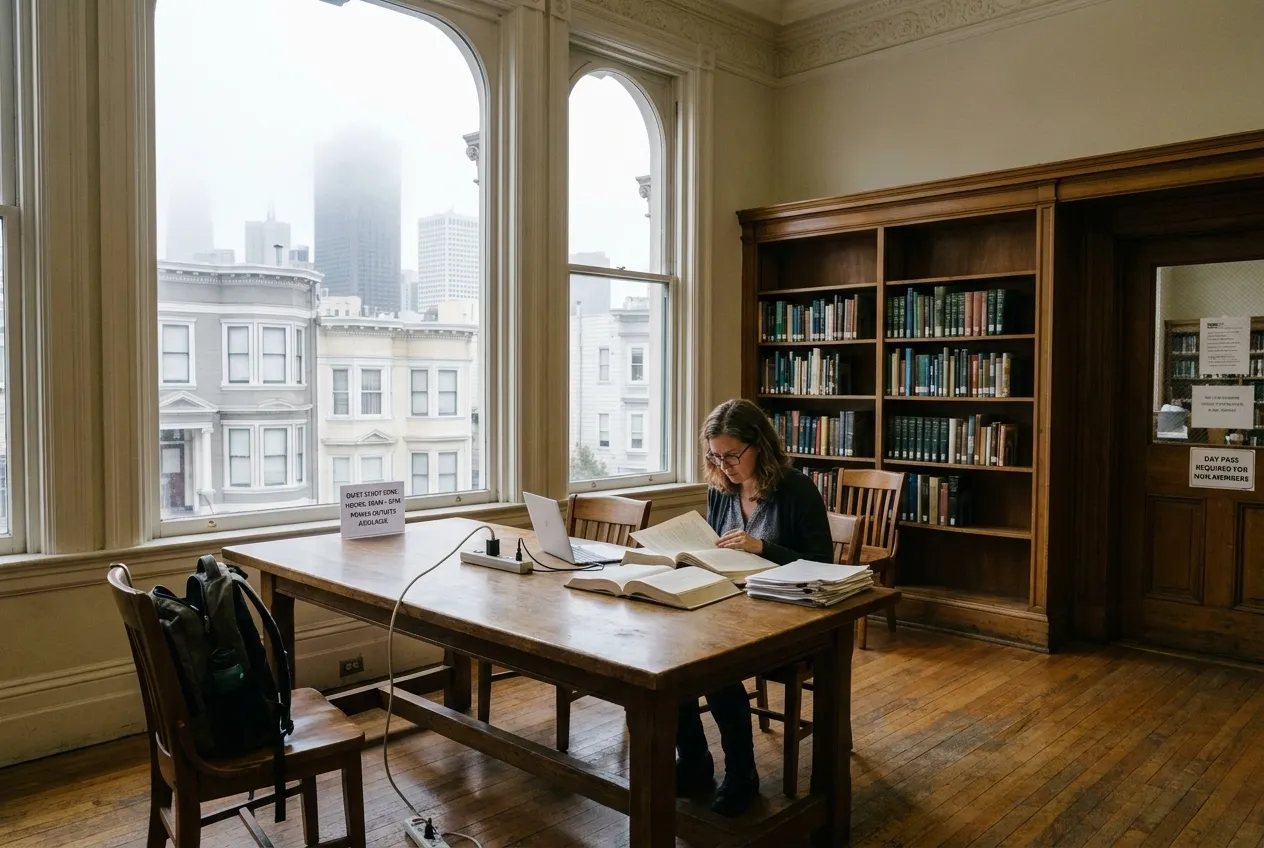
San Francisco Public Library branches do not uniformly require library cards for building entry, but accessing computers and certain study rooms often does. Obtaining a card involves presenting identification and proof of address, a process that takes time if you're starting from scratch on the morning you need to work. Some branches allow guest computer passes for limited sessions, while others reserve machines exclusively for cardholders during busy periods. Calling ahead to confirm the specific branch's policy prevents the frustration of arriving ready to research only to discover you need documentation you left at home or must wait in a queue for guest access.
Power outlet availability represents another variable worth confirming in advance, particularly for laptop-dependent research that extends beyond a single battery charge. Older branch buildings may have limited electrical infrastructure in reading areas, with outlets concentrated near staff desks or in locations that don't align with quiet study zones. Newer or renovated branches like Mission Bay at 960 4th Street typically incorporate more charging-friendly furniture configurations, but assumptions based on building age don't always hold. A quick phone inquiry about outlet access near quiet seating saves the awkward mid-research scramble to relocate when your device battery hits critical levels.
Navigating Weekday Morning Schedules Across Branches
Branch opening times create a patchwork that rewards advance planning but punishes assumptions. The Main Library opens at 9 AM on weekday mornings, while many neighborhood branches don't unlock doors until 10 AM, and some like Park at 1833 Page Street or Potrero at 1616 20th Street begin weekday service at 1 PM on certain days. For journalists working against deadlines or trying to maximize a focused morning research block, these hour-long differences determine whether a branch fits your timeline or forces you to kill time elsewhere. The library system's online schedule listings show current hours, but verifying by phone accounts for temporary changes due to staffing or maintenance that web updates sometimes lag behind.
Evening hours extend research windows but introduce different tradeoffs. Branches that stay open until 8 PM on Tuesday through Thursday evenings serve researchers whose mornings are committed elsewhere, yet late-day sessions mean sharing space with after-work crowds and students. The quiet intensity of a 10 AM Tuesday morning at Sunset branch at 1305 18th Avenue differs markedly from the same room at 6 PM Wednesday when high schoolers claim tables for homework. Understanding these rhythms helps match your research needs to the branch environment most likely to support them, rather than fighting against predictable patterns of public space use.
Transportation Logistics for Multi-Branch Research Days
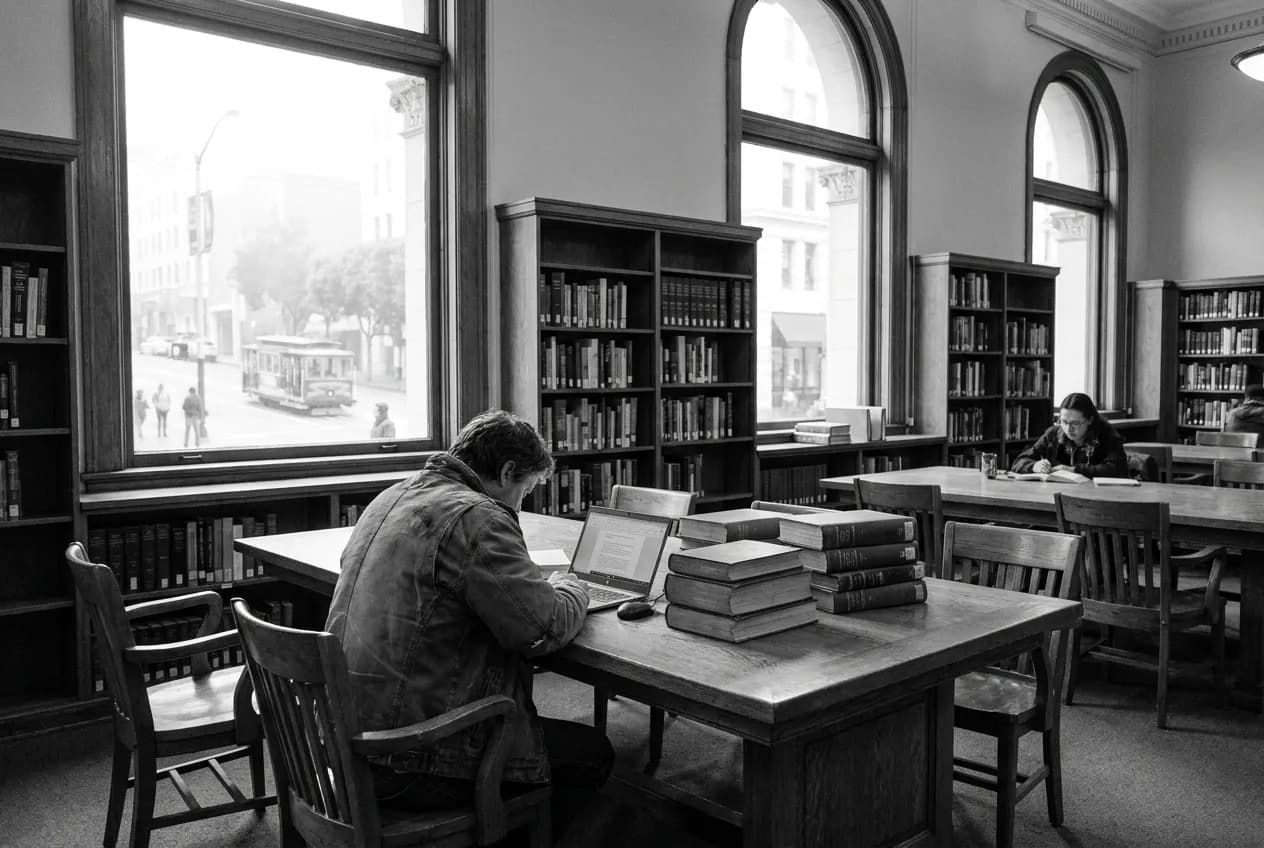
Researchers sometimes need to visit multiple branches in a single day, whether to access specialized collections or to escape a location that becomes too crowded or distracting. San Francisco's Muni system connects library branches throughout the city, but transit time between locations eats into research hours and introduces variables around bus frequency and route reliability. The SFMTA provides trip planning tools that estimate travel time, yet real-world experience shows that a 25-minute transit estimate can stretch to 45 minutes when connections don't align or when walking distances from stops to branch doors prove longer than map views suggest. Researchers working on tight schedules need to buffer generously or commit to a single location for the full session.
Driving between branches trades transit uncertainty for parking challenges, particularly in dense neighborhoods where street parking requires circling blocks or feeding meters that expire mid-research session. Some branches have nearby parking lots or garages, but costs accumulate quickly if you're moving between multiple locations. Biking offers a middle path for researchers comfortable navigating San Francisco's hills and traffic, with most branches providing bike racks, though security concerns about leaving equipment unattended for hours apply. The transportation choice ultimately reflects how you value time versus cost versus the cognitive disruption of interrupted research flow.
Who This Research Approach Serves Best
Library reading rooms suit researchers whose work demands extended concentration without collaboration. Freelance journalists tracing viral stories like trending names benefit from environments where silence norms discourage interruptions and where the presence of other focused individuals reinforces sustained attention. This approach fits solo investigators comfortable working independently through archives, databases, and online sources without needing to discuss findings in real-time or whiteboard ideas with colleagues. The library model falters for research requiring frequent phone interviews, video calls, or conversations that would violate quiet space expectations and disturb others.
Advanced investigative research—the kind requiring skeptical verification of multiple sources and careful documentation of claim origins—aligns well with library infrastructure that provides stable internet, printing capabilities, and proximity to reference materials. Researchers must bring their own expertise in search methodology and source evaluation; libraries offer the space and tools but not the investigative framework. This environment serves journalists who know what they're looking for and need uninterrupted hours to find it, rather than those still in exploratory phases where casual conversation might spark useful directions. The match between researcher needs and library offerings determines whether these quiet rooms become productive workspaces or merely silent places to struggle with work that requires a different setting.
Tags: #SanFranciscolibraries #quietstudyspaces #researchfacilities #investigativejournalism #branchlibraries #deepworkenvironments #weekdayresearch #SFPLreadingrooms #soloresearch #hiddengemsSanFrancisco
Sources consulted: Source 1: sf.gov · Source 2: sfmta.com · Source 3: sfpl.org · Source 4: sf.gov
All trademarks are the property of their respective owners.
Ask Karpo first
Ask Karpo to turn this San Francisco idea into a current plan for your date, budget, companion, transit preference, and energy level. Karpo can narrow the route and flag what to verify before you go.


