
The locked headline, “jamie komoroski: A Useful San Francisco City Guide,” should not send anyone hunting for a celebrity sighting, private address, rumored event, or unofficial meetup. Treat the phrase jamie komoroski as a timely search hook and use it to do something more useful: build a verification-first San Francisco plan around odd public places, overlooked collections, strange streetscape details, and low-pressure backup options. The city rewards curiosity, but it also punishes lazy planning with reroutes, closed doors, crowded corridors, and outdated listings. Start with official pages, then use SFMTA’s trip planning tools and travel updates to decide whether your route works today. If a detail can change, assume it has changed until the official source says otherwise.
Want a second set of eyes before you cross town? Text Karpo with your start point, preferred transit mode, and odd-find target, and ask for a verified San Francisco backup plan.

Use the headline to open a more curious detour
A search phrase can be useful without being literal. If jamie komoroski brought you here, use that momentum to plan a city day that does not depend on any claimed appearance, endorsement, affiliation, or special access. The better San Francisco move is to pick a public-facing oddity, confirm the entry rules, and build a route that still works if the first stop is too crowded, closed, or less interesting than expected.
For this kind of city guide, the first filter is not “what is viral?” It is “what can I verify?” SFMTA’s official site gives visitors several practical planning categories, including Muni, walking, biking, driving, parking, taxis, accessibility, routes, stops, neighborhoods, maps, and travel updates. That is enough to turn a loose idea into a workable plan without pretending that every attraction, collection, or street detail is open on your preferred schedule.
Keep the detour compact. San Francisco is dense, but hill grades, event crowds, transit substitutions, and street activity can stretch a short-looking trip. Choose one main odd stop, one nearby calmer option, and one clean exit route. That structure protects the day from hype.
Choose a place with a real point of view
The strongest hidden-gems and odd-finds itinerary is not a scavenger hunt of random curiosities. It has a point of view: mechanical, maritime, architectural, botanical, literary, industrial, transit-related, or neighborhood-specific. Before you go, look for an official page that explains what the place is, how the public may access it, and whether any rules apply. If the official page is unavailable, vague, or blocked by a security check, do not fill the gaps with assumptions.
San Francisco’s visitor information ecosystem can include security verification pages, and an official site may not always display the details you hoped to confirm at the moment you check it. That is a signal to slow down, not a reason to rely on copied snippets from elsewhere. If you cannot confirm current access, make the site a “maybe” and move your backup into the lead slot.
A useful odd-find day also has a neighborhood logic. Use SFMTA’s neighborhood and route information to see whether the trip can be made by Muni, bike, foot, or a mix of modes. If the plan requires multiple fragile connections, a steep walk you are not ready for, or a parking gamble, it is not a hidden gem anymore. It is an errand with better adjectives.
Look for materials archives or hands-on details
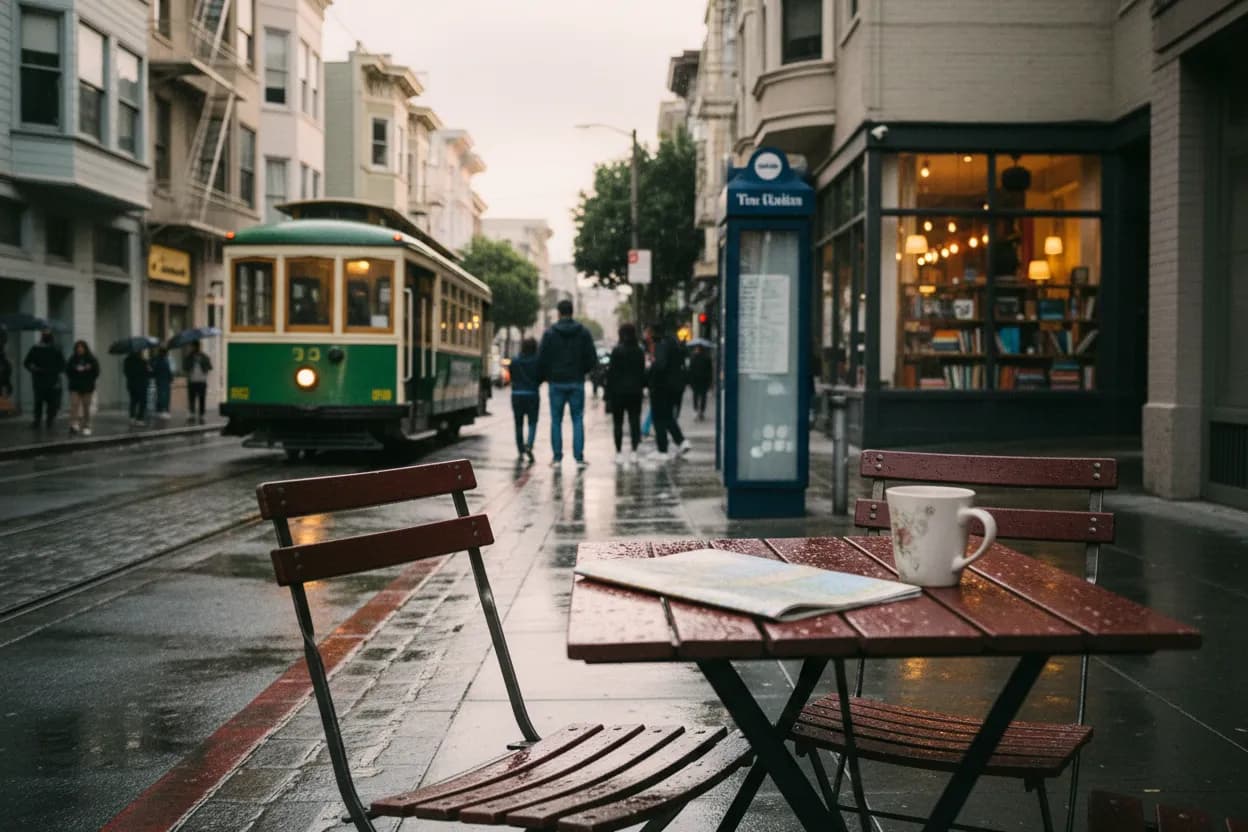
Odd finds become memorable when there is texture: signage, machinery, preserved materials, maps, models, public art details, landscape features, or historic transit hardware. SFMTA specifically points visitors toward Muni routes, train and bus service, historic streetcars, and cable car routes. Even if your main destination is not transit-focused, the ride can become part of the day if you verify the route and allow enough time for changes.
Do not assume hands-on access just because a place sounds interactive. “Hands-on” can mean anything from a public exhibit to a supervised program, and those details may change. The safer approach is to read the official access language before you go, then plan as if only the clearly public portions are available. If a materials archive, workshop, collection room, or demonstration is not explicitly open to walk-in visitors, do not build your day around entering it.
For timing, give the first stop your freshest attention. Put the oddest, most detail-rich place early in the outing, then save the looser wandering for later. If SFMTA alerts show reroutes or disruptions near your corridor, adjust before leaving rather than while standing at a stop. The official SFMTA page makes clear that alerts and travel updates are part of the system; treat them as live planning tools.
Pair the odd stop with a calmer second option
A backup should not be an afterthought across town. It should be a quieter public option within the same general route family: a park check, a waterfront pause, a public plaza, a short architecture walk, or another official-access place you can verify before moving. Because SF Rec & Park details can change and the official page should be checked directly, use it as the place to confirm current park-related access rather than assuming every site, facility, or amenity is available.
The best pairing reduces crowd risk. If the main odd stop is indoors, cramped, or popular with weekend visitors, choose an outdoor or dispersed second option. If the first plan depends on a single doorway, timed program, or small room, choose a backup that works as a walk-through. San Francisco rewards the person who can pivot without turning the day into a logistical apology.
Transit should shape the pairing. SFMTA’s tools let you think in terms of Muni, walking, biking, driving, and parking rather than wishful straight lines. Before committing, check whether your second option sits along the same route, a simple transfer, or a comfortable walk. If it requires a new cross-city journey, it is not a backup. It is a second itinerary.
Respect access photography and privacy rules
Hidden-gem culture can get intrusive fast. A public-facing place is not permission to photograph staff areas, private interiors, residential windows, restricted workspaces, or people who did not agree to become part of your content. When an official page lists access rules, photography limits, accessibility notes, or facility conditions, follow the posted language. If you do not see a policy, ask on site or skip the shot.
This matters even more when a search term is attached to a real person. The presence of jamie komoroski in a headline does not create any San Francisco itinerary connected to that person, and it should not be used to imply a sighting, route, event, or affiliation. Keep the city plan about publicly accessible places and your own verified movements.
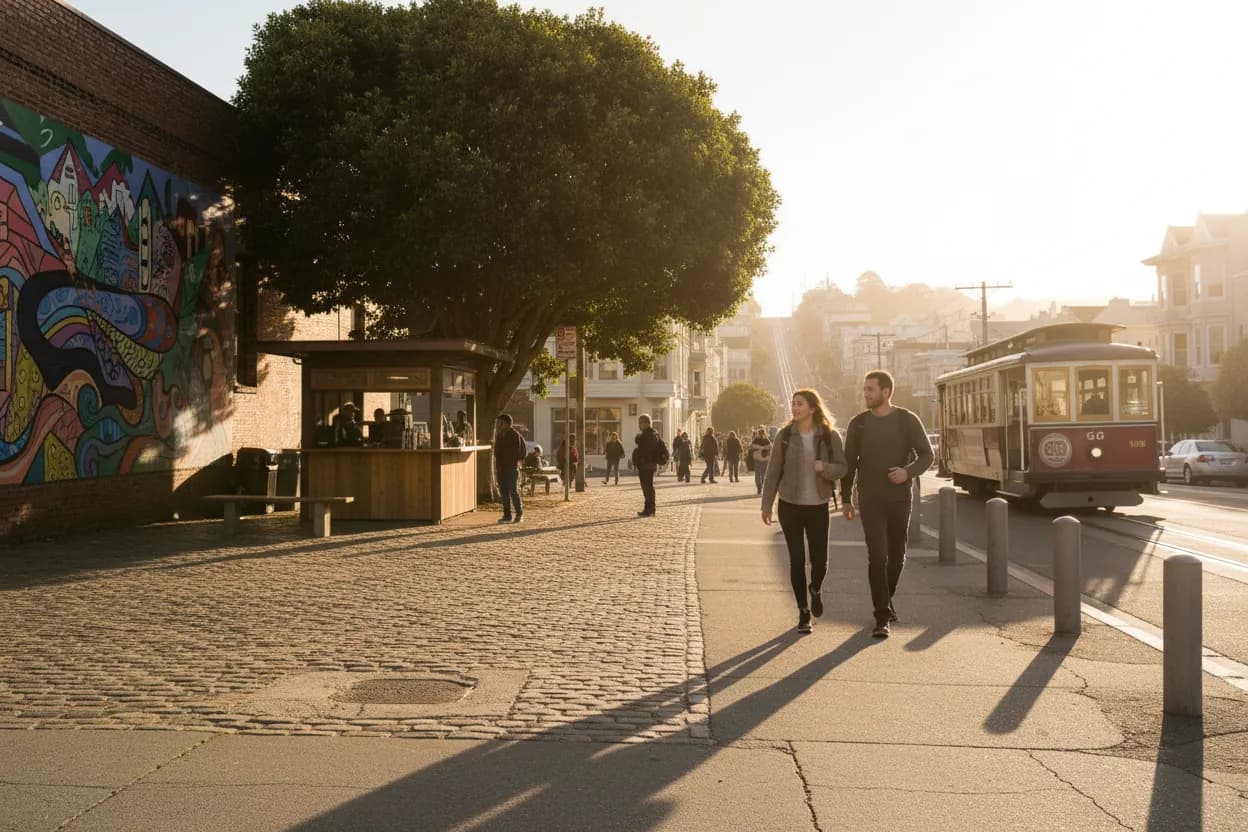
Privacy also applies to transit and street scenes. Muni vehicles, historic streetcars, cable cars, sidewalks, and parks are shared spaces. Take notes, enjoy details, and document your trip without blocking boarding areas, doorways, paths, ramps, or narrow viewpoints. The most locally literate visitor is not the one with the rarest photo; it is the one who leaves the place usable for everyone else.
Verify current entry details
The final check should happen the day you go. Open the official page for the main stop, then confirm the backup. Check whether the page states current access, location guidance, closures, entry procedures, or visitor limitations. If the site fails to load, shows only a security verification screen, or does not answer the basic access question, treat the stop as unconfirmed.
Next, open SFMTA for the route. Its official homepage surfaces a trip planner, routes and stops, visitor guidance, accessibility, travel maps, alerts, and travel updates. The extract also shows that reroutes can occur because of city activity, and that Muni service changes may be posted with future effective dates. That means your saved route from last week is not proof of today’s trip.
Build a simple departure rule: if the main stop and the transit path are both verified, go. If one is uncertain, switch to the backup. If both are uncertain, shorten the day to a neighborhood walk with confirmed public access. San Francisco odd finds are better when the plan is modest, checked, and reversible.
Tags: #SanFrancisco #SFGuide #HiddenGems #OddFinds #AskKarpo #BeforeYouGo #Muni #SFMTA #CityGuide #PublicAccess #TransitPlanning #SFTravel #VerifyFirst #UrbanExploring
Sources consulted: sftravel.com · sfmta.com · sfrecpark.org
All trademarks are the property of their respective owners.
Ask Karpo first
Ask Karpo first before you chase a rumor, cross the city, or trust an old listing. Send your target, time window, mobility needs, and backup tolerance, and Karpo can help you turn a San Francisco odd-find idea into a checked public plan.


