 Where to Eat Near Penn Station That Isn't a Chain
US Open 2026

Jacob Batalon Hawaiian Shave Ice Near US Open Flushing
A practical guide to finding shave ice, frozen treats, and tropical dessert carts in Queens while planning your day around the US Open tennis tournament.
When Jacob Batalon's name trends alongside summer searches, it often pulls in fans of Spider-Man, Hawaiian culture, and the kind of tropical treats that make a hot day bearable—especially when you're navigating Queens during US Open season. The 2026 tournament at the USTA Billie Jean King National Tennis Center in Flushing Meadows will draw tens of thousands of visitors each day, and many will discover that the best way to cool down between matches isn't inside the grounds but along the vibrant streets of Flushing, Corona, and Jackson Heights, where shave ice carts, tropical fruit vendors, and frozen dessert shops have been serving the neighborhood for decades. This guide maps out where to look for those icy, colorful treats and how to weave them into a practical US Open day trip that respects both the tournament schedule and the rhythms of Queens public life.
Text Karpo with your US Open session time and Queens starting point, and we’ll turn this Tropical dessert carts and frozen treat vendors in Queens for cooling down between tennis matches into a practical local plan.
Why Shave Ice and Frozen Treats Matter During US Open Season
The US Open runs for two weeks in late August and early September, when New York humidity peaks and the sun beats down on the open-air courts and walkways of Flushing Meadows Corona Park. While the tournament grounds offer food concessions, stepping outside between sessions or after an early match gives you access to Queens' deep bench of immigrant-run dessert vendors, many of whom specialize in tropical and Asian-style frozen treats that are lighter, less sweet, and more refreshing than standard American ice cream. Shave ice—whether Hawaiian-style with fruit syrups and condensed milk or Filipino halo-halo with beans, jelly, and ube—has become a summer staple in neighborhoods like Flushing and Woodside, where Filipino, Korean, and Latin American communities have built a thriving street-food culture. Planning your US Open visit around these vendors means you can cool down, explore the borough, and avoid the crowds that cluster around the main food courts inside the tennis center.
Where to Start Looking: Flushing and the 7 Train Corridor
The 7 train is the primary public transit line connecting Manhattan, Long Island City, and Flushing, and it's the route most US Open visitors will take to reach the Mets–Willets Point station, which sits adjacent to the tennis center. According to the MTA's official US Open transit guide, service is increased during the tournament, and the trip from Times Square to Mets–Willets Point typically takes about 35 minutes. But the real opportunity lies in the stops before and after: Flushing–Main Street, 61st Street–Woodside, Junction Boulevard, and 82nd Street–Jackson Heights all anchor neighborhoods with high concentrations of dessert shops, fruit vendors, and mobile carts that set up on warm afternoons. Flushing's downtown core, a short walk or bus ride from the Main Street station, is home to dozens of bakeries, tea shops, and dessert counters where you can find shaved ice topped with fresh mango, lychee, or red bean. Corona, just west of the park, has a strong Latin American presence, and you'll often see street vendors selling raspados—Mexican shaved ice with tamarind, lime, or tropical fruit syrups—from pushcarts near the intersection of Roosevelt Avenue and 103rd Street.
Timing Your Treat Run Around Match Sessions
The US Open typically schedules day sessions starting at the posted time and night sessions beginning at the posted time, with some early rounds featuring continuous play from morning through evening. The official event schedule on usopen.org is updated closer to the tournament and will show which courts are active each day. If you're attending a day session, consider arriving in Flushing an hour or two early, grabbing a shave ice or fruit cup near Main Street, and walking through Flushing Meadows Corona Park to the tennis center—it's about a 20-minute stroll from downtown Flushing. For night sessions, you might plan a late-afternoon break in Corona or Jackson Heights, where many vendors stay running late only when current hours confirm it. Leaving the grounds between the day and night sessions is allowed, and re-entry is straightforward if you keep your ticket and follow the procedures outlined in the official visitor A-Z guide. This flexibility makes it easy to step out, cool down, and return for the evening matches without feeling rushed.
What to Expect from Queens Dessert Vendors
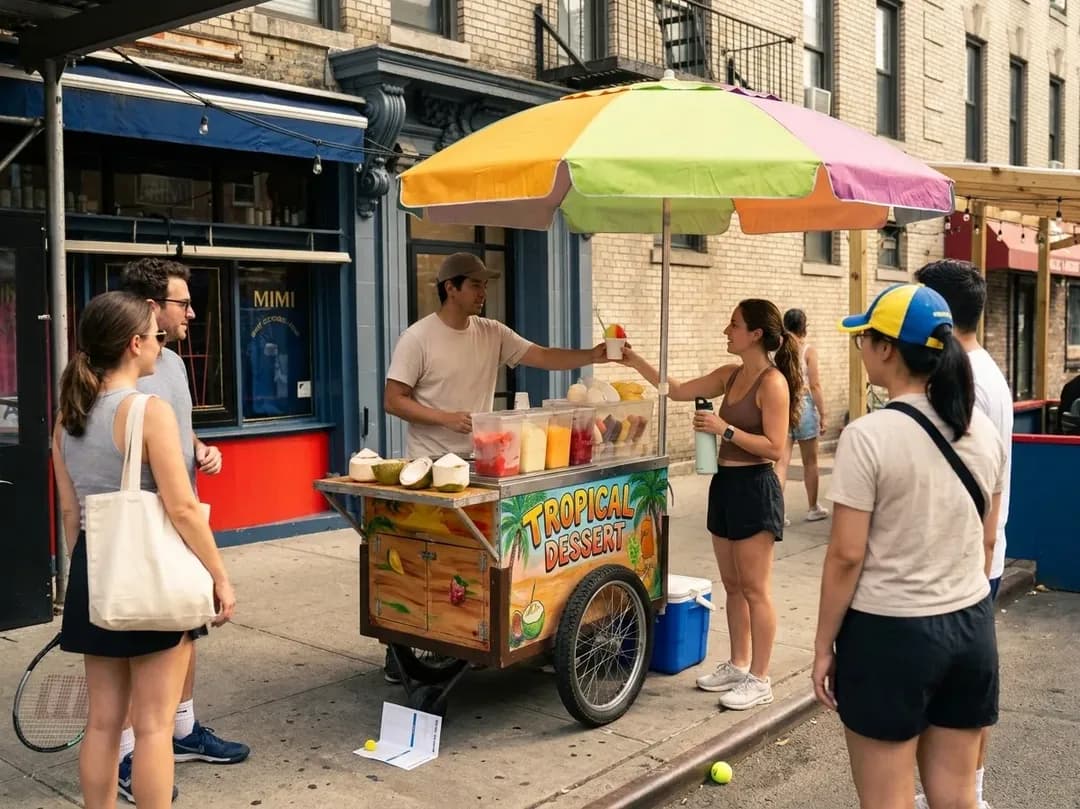
Queens frozen-treat vendors range from brick-and-mortar shops with air conditioning and seating to mobile carts that appear on busy corners when the temperature climbs. Many are cash-only, though an increasing number accept digital payments. Portions tend to be generous, and prices are typically lower than what you'll find inside the tennis center or in Manhattan. Shave ice is often customizable: you choose your syrup flavors, add-ons like condensed milk or fruit chunks, and sometimes a scoop of ice cream or mochi at the base. Halo-halo, a Filipino dessert that layers shaved ice with sweetened beans, coconut gel, flan, and purple yam ice cream, is a full meal in a cup and especially popular in the blocks around Roosevelt Avenue. Raspados and paletas—Mexican ice pops—are sold from carts that often park near subway exits, playgrounds, and bus stops. Because these are small, independent operations, availability can shift day to day, so it's wise to have a backup plan and check NYC Health's food safety resources if you want to verify a vendor's permit status.

Combining Treats with Other Queens Stops
A shave ice run fits naturally into a broader Queens itinerary. Flushing Meadows Corona Park, managed by NYC Parks, is home to the Unisphere, the Queens Museum, the New York Hall of Science, and miles of walking paths. If you arrive early or leave the tennis center mid-afternoon, you can visit the Queens Museum's panorama of New York City, then grab a frozen treat in Corona on your way back to the 7 train. Jackson Heights, a few stops west, is known for its South Asian and Latin American food scene, and you'll find kulfi, mango lassi, and other cooling desserts in the blocks around 74th Street. Long Island City and Astoria, closer to Manhattan, have their own ice cream shops and gelato counters, though they're less convenient if your main destination is the US Open. Citi Field, home of the Mets, is adjacent to the tennis center, and on days when both venues host events, the area can be crowded—another reason to explore the quieter dessert spots a few subway stops away.
Practical Notes for Your Frozen Treat Hunt
- Check the official US Open event schedule on usopen.org to confirm session times and plan your arrival and departure around peak crowds.
- Review the MTA's US Open transit guide for service changes, station access, and estimated travel times on the 7 train.
- Bring small bills or confirm that your preferred vendor accepts card or digital payment—many carts are cash-only.
- Consult the official prohibited-items guide before leaving the tennis center if you plan to re-enter; outside food and large bags are restricted.
- Use NYC Parks' Flushing Meadows Corona Park page to map walking routes between the Unisphere, museums, and the tennis center.
- Check NYC Health's food safety resources if you want to verify a mobile vendor's permit or report a concern.
- Plan for sun and heat: bring a hat, sunscreen, and a refillable water bottle, and treat shave ice as a supplement, not a replacement, for hydration.
- Explore NYC Tourism's Queens page for additional neighborhood guides, cultural sites, and dining recommendations beyond frozen treats.
Respecting the Neighborhood and the Vendors
Queens is a working borough, and the vendors who sell shave ice, raspados, and halo-halo are often supporting families and building small businesses in communities that have welcomed immigrants for generations. When you stop at a cart or shop, be patient, ask questions if you're unfamiliar with the menu, and tip if the service is good. Avoid blocking sidewalks or subway exits while you eat, and dispose of cups and spoons in the trash cans provided. If you're visiting during the US Open, remember that locals are navigating the same crowded trains and streets, often on their way to work or school. A little courtesy—stepping aside, keeping your voice down, and respecting the pace of the neighborhood—goes a long way. The frozen treats you'll find in Queens aren't tourist gimmicks; they're everyday comforts that reflect the borough's diversity and resilience, and they're best enjoyed with that context in mind.
Tags: #USOpen2026 #Queens #FlushingMeadows #KarpoFinds #Karpo #jacobbatalon #NewYorkLocal #TennisTravel #NYCLocalLife #TennisTravel
Sources consulted: usopen.org — Official event schedule · usopen.org — Official visitor A-Z guide · usopen.org — Official transportation directions · usopen.org — Official prohibited-items guide · MTA — Official US Open transit guide · NYC Parks — Flushing Meadows Corona Park · NYC Tourism — Queens · NYC Health — Food Safety
All trademarks are the property of their respective owners.
Ask Karpo first
Want to know what is actually open, how to time the trip, and where to pause around Queens? Ask Karpo for the latest public US Open context, a respectful visitor plan, and a live route around Flushing Meadows before you head out.
Ask Karpo for more information.
Keep reading
- Where to Eat Near Penn Station That Isn't a Chain
 Andytown Coffee in the Outer Sunset: The Snowy Plover Explained
- Best Things to Do in Chicago: What the City Gives Away