Between 82nd and 83rd Streets, Roosevelt Avenue gives up its asphalt to something better. Diversity Plaza—the name is aspirational but earned—closes to cars and opens to folding tables, propane burners, and the particular magic that happens when strangers share benches under string lights. From roughly 6pm until late evening, this two-block pedestrian zone becomes one of the borough's most reliable free things to do: a night market without the branding, where the elevated train rumbles overhead and the menu changes with whoever showed up that evening.
The Geography of the Plaza
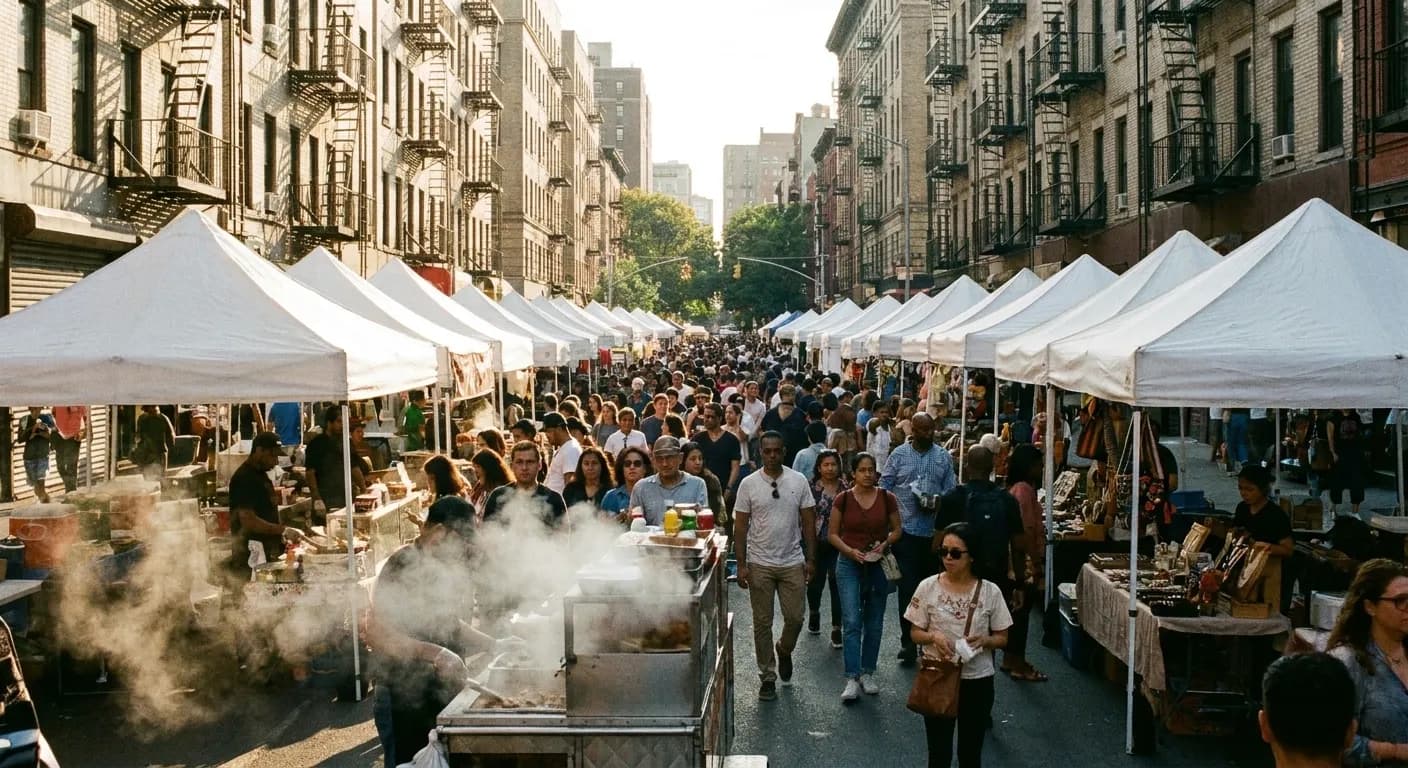
The car-free zone runs from 82nd to 83rd, a modest span that feels larger once you're inside it. Permanent plaza furniture—benches, concrete planters, a few metal tables bolted down—defines the bones of the space, but the real architecture is temporary. Vendors arrive in waves starting around six, unpacking coolers and hanging handwritten menus from cart frames. By seven, the layout has settled into its nightly configuration: halal carts anchor the western end, arepas and empanadas vendors cluster mid-block, and at the 82nd Street corner, a momo stand holds its post.
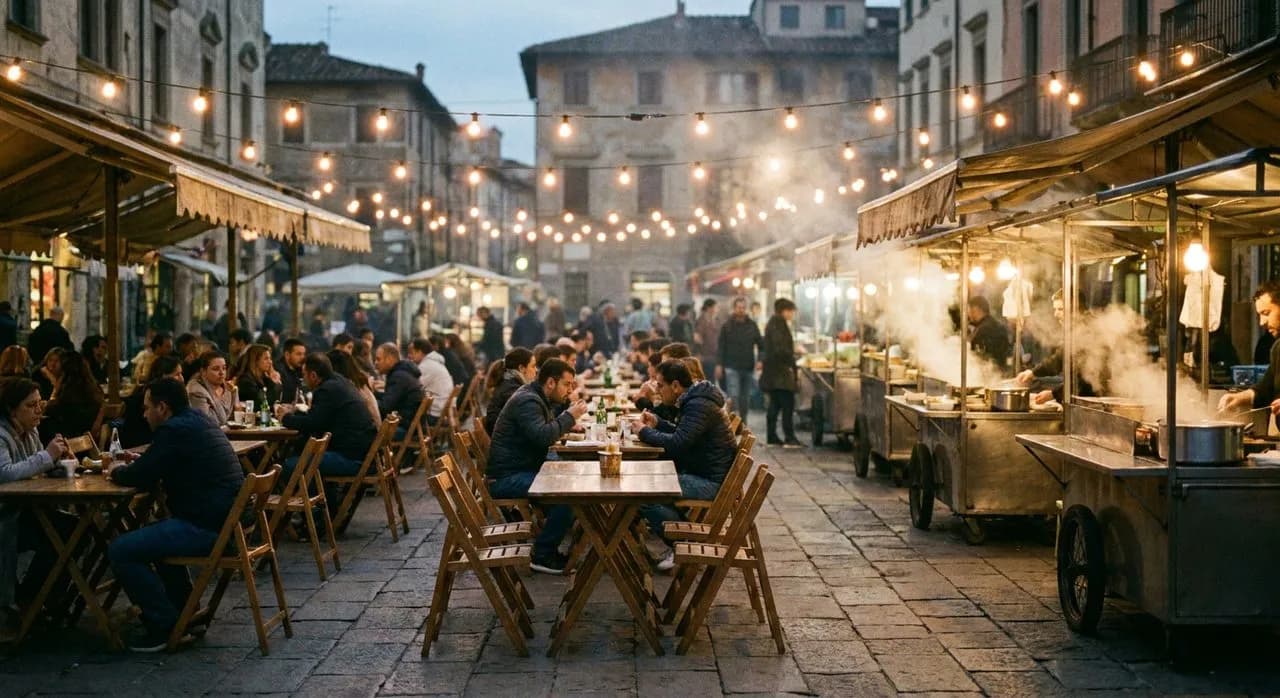
The plaza's concrete planters double as informal seating during peak hours; the northern row gets evening shade from the elevated train structure, a detail that matters in July and August when the pavement still radiates heat at eight o'clock. By 7:30pm on a summer Friday, every planter has a perched diner balancing a paper plate and a napkin stack. The unwritten social geography emerges: families with small children favor the benches nearest the newsstand, solo diners claim the planter edges, and groups of friends colonize the movable tables in the center, pushing two or three together until a waiter gently suggests they leave room for others.
Uncle's Cart and the Green Sauce
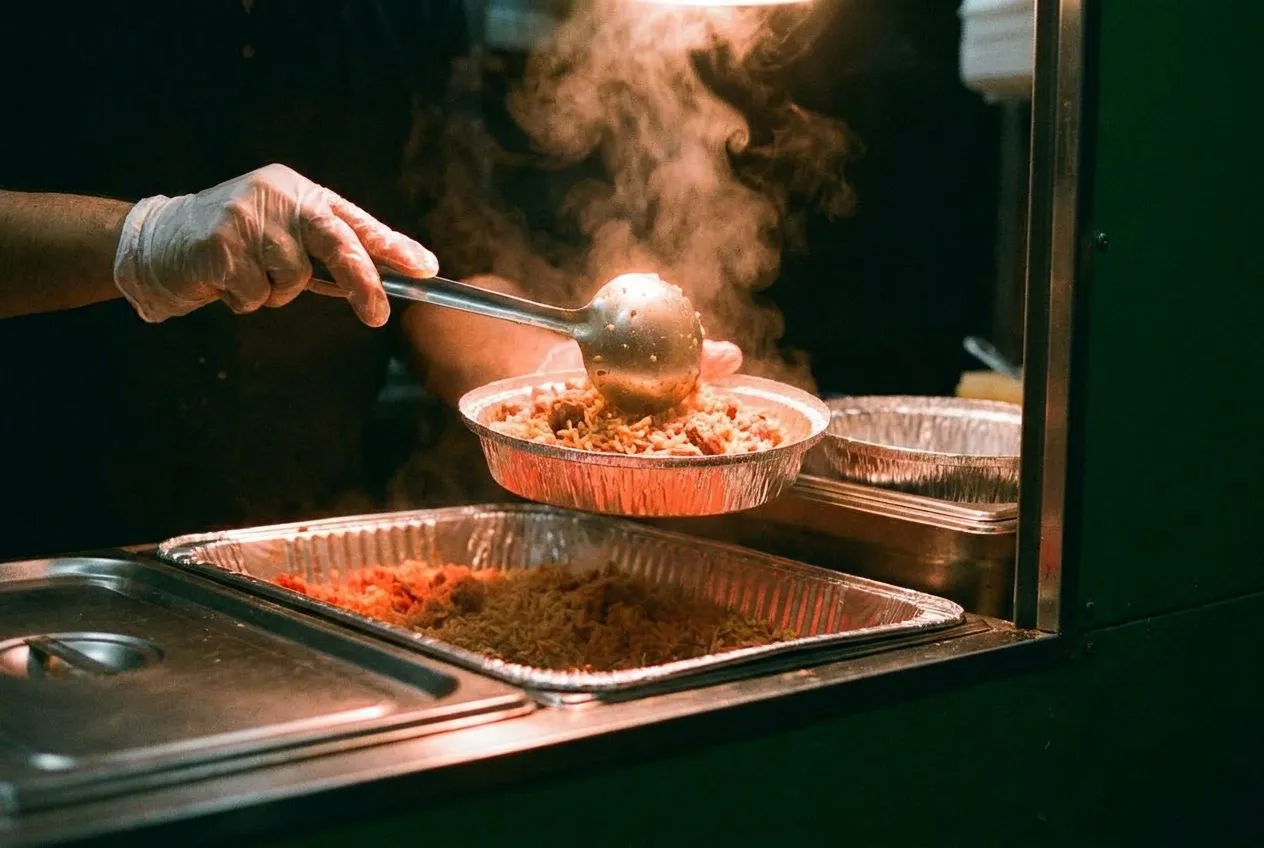
At the 82nd Street corner, Uncle's cart serves Nepali-style momos—steamed dumplings, ten to an order, with a choice of chicken, vegetable, or buff. The printed menu lists two sauces: a mild tomato-sesame and a fiery red chili. But regulars know to order with the green sauce, a Nepali-style chutney heavy on cilantro, mint, and something sharp that might be raw mango or tamarind, depending on the season. It's not written anywhere. You simply say the words when you order, and Uncle—or whichever family member is working the steamer that night—nods and reaches beneath the cart for a plastic squeeze bottle with a green cap.
The momos themselves are sturdy, pleated with the thick-skinned competence of dumplings meant to travel. They arrive in a paper boat, still steaming, and the green sauce turns them from good to essential. By late 2026, Uncle's cart had become enough of an open secret that you'd hear the phrase ripple through the line: first-timers eavesdropping, then leaning forward to amend their orders. With the green sauce. The vendor's English is minimal, but that phrase he understands perfectly.
The Sound Layer
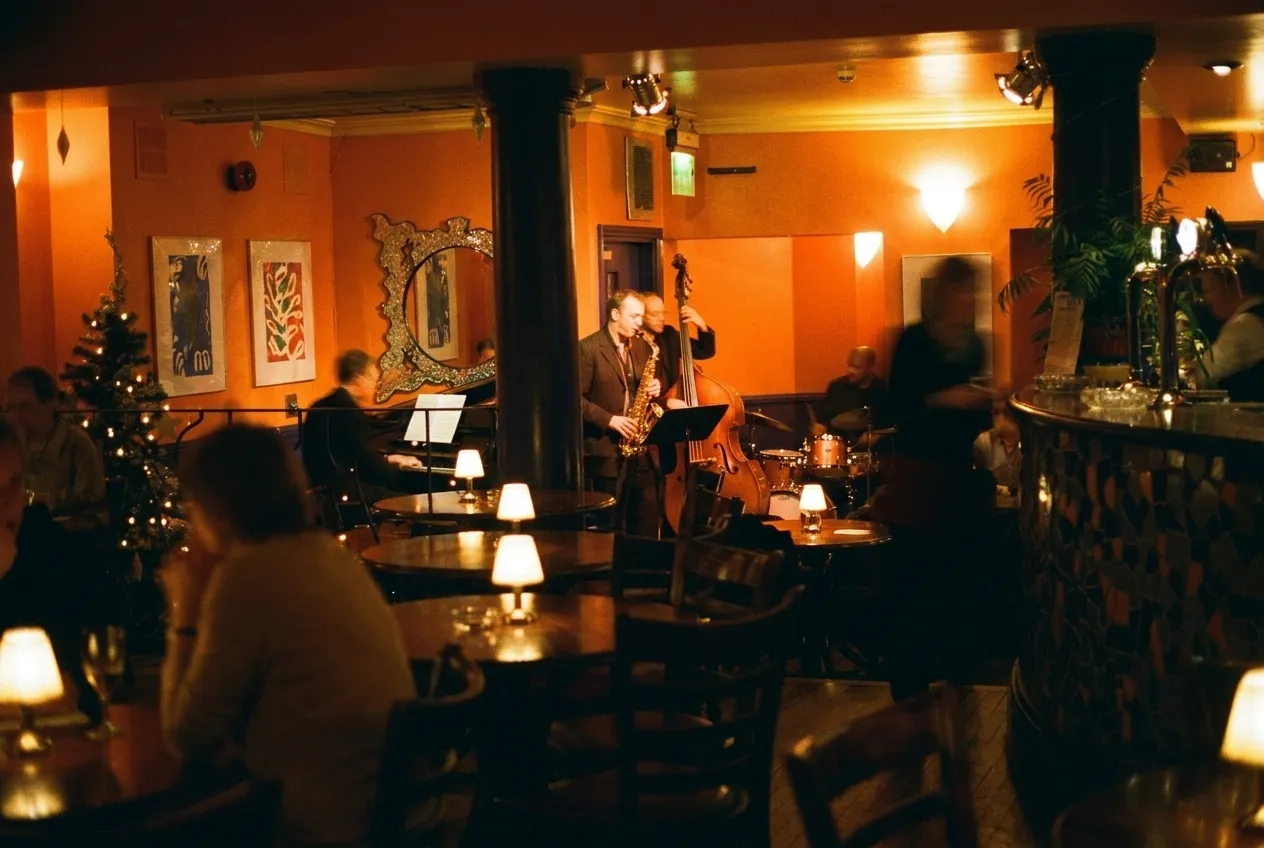
Diversity Plaza operates at a consistent ambient volume: the hiss of meat hitting flat-tops, the clatter of tongs against aluminum trays, multilingual bargaining, and the 7 train announcing itself every few minutes with a metallic growl. But on Friday and Saturday nights, a rotating group of street musicians sometimes sets up near the 83rd Street end in the evening. The lineup changes—sometimes it's a keyboard and conga, sometimes a full six-piece with horn section—but the repertoire is steady: Héctor Lavoe, Celia Cruz, Willie Colón, the standards that need no introduction in this neighborhood.
The musicians don't perform so much as host. Couples dance in the narrow aisles between vendor carts. Kids spin in approximate circles. The music doesn't dominate; it weaves into the existing soundscape, another layer in a space already thick with input. By 10pm, the plaza reaches a kind of equilibrium: the dinner rush has passed, the musicians have settled into a groove, and the vendors are restocking for the second wave—the post-movie, post-drink crowd looking for something warm and inexpensive before heading home.
The July-August Window
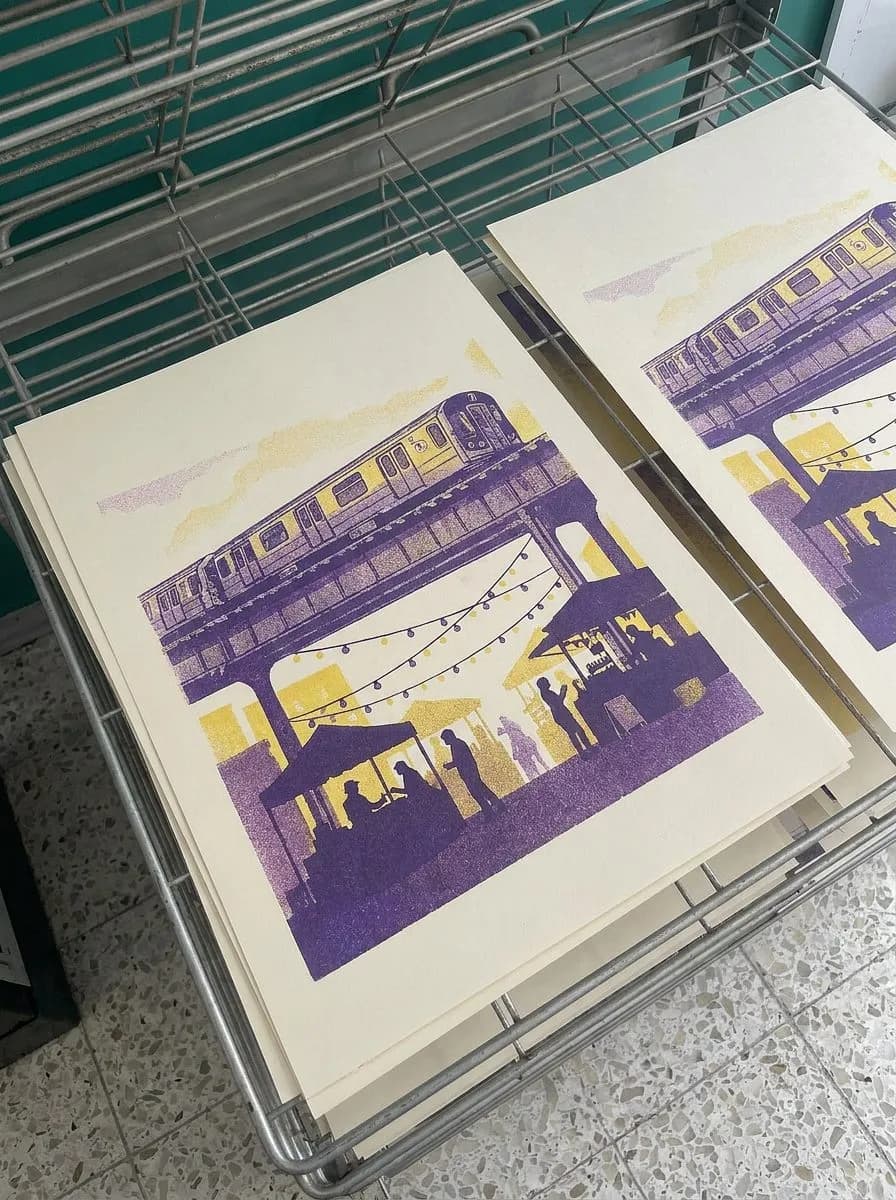
Diversity Plaza operates year-round, but it reaches peak density in the July-August corridor when the weather cooperates and the 7 train disgorges crowds who want to be outside, even if outside means standing on Roosevelt Avenue. The air smells of grilled meat and cumin, of fried dough and charred corn, of the particular funk that rises from a street grate in summer. The vendors know this is their high season; menus expand, portions grow slightly more generous, and the newest carts jostle for position, testing whether they can claim a regular spot.
The evening light during this window is forgiving. The sun sets late, and the elevated train structure casts long shadows that stripe the plaza in alternating bands of gold and gray. By 8:30pm, the string lights take over—white LEDs strung cart-to-cart, nothing fancy, but enough to mark the space as intentional, a destination rather than a throughway. The newsstand at the plaza's edge, which sells international SIM cards and phone cards in denominations from five to fifty dollars, stays open until eleven, a useful anchor for anyone arriving without cash and needing to orient themselves.
What to Eat and How to Navigate
The short answer: eat widely and eat cheaply. Most plates run six to twelve dollars. The halal carts offer the platters you know—rice, salad, white sauce, hot sauce, your choice of protein—but also lamb chops on weekends, if you ask. The arepas vendors will split an order if you're sampling. The Ecuadorian cart near the 83rd Street end serves encebollado, a fish stew that tastes better at 9pm on a humid night than it has any right to. Bring cash; some carts take Venmo or Cash App, but the signal under the train can be unreliable, and nobody wants to watch you refresh your payment app while a line forms behind you.
Navigation is instinctive. You walk the two-block loop once to survey options, then circle back to commit. Seating is first-come; if the benches and planters are full, you stand or you walk a half-block east to the small public plaza near 83rd and Roosevelt that offers a few more metal chairs. The social contract is gentle but firm: bus your own trash, don't linger too long if people are waiting, and if you're taking photos, keep it quick and unobtrusive. This is a working market, not a set.
Practical Notes
Diversity Plaza occupies Roosevelt Avenue between 82nd and 83rd Streets in Jackson Heights, Queens. Nearest subway: 82nd Street – Jackson Heights on the 7 train. Street parking is scarce; the neighborhood is better reached by train or bus (Q33, Q53). Vendors typically arrive around 6pm and pack up by midnight, though hours vary by cart and weather; peak activity runs 7pm to 10pm on weekends. The plaza is at street level and wheelchair accessible, though seating is limited and crowding can make navigation difficult during peak hours. Bring cash, a light jacket for breezy evenings, and patience. Most vendors speak limited English; pointing works. Verify specific vendor schedules and offerings on-site, as the lineup shifts weekly.
Tags: #JacksonHeights #DiversityPlaza #QueensFood #StreetFood #NYCNightMarket #FreeAndFine #7Train #RooseveltAvenue #NYCFoodie #SummerInTheCity #UrbanDining #CityGuideNYC #OpenAirMarket #NeighborhoodEats #NYCSummer
Please drink responsibly. Must be of legal drinking age.
Sources consulted: Jackson Heights, Queens · Roosevelt Avenue · NYC Plaza Program · 7 Train Service · Jackson Heights Dining
All trademarks are the property of their respective owners.