 Where to Eat Near Penn Station That Isn't a Chain
US Open 2026
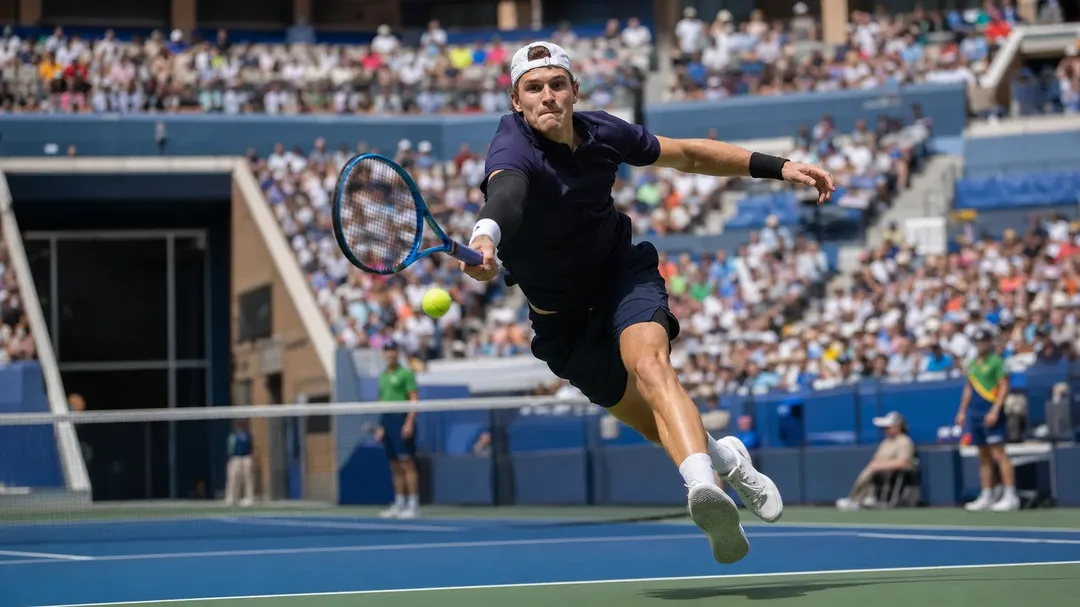
Jack Draper’s Left-Handed Game Could Challenge US Open Favorites
If Jack Draper appears in New York, his left-handed serve, forehand shape, and court positioning could give US Open favorites awkward problems.
Jack Draper’s run to the 2024 US Open semifinals gave many American tennis fans a clear picture of why his game can feel different from a standard hard-court matchup. That result is confirmed history, not a promise about any future draw, entry, seed, or outcome. Still, if Draper is part of the New York conversation again, his left-handed serve, heavy forehand shape, and willingness to take court position early would make him an interesting tactical problem for more established contenders. The appeal is not only that he hits big. It is that his best patterns force right-handed opponents to defend unfamiliar angles, adjust return positions, and make choices under pressure before a rally has fully formed. On a hard court, where the first serve, first return, and first forehand can decide so many points, those small geometric changes can become a major part of the match.
Text Karpo Now: Tell us what matters most for Jack Draper s Left Handed Game, and Karpo can turn current US Open updates into a practical plan before you go.
Why The Lefty Look Matters
Most elite players spend much of the season facing right-handers. Their return habits, practice patterns, and defensive instincts are often built around right-handed serves and forehands. A strong left-hander flips those pictures. Draper’s serve can drag a right-handed returner wide on the ad side, opening the next ball into the opposite corner. Even when that serve is not an ace, it can create a stretched return, a short reply, or a rushed neutral ball.
For fans watching in the stadium or on television, the key is to look at the receiver’s first step. If the returner leans early toward the sideline, Draper may be creating doubt with the wide serve. If the returner stands farther outside the singles line, the body serve and serve down the T become more available. That push and pull is what makes left-handed serving valuable on hard courts: the threat of one angle improves the next option.
Serve Patterns To Watch
Draper’s serve does not need to dominate every game to shape a match. The important question is whether it regularly earns first-strike forehands. On a medium-to-fast hard court, a lefty serve out wide in the ad court can pull a right-hander beyond the doubles alley. If the return floats crosscourt, the left-hander can step around and hit a forehand into the open deuce side. If the returner overprotects that angle, the server can go at the body or flatten the ball through the middle.
The deuce court presents different geometry. A left-handed slice serve can move into a right-hander’s forehand, which is often less naturally jammed than the backhand return. That makes precision important. A good body serve can still crowd a player who wants a full swing, while a serve down the T can win quick points if the receiver is guarding the wider pattern. The best opponents will test whether Draper can change locations under scoreboard pressure rather than repeat the same favorite serve.
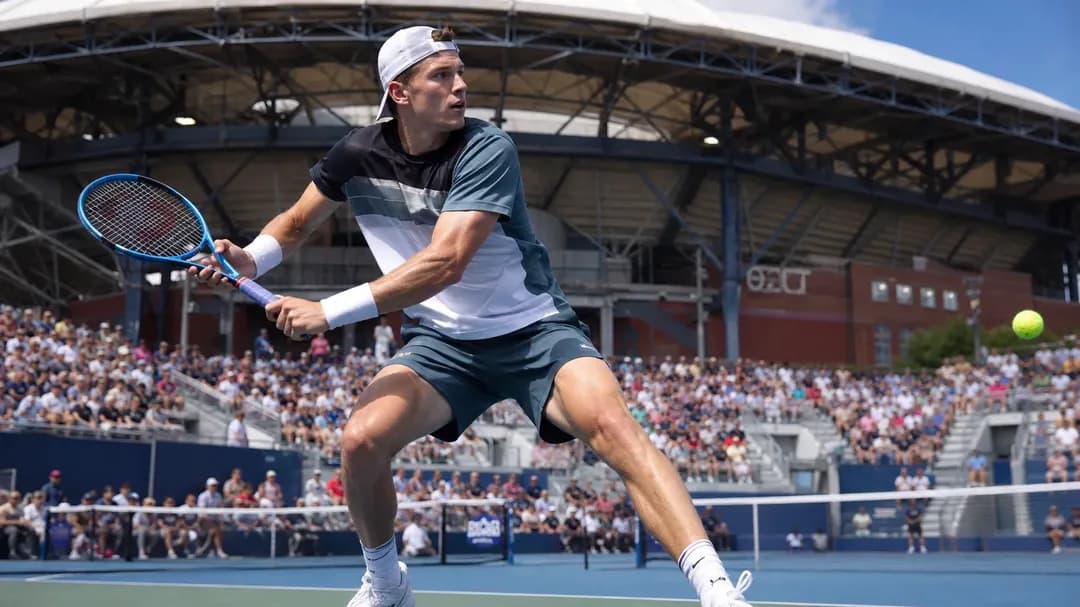
- On break points, watch whether he trusts the wide ad-court serve or chooses a safer body target.
- After a short return, notice whether the first forehand goes behind the opponent or into the open court.
- Against aggressive returners, check whether he uses more body serves to reduce swing space.
- When rallies start neutral, see whether he can still earn forehands without overpressing.
Returns And Court Position
A left-handed player’s return game can be just as disruptive as the serve. Against right-handed servers, Draper’s forehand return can line up against the ad-court wide serve, a delivery many right-handers like when they want a high-percentage point starter. If he blocks that ball deep or redirects it early, he can remove one of the server’s safer patterns. He does not have to attack every return. Sometimes the best answer is a firm, deep ball that prevents the server from controlling the next shot.
Court position is the visual clue. If Draper stands close to the baseline, he is signaling that he wants to take time away and turn the point into a first-strike exchange. If he backs up, he may be prioritizing height, depth, and a cleaner swing. Both choices can work, but each has a trade-off. Standing in makes the court feel smaller for the server but raises the risk of errors. Standing back gives more reaction time but can invite the server forward.
New York hard courts can reward players who manage that trade-off calmly. The bounce gives an aggressive returner a chance to step in, yet the pace of play punishes late contact. Against top opponents, the return games that matter may not always begin with obvious scoreboard pressure. They may be the games where Draper lands three solid returns in a row, forces a longer service game, and makes the server feel that no hold is automatic.
Movement Under Pressure
Power gets attention, but movement decides whether the patterns survive a long match. Draper’s left-handed forehand can create sharp crosscourt angles, especially when he has time to set his feet. The challenge comes when opponents make him hit that forehand after a hard change of direction. A favorite with excellent defense will try to stretch him first, then attack the space he leaves. That is not a special weakness claim; it is standard hard-court strategy against any player who wants to dictate.
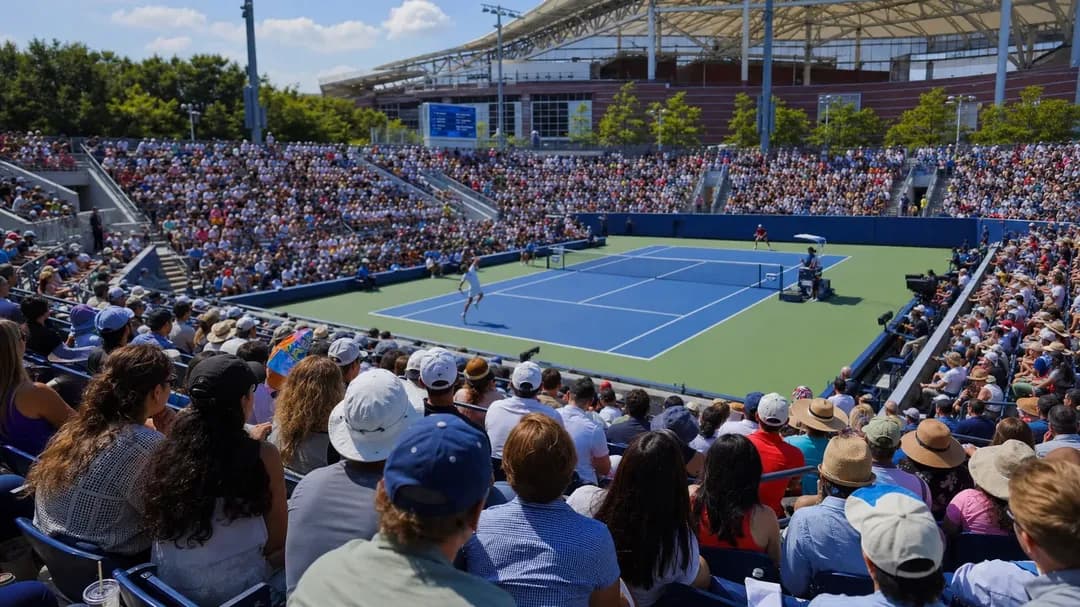
Fans should separate spectacular winners from repeatable pressure. A forehand winner from several feet outside the sideline can change a highlight reel, but the more important pattern is whether Draper can recover toward the middle and defend the next ball. If he hits big and still regains position, he can keep attacking without giving away open court. If he hits big but remains off balance, an elite opponent can absorb one shot and win the point with the next two.
Pressure management is also tactical. At the US Open, noise, heat, late sessions, and momentum swings can make shot selection feel urgent. A left-hander with a dangerous serve has a natural escape route, but relying only on serve-based solutions can become predictable. The stronger approach is variety: one heavy serve, one safer pattern, one patient rally, one sudden change down the line. If Draper is involved in a major match, his ability to mix those choices may matter as much as his top speed.
- Does he slow down between points after a loose error, or rush into the next serve?
- Can he defend the backhand corner without immediately giving up court position?
- When ahead in a rally, does he finish at net or try to hit through one more ball?
- In tight games, does his target selection become clearer or more predictable?
Practical Notes
For visitors planning a US Open trip, treat Draper as a player to monitor rather than a scheduled attraction unless official tournament information confirms his place and court assignment. Check the tournament player index and event schedule close to your session, because practice access, match courts, and daily orders can change. If he is on your court, sit high enough to see the serve angles. The ad-court wide serve is easiest to appreciate from behind the baseline or an elevated corner. For a simple tactical viewing plan, track the first four shots of each point. With Draper, that short sequence usually reveals whether the left-handed geometry is bothering the opponent.
Tags: #USOpen2026 #Tennis #GrandSlam #NewYorkTennis #ArthurAsheStadium #FlushingMeadows #USOpenGuide #TennisFans #SportsTravel #HardCourt #NewYork #KarpoFinds
Sources consulted: atptour.com — Official reference · usopen.org — Official reference · usopen.org — Official reference
All trademarks are the property of their respective owners.
Ask Karpo first
Want to know what is confirmed, when to show up, and how to make jack draper s left handed game work for your day? Ask Karpo for current US Open updates, a respectful fan plan, and a live route around Flushing Meadows.
Ask Karpo for more information.
Keep reading
- Where to Eat Near Penn Station That Isn't a Chain
 Andytown Coffee in the Outer Sunset: The Snowy Plover Explained
- Best Things to Do in Chicago: What the City Gives Away