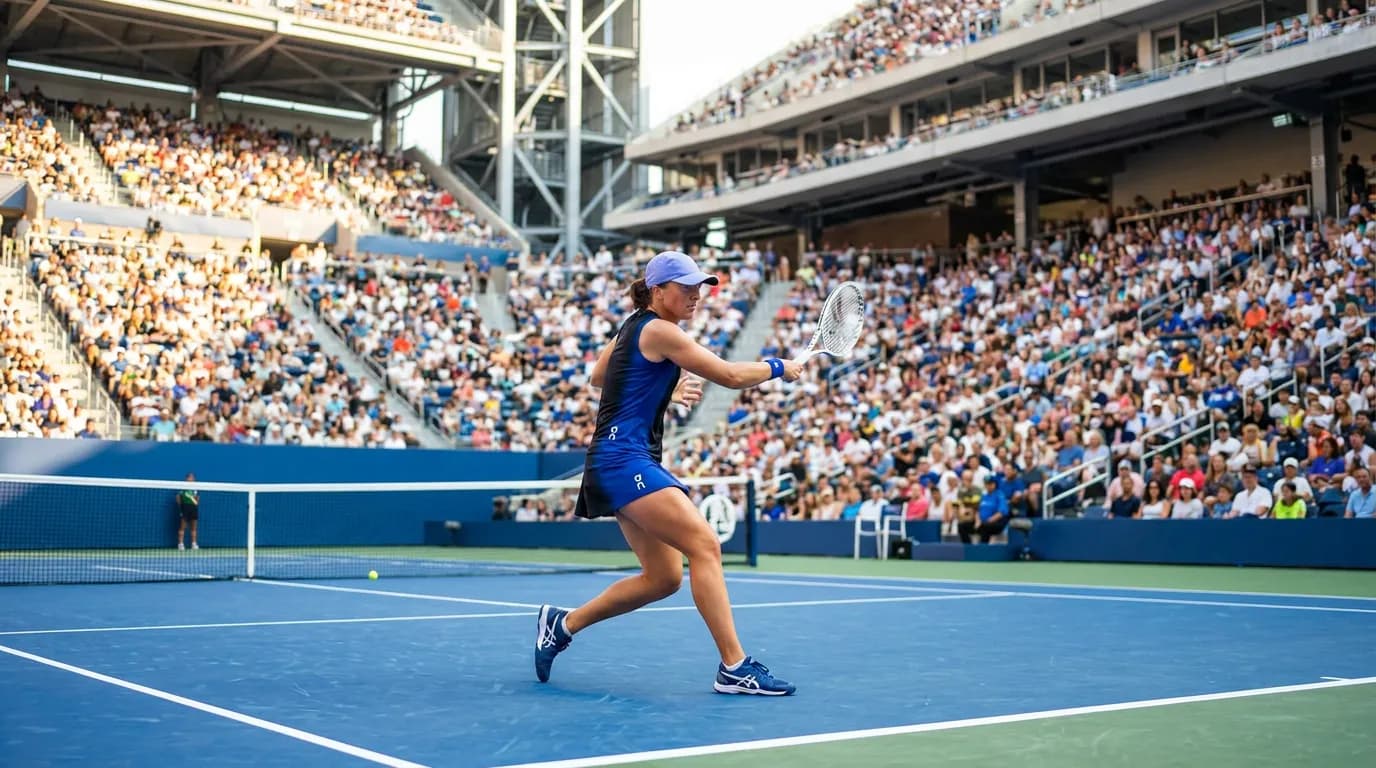
Iga Swiatek captured the 2022 US Open title with a commanding performance against Ons Jabeur, demonstrating her ability to adapt to the unique demands of Flushing Meadows. The DecoTurf surface at the USTA Billie Jean King National Tennis Center plays faster than the clay courts where she has built much of her reputation, and the ball sits lower through the bounce, forcing adjustments in court position, swing path, and decision-making. These surface-specific challenges remain constant for any player competing in New York, requiring refinements in tactical approach that differ from other tournaments on the calendar. The flatter trajectory and quicker pace of the hard courts compress reaction time and alter the geometry of rallies in ways that demand careful calibration of positioning and shot selection.
Text Karpo Now: Tell us what you want from Iga Swiatek’s Biggest Tactical Challenge at the US Open, and Karpo can track official updates, match timing, tickets, transit, and the easiest way to plan your US Open day.
Return Position and Court Geometry
The flatter trajectory of serves and groundstrokes on hard courts compresses reaction time, making return position a critical tactical variable. On clay, players can afford to stand further back and use the higher bounce to load forehands with topspin. At the US Open, that same positioning leaves returners vulnerable to flat serves that skid through the court, forcing defensive mode before rallies even begin. Standing closer to the baseline helps players take the ball earlier and neutralize pace, but it also reduces margin for error on second-serve returns, where mistiming by even a few inches can send the ball long or into the net.
The geometry of the court changes subtly with return position. Stepping inside the baseline shortens the angles available to opponents but also gives less time to recover if the server moves the returner off the court. This trade-off becomes especially important against opponents with heavy first serves. Finding the optimal distance requires constant recalibration based on serving patterns, wind conditions, and the specific pace of the court on any given day. US Open hard courts can vary in speed depending on humidity and temperature, meaning that a return position that works during an afternoon match may need adjustment under the lights.
Forehand Spacing and Strike Zone
Swiatek's forehand serves as her primary weapon, a shot she uses to dictate rallies and move opponents out of position. On clay, the higher bounce allows contact in an ideal strike zone, typically between waist and shoulder height, where players can generate maximum racket-head speed and topspin. The US Open surface produces a lower, flatter bounce that often forces contact closer to hip level or below, a position that reduces the ability to drive through the ball with the same margin for error. This lower contact point requires adjustments in footwork and swing path, as players must stay lower through the shot and maintain balance while generating pace.
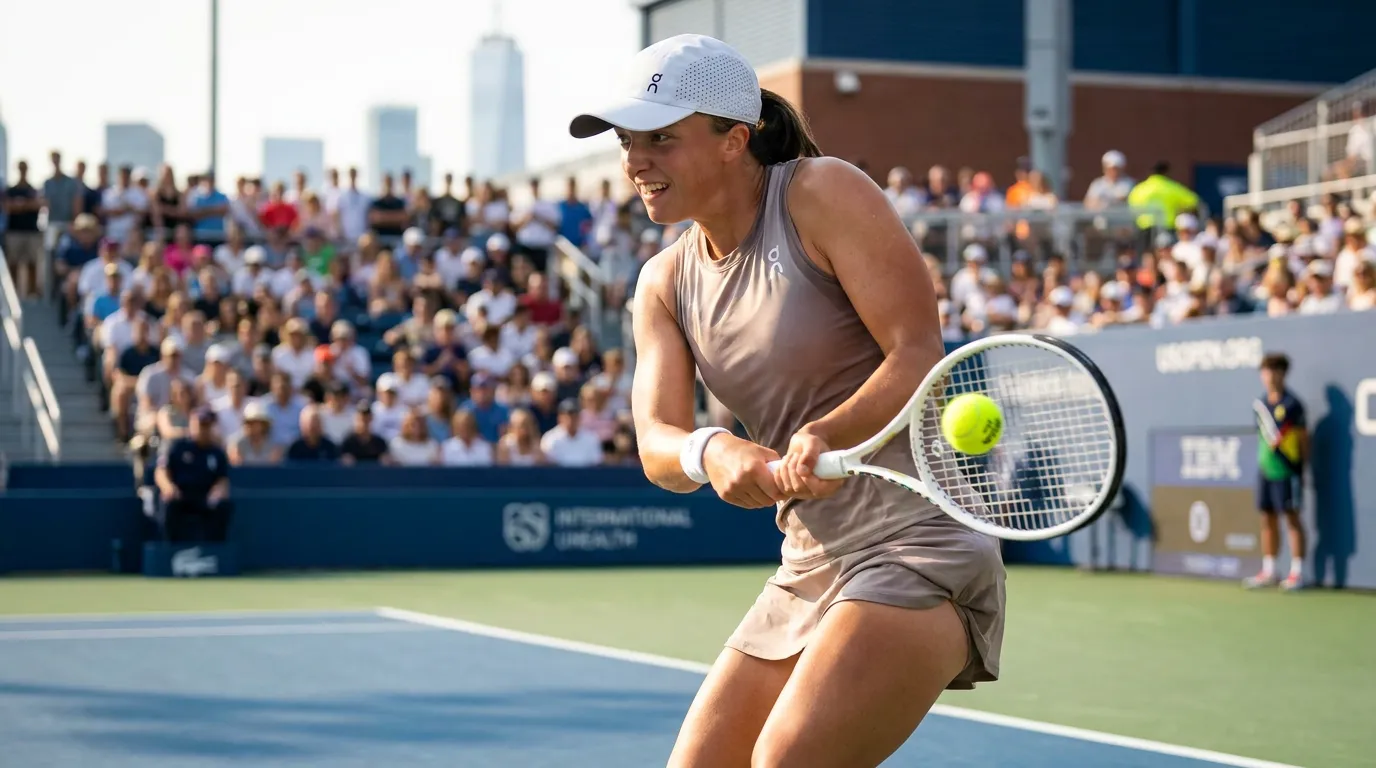
The spacing challenge extends beyond the height of the bounce. On faster hard courts, the ball arrives more quickly, compressing the time available to set up for forehands. Against opponents who flatten out their shots and aim for the lines, players must decide whether to take the ball on the rise or allow it to drop into a more comfortable hitting zone. Taking the ball early maintains offensive pressure but increases the risk of mistiming. Letting it drop gives more control but surrenders court position and allows opponents to recover. These split-second decisions accumulate over the course of a match, and the ability to read the incoming ball and adjust spacing accordingly influences performance outcomes.
Managing Flatter Pace and Depth
The pace of play at the US Open rewards players who can flatten out their shots and take time away from opponents. Games built heavily on topspin provide consistency and allow aggressive margins over the net. On hard courts, however, excessive topspin can result in balls that sit up and give opponents time to step in and attack. Finding the right balance between spin and pace becomes a tactical puzzle that shifts with each opponent and match situation. Depth control becomes equally important, as balls that land a meter inside the baseline on clay remain effective because the surface slows them down. On faster US Open courts, that same depth gives opponents an opportunity to move forward and take control of points.
- Adjusting topspin levels to prevent balls from sitting up on the faster surface
- Targeting depth within one meter of the baseline to maintain offensive positioning
- Reading opponent positioning to decide when to flatten shots versus when to use spin for safety
- Maintaining consistency through long rallies without sacrificing aggressive intent
Night Session Rhythm and Recovery
The US Open schedule places many high-profile matches in the night session, which begins at 7:00 PM and can extend past midnight depending on the length of preceding matches. Playing under the lights introduces variables that affect both performance and recovery. Cooler evening temperatures slow the ball slightly compared to afternoon conditions, and artificial lighting can alter depth perception and make it harder to pick up spin on incoming shots. Players must adapt timing and court positioning to account for these differences, often with little advance notice of when matches will actually begin.
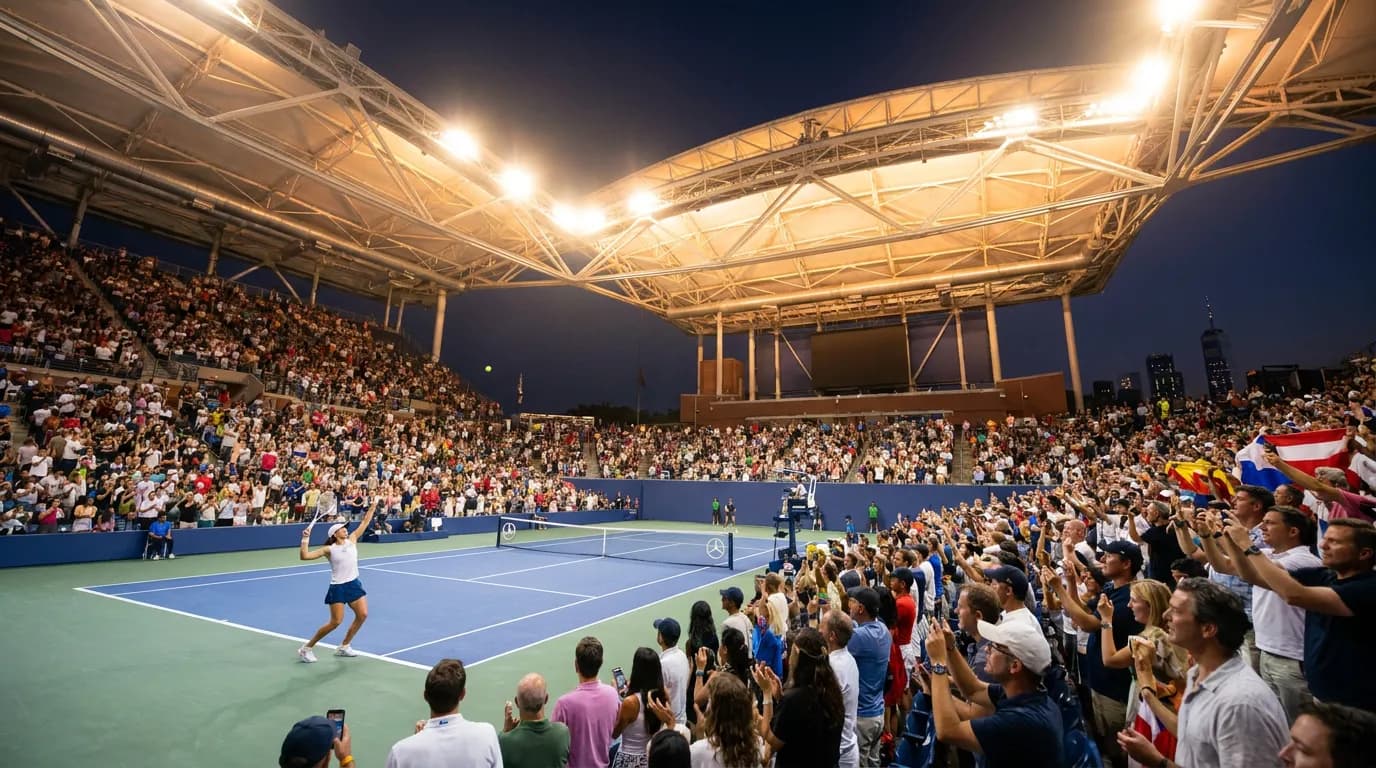
The rhythm of night matches also affects recovery patterns. A match that finishes after midnight leaves less time for treatment, nutrition, and sleep before the next day's practice or match. The compressed schedule of a Grand Slam tournament means that even a single late finish can create a cascade effect, leaving a player slightly behind in recovery for the remainder of the event. Managing energy levels, maintaining focus during long waits before taking the court, and adjusting sleep schedules all become part of the tactical challenge. For players who rely on physical intensity and sustained focus over the course of long rallies, these logistical factors can influence performance as much as any technical adjustment.
Practical Notes
Fans planning to attend the US Open can access the tournament grounds in Flushing Meadows via the 7 train to Mets-Willets Point station, which provides direct access from Manhattan and other parts of New York City. The tournament runs from late August through early September, with day sessions typically beginning at 11:00 AM and night sessions at 7:00 PM. Arthur Ashe Stadium hosts the marquee matches, while Louis Armstrong Stadium and the Grandstand offer excellent sightlines for featured matches. Grounds passes provide access to the outer courts, where fans can watch multiple matches throughout the day. Arrive early for popular sessions, as lines for entry and security can extend during peak times, especially on weekends and during the later rounds.
Tags: #USOpen2026 #Tennis #GrandSlam #NewYorkTennis #ArthurAsheStadium #FlushingMeadows #USOpenGuide #TennisFans #SportsTravel #HardCourt #NewYork #KarpoFinds
Sources consulted: usopen.org — Official reference · usopen.org — Official reference
All trademarks are the property of their respective owners.
Ask Karpo first
Before you lock in tickets or build a full day around an unconfirmed schedule, ask Karpo first. Share your dates, budget, and favorite players, and Karpo can help turn official US Open updates into a practical New York plan.