 Where to Eat Near Penn Station That Isn't a Chain
US Open 2026
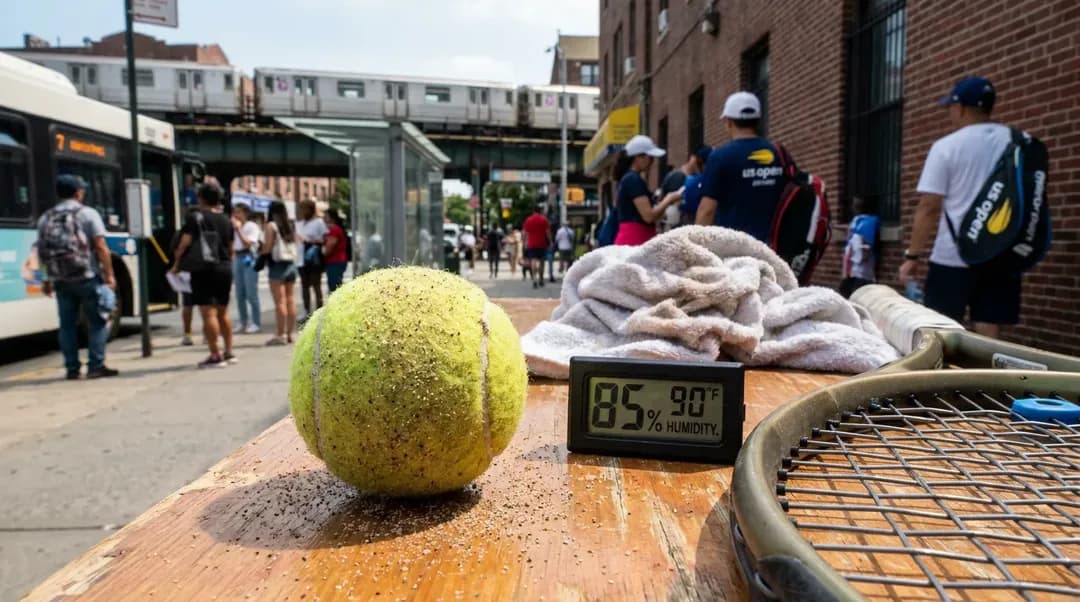
How US Open Ball Speed Changes Match Tactics
Ball speed at the US Open is not just about who hits hardest; pace, bounce, humidity, and timing can reshape how rallies feel from point to point.
When a forehand rushes through the court at the US Open, the useful question is not only how fast it was. The better question is what that pace did to the next shot. Ball speed changes spacing, balance, recovery time, and risk, but it rarely acts alone. A firm drive can look overwhelming if it stays low, lands deep, and reaches the opponent before the feet are set. A similar shot can become attackable if it sits up or gives the receiver an extra fraction of time. That is why pace is best read as part of a sequence. It can explain why a player steps inside the baseline in one passage, retreats in another, or chooses heavy crosscourt depth instead of a lower-percentage winner.
Text Karpo for a current, low-friction plan for how us open ball speed changes match tactics—including timing, route checks, and practical options that fit your day.
Why Pace Needs Context
In tennis, “fast conditions” can mean several things. It may describe the speed of the ball after the bounce, the height of the bounce, the time available to prepare, or the difficulty of controlling the next swing. Those ideas overlap, but they are not the same. A player can strike the ball hard and still create a manageable rally if the opponent has time to set up. Another player can hit with less raw speed but create pressure by taking the ball early, aiming deep, and changing direction before the opponent has recovered.
The tactical issue is perceived time. If a player feels rushed, the return may become shorter, the backswing more compact, and the target safer. If a player feels comfortable, the same exchange may invite a bigger swing or a down-the-line change. Ball speed therefore works as a pressure tool rather than a guaranteed advantage. Its value depends on court position, anticipation, stroke shape, and whether the hitter can turn a quick arrival into the next good position.
Bounce Changes The Rally
Bounce height is one reason two rallies with similar pace can feel completely different. A lower bounce often rewards compact preparation, clean footwork, and players who can redirect pace without needing a large swing. A higher bounce can give a defender more clearance and recovery time, but it can also push contact above the shoulder, where leverage becomes harder. The important detail is the opponent’s strike zone. If the ball repeatedly arrives at a comfortable height, speed alone may not be enough. If it keeps arriving at an awkward height, even moderate pace can disrupt timing.
- Low, skidding replies can make short preparation more valuable than maximum swing speed.
- Higher, heavier balls can buy recovery time while pushing contact into an uncomfortable zone.
- Deep pace near the baseline can matter more than sideline width because it crowds the next swing.
- Changing bounce height within a rally can prevent an opponent from settling into one rhythm.
First-strike patterns are especially sensitive to bounce. After a serve, a player may want the return to sit high enough to attack with the next forehand. On return, a deep ball through the middle can remove angles and test whether the server can create pace from a neutral stance. Fans do not need exact court measurements to follow this. Watch where contact happens: waist, chest, shoulder, or stretched out in front. That contact point often reveals why a rally turns.

Humidity And Session Timing
Humidity is often used as a simple explanation, but it should be treated carefully. Moist air, temperature, ball wear, player sweat, and the timing of a session can all affect how a match feels. The tactical effect is usually seen through control, margin, and recovery rather than through one obvious visual change. If the ball feels heavier to a player, aggressive swings may require safer targets. If the ball is coming through more easily, defensive reactions and return positioning can become more important. These are tendencies, not promises about a specific match.
The time of day can also alter rhythm. Afternoon tennis may ask players to manage heat, glare, and faster recovery between points, depending on conditions. Evening tennis can feel different because temperature, light, and crowd energy change the way a rally is experienced. A night-session exchange that looks slower on screen may still be severe if the receiver is taking the ball late or defending from deep behind the baseline. A daytime rally may look explosive yet remain controlled if both players are reading direction early. The most revealing clue is how quickly each player returns to balance after contact.
Court Position Controls Time
The clearest sign of ball-speed pressure is court position. When a player stands on or inside the baseline, the opponent has less time, even if the incoming shot is not the fastest of the match. Taking the ball early can turn neutral depth into offense. It also carries risk: contact must be clean, the swing path must be compact, and there is less room to adjust to a late bounce. That is why players often shift between stepping in and moving back. The goal is not always to hit harder. It is to decide who controls time.
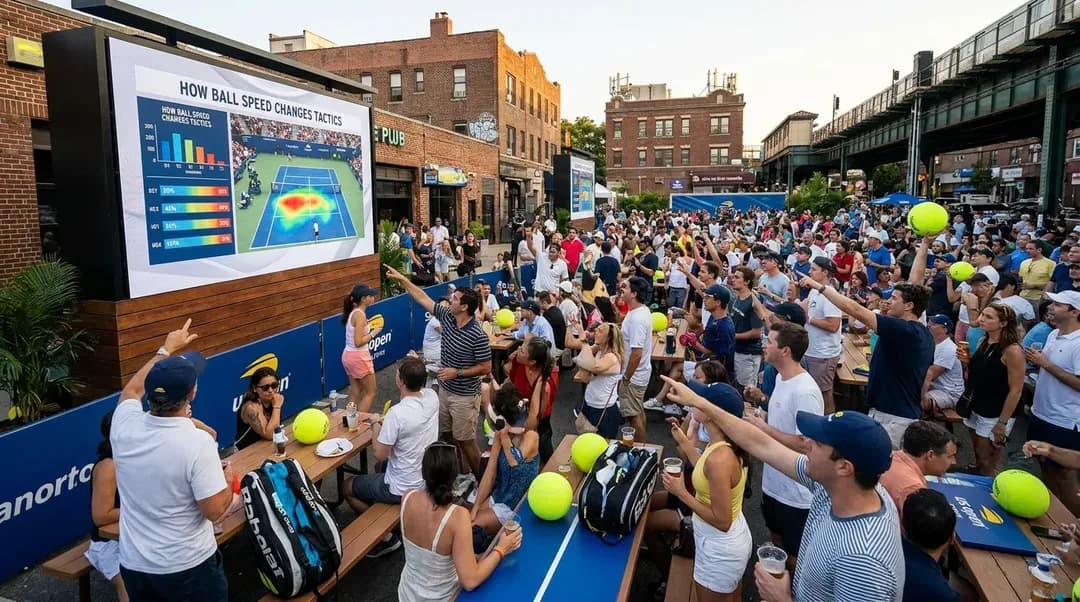
- A returner moving forward is trying to shorten the server’s next decision.
- A baseliner drifting back may be buying time for height, spin, or safer depth.
- Repeated short balls can show that incoming pace or bounce is disturbing clean contact.
- A sudden down-the-line change can punish an opponent leaning toward crosscourt pace.
Recovery after the shot is just as important as the shot itself. If a player hits big but lands off balance, the next ball may expose the aggression. If a defender absorbs pace and recovers centrally, the apparent advantage can disappear. Elite rallies often turn without a winner because pressure accumulates in stages: one deep ball moves the opponent, the next takes away time, and the third opens the court. Watching that chain makes ball speed more meaningful than any single speed graphic.
Practical Notes
For “How US Open Ball Speed Changes Match Tactics,” the useful 2026 calendar anchor is August 23 through September 13, with singles main-draw play beginning August 30. That calendar gives fans a broad frame, not a guarantee about who will play in a particular session or how any match will feel. Advice: use the official event schedule as the reference point before making plans, and treat pace, bounce, humidity, and timing as variables to observe once play begins. Before acting on “How US Open Ball Speed Changes Match Tactics,” recheck the official security page; its current limit is one searchable bag per guest, no larger than 12 by 12 by 16 inches. For the tennis itself, read the first few games closely. Contact height, recovery steps, and baseline position will usually tell you more about ball speed than a casual label such as fast or slow.
Tags: #USOpen2026 #Tennis #NewYork #Queens #FlushingMeadows #USOpenGuide #TennisFans #SportsTravel #NYCEvents #HardCourt #KarpoFinds #Karpo
Sources consulted: usopen.org — Official reference · wtatennis.com — Official reference · atptour.com — Official reference
All trademarks are the property of their respective owners.
Ask Karpo first
Want to know what is confirmed, when to show up, and what is actually open to the public? Ask Karpo for the latest US Open updates and a practical New York plan for how us open ball speed changes match tactics.
Ask Karpo for more information.
Keep reading
- Where to Eat Near Penn Station That Isn't a Chain
 Andytown Coffee in the Outer Sunset: The Snowy Plover Explained
- Best Things to Do in Chicago: What the City Gives Away