 Where to Eat Near Penn Station That Isn't a Chain
US Open 2026
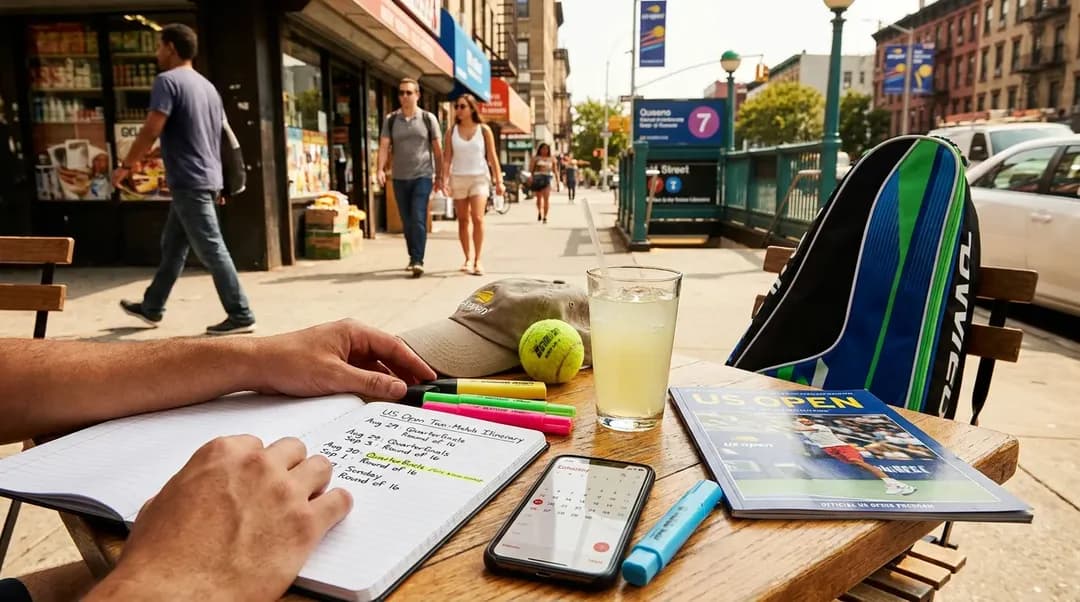
How to Build a Two-Match US Open Itinerary
A two-match US Open day works best when you choose priorities, protect meal breaks, and leave realistic time to move around the grounds.
The smartest casual-fan US Open itinerary starts with restraint. Instead of asking how many matches you can squeeze into one day, decide which two matches would make the visit feel worthwhile. Those two priorities become your anchors: one reason to arrive with purpose and one reason to pace the rest of the day. This approach leaves room for food, shade, bathrooms, photos, and the reality that tennis does not follow a fixed clock. It also reduces the temptation to chase every roar from a nearby court. A two-match plan is not less ambitious; it is more realistic. You still get the drama of live tennis, but you are not building a day that falls apart the first time a match runs long, a line moves slowly, or your group needs a reset.
Text Karpo for a current, low-friction plan for how to build a two-match us open itinerary—including timing, route checks, and practical options that fit your day.
Choose Your Two Anchors
Pick two priority matches before you start filling the day with possibilities. Your first anchor should be the match that gets you through the gate and moving in the right direction. Your second anchor should give the back half of the day a purpose. Until the official schedule is available for your date, advice is to think in categories rather than names: a stadium singles match, a doubles match on a smaller court, a first look at a favorite style of play, or a session where the atmosphere matters as much as the matchup.
Do not build the plan around guaranteed player appearances or fixed match times. Player fields, court assignments, and daily schedules can change, and tennis match length is inherently uncertain. For “How to Build a Two-Match US Open Itinerary,” the useful 2026 calendar anchor is August 23 through September 13, with singles main-draw play beginning August 30. Use the official event schedule close to your visit to turn your two-anchor idea into a final route.
A balanced day often beats a celebrity chase. A big-stage match can be memorable, but a close contest on a more intimate court may be easier to follow and less exhausting to reach. Advice: make at least one of your two anchors a match you are willing to watch properly from the beginning, not a match you hope to catch after circling the grounds. Two complete viewing experiences are better than five fragments.
Build Around Tennis Timing
A tennis schedule gives sequence, not certainty. If your target match is listed after another match on the same court, the earlier match controls your timing more than your watch does. A quick result can move the day forward; a long, tense match can push everything back. Weather, operational decisions, and court changes can also affect the flow. Advice: treat every plan as adjustable, especially if your two anchors are on different courts.
Give both anchors breathing room. For the first match, plan to be on-site early enough to enter, get oriented, and reach the court before the match is already underway. For the second, avoid filling the entire gap with errands or bonus tennis. The space between anchors is where lunch, walking, regrouping, and schedule-checking belong. If it looks like too much time on paper, that is usually a sign the plan may actually work in practice.
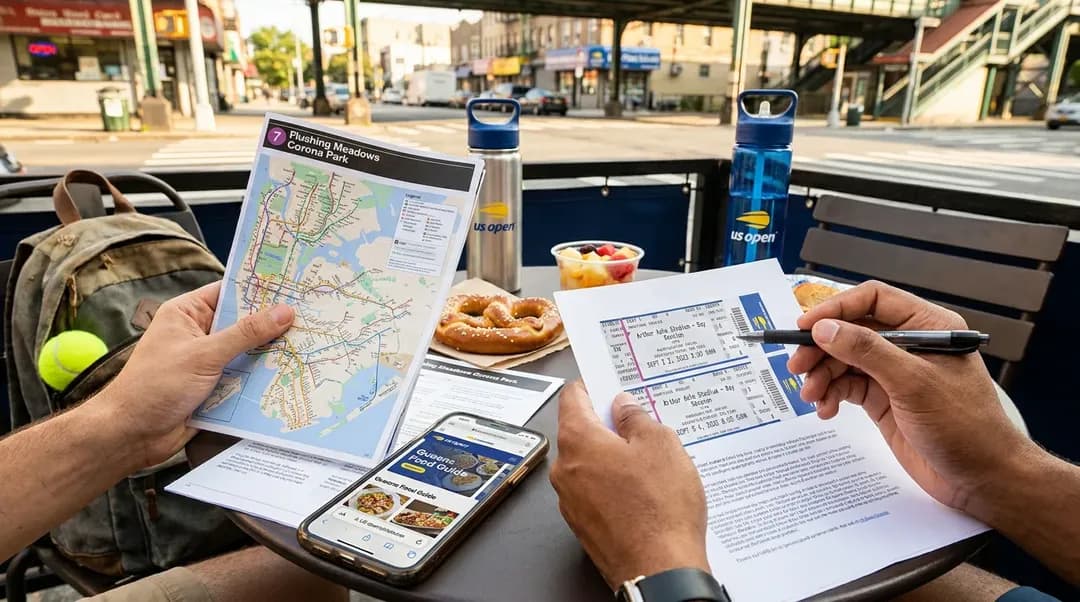
- Choose one match you are willing to arrive early for.
- Keep one backup court in mind if your first choice becomes impractical.
- Avoid tight back-to-back priorities unless the courts are close.
- Use optional matches as bonuses, not obligations.
A useful model is one committed match and one flexible match. For the committed match, settle in for the warmup, early momentum shifts, and crowd reactions. For the flexible match, allow yourself to arrive early, late, or not at all if the day changes. This keeps the itinerary focused without making it brittle.
Place Meals With Purpose
Food timing should protect the tennis, not compete with it. The worst meal plan is waiting until everyone is hungry at the same moment your must-see match is approaching. Decide before you arrive whether your group will eat before the first anchor, between anchors, or after the second anchor. Advice: if your first match matters most, eat something beforehand or plan a real break immediately afterward. If your second match is the priority, use the middle of the day to get food early enough that you are not entering the court distracted and rushed.
Do not assume exact menus, prices, business hours, or availability without checking current official information and day-of conditions. Instead, build the itinerary around the role of the meal. A meal between anchors creates a reset: you finish the first match, talk about what you saw, check the schedule, and move toward the second. A snack-and-sit plan works better when you want to be in position early for the later match. The key is deciding before the group is tired.
Comfort matters because a tennis day can include sun, shade changes, stairs, standing, and repeated small decisions. Advice: schedule the break before patience runs out, especially if you are with children, older relatives, or friends who are more interested in the outing than in every point. A two-match itinerary gives you permission to eat like a normal person instead of treating lunch as a failure of fan commitment.
Respect The Walking Map
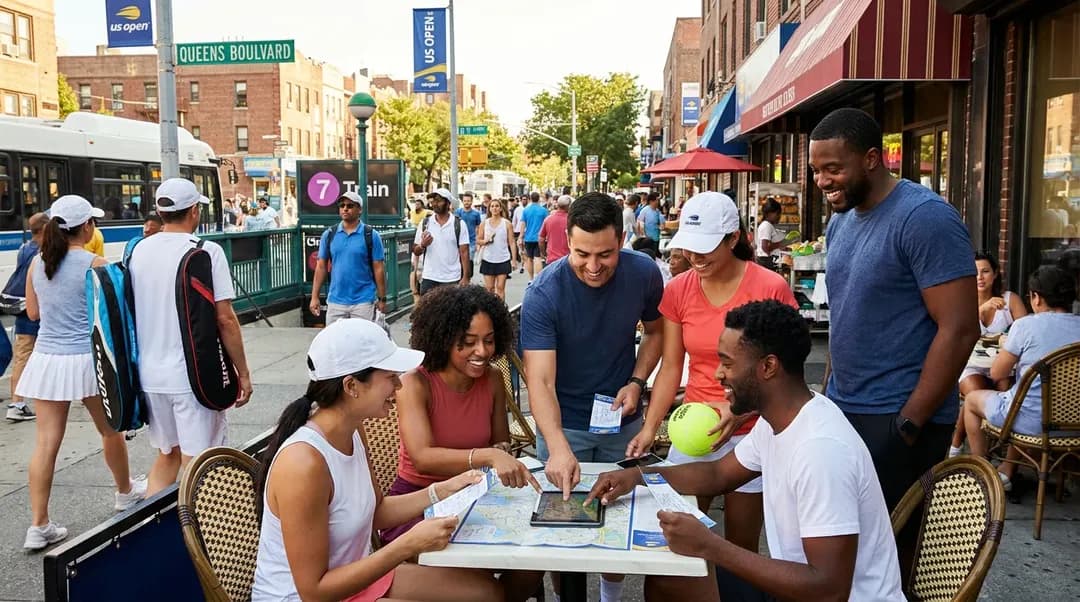
Walking time is the hidden cost of a US Open day. A route that looks simple can feel very different when crowds are moving, someone needs a restroom, or your second court is farther than expected. Advice: when choosing between two possible later matches, consider the walk as part of the decision. The better match on paper is not always the better itinerary choice if you will miss the opening games just getting there.
Build your route in a sequence. First, know where you enter. Second, know where your first anchor is. Third, identify a sensible food or rest stop after that match. Fourth, move toward the second anchor before the whole grounds seems to be going the same way. This keeps you from crisscrossing the site and helps the day feel deliberate instead of reactive.
- Use your first few minutes on-site to orient yourself.
- Choose a meeting point before anyone separates.
- Treat court changes like short commutes.
- Leave room for photos, shade, and crowd movement.
The two-anchor structure also protects your energy. If the first match is tense and long, the middle block can slow down. If it ends quickly, you can sample a nearby court without turning that bonus into a new requirement. Think of the day as two priorities plus texture: a warmup, a few games elsewhere, a meal, and the feeling of moving through a major tennis event without constantly being late.
Practical Notes
Before travel, recheck the official US Open schedule, A-to-Z information, and security rules, because published schedules, gate times, venue rules, transit conditions, local business hours, inventory, and availability can change. Before acting on “How to Build a Two-Match US Open Itinerary,” recheck the official security page; its current limit is one searchable bag per guest, no larger than 12 by 12 by 16 inches. Advice: carry only what you are comfortable managing all day, keep tickets or confirmations easy to access, and avoid any itinerary that depends on perfect timing. If your two anchors can survive a delayed arrival, a longer walk, and one match running longer than expected, you have built the right kind of US Open day.
Tags: #USOpen2026 #Tennis #NewYork #Queens #FlushingMeadows #USOpenGuide #TennisFans #SportsTravel #NYCEvents #HardCourt #KarpoFinds #Karpo
Sources consulted: usopen.org — Official reference · usopen.org — Official reference · usopen.org — Official reference
All trademarks are the property of their respective owners.
Ask Karpo first
Want to know what is confirmed, when to show up, and what is actually open to the public? Ask Karpo for the latest US Open updates and a practical New York plan for how to build a two-match us open itinerary.
Ask Karpo for more information.
Keep reading
- Where to Eat Near Penn Station That Isn't a Chain
 Andytown Coffee in the Outer Sunset: The Snowy Plover Explained
- Best Things to Do in Chicago: What the City Gives Away