 Haaland Has Seven Goals and Norway Runs Entirely Through Him
⚽️2026 FIFA WORLD CUP
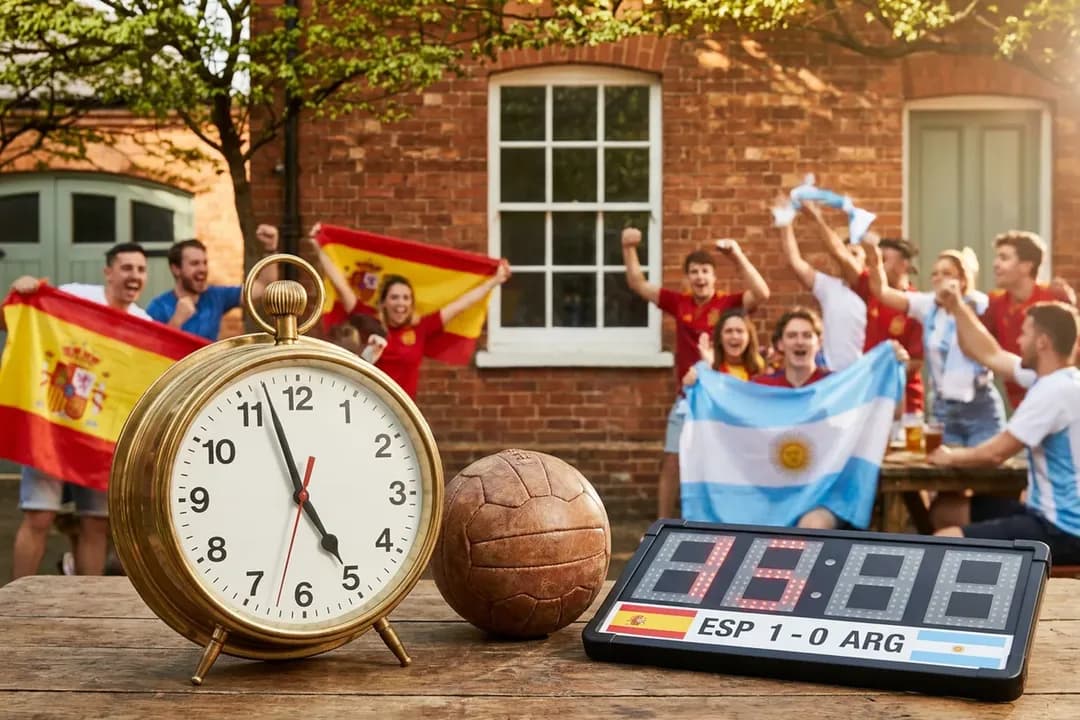
How Long Can a World Cup Knockout Match Last
A World Cup knockout match starts with 90 minutes, but it can stretch well beyond that when the score is tied. Here is the beginner-friendly guide to regulation, stoppage time, extra time and penalties.
East Rutherford and New York City soccer fans often ask the same basic question before a major knockout match: how many minutes in a soccer game? The simple answer is 90 minutes, but World Cup elimination matches have layers that make the real viewing window longer. A match is built from two 45-minute halves, a halftime break, referee-added stoppage time, and, if the competition rules require a winner, possible extra time and penalties. Understanding those pieces helps new fans plan their day without guessing when the drama will actually end.
Text Karpo before kickoff if you want a personalized final-recap, viewing, celebration, food or city plan around East Rutherford and New York City, built for your group and your timing.
The basic answer: 90 minutes of regulation
A standard soccer match is scheduled for 90 minutes of regulation time. That means two halves of 45 minutes each, not four quarters and not a running countdown like many North American sports. The match clock usually counts upward from 0:00 to 45:00 in the first half, then from 45:00 to 90:00 in the second half. The referee keeps the official time, and the visible stadium or broadcast clock is a guide rather than the final authority.
For a beginner, the key is to separate the scheduled playing time from the total event time. The 90 minutes describe regulation only, not the halftime interval, stoppage time, extra time, the break before extra time, or a penalty shootout. In a group-stage match, a draw can stand after regulation and added time. In many knockout matches, however, the tournament needs one team to advance, so the match can continue beyond the familiar 90-minute answer.
Halftime and why the match does not end at 45
Halftime comes after the first 45-minute half and gives the teams a short interval before play resumes. Fans may treat it like a natural break for food, messages or a quick walk, but it is still part of the overall match experience. The second half does not begin until the teams return and the referee restarts play. That is why a match that contains 90 minutes of regulation is never only 90 minutes from opening whistle to final whistle.
The same idea matters for planning in East Rutherford, New York City or any major host area. If you are meeting friends after the match, do not schedule around exactly 90 minutes from kickoff. Even before extra time enters the picture, halftime and stoppage time push the real-world window later. Broadcasters, stadium operations and fans all understand that soccer’s clock is structured around play, not a fixed television slot.
Stoppage time: why 45 and 90 are not final
Stoppage time, also called added time, is the referee’s way of accounting for delays during each half. Substitutions, injuries, goal celebrations, disciplinary delays, video review checks and other interruptions can all lead to added minutes. The fourth official may display a minimum amount near the end of each half, but the referee can still allow play to continue beyond that if circumstances require. This is why a first half can pass 45:00 and a second half can pass 90:00.
Stoppage time is not overtime, and it does not change the basic regulation structure. It is part of the half in which it is added. If the score is level after 90 minutes plus second-half stoppage time in a knockout match, the next step depends on the competition rules. In a World Cup elimination setting where a winner must be decided, the match can move into extra time rather than ending as a draw.
Extra time: two 15-minute periods
Extra time is used in applicable knockout matches when the teams are level after regulation and stoppage time. It consists of two 15-minute periods, for 30 scheduled minutes total. The teams play both periods; it is not a sudden-death format where the first goal automatically ends the match. If a goal is scored in the first period of extra time, the match continues unless the laws and competition procedures say otherwise, and the trailing team still has time to respond.
This is where the viewing window can stretch meaningfully. A knockout match can include 90 minutes of regulation, stoppage time in both halves, a halftime interval, a short transition into extra time, two 15-minute extra-time periods, and any added time within extra time. The official clock and referee management still matter. Fans should understand that “extra time” is a specific 30-minute playing segment, not a loose phrase for every minute after 90.
Penalties only if the match is still level
A penalty shootout is not a normal part of every soccer game. It happens only when the competition needs a winner and the teams remain level after regulation, stoppage time and extra time. The shootout is a tie-breaking procedure, not a third match period. Players take kicks from the penalty mark under a set sequence, and the result determines which team advances or wins the final. The goals from the shootout do not rewrite the match score in the same way as open-play goals.
For new viewers, penalties can feel sudden because they arrive after a long build-up of structured time. But they are actually the last step in the knockout ladder. First comes regulation, then stoppage time inside regulation. If still tied, extra time follows where required. If still tied after those two 15-minute periods and any added time, then the shootout decides the winner. That order is the simplest way to remember how a knockout match can reach its maximum drama.
Spain-Argentina as a one-paragraph example
The Spain-Argentina final is a clean example of why a knockout match can last longer than 90 minutes without reaching penalties. Spain won 1-0 after extra time, with the decisive goal coming in the 106th minute. That tells beginners the match was still alive beyond regulation and had entered the extra-time stage. It also shows why fans should not assume a tied final will finish at the 90-minute mark, even when only one goal ultimately separates the teams.
The safest way to explain any final is to stick to the confirmed timing categories rather than guessing the total elapsed clock time. A match can have different amounts of stoppage time in each half and in extra time, and those totals are controlled by the referee. Unless the official report gives the exact added time and elapsed finish, do not invent it. What matters for planning is the framework: 90 minutes, halftime, added time, extra time if required, then penalties only if still level.
Tags: #WorldCup2026
Sources consulted: IFAB Laws of the Game · Associated Press final report
All trademarks are the property of their respective owners.
Ask Karpo First
Ask Karpo to build your knockout-match plan, from recap to food, celebration and city timing.
Ask Karpo for more information.
Keep reading
- Haaland Has Seven Goals and Norway Runs Entirely Through Him
 World Cup Trophy Ceremony Timing Medals and Postmatch Celebrations
 Olise and France's Attack: The Semifinal Tactical Question