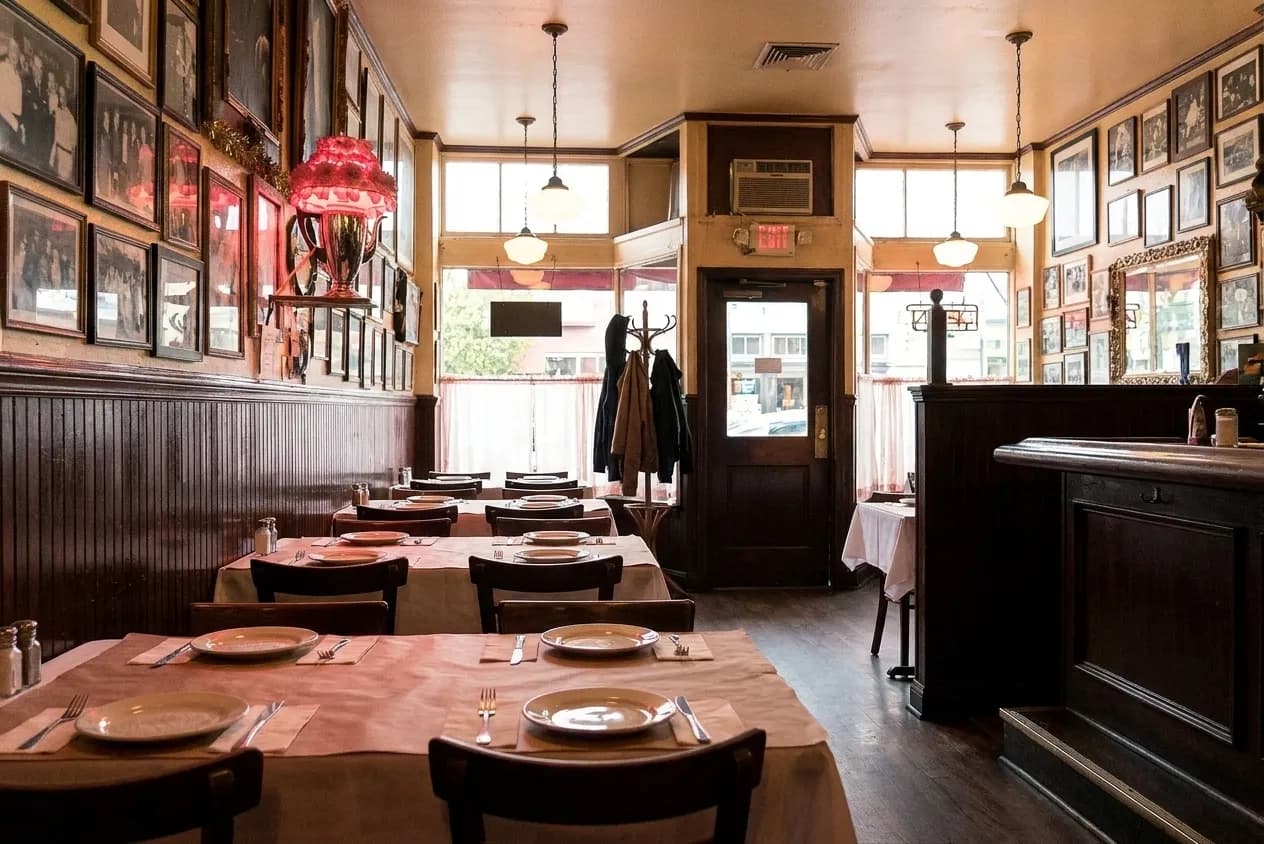
North Beach has two pizza economies operating on the same few blocks. One faces the main commercial spine, has a large menu with photographs, keeps a host outside, and exists to catch people walking between Chinatown and the waterfront. The other is a handful of small rooms a street or two off it, with six things on the board and a queue of people who live nearby. They are not competitors. They are different businesses, and telling them apart takes about ten seconds.
The good pizza in this neighbourhood is usually one street off the one everybody walks down, and the tells are easy once you know them. Tell Karpo where you are standing and it will point you off the main drag.
The tells, in order of reliability
Menu length is the first and best signal. A shop selling pizza, pasta, calzone, sandwiches, salads and a full breakfast is not a pizza shop; it is a restaurant hedging against every possible customer. The small rooms that do this well sell pizza, maybe a salad, and drinks. The board is short because the oven is the entire business.
The second tell is who is outside. A person on the pavement inviting you in is a reliable indicator that the room needs passing trade to fill, which in this neighbourhood means it is not filling on its food. The good small rooms have nobody outside and frequently nobody visible inside either, because the queue forms at specific hours and disappears in between.
Slice shops and pie shops are different again
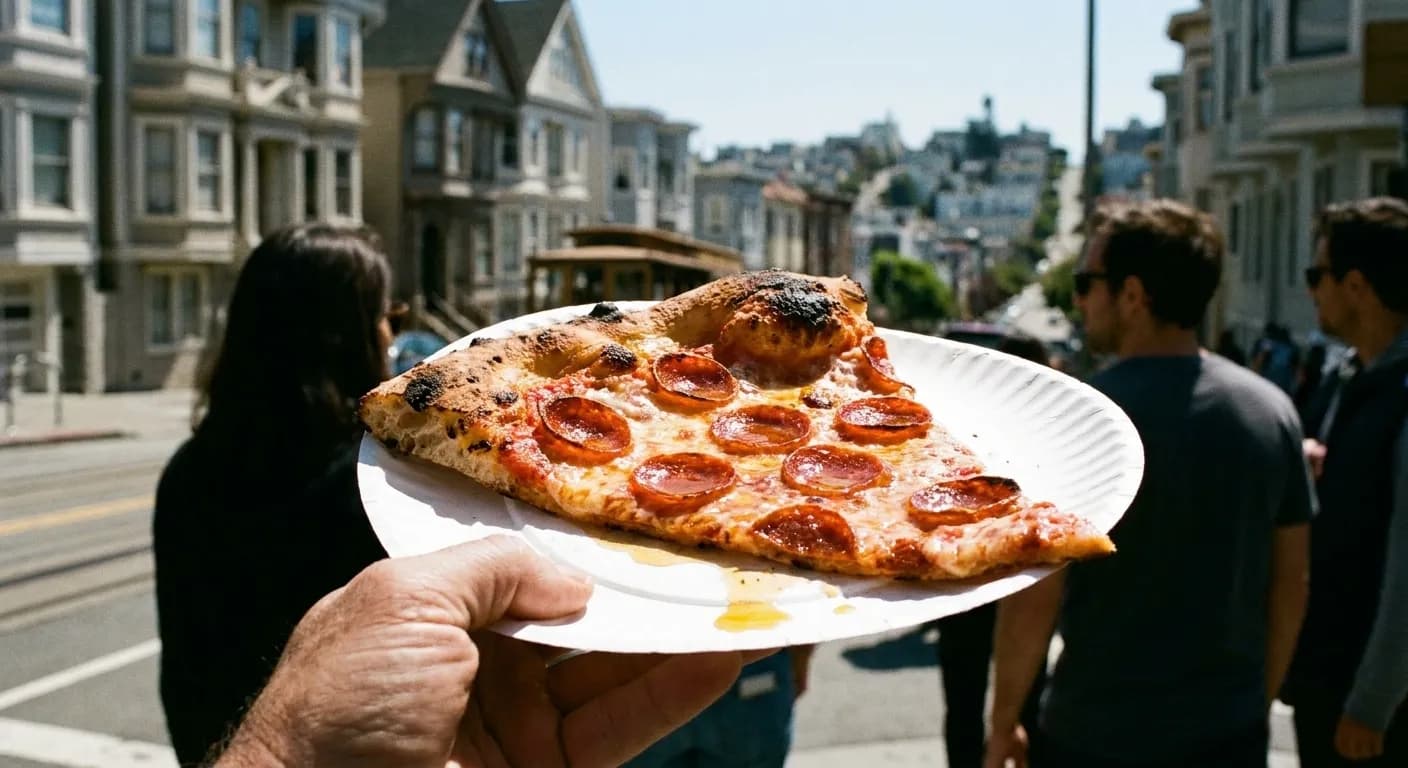
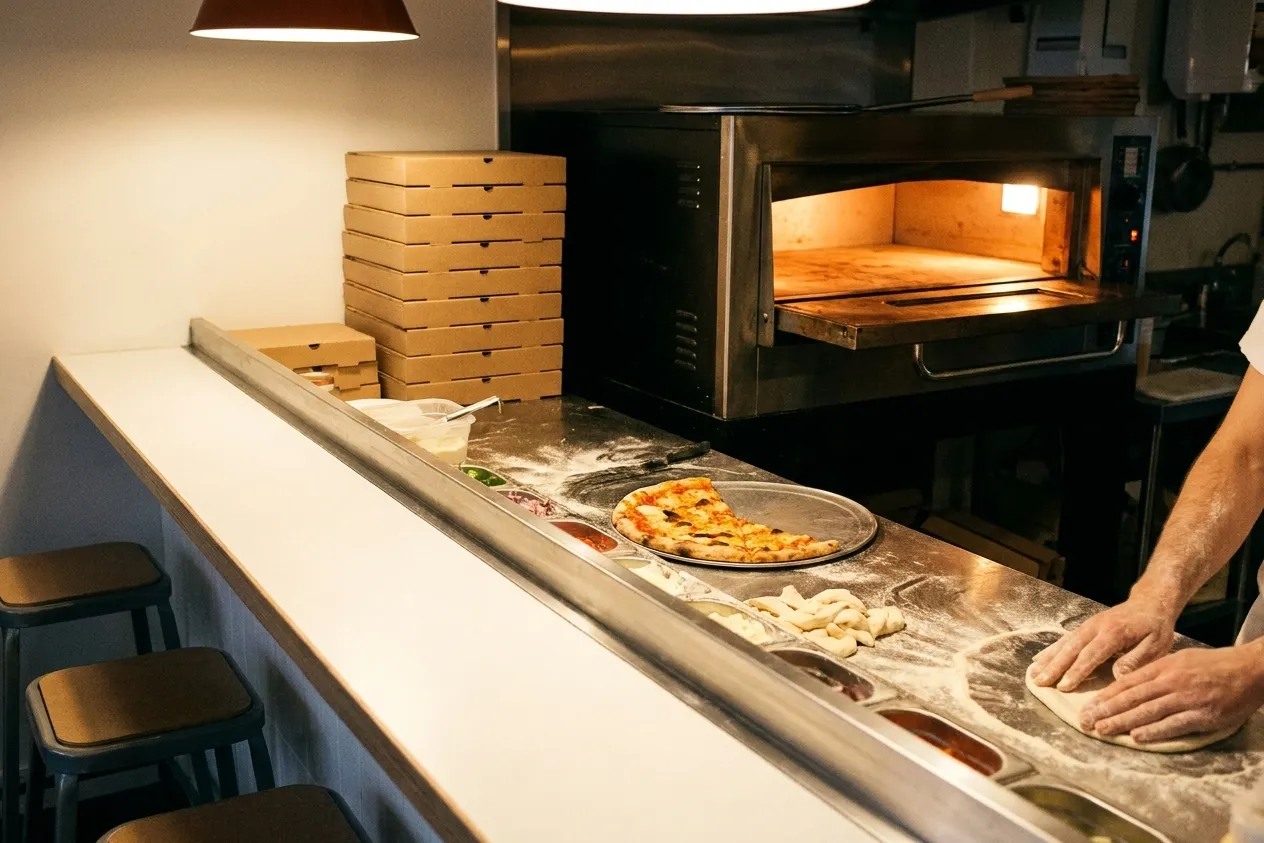
Within the good half of the neighbourhood there are still two models. Slice counters keep whole pies in a case and reheat to order, which means service in two minutes, low overheads and long hours. Pie shops fire to order, which means twelve to fifteen minutes, a better product, and usually earlier closing because a single order does not justify a hot oven at midnight.
Choose by the clock. Before ten, order a whole pie made to order and sit down. After eleven, the slice counter is the honest choice, and the quality of the reheat — a proper deck oven rather than a warming shelf — is what separates a good late slice from a limp one.
Why this neighbourhood specifically
North Beach's geography creates the split. The main street is one of the most heavily walked corridors in San Francisco, which supports businesses that never need a repeat customer. One block away the foot traffic drops off sharply and the buildings are residential, so a shop there survives on people who come back — a completely different incentive that shows up directly in the food.
The same pattern explains the pricing. Main-drag rooms price for a one-time visitor; the side-street rooms price for someone eating there twice a week. The gap is often several dollars a slice for a better product, which is an unusual arrangement and worth exploiting.
What to order once you are in the right place
Order the plainest thing on the board. A cheese or margherita slice is the honest test of any pizza operation, because there is nothing on it to hide behind — the crust, the sauce and the bake are all exposed. If that is good, everything else will be. If it is not, a pile of toppings will not fix it.
If there is a queue, join it rather than going next door. A queue at a two-person counter in this neighbourhood is a strong signal and it moves fast, because slice service is measured in seconds per customer. The empty shop beside it is empty for a reason at the same hour.
Practical notes
Hours at the small rooms are shorter and less predictable than at the main-drag restaurants, and several close on a weekday that suits the owner rather than a schedule. Cash is still useful. Confirm before crossing town, and remember that the case being empty is a closing time too — a shop that has sold out is done for the night regardless of the sign.
Where to eat it once you have it
Almost none of the small counters here have real seating, which is a feature rather than a problem in a neighbourhood built around a park and a square. A slice eaten on a bench two minutes away is a better experience than the same slice at a wobbly ledge, and it costs nothing. Late at night the sheltered corners out of the wind are worth knowing.
The wind is the practical constraint. This part of San Francisco funnels it down the cross-streets, and a spot that is pleasant in the afternoon can be unpleasant at eleven. Eating on the leeward side of a building, or in the square rather than on an exposed corner, makes more difference than people expect.
The hours that catch people out
The small rooms in this neighbourhood keep hours that suit their owners, which means a midweek closing day is common and rarely advertised anywhere you would look. Several close for a couple of weeks at a time. None of this is unusual for owner-operated businesses and all of it is invisible in a search result showing a tidy set of opening times.
The practical response is to pick the block rather than the shop. Within two streets here there are enough small counters that one being dark on a Tuesday costs you a ninety-second walk. That is a much better plan than crossing the city for a specific door and finding a shutter.
Tags: #SanFrancisco #SF #BayArea #HiddenGems #LocalFinds #OffTheBeatenPath #NorthBeach #Pizza #Beaches #SFEats #SFGuide #ExploreSF #SFLocal #SFWeekend
Sources consulted: sfchronicle.com · eater.com · sfstandard.com
All trademarks are the property of their respective owners.
Ask Karpo first
Karpo is a proactive AI assistant that lives in iMessage. Ask which side-street counter is still cutting.